

 Home
Home Chiang Mai(




Rating: 3.8/5 (4 votes)
 |
|  Map
Map 
 Have Map
  No Map
Phranakhon Si Ayutthaya attractions
Attractions in Thailand
Open Days: Daily
Opening Hours: 08:00 – 17:00
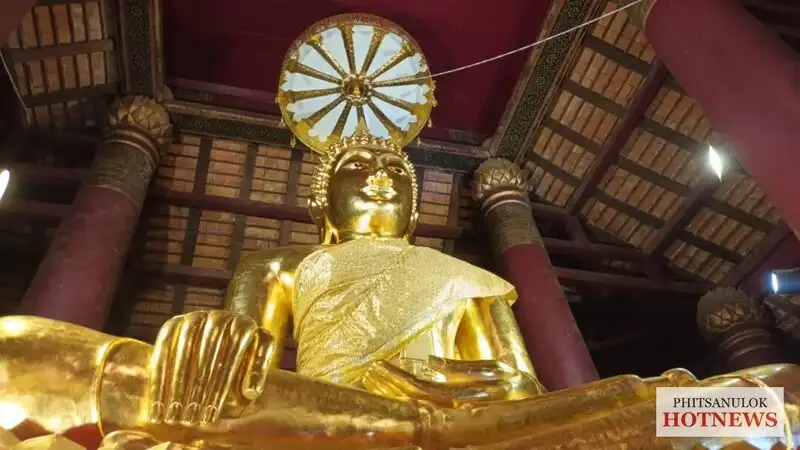
Ubosot of Luang Pho Thong Dam (Luang Pho Dam), Wat Han Sang is one of Ayutthaya’s lesser-known yet deeply meaningful stops that clearly reflects the charm of “Ayutthaya beyond the main tourist route.” Instead of standing out through the grand scale of the famous temples on the island of the old capital, this place stands out through a long-standing faith shared by the local community—centered on an ancient laterite Buddha image that villagers affectionately call “Luang Pho Thong Dam” or “Luang Pho Dam,” and on the ubosot itself, which feels like a spiritual anchor for people in Han Sang Subdistrict, Bang Pahan District, Phra Nakhon Si Ayutthaya Province. If you want to understand Ayutthaya beyond postcard views, Luang Pho Thong Dam is a strong example of how the province holds not only royal history, but also the everyday history of communities that keep their faith alive.
What makes a visit to Wat Han Sang meaningful is the chance to experience the rhythm of a living local temple. Daily life in Bang Pahan does not revolve around tourism the way the city-island area often does, so the overall atmosphere is usually calmer and less rushed, giving visitors more space to be truly “present” while paying respects. Many people come here not only for photos, but to make merit, to pray, or to ease worries about life and work through a language of belief familiar to the community. When a sacred place is integrated into real everyday life, the meaning of “sacred” does not need grand explanations—it emerges from people returning again and again, reaffirming their connection to the same place.
The temple is located in Han Sang Subdistrict, Bang Pahan District, Phra Nakhon Si Ayutthaya Province, and it sits toward the northern side of the subdistrict. When driving along Highway 32 (Asia Road), you can notice the temple entrance on the right-hand side. This kind of access reflects another face of Ayutthaya—an Ayutthaya that grows alongside modern transportation routes, not only an old city tied to waterways. That makes it easier for travelers coming from Bangkok or from the city-island zone to plan a trip without having to loop back through the busiest tourist areas on weekends.
When talking about “Luang Pho Thong Dam,” it is important to describe the Buddha image’s status in the eyes of the local community. Luang Pho Thong Dam is regarded as an old and highly revered image, with stories of spiritual power connected to vows and vow-fulfillment rituals. While “sacredness” is ultimately personal, what is notable here is how this belief appears as shared community behavior—people continue to come to pay respects, and certain vow-fulfillment practices are repeated often enough to become the place’s signature. That makes Luang Pho Thong Dam more than a religious object; it becomes a “center of meaning” that people rely on when they seek stability in life.
One of the most frequently mentioned practices related to Luang Pho Dam is “fulfilling vows with a traditional theatrical performance.” This is a vivid example of Thai belief culture because it connects performing arts with ritual gratitude. This practice carries two layers of meaning. First, it confirms that the person making the vow keeps their word by doing what they promised. Second, it turns the temple into a living space rather than a silent place where people only arrive, pray, and leave. On days when a vow is fulfilled, visitors may sense community gathering, faith made visible, and participation across generations—people come as worshippers, as audience, and as informal helpers who keep the space running smoothly. This is the distinctive appeal of a faith-based destination: it reveals the relationship between religion, art, and everyday life within a single scene.
Another reason Luang Pho Thong Dam is searched as an Ayutthaya attraction is the story of the “Luang Pho Dam amulet coin” that was reportedly created in 1969 (B.E. 2512). Many people refer to it as the “iron-shaped (tao-reed) model,” describing a coin shape with a wide base and a tapered top. The popularity of this model is often retold as having been widespread among devotees, and it is also said to have supported the successful restoration of the ubosot. From a cultural travel perspective, this is not only an amulet story—it is also a social record that shows how Thai communities have helped sustain temples in more recent times. Faith channeled through amulets can return as real resources for preserving sacred spaces, and it also encourages us to view local temples with deeper respect, because their continuity often relies on community support as much as on formal budgets.
In terms of architecture and atmosphere, the ubosot at Wat Han Sang creates a particularly calm setting for worship. For many Thai visitors, the ubosot is a formal sacred space associated with key monastic rites, so as people approach it, their pace, voice, and demeanor naturally slow down. That calmness makes praying feel more like inner reflection than a rushed activity. If you have visited Ayutthaya many times and feel that the “famous temples” have become visually repetitive, stopping at the ubosot of Luang Pho Thong Dam can bring you back to the core feeling of worship—simple, but deeply grounded.
Visiting Luang Pho Thong Dam also suits travelers interested in the “modern community history” of Ayutthaya, because the 1969 (B.E. 2512) amulet story and the accounts of restoration reflect a period when communities increasingly used contemporary methods to care for religious sites more systematically. We often discuss Ayutthaya’s history as the story of a capital, but in reality, any city contains multiple historical layers, and local temples are windows into the lives of ordinary people. They show how communities protect what feels like their “spiritual home.” Standing before the ubosot and looking at Luang Pho Thong Dam, you can sense that Thai faith holds both a belief dimension and a communal stewardship dimension at the same time.
For visitors coming to pray for auspiciousness, the best preparation is to dress respectfully, speak softly, and treat the temple as a shared community space. If you plan to offer merit-making items, keep everything tidy and, if needed, politely ask locals or caretakers about appropriate practices. The key is balance—avoid turning your own rituals into burdens for others. Especially on busy days, small courtesies such as not littering, not blocking access with your vehicle, and avoiding intrusive photography in ritual areas help ensure your Ayutthaya trip remains gentle and respectful toward local life.
As for the best time to visit, morning to late morning is recommended because the weather is cooler and the atmosphere is quieter, which supports a more focused worship experience. Another good time is late afternoon when the light softens for photos, though you should allow enough time for the return drive since the temple is some distance from central Ayutthaya. Midday can be hotter, but it offers clearer visibility and road safety. Publicly shared information commonly lists visiting hours around 08:00 to 17:00, which fits well with a plan to pray here and continue to other sites within the same day.
What many people appreciate about Wat Han Sang is the feeling of stepping outside the main tourist zone into a different kind of Ayutthaya. This Ayutthaya centers on Asia Road as a modern spine, with rural landscapes and community life as the backdrop, and local temples as spiritual anchors. Driving along Highway 32 and turning into the temple offers a noticeably different scene from driving around the city-island area. This is ideal for travelers who want a break from crowds but still want an “Ayutthaya temple” experience with deeper cultural and faith-related meaning. If you have ever felt that crowded days in Ayutthaya turn temple visits into rushed checklists, Luang Pho Thong Dam can reset that feeling.
From a trip-planning perspective, Luang Pho Thong Dam can serve as the main stop for a one-day Bang Pahan itinerary, or as a meaningful stop on the way to other major sites in Ayutthaya. For example, if you plan to visit the Nakhon Luang area to see Prasat Nakhon Luang and Wat Nakhon Luang, beginning your day by praying at Luang Pho Thong Dam and then driving onward can give your trip both a faith dimension and an architectural-history dimension in one day. Or, if you plan to enter the city-island in the afternoon, visiting Luang Pho Thong Dam in the morning can be a gentle “opening chapter” for your Ayutthaya journey.
From a travel-writer’s lens, a place like Luang Pho Thong Dam is rich for storytelling because it helps us talk about “faith in real life,” not faith as abstract, decorative language. Here, faith becomes tangible through the 1969 (B.E. 2512) “tao-reed” coin story, through the vow-fulfillment performances that bring the temple into communal motion, and through restoration efforts that reflect shared responsibility. It is also tangible in the word “Luang Pho,” which is not merely a title, but a feeling of trust that people place in the sacred. Together, these elements make Luang Pho Thong Dam an Ayutthaya attraction especially suitable for cultural travelers, merit-makers, and those who enjoy collecting local narratives.
If you enjoy photography, Wat Han Sang often offers a more “authentic” and “warm” visual character than heavily touristed temples. Your photos can capture community atmosphere, simple compositions, and the quietness of a living sacred space. As always, keep your photography respectful: avoid blocking worshippers, keep an appropriate distance during rituals, and avoid flash when it may be disruptive. With that mindset, your images will not only document what you saw, but also preserve the feeling of the place.
Overall, the ubosot of Luang Pho Thong Dam is ideal for travelers who want their Ayutthaya trip to feel a little deeper—deeper in belief, deeper in community narratives, and deeper in the local stewardship that sustains temples outside the tourism spotlight. If you value journeys that allow you to learn both people and place at the same time, Luang Pho Thong Dam is a small but meaningful stop that reveals a different scene of Ayutthaya and encourages a more attentive way of seeing the old capital.
Getting There From Bangkok, take Highway 1 (Phahonyothin Road) and pass the Phra In Water Gate, then connect to Highway 32 (Asia Road). After that, turn left to Highway 309 to enter Phra Nakhon Si Ayutthaya. When you have passed the Ayutthaya city entrance on Asia Road, continue toward Nakhon Luang District (the direction toward Ang Thong Province). You will see a sign for the turnoff to Nakhon Luang on the right. Continue driving and turn right under the bridge; the temple will be on the left. You can also use GPS and pin the coordinates to reach the temple entrance more precisely.
| Name | Ubosot of Luang Pho Thong Dam (Luang Pho Dam), Wat Han Sang |
| Address | Han Sang Subdistrict, Bang Pahan District, Phra Nakhon Si Ayutthaya, Thailand |
| Coordinates (Latitude, Longitude) | 14.530882, 100.514819 |
| Summary | A local temple in Bang Pahan featuring “Luang Pho Thong Dam/Luang Pho Dam” as a spiritual anchor, known for narratives of sacred power, a 1969 (B.E. 2512) “tao-reed” coin model, and a distinctive vow-fulfillment tradition involving theatrical performance |
| Highlights | 1) Revered ancient Buddha image “Luang Pho Thong Dam” 2) The 1969 (B.E. 2512) amulet coin story (popular search topic among devotees) 3) Signature vow-fulfillment practice with “theatrical performance” 4) Calm, community-based temple atmosphere beyond the main tourist route |
| Latest Caretaker | Wat Han Sang (Temple Contact) Tel. 035-228-173 |
| Open Days | Daily |
| Opening Hours | 08:00 – 17:00 |
| Travel | Drive from Bangkok via Phahonyothin Road → Highway 32 (Asia Road). Watch for the temple access point and use GPS coordinates for precise arrival |
| Current Status | Open for worship and merit-making during commonly listed visiting hours (daytime visits recommended) |
| Nearby Tourist Attractions (Approx. Distance) | 1) Prasat Nakhon Luang – ~15 km 2) Wat Nakhon Luang – ~15 km 3) Bang Pa-In Royal Palace – ~32 km 4) Wat Phanan Choeng Worawihan – ~33 km 5) Wat Mahathat (Ayutthaya Island) – ~35 km |
| Popular Restaurants Nearby (Approx. Distance + Phone) | 1) Baan Suan Rim Khlong (Pad Thai) – ~10 km – Tel. 081-991-1549 2) GoodDay ALL DEE Cafe’ – ~12 km – Tel. 087-747-5555 3) Mae Prapai Sri Coconut-Milk Boat Noodles (Ayutthaya Branch) – ~14 km – Tel. 094-654-2665 4) Boon Boen Krua Khun Benz (Bang Pahan) – ~13 km – Tel. 084-008-9885 5) Nai Chan Boat Noodles (Krung Kao) – ~16 km – Tel. 086-797-6501 |
| Popular Accommodations Nearby (Approx. Distance + Phone) | 1) Krungsri River Hotel – ~33 km – Tel. 035-244-333 2) Kantary Hotel Ayutthaya – ~34 km – Tel. 035-337-177 3) Classic Kameo Hotel Ayutthaya – ~34 km – Tel. 035-212-535 4) sala ayutthaya – ~36 km – Tel. 035-242-588 5) Ayothaya Riverside Hotel – ~34 km – Tel. 035-243-139 |
Frequently Asked Questions (FAQ)
Q: Which temple houses Luang Pho Thong Dam, and which area of Ayutthaya is it in?
A: It is at Wat Han Sang in Han Sang Subdistrict, Bang Pahan District, Phra Nakhon Si Ayutthaya. It is outside the city-island zone and is easy to reach from Asia Road.
Q: What do people commonly pray for at Luang Pho Thong Dam?
A: Many devotees come to pray for stability, smooth progress in life, and success, along with stories of ongoing vow-making and vow-fulfillment practices within the community.
Q: Why do people mention “fulfilling vows with a theatrical performance” for Luang Pho Dam?
A: It is widely retold as a popular vow-fulfillment form, where a theatrical performance is arranged as a way to keep one’s vow and express gratitude and faith.
Q: What is the 1969 (B.E. 2512) “tao-reed” amulet coin model?
A: It refers to an amulet coin reportedly created in 1969 (B.E. 2512). The term “tao-reed” describes a coin shape with a wide base and a tapered top, and it has been popularly sought by devotees.
Q: What are the visiting hours for Wat Han Sang?
A: Commonly shared information lists 08:00 – 17:00, and daytime visits are recommended for convenience and worship.
Q: What phone number can I use to contact Wat Han Sang?
A: You can contact Wat Han Sang at 035-228-173.
 Luang Pho Thong Dam Map
 Category:
  Group:
  Last Update: 3 DayAgo
Comment
 Nearby Attractions
| Keyword (Advance) |
 Region
|
 Phranakhon Si Ayutthaya(