

 Home
Home Chiang Mai(




Rating: 4/5 (5 votes)
 |
|  Map
Map 
 Have Map
  No Map
Phranakhon Si Ayutthaya attractions
Attractions in Thailand
Open Days: Daily
Opening Hours: 24 hours
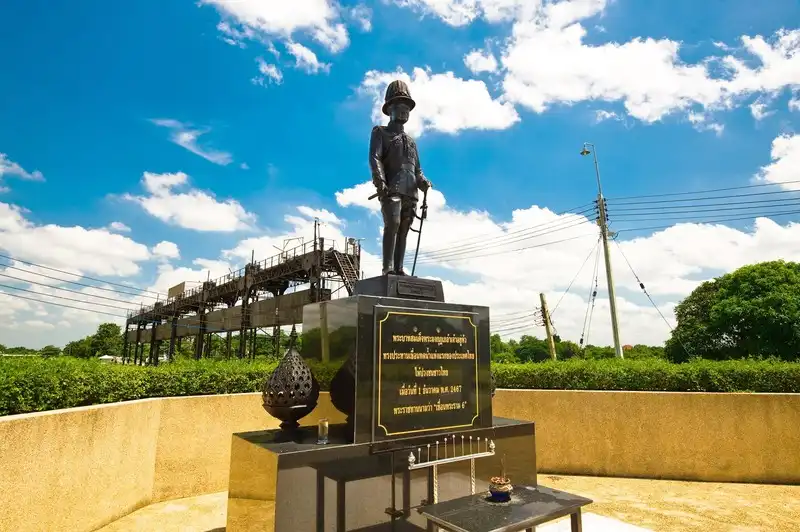
Rama VI Dam is one of Ayutthaya’s travel spots that feels genuinely different from the province’s usual image of temples and ancient ruins. Here, natural scenery is fused with the tangible history of Thailand’s national development. You might come for a quiet riverside place to rest between destinations, or specifically to catch sunset light over the Pa Sak River, but once you stand in front of the water and the dam’s real structure, it becomes clear that this is more than a check-in point. It is an open-air lesson in Thai water management—no textbook required. The dam is located in Moo 10, Tha Luang Subdistrict, Tha Ruea District, Phra Nakhon Si Ayutthaya, and it is under the supervision of the Royal Irrigation Department. Its core role is to manage the Pa Sak River’s water for agriculture and for the livelihoods of communities across the basin.
The reason many travelers consider Rama VI Dam a place worth stopping at—especially when searching for nature-focused attractions in Ayutthaya—is not the kind of grand architectural spectacle you get from historic monuments. Its appeal is a meaningful simplicity. The breeze along the dam crest often feels cooler than the old city zone at many times of day. The sound of water and the rhythm of the sluice gates can make simply standing still and watching feel like a natural mental reset. Many visitors prefer late afternoon into early evening for softer air and better light, while others choose weekdays for a slower walk, fewer people competing for photo angles, and a clearer sense of the natural soundscape.
In straightforward terms, Rama VI Dam is a diversion dam. Its main purpose is not to store enormous volumes of water like large mountain reservoirs, but to control water levels and redirect water so it can continuously nourish agricultural areas through irrigation canals. In other words, a diversion dam acts like a manager of water’s timing, making flow more orderly and more predictable for cultivation. When you look at the Central Plains as one of Thailand’s most important food-producing regions, it becomes easy to understand why a working diversion dam is fundamental to food security—and why irrigation development has been such a major theme in the country’s modern history.
The history of Rama VI Dam gives it value beyond the word “attraction.” This diversion dam is recognized as the first of its kind in Thailand. It was built during the reign of King Rama VI to control and manage the Pa Sak River so the water could be used effectively for agriculture and everyday life. The dam was originally named “Phra Thian Racha Dam” (the spelling of the former name varies across some sources) before later becoming known as “Rama VI Dam.” The broader picture of that period reflects Thailand’s transition into an era where national progress relied not only on local labor and community capability, but also on infrastructure designed to shape the country’s future for generations. Rama VI Dam remains a concrete, visible piece of that long-term thinking.
When you stand on the dam and look across the Pa Sak River, a natural curiosity often arises: “How does a structure like this actually work?” and “Why does it matter?” The answer is in the sluice gate system that controls water levels and regulates flow through different time periods. Large steel gates allow water release to be precise and adjustable to real conditions. That is the quiet charm of engineering sites: they may look still, but they are continuously working for the lives of countless people. In some seasons you may see stronger flow and feel the force of nature that has been organized for practical use. On calmer days the water can look more still, creating a peaceful scene that encourages long, unhurried walks.
What makes Rama VI Dam especially suitable for learning-based travel is that you do not need to have an engineering background to enjoy it. The experience starts with the simplest actions: looking and feeling. Riverside wind makes walking comfortable, the steady rhythm of the dam helps you slow down, and as your mind becomes quieter, you begin noticing details almost automatically—why people like to stand in certain spots, why some angles feel wider and more photogenic, and why watching the sun gradually sink behind the dam line can make you feel you have truly rested, even within a single day.
If you come primarily for photography, Rama VI Dam is the kind of place that looks good without artificial staging. The lines of the structure and the open water combine into a clean, sharp natural backdrop. Evening light often turns the water surface into a soft, warm reflection, making the overall atmosphere feel gentler. Many people like framing a person small within the scene to show the scale of the dam and river, or composing the long dam line to create a sense of continuity—a visual idea that matches a place that has been operating for more than a century. When the breeze is good, the entire experience becomes even more pleasant, because you can walk and photograph without feeling pressured to escape heat like you might in a city-centered itinerary.
Another reason many visitors remember Rama VI Dam is the community atmosphere and local character found near the site. Along the dam area there are community-product zones linked to the One Tambon One Product (OTOP) concept, reflecting local efforts to turn tourism into direct economic support for residents. You may find crafts made from coconut shell, transforming an everyday material into distinctive decorative items and practical goods, as well as handmade artificial flowers and products made from saa paper that reflect delicate Thai craft traditions. Buying small items here is not only souvenir shopping; it is a way to help local knowledge and skills continue to exist within the real economy.
If you are looking for a half-day trip or a worthwhile stop between destinations, Rama VI Dam fits easily because even a short visit can feel meaningful. You do not need to stay all day to get value, but if you have time and want a deeper experience, walking slowly and letting yourself observe people, water, and sky can offer more than photos—it can bring you back into the present moment. Many families bring children so they can see how the water in canals and rice fields is connected to national infrastructure. Others pair the visit with nearby temples so the day includes nature, history, and local faith within one well-paced journey.
The context of Tha Ruea District also makes Rama VI Dam easy to combine with nearby landmarks. One of the most common paired stops is Wat Satue, known for its large reclining Buddha image and local narratives connected to Somdet Phra Phutthachan (To Phromrangsi), a highly respected figure in Thai Buddhist tradition. Visiting the temple and then returning to the dam can give your trip both the calm of nature and the calm of the mind. In the broader Tha Ruea area, there are also other temples and attractions that can extend your day depending on your interests, including family-friendly spots and community areas that feel noticeably different from Ayutthaya’s old city zone.
Getting There The easiest way to visit Rama VI Dam is by private car, because Tha Ruea District connects to several main routes and works well as a stopover itinerary. A helpful way to plan is to treat the dam as a “high-value rest stop,” not merely a quick stop. You can aim to arrive in the late afternoon to enjoy the breeze and capture softer evening light, then continue to nearby temples or local restaurants without rushing. If you do not have a private vehicle, you can begin by traveling to Tha Ruea District via routes that pass through the area, then take a taxi or local hired transport to the dam. It is wise to allow extra time for the return connection and carry cash for the final leg so the trip remains smooth and stress-free.
The best times to visit Rama VI Dam are generally early morning or late afternoon, when the air is cooler and the light is better for photography. If you prefer a livelier atmosphere, weekends and holidays may feel more animated. If you want a quieter walk without navigating crowds, weekdays usually offer a more comfortable pace. Regardless of timing, safety should always come first near the water and along the dam crest. This is especially important if you travel with small children or older adults. Stay close in areas near the water, walk and stand where space is clearly provided, and respect on-site rules, because the dam is a working public infrastructure facility that balances water management responsibilities with visitor access.
In terms of meaning, Rama VI Dam is a place that makes national development feel close and visible. Every time water is redirected to nourish farmland, it supports lives and livelihoods at scale—made possible through systematic water management. When you view the dam as a traveler, you are also witnessing a living piece of Thai development history operating right in front of you. So if you are searching for an Ayutthaya attraction that offers nature, strong photo opportunities, and real-world learning without requiring formal study, Rama VI Dam is a place to slow down—and understand Thailand a little more—within a single trip.
| Place Name | Rama VI Dam |
| Location | Moo 10, Tha Luang Subdistrict, Tha Ruea District, Phra Nakhon Si Ayutthaya |
| Address | Tha Luang Subdistrict, Tha Ruea District, Phra Nakhon Si Ayutthaya 13130 |
| GPS | 14.556111, 100.765000 |
| Place Summary | Thailand’s first diversion dam on the Pa Sak River, a King Rama VI era irrigation landmark. Ideal for scenic walking, breezy riverside relaxation, photography, and learning about Thai water-management history, with community products nearby. |
| History / Period | Built during the reign of King Rama VI. Originally called “Phra Thian Racha Dam,” later known as “Rama VI Dam.” |
| Highlights | Thailand’s first diversion dam, Pa Sak River views and photogenic dam line, breezy and calming atmosphere, hands-on learning about irrigation, easy to pair with temples and community travel in Tha Ruea. |
| Latest Operator / Caretaker | Royal Irrigation Department (Pa Sak Tai Operation & Maintenance Project / Regional Irrigation Office 10) |
| Open Days | Daily |
| Opening Hours | 24 hours |
| Fees | No confirmed entrance fee information (for special activities/services, follow on-site notices) |
| Facilities | Riverside viewing/walking areas, photo rest points, nearby community product zone (availability depends on on-site setup at the time of visit) |
| Travel | Private car is the most convenient (enter Tha Ruea District and follow signs to the dam), or travel by bus/van to Tha Ruea area and continue by taxi/local hired transport. |
| Current Status | Open to visitors (working infrastructure area—please follow on-site rules) |
| Contact Number | 035-802-555 |
| Nearby Tourist Attractions (With Distance) | 1) Wat Satue – 0.5 km 2) Wat Bueng Latthiwan – 1.2 km 3) Wat Mai Ruak – 4.7 km 4) Sri Ayutthaya Lion Park – 8.5 km 5) Wat Tako (Luang Pho Ruay) – 9.6 km |
| Popular Restaurants Nearby (Distance + Phone) | 1) IMP SUSHI – 0.4 km – 098-268-9368 2) Yai Khraeng Boat Noodles – 0.4 km – 092-639-5272, 061-454-5317 3) Tharua Charcoal Pork Noodles – 2.1 km – 035-341-702 4) SVNLOWBAR Specialty Coffee & Matcha (Tha Ruea) – 2.5 km – 097-193-4287 5) Wood-Fired Pizza at Suan Thammachat Mi Dee (Ban Mo) – 3.4 km – 089-776-0620 |
| Popular Accommodations Nearby (Distance + Phone) | 1) Rim Bueng Suan Prik Resort – 5.8 km – 084-516-6553, 089-777-8352 2) ChuanChom The High Resort Saraburi – 17 km – 036-222-533 3) Glai Gan Place Hotel – 18 km – 036-212-1412 4) River Residence Saraburi – 18 km – 096-971-9599 5) The T Hostel Saraburi – 18 km – 092-587-7982 |
Frequently Asked Questions (FAQ)
Q: Where is Rama VI Dam located?
A: Rama VI Dam is in Moo 10, Tha Luang Subdistrict, Tha Ruea District, Phra Nakhon Si Ayutthaya. It is a diversion dam on the Pa Sak River and sits close to the Tha Ruea community area.
Q: What kind of dam is Rama VI Dam, and why is it important?
A: It is Thailand’s first diversion dam. Its key role is to control and redirect water for agriculture, supporting a systematic and continuous irrigation distribution system.
Q: What is the best time to visit Rama VI Dam for scenery and photos?
A: Late afternoon into early evening is popular for softer air, better light, and a calm Pa Sak riverside atmosphere that suits walking and photography.
Q: Is Rama VI Dam suitable for children or older visitors?
A: Yes. It is a place for easy scenic viewing and does not require long walks under strong sun like many historic sites, but visitors should stay cautious near the water and choose safe standing areas.
Q: If I want to continue my trip after Rama VI Dam, where should I go nearby?
A: Wat Satue is a popular next stop. You can also visit Wat Bueng Latthiwan, Wat Mai Ruak, and family-friendly attractions like Sri Ayutthaya Lion Park, depending on how long you want your half-day or full-day trip to be.
 Rama VI Dam Map
 Category:
  Group:
  Last Update: 2 DayAgo
Comment
 Nearby Attractions
| Keyword (Advance) |
 Region
|
 Phranakhon Si Ayutthaya(