

 Home
Home Chiang Mai(










Rating: 3.4/5 (9 votes)
 |
|  Map
Map 
 Have Map
  No Map
Kanchanaburi attractions
Attractions in Thailand
Open Days: Open daily
Opening Hours: Recommended 08:00 – 17:00 (for convenient visiting around the ancient remains and temple grounds)
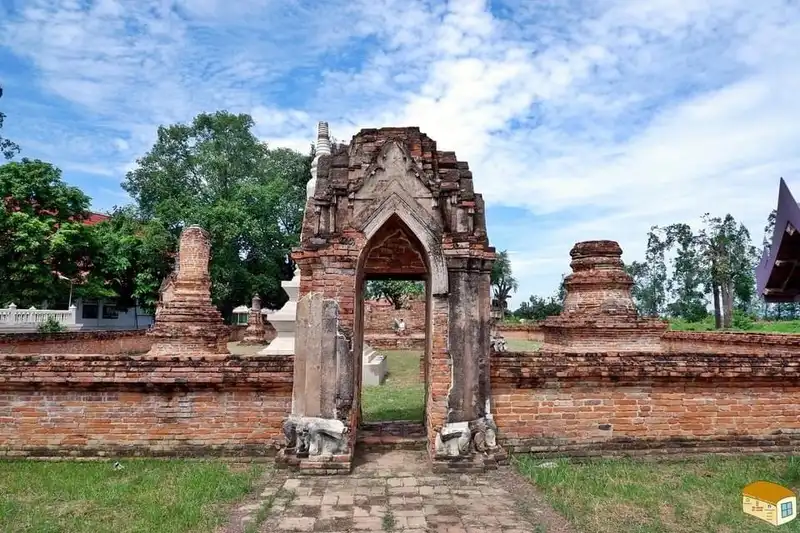
Wat Ban Noi Ancient Site in Don Chedi Subdistrict, Phanom Thuan District, Kanchanaburi is the kind of place that, at first glance, may feel like a quiet local temple with a few old structures on the grounds. But for anyone interested in Ayutthaya history and architecture, Wat Ban Noi functions like a “key” that helps connect the understanding of Mid-Ayutthaya period stupas across inner Kanchanaburi in a more systematic way. Dating ancient structures is rarely about looking at a single point and concluding immediately; it is usually built from comparing forms, details, and surrounding context, then arranging relationships among sites in the same region into a coherent narrative. When you arrive at Wat Ban Noi with a mindset ready to “read” rather than rush for photos, you begin to see that its importance is not only about one structure, but about how the site provides a reference point for discussing Mid-Ayutthaya in Kanchanaburi with stronger reasoning.
For many people, the image of Ayutthaya is the capital city, city walls, grand temples, or royal palaces. In reality, Ayutthaya’s power and culture moved through wide networks of towns and communities beyond the center as well. Kanchanaburi, linking the Central Plains with Thailand’s western frontier, holds old travel routes, agricultural landscapes, and communities tied to movement in the past. Many local temples preserve Ayutthaya traces in the form of chedis (stupas), ancient bases, or architectural fragments that have been repaired over time. Wat Ban Noi sits within this larger picture, and what makes it stand out is its role in “setting a time marker” for Mid-Ayutthaya chedi forms, so that the same logic can be extended to nearby temples and ancient sites continuously, rather than viewing each place as an isolated dot.
Calling Wat Ban Noi an important “key” does not mean it offers one ready-made answer. It means the site has certain characteristics that researchers and serious visitors can use as an anchor for typological comparison. Put simply: if we want to date a chedi in a particular area, we usually need multiple elements together – the proportions of the base and main body, the presence or arrangement of niches and decorative components, material choices and construction technique, and the relationship to the temple layout and surroundings. When one site presents features that are both “clear” and “consistent” with the period being examined, it becomes a strong reference point. Wat Ban Noi is often mentioned in this way, as a helper that allows the dating and linkage of Mid-Ayutthaya period chedis in this region to connect smoothly across multiple sites.
Before stepping in to view the ancient remains, it helps to shift from a mindset of “checking off places” to “reading for understanding.” Sites like this do not usually deliver spectacle on the scale of monumental architecture, but they offer depth through detail and context. Start by observing the overall temple environment – what kind of community temple it is, and whether it sits near a travel corridor or agricultural area. Then look at where the ancient remains are positioned within the temple grounds and how they relate to the ubosot, viharn, or main community buildings. Temple layout and architectural placement often reflect usage and beliefs at the time of construction, as well as later restoration phases. Reading the site this way avoids the trap of assuming an ancient site is only meaningful if it remains “complete.” Sometimes, what survives as a single element is precisely what explains the period most effectively.
Once you begin observing the chedi or ancient structures, the visit becomes more engaging if you ask simple questions and answer them with what you can see: “How many tiers does the base have?” “Is the silhouette slender or more compact?” “What kinds of decorative elements appear?” “Do the plaster and masonry surfaces look original, or clearly repaired?” These questions do not require heavy technical vocabulary. They rely on repeated observation and comparison with chedis at nearby sites. Over time, you begin to see that “Mid-Ayutthaya” is not just a label; it is a period with recognizable architectural preferences. Wat Ban Noi supports that understanding by making the comparison more tangible and grounded.
Another reason Wat Ban Noi is worth visiting is that it remains a “living temple” within an active community. You are not only looking at the past; you are seeing how the past is preserved and used alongside the present. Temples with ancient remains often undergo multiple restoration phases. Some repairs are made for structural safety; some landscape adjustments are made to support community use. Recognizing this makes the experience more human and realistic, because the site is not in a vacuum – it is part of a faith space and a public space. Visiting with respect and an intention to learn benefits both visitors and the local community.
In terms of historical understanding, what we can reasonably say is that Wat Ban Noi continues to function as a community temple, which supports the idea that it remains active rather than abandoned. However, when writing about an ancient site that is significant for dating, the key is to separate what can be verified from what remains interpretive. Stating exact construction years or specific events without firm evidence weakens credibility. A higher-quality approach is to write with confidence but avoid premature conclusions: explain that the temple’s ancient remains are used as a reference point for understanding Mid-Ayutthaya chedi forms, and invite readers to observe the formal details – rather than relying on emotional storytelling or over-assertion.
To make the visit more meaningful, connect Wat Ban Noi to a wider historical travel map of Kanchanaburi. The province contains both Ayutthaya-era heritage and World War II narratives in the same geography. If you design a trip with a storyline, you can begin with ancient sites in the Don Chedi–Phanom Thuan area to understand Mid-Ayutthaya and local history, then shift toward Kanchanaburi town to learn modern history through museums and the Thailand–Burma Railway story, and finally add nature destinations for balance. This kind of planning turns Wat Ban Noi from a simple stop into a starting point that makes Kanchanaburi as a whole feel clearer and more connected.
Wat Ban Noi is also valuable for writers who aim for serious, differentiated content, because you can tell a story about “how we think” rather than only “what a place is.” You can explain how dating chedis works through comparison, what details matter, and why linking nearby sites is essential. That approach separates the article from generic travel writing, and leaves readers with a transferable skill: the ability to “read ancient architecture.” When readers gain that skill, they tend to value and revisit historical sites elsewhere in Thailand more deeply.
Getting There Wat Ban Noi is located in Don Chedi Subdistrict, Phanom Thuan District, Kanchanaburi. The most convenient option is traveling by private car or hiring a local car/driver. Start from main provincial routes, head into the Don Chedi–Phanom Thuan area, and use online maps for accurate navigation because some stretches are community roads with smaller junctions. Pinning the location by coordinates helps reduce confusion and saves time. The reference coordinates for Wat Ban Noi are latitude 14.109774 and longitude 99.798063. Once you arrive, drive carefully, follow local traffic rules, and park in a spot that does not obstruct movement or temple activities, so the visit remains friendly to the community.
If you want a comfortable walk and clearer visibility of details, the best time to visit is morning to late morning or late afternoon. Natural light helps reveal surface texture and proportions better, and the temperature is usually more pleasant than midday. If you are taking photos for writing or study, capture both wide shots (showing where the ancient remains sit within the temple layout) and detail shots (base, plaster/masonry surfaces, decorative elements). Most importantly, observe respectful etiquette: do not climb on structures, do not touch fragile areas, and do not treat a sacred space as an entertainment set. Respect is the baseline for sustainable historical travel.
In the end, Wat Ban Noi may not deliver the thrill of a massive landmark, but it offers a kind of depth that is difficult to find in more mainstream sites. It encourages you to see that dating ancient architecture is not memorization; it is careful observation, reasoning, and connecting multiple strands of evidence. If you are developing higher-quality Kanchanaburi content, Wat Ban Noi is an excellent place to tell a Mid-Ayutthaya story in Kanchanaburi in language that stays accessible while still carrying real substance – and leaves readers feeling they gained both a destination and a way of thinking.
| Name | Wat Ban Noi Ancient Site |
| Location | Don Chedi Subdistrict, Phanom Thuan District, Kanchanaburi |
| Address | Wat Ban Noi, Don Chedi, Phanom Thuan, Kanchanaburi |
| Coordinates | 14.109774, 99.798063 |
| Place Summary | A community temple and ancient site in the Don Chedi area, often discussed as an important reference point for comparing and linking Mid-Ayutthaya period chedi forms across the region. Suitable for historical travel focused on reading architecture and spatial context. |
| Highlights | Helps connect Mid-Ayutthaya context in Kanchanaburi through surviving ancient elements, supports learning how to compare chedi forms and read temple landscapes, accessible community temple that links well with nearby historical stops. |
| Abbot / Caretaker | Phra Khru Kanchana Thammachot (Abbot) |
| Open Days | Open daily |
| Opening Hours | Recommended 08:00 – 17:00 |
| Current Status | An active community temple with ancient remains for historical learning |
| Travel | Head into Don Chedi (Phanom Thuan) and navigate using coordinates 14.109774, 99.798063 for accurate arrival |
| Nearby Tourist Attractions (Distance + Phone) | 1) Ban Don Chedi Ancient Site (approx. 6 km) Tel. 034-540-442 2) Wat Phra Thaen Dong Rang Worawihan (approx. 18 km) Tel. 034-571-134 3) Thailand-Burma Railway Centre (approx. 40 km) Tel. 034-510-067, 034-512-721 4) Hellfire Pass Interpretive Centre (approx. 85 km) Tel. 034-919-605 5) Erawan National Park (approx. 110 km) Tel. 034-574-222, 034-574-234 |
| Popular Restaurants Nearby (Distance + Phone) | 1) keeree mantra restaurant (approx. 40 km) Tel. 034-540-889 2) by de river (approx. 40 km) Tel. 085-405-9161 3) bell's pizzeria (approx. 40 km) Tel. 034-513-003, 081-010-6614 4) sabai jit restaurant (approx. 40 km) Tel. 034-511-931 5) loft restaurant & bar (approx. 40 km) Tel. 034-512-259 |
| Popular Accommodations Nearby (Distance + Phone) | 1) felix river kwai resort (approx. 42 km) Tel. 034-551-000 2) u inchantree kanchanaburi (approx. 41 km) Tel. 034-521-584 3) dheva mantra resort (approx. 43 km) Tel. 034-615-999 4) royal river kwai resort & spa (approx. 45 km) Tel. 086-313-4273 5) good times resort kanchanaburi (approx. 40 km) Tel. 087-162-4949 |
Frequently Asked Questions (FAQ)
Q: When is the best time to visit Wat Ban Noi?
A: Morning to late morning or late afternoon is recommended, as the weather is more comfortable and natural light makes architectural details easier to observe.
Q: How much time should I plan for the visit?
A: If you want to read the site carefully and observe details, plan at least 1 – 2 hours to explore the temple grounds and ancient remains without rushing.
Q: If I want to understand the Mid-Ayutthaya period through a chedi, what should I look for?
A: Observe the proportions of the base and main body, traces of plaster and masonry work, remaining architectural components, and where the ancient structure sits within the temple layout – then compare with nearby sites in the same area.
Q: Is the site suitable for children or older visitors?
A: Yes, if you keep the walk light and comfortable. Bring drinking water and a hat, avoid strong midday sun, and watch for uneven ground in some spots.
Q: Where should I go next to make the trip more worthwhile?
A: Continue exploring the Don Chedi and Phanom Thuan area for additional historical stops, then head into Kanchanaburi town to learn about the Thailand–Burma Railway and related museums for a connected storyline that spans Ayutthaya-era and modern history.
 Wat Ban Noi Ancient Site Map
 Category:
  Group:
  Last Update: 2 DayAgo
Comment
 Nearby Attractions
| Keyword (Advance) |
 Region
|
 Muang Kanchanaburi(