

 Home
Home Chiang Mai(










Rating: 2.8/5 (6 votes)
 |
|  Map
Map 
 Have Map
  No Map
Kanchanaburi attractions
Attractions in Thailand
Open Days: Daily
Opening Hours: Approximately 08:00 – 17:00
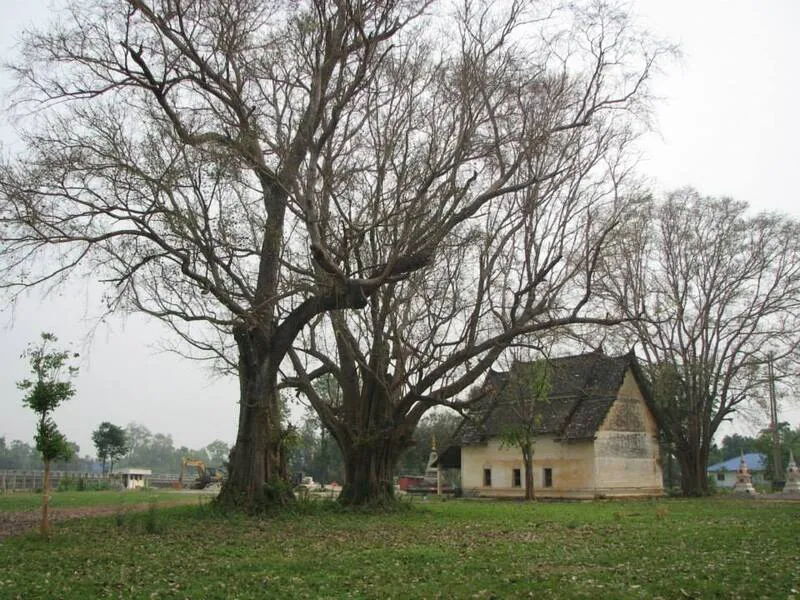
Wat Ton Lam Yai is located in Ban Ton Lam Yai, Moo 3, Ban Mai Subdistrict, Tha Muang District, Kanchanaburi Province. This long-established riverside temple on the Mae Klong River carries multiple “layers of time” at once, from traditions associated with the late Ayutthaya era—when Ayutthaya was still the capital—to the early Rattanakosin period, when Thai society was reorganizing governance and stabilizing religious institutions. For the local community, the temple has never been just a place to stop by for merit-making; it is also a lens through which one can read the relationship between people and water, multi-ethnic settlement patterns, and the realities of living with seasonal flooding along a major river system.
Geographically, Wat Ton Lam Yai sits on the low-lying floodplain of the Mae Klong River, an ecosystem defined by abundance and unpredictability at the same time. In the rainy season, rich soil and reliable water support agriculture and settlement, yet high water can also reshape the environment quickly. Many riverside temples and communities in central and western Thailand therefore develop a practical “skill of living with water,” from raising building floors and placing sacred areas above flood levels, to relocating or adjusting parts of the compound when conditions change. Local narratives about Wat Ton Lam Yai specifically mention repeated inconvenience from flooding and the need to shift the temple area more than once, until devoted donors provided a 10-rai land parcel for rebuilding on firmer ground. This process shows how faith is not only an abstract belief, but also a community force that solves concrete spatial problems to keep a sacred place functioning.
The temple’s oral history connects strongly to its former name, “Wat Koh Karen” (Temple of the Karen Island), a name that reflects the Mae Klong basin as a corridor for movement and exchange among different peoples. In the narrative, the name arose because Karen, Mon, and Burmese groups frequently rafted downriver and moored near an island in front of the temple, relying on the temple as support. Read carefully, this story reveals at least three overlapping pictures: first, the river as a “road” linking settlements; second, the temple as a “receiving space” for travelers, whether for trade, migration, or safety; and third, the moral dimension of a religious institution that does not close itself off to one group, but can genuinely serve as refuge for those who pass through.
What makes Wat Ton Lam Yai especially compelling in cultural travel writing is its identity as a riverside temple with multiple intersecting roles. Religiously, riverside temples are often key sites for merit-making tied to community life—offering alms, dedicating merit to ancestors, and gathering during Buddhist festivals. Socially, the temple is a meeting place and a venue for communal activities. Landscapewise, it is a vantage point where visitors can “see the river” and immediately understand how a community grew alongside water. This riverside character creates calm, shade, and a sense that history is not distant, because the river keeps flowing in continuity, much like the community’s stories and memories.
In local accounts, Wat Ton Lam Yai is described as having been established in the late Ayutthaya period and as possessing an old ordination hall (ubosot) by the Mae Klong River, estimated to be around 300 years old. The mention of an “old ubosot” is significant because it frames the temple as a tangible cultural asset. While detailed stylistic analysis would require systematic on-site documentation, the core idea—that a sacred hall stands by the river—is enough to evoke an older spatial logic in which sacred space is closely integrated with natural landscape. In a Mae Klong setting historically shaped by waterborne trade and transport, a riverside ubosot is not surprising if we consider the temple as a community’s “center of visibility” and the river as its “center of movement.”
Another important point in the narrative is the temple’s formal recognition: it was reportedly declared a permanent temple in 2320 BE and granted Wisungkhamsima in 2358 BE. Such dates provide a clearer time-axis, reflecting how, after the transition from Ayutthaya to Rattanakosin, communities gradually stabilized religious sites within state-administered systems. Wisungkhamsima carries symbolic and practical meaning: it formally defines the boundary of the ubosot area, clarifies sacred jurisdiction, and supports the proper performance of major monastic acts in accordance with Vinaya discipline. When linked back to the theme of flooding and spatial adjustments, this recognition underscores the community’s effort to ensure that both “sacred space” and “functional space” could endure together.
The story of the former name “Wat Koh Karen,” tied to Karen, Mon, and Burmese rafting and mooring near the temple, also deepens our understanding of the temple as a kind of “river station” or “rest point” for people from elsewhere. In a river world, water is not merely a passage but an economic and safety system. Rafts stopping near a temple suggest a place offering rest, assistance, and a sense of legitimacy or safety for travelers. In traditional Thai society, temples commonly functioned as social support—offering water, food, temporary shelter, and guidance from monks. When diverse groups used the temple as a support point, it only highlights more clearly how “compassion” becomes the temple’s practical foundation.
Later, when the temple relocated or rebuilt on the 10-rai donated land—given by donors named “Nai Lam” and “Nang Yai”—the name “Wat Ton Lam Yai” became a living memory of generosity. It is also evidence that many Thai religious sites remain viable through community effort, not only through royal patronage or official titles. A temple name rooted in local donors differs from names anchored in the court or auspicious Sanskrit-Pali forms; it communicates “grassroots faith capital,” making visitors feel that this is truly the community’s temple. In a flood-prone riverside environment, that act of land donation becomes especially meaningful because it enabled the temple to “set its footing” and remain stable.
Seen today, Wat Ton Lam Yai should be understood in two ways at once. First, it is a long-established Mae Klong riverside temple with deep narrative roots. Second, it is a place to learn how riverside communities live: simply walking within the compound and looking toward the river helps visitors understand how life has been shaped by water’s abundance and its seasonal volatility. For cultural travelers, the strength of such a temple is that it offers an experience that does not require heavy explanation—you see, you feel, and you interpret naturally.
If you want a visit that feels meaningful rather than merely “stop-and-go merit-making,” one approach is to notice small but telling details common to riverside temples: how the ubosot or sacred halls relate to the river line; how pathways or functional zones are raised or organized to cope with floods; where shade trees and sitting areas are placed for people to rest. These are not always “photo highlights,” yet they help you understand a temple as a living part of community life rather than a static building.
Respect for the place matters. Wat Ton Lam Yai remains an active temple for real religious practice. Visitors should dress modestly, keep conversation at an appropriate volume, and respect ritual areas. If chanting or a service is underway, avoid cutting through close in front of worshippers. Also avoid treating the space like a generic tourist venue; riverside temples often serve elders who come for quiet merit-making and rest. Preserving a calm atmosphere is part of “making merit without disturbing others.”
For those interested in local history, Wat Ton Lam Yai invites deeper questions: Why do so many riverside temples in central Thailand have stories of relocation or spatial adjustment? What do changes in river channels or “islands” in front of temples reveal about Mae Klong geography? What does the recurring presence of different ethnic groups rafting and mooring tell us about travel, trade, and safety in earlier times? Questions like these turn a temple visit into learning that follows you home.
If you enjoy photography, Wat Ton Lam Yai tends to produce a different visual mood from hilltop or cave temples in Kanchanaburi. Its strengths are riverside shade, soft reflections on water, and a calm atmosphere in an easy-to-walk lowland setting. Morning light is gentler and cooler for a slow walk. In the late afternoon, the riverside feels more relaxed, though you should allow time before closing and respect the privacy of nearby residents.
In Thai merit-making culture, riverside temples are often used for dedicating merit to ancestors and for communal merit-making tied to seasonal calendars. While this article does not state a specific, fixed “local ritual” for Wat Ton Lam Yai, visitors can practice simple devotion—pay respects, chant, set an intention for calm and compassion, and participate in activities the temple announces at the time. A good practice in community temples is to act in ways that do not create burdens: keep the area clean, do not litter, and avoid activities that turn sacred space into a noisy zone.
Getting There Wat Ton Lam Yai is located in Ban Ton Lam Yai, Moo 3, Ban Mai Subdistrict, Tha Muang District, Kanchanaburi Province. Traveling by private car or local hired transport is recommended. Drive toward Tha Muang District and continue to Ban Mai Subdistrict, then follow signs or map navigation to Ban Ton Lam Yai. As you approach the temple, drive slowly because it is a riverside residential area, and park only in the areas designated by the temple so as not to block local traffic.
| Place Summary | A long-established Mae Klong riverside temple in Tha Muang with community river-life narratives, a former name linked to multi-ethnic river travel, and a history shaped by seasonal flooding and relocation. |
| Address / Location | Ban Ton Lam Yai, Moo 3, Ban Mai Subdistrict, Tha Muang District, Kanchanaburi Province, Thailand |
| Highlights | Quiet Mae Klong riverside atmosphere, local narrative of the former name “Wat Koh Karen,” the temple name tied to the donors “Nai Lam–Nang Yai,” and a floodplain landscape that helps visitors read local history through place. |
| Period / Era | Late Ayutthaya era (local account of an old riverside ubosot around 300 years old) – Early Rattanakosin (dates of permanent temple status and Wisungkhamsima are cited in local history). |
| Key Evidence / Local History Notes | Former name “Wat Koh Karen” linked to Karen–Mon–Burmese rafting and mooring near the temple; flood events led to repeated spatial adjustments; relocation/rebuilding was enabled by a 10-rai land donation; “Wat Ton Lam Yai” name derives from the donors “Nai Lam” and “Nang Yai.” |
| Name Origin | “Wat Ton Lam Yai” is said to come from the names of the land donors, “Nai Lam” and “Nang Yai.” The former name “Wat Koh Karen” is associated with ethnic river travelers mooring near an island in front of the temple. |
| Abbot (Latest) | Phra Khru Samuh Thongphun Siripanyo |
| Getting There | Drive to Tha Muang District and continue to Ban Mai Subdistrict, then follow signs or map navigation to Ban Ton Lam Yai (Moo 3). The temple is in a riverside community area; drive slowly and park in designated zones. |
| Current Status | Open for worship and merit-making (contact the temple or ask locally if you want to access specific internal areas). |
| Nearby Tourist Attractions | 1) Wat Tham Suea (Tha Muang) ~12 km 2) Wat Tham Khao Noi ~12 km 3) Wat Ban Tham (Khao Noi) ~14 km 4) Kanchanaburi Skywalk ~18 km 5) Bridge Over the River Kwai ~20 km |
| Popular Restaurants Nearby | 1) Khrua Chuk Don ~12 km Tel. 034-512-345 2) Je Lek Khao Tom ~14 km Tel. 086-998-4846 3) Balance Cafe House ~12 km Tel. 034-623-156 4) Move To Mountain Cafe ~12 km Tel. 091-878-2083 5) Lam Yuen (Kanchanaburi) ~18 km Tel. 086-141-4944 |
| Popular Accommodations Nearby | 1) Hop Inn Kanchanaburi ~18 km Tel. 034-513-599 2) Kanokkan Hotel ~18 km Tel. 034-513-260 3) The 28th Hotel ~18 km Tel. 034-51-2828 4) Chic Inn Hotel Thamuang ~12 km Tel. 092-424-1644 5) BY Hotel Kanchanaburi ~18 km Tel. 092-901-7722 |
Frequently Asked Questions (FAQ)
Q: Where is Wat Ton Lam Yai located?
A: It is in Ban Ton Lam Yai, Moo 3, Ban Mai Subdistrict, Tha Muang District, Kanchanaburi Province, in a quiet Mae Klong riverside community area.
Q: Why was the temple formerly called “Wat Koh Karen”?
A: Local narratives say Karen, Mon, and Burmese groups often rafted downriver and moored near an island in front of the temple, relying on the temple for support, which influenced the former name.
Q: What is the origin of the name “Wat Ton Lam Yai”?
A: The story says the temple relocated or rebuilt on a 10-rai land donation by donors named “Nai Lam” and “Nang Yai,” and the current name memorializes their generosity.
Q: What makes Wat Ton Lam Yai interesting for cultural travelers?
A: Its riverside Mae Klong setting, its local history narrative about multi-ethnic river travel, and its relationship with seasonal flooding make it a place where visitors can learn about local life through landscape and story.
Q: How should visitors prepare for a respectful visit?
A: Dress modestly, keep your voice down, respect ritual zones, drive slowly in the riverside neighborhood, and park only where the temple designates so local traffic is not blocked.
 Wat Ton Lam Yai Map
 Category:
  Group:
  Last Update: 16 HourAgo
Comment
 Nearby Attractions
| Keyword (Advance) |
 Region
|
 Muang Kanchanaburi(