

 Home
Home Chiang Mai(







Rating: 3.9/5 (13 votes)
 |
|  Map
Map 
 Have Map
  No Map
Kanchanaburi attractions
Attractions in Thailand
Open Days: Daily
Opening Hours: Based on the State Railway of Thailand timetable (services run daily, with special trains on Saturdays–Sundays/public holidays on certain routes)
Death Railway (Thai–Burma Railway / Thailand–Burma Railway) If there is one railway route in Thailand that makes travel feel “more meaningful than just taking photos,” the Death Railway in Kanchanaburi is one of the clearest examples. Built for strategic military purposes during World War II, this line later became a living memorial—a place that records the brutality of war, the endurance of forced laborers, and the lesson that human dignity should never be reduced to a tool of power. Visiting the Death Railway today is not simply a scenic train ride; it is a journey through history that still breathes, because parts of the track are still in real operation, people still board trains as part of daily life, and key landmarks along the route continue to quietly but powerfully affirm what happened here.
Geographically, the Death Railway—often referred to as the Thai–Burma Railway—begins on the Thai side at Nong Pladuk Junction Station in Ban Pong District, Ratchaburi Province. From there, the track runs into Kanchanaburi Province, passes through the Kanchanaburi town area, and crosses the Khwae Yai River via the iconic Bridge over the River Kwai before heading west toward the mountains and the Khwae Noi River corridor, continuing toward the border area near the Three Pagodas Pass. The original objective was to connect onward to Thanbyuzayat in Burma/Myanmar. The full historical line is commonly described as about 415 kilometers in total, with approximately 303.95 kilometers in Thailand and 111.05 kilometers in Burma/Myanmar, and many stations distributed along the route. This scale matters because it shows the railway is not just a handful of photo spots, but a long, physically demanding corridor carved through real terrain—especially the cliffs, forests, and river valleys of Kanchanaburi.
The reason the railway was built during World War II is closely tied to the regional battlefield context. Japanese forces sought a land route to move troops, weapons, and supplies to support operations in Burma and onward toward India, which at the time was under British colonial rule. Sea routes carried higher risks of attack, which increased the urgency to push a land connection through as quickly as possible. Construction ran from October 1942 to October 1943—roughly one year—and many records note that the line was completed on October 25, 1943 and opened for use on December 25 of the same year. The compressed timeframe, compared with the difficulty of the landscape, is one of the reasons the “human cost” of this project became exceptionally high: the schedule was accelerated through harsh forced labor, with Allied prisoners of war and large numbers of Asian laborers forming the core workforce.
The name “Death Railway” was not coined to sound dramatic for tourism. It is rooted in the documented realities of wartime construction. Japanese forces compelled Allied POWs—including British, American, Australian, Dutch, and New Zealand soldiers—alongside huge numbers of Asian laborers from Chinese, Vietnamese, Javanese, Malay, Thai, Burmese, Indian, and other communities, to build the railway under conditions defined by disease, food shortages, limited tools, and severe punishment. Death did not result only from accidents; it also came from relentless overwork in tropical wilderness, untreated illness, malnutrition, and exhaustion. When tens of thousands died, the railway’s name became a global warning: engineering achievement cannot be celebrated when it is paid for with the lives and suffering of the powerless.
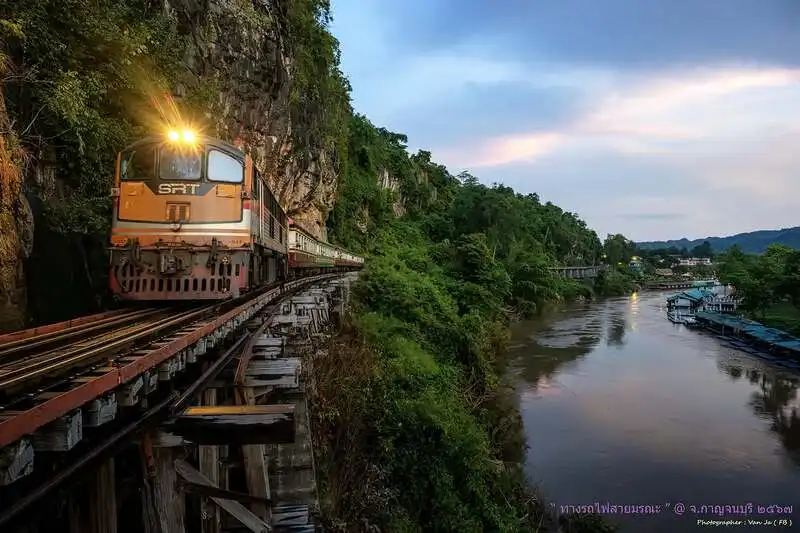
For travelers today, the most accessible and widely experienced section is the part operated under the State Railway of Thailand. On the Thai side, passenger services on this historical corridor currently run to Nam Tok Station (the Ban Tha Sao/Nam Tok Sai Yok Noi area). The most popular segment for visitors is between Kanchanaburi Station and Nam Tok Station, a distance of about 77 kilometers. Trains run daily, making this route a signature Kanchanaburi experience. Even if you have seen countless photos of the Bridge over the River Kwai, the feeling changes completely when the train moves slowly over the steel structure above the water—or when it inches along cliffside wooden trestles near Tham Krasae. In those moments, a static image becomes a real, sensory experience: you hear the rhythm of the rails, feel the wind, and watch the landscape unfold in the same terrain where people were once forced to work under unimaginable pressure.
If you have limited time, it helps to focus on two main zones. The first is the Bridge over the River Kwai in Kanchanaburi town, a world-famous symbol strongly associated with World War II narratives. It is not merely a photo bridge; it is a place that makes the railway’s strategic logic tangible, because crossing a major river required a structure capable of carrying real train loads under wartime constraints. The scale and curvature of the bridge also create the classic scene visitors remember: a train passing through the steel arches. This zone also connects conveniently to other historical learning sites in town, including museums and war cemeteries linked to POW history.
The second zone is the so-called “Death Curve” near Tham Krasae (Tham Krasae Cave), widely considered the most striking scenic highlight of the Death Railway. This section features a cliff-hugging wooden viaduct along the Khwae Noi River, commonly described as around 400 meters long. Here, you can immediately understand why construction was so difficult: one side is rocky cliff, the other is deep river. As the train creeps along the curve, the river stretches below in a long line of view, while the cave area itself serves as a resting and worship point for visitors today. This makes Tham Krasae a layered place—where nature, local belief, and wartime history overlap. It is worth allowing enough time not only to take photos but to observe the structure safely and let the atmosphere remind you that this was once a worksite of extreme hardship.
For travelers who want a “complete” experience beyond a scenic ride, the most meaningful plan is to combine landscape with historical context. A common approach is to start in Kanchanaburi town in the morning, visit the Bridge over the River Kwai as the route’s signature symbol, then take the train toward Tham Krasae or Nam Tok. Along the way, notice how the track follows the river corridor and clings to the mountain edges. When you reach the cliffside sections, the reasons the railway became a global wartime memorial become much clearer. If time allows, adding a visit to an educational site—such as a museum or a memorial space connected to the victims—helps the journey stand apart from typical content that focuses only on beautiful views.
Another reason the Death Railway remains significant is its postwar story. Not all sections of the original route survived intact: after the war, parts were dismantled, while other segments were later submerged beneath the reservoir of Vajiralongkorn Dam. In this sense, the historical railway is like a body that was partially removed. Yet the remaining operational section has become one of the most tangible World War II memorials in Thailand—not a static reconstruction behind museum glass, but a working line where trains still run. That living reality is precisely what prevents the memory of those who died here from fading into textbooks alone.
Getting There If you drive from Kanchanaburi town to the Tham Krasae and Nam Tok areas, the main route is Highway 323 toward Sai Yok District. The distance from town to the key sightseeing zone along this corridor is about 55 kilometers. This highway is the backbone of Kanchanaburi travel because it traces the same river-and-mountain landscape that frames the Death Railway experience. Traveling by train is ideal for those who want the most authentic “on-the-rails” perspective. You can plan your journey to pass the Bridge over the River Kwai and the Tham Krasae section, choosing a service that gives you enough time at stops or at the end of the line, and checking the timetable before departure to avoid missing trains or arriving at viewpoints when the light is not favorable.
A key to making this trip feel “worth it like a pro” is understanding the nature of a sightseeing railway: the pace is unhurried, with stops at stations along the way. This is not a drawback—it is part of the charm, because it gives you time to look, to listen, and to grasp the scale of the terrain. If you want photos at the Bridge over the River Kwai, arrive early enough to explore both sides and wait safely for the moment a train passes. If your priority is Tham Krasae, allow time to observe the viaduct area carefully and never approach the track when there are signs a train is coming. Bring a hat, water, and stable walking shoes, since surfaces can be slippery in the rainy season or uncomfortably hot in the dry season.
Seasonal timing also changes the experience. In the cool season, the weather is comfortable for long train rides and walking at multiple stops. The rainy season brings deep green mountains and stronger river presence, but requires extra caution on wet surfaces and good rain protection. Hot season often offers bright skies and strong light, but the heat can be draining, so planning rest points and staying hydrated becomes essential. No matter the season, the core principle is to align your timing with the train ride and the real pace on site, because this route is not a single “stop and go” location—it is a continuous experience best enjoyed at the speed of the rails.
In the bigger picture, the Death Railway carries multiple layers of value. First is historical value, tied to World War II and the lives of POWs and forced laborers. Second is landscape value, because the route reveals river-and-mountain views that roads cannot easily replicate. Third is educational travel value, because visitors can design a day that includes both scenic immersion and reflection on human history. If an article about the Death Railway only says, “It’s beautiful—go take photos,” it will never compete seriously in search. But if it explains origins, route logic, meaning, practical guidance, and learning points, readers stay longer, plan better, and trust the content—signals that matter strongly in the era of AI-influenced search.
Ultimately, you do not need to be a history specialist to visit the Death Railway. You only need openness and respect for the place. This is not merely a backdrop for photos; it is ground where real suffering occurred. When you stand on the bridge or watch the train curve along the cliff near Tham Krasae, pause for a moment to think of those who carried rock, timber, and their exhausted bodies through this same landscape. In that pause, you may find that this journey offers both beauty and depth at the same time—which is why the Death Railway still matters to the world, even decades after the war ended.
| Place Name | Death Railway (Thai–Burma Railway / Thailand–Burma Railway) |
| Address (Main Reference Point) | Rail corridor through Ratchaburi and Kanchanaburi (Key visitor areas: Bridge over the River Kwai and the Tham Krasae “Death Curve” section, continuing to Nam Tok Station) |
| Place Summary | A World War II historical railway that still operates on the Thai side to Nam Tok Station and serves as one of Kanchanaburi’s most important learning-and-memorial travel experiences |
| Highlights | Bridge over the River Kwai (Landmark), Tham Krasae “Death Curve” (Cliffside Wooden Viaduct Above the Khwae Noi River), Authentic Train Ride Along a Living War Memorial Route |
| Period | World War II (Construction Period: 1942–1943) |
| Key Evidence | Surviving Track and Railway Structures, Bridge over the River Kwai, Tham Krasae Section (Wampo Viaduct), Current Operational Terminus at Nam Tok Station |
| Name Origin | Named “Death Railway” due to the extreme hardship, disease, shortages, and the large number of POW and forced labor deaths during wartime construction |
| Travel | Drive via Highway 323 from Kanchanaburi town to Tham Krasae/Nam Tok area (Approx. 55 km), or take the train to experience the route directly (Recommended to confirm the timetable before departure) |
| Current Status | Open for visits and daily train operations on the Thai section to Nam Tok Station (Use the State Railway of Thailand timetable for exact times) |
| Contact Number | State Railway of Thailand Call Center: 1690 |
| Nearby Tourist Attractions (With Distance) | 1) Kanchanaburi War Cemetery (Don Rak) – 4 km 2) JEATH War Museum – 3 km 3) Hellfire Pass Memorial Museum – 80 km 4) Erawan National Park (Erawan Waterfall) – 65 km 5) Sai Yok Noi Waterfall – 55 km |
| Popular Restaurants Nearby (With Distance + Phone) | 1) Keeree Tara Restaurant – 2 km – 034 513 855 2) By De River – 2 km – 085 405 9161 3) On’s Thai Issan Vegetarian Restaurant – 3 km – 087 364 2264 4) Keeree Mantra Restaurant – 14 km – 034 540 889 5) Bell’s Pizzeria – 3 km – 081 010 6614 |
| Popular Accommodations Nearby (With Distance + Phone) | 1) U Inchantree Kanchanaburi – 2 km – 034 521 584 2) Felix River Kwai Resort – 2 km – 034 551 000 3) Dheva Mantra Resort – 6 km – 034 615 999 4) The Bridge Residence Hotel – 2 km – 080 088 8454 5) Mida Resort Kanchanaburi – 35 km – 034 919 606 |
| Facilities | Parking/shops/restaurants are generally available around major visitor zones (Bridge over the River Kwai, Kanchanaburi town, and the Tham Krasae–Nam Tok corridor), depending on the exact area and season |
Frequently Asked Questions (FAQ)
Q: Where does the Death Railway start?
A: Historically, the line began at Nong Pladuk Junction in Ratchaburi Province, ran through Kanchanaburi, and originally connected toward Thanbyuzayat in Burma/Myanmar.
Q: Where is the farthest point you can ride today on the Thai side?
A: On the Thai section, passenger services operate to Nam Tok Station, which is the most popular terminus for visitors.
Q: What are the top highlights along the route?
A: The most visited highlights are the Bridge over the River Kwai and the Tham Krasae/Wampo Viaduct area, often called the “Death Curve,” where the train runs along a cliff above the Khwae Noi River.
Q: Can you visit the Death Railway without a private car?
A: Yes. Many travelers base themselves in Kanchanaburi town, use the train as the main experience, and connect to key points via local transport or hired vehicles.
Q: What safety precautions should visitors keep in mind?
A: Prioritize safety at all times: do not approach the track when a train is expected, watch for slippery surfaces in the rainy season, bring water and stable shoes, and avoid risky photo-taking on or near the rails.
 Death Railway Map
 Category:
  Group:
  Last Update: 2 DayAgo
Comment

Photo Gellery(9) 
 Thank you photo(6) from: Oficinista
|
|
|
|
|
|
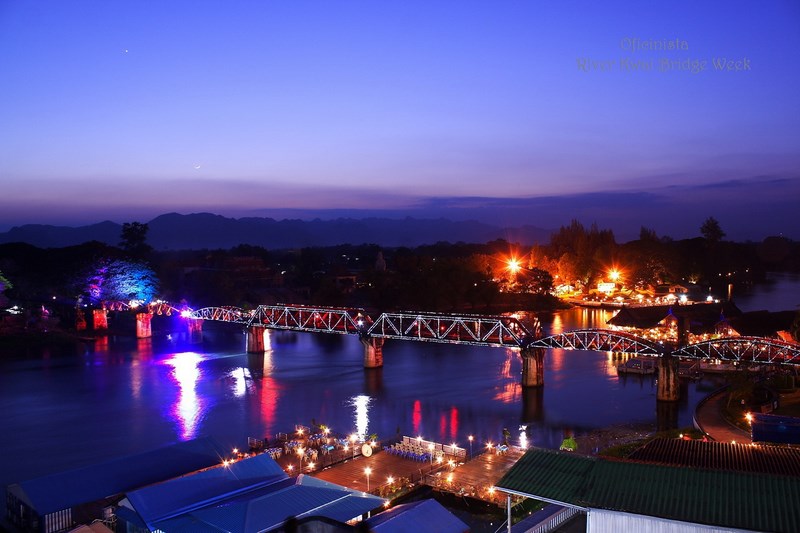
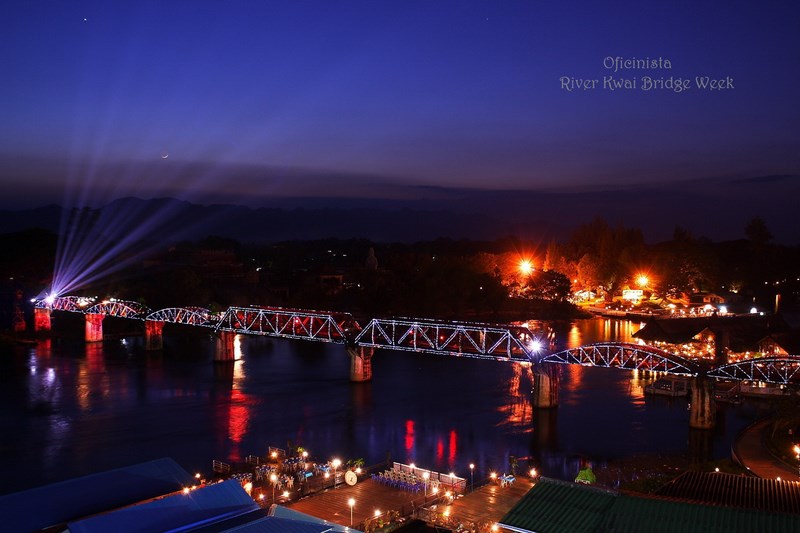
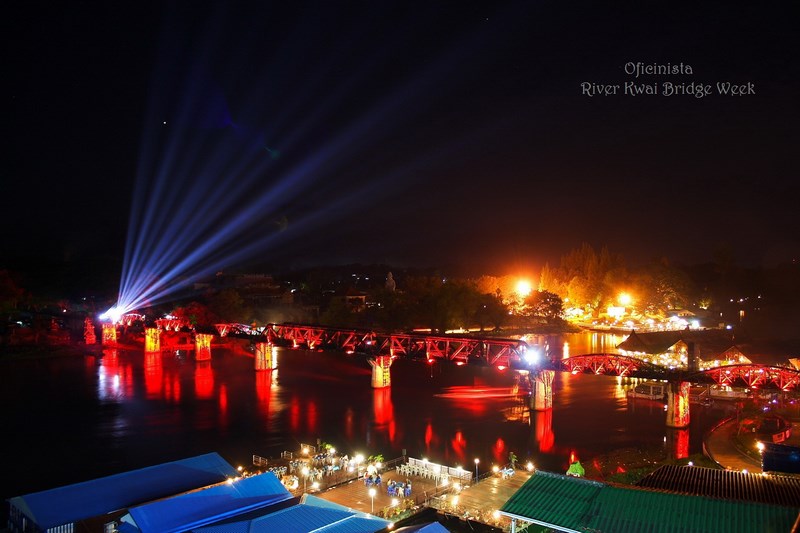
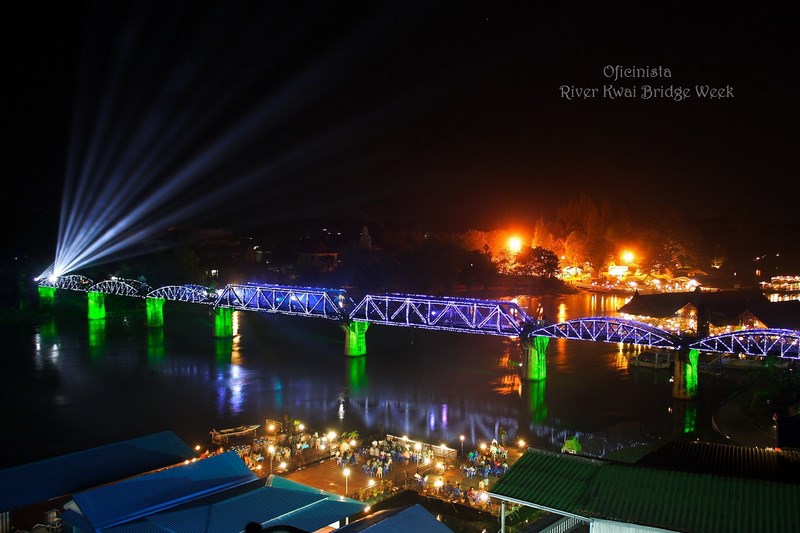
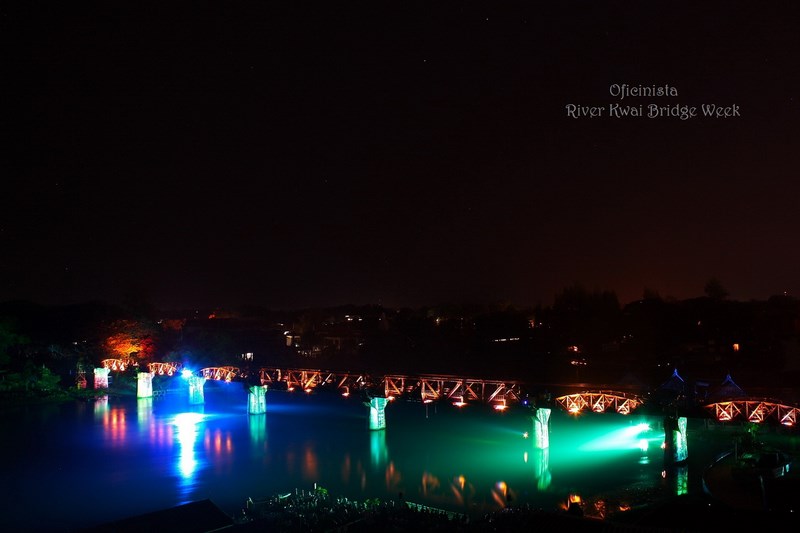
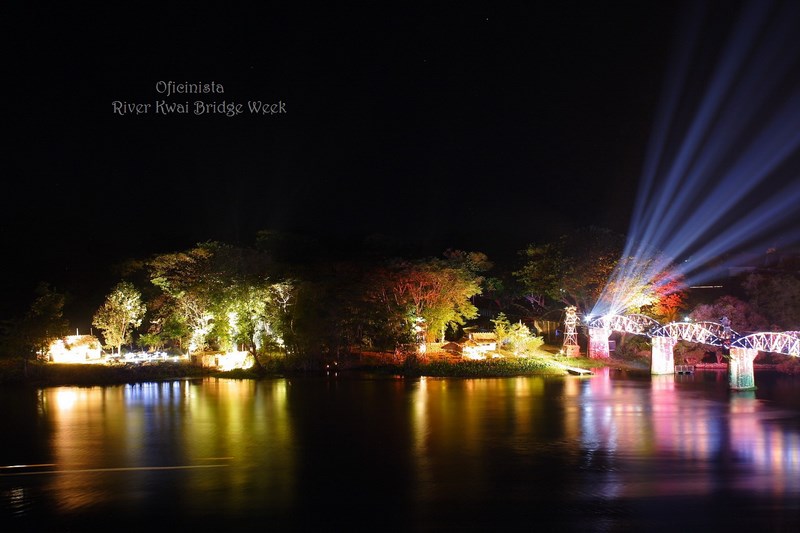
 | ● Photographer: Oficinista ● Link: thaidphoto.com/forums/showthread. ● Ref: thaidphoto.com |
Thank you photo(3) from: Nakin
|
|
|
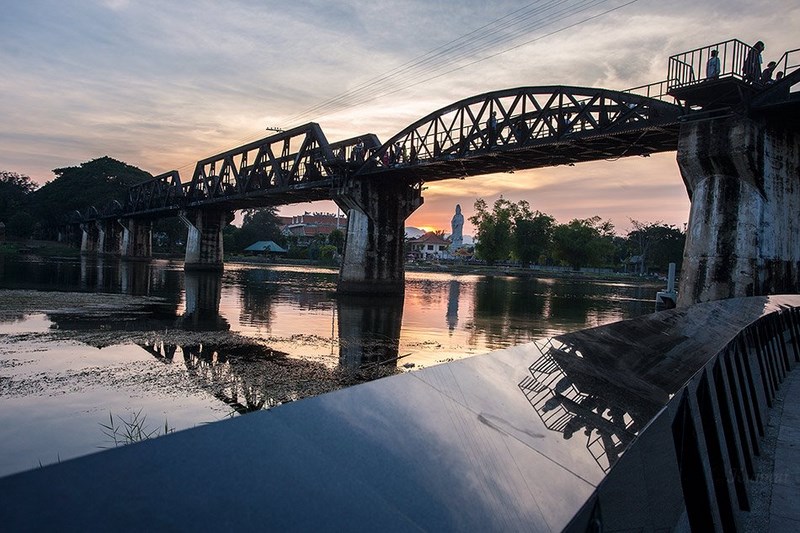
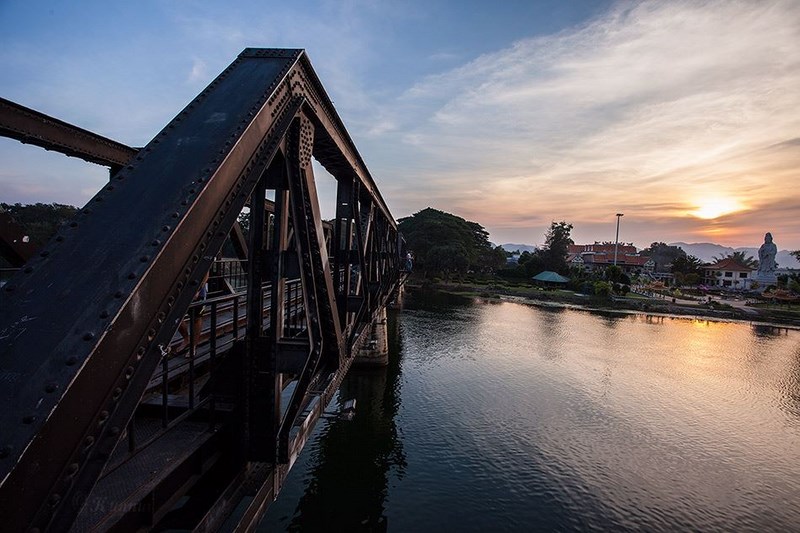
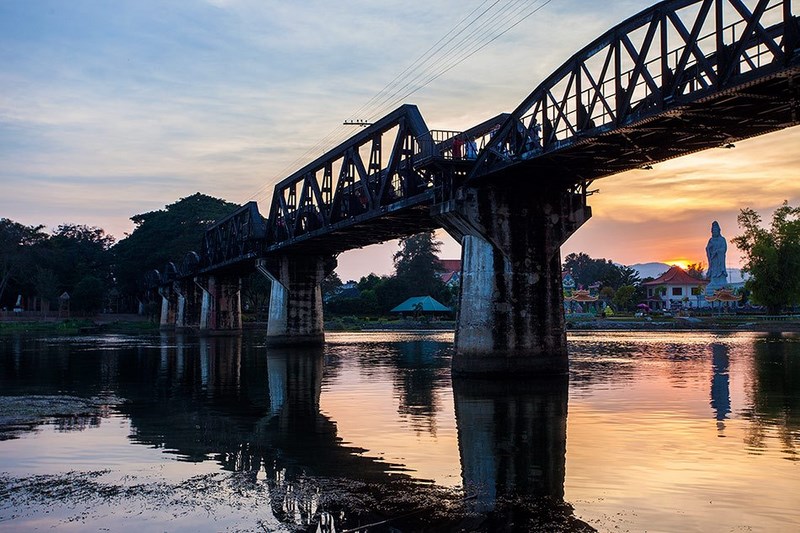
 | ● Photographer: Nakin Outtama ● Link: facebook.com/nakin.outtama ● Ref: thaidphoto.com |
● Copyright Photography. (800*500)
● View full size images from the photographer.
● View full size images from the photographer.
 Nearby Attractions
| Keyword (Advance) |
 Region
|
 Muang Kanchanaburi(