

 Home
Home Chiang Mai(










Rating: 3.5/5 (6 votes)
 |
|  Map
Map 
 Have Map
  No Map
Kanchanaburi attractions
Attractions in Thailand
Open Days: Daily
Opening Hours: 09:00 – 16:00
Hellfire Pass Memorial Museum in Kanchanaburi Province is one of Thailand’s most meaningful historical sites in the context of World War II and the Death Railway. This place is not merely a museum that exhibits information; it is a “landscape of memory” that conveys hardship, loss, and human dignity—especially the experiences of Allied prisoners of war who were forced into labor to build the Thailand–Burma Railway during World War II. Hellfire Pass lies within the rocky mountain terrain of Sai Yok District, Kanchanaburi, and the physical traces of the Death Railway remain clearly visible to this day.
Kanchanaburi was a strategic area during World War II because it served as a corridor connecting Thailand and Burma. The Thailand–Burma Railway was constructed to support the movement of Japanese troops and supplies. Yet behind this strategic objective was an immense story of suffering and loss among prisoners of war and forced laborers. Hellfire Pass was one of the harshest points along the route because it required cutting through solid rock by hand, without modern equipment, and under extremely brutal working conditions.
The Thai name “Chong Khao Khat” (literally, “the cut mountain pass”) comes from the landform itself—a mountain pass that was cut open to lay railway tracks. In English it is known as “Hellfire Pass,” a name that reflects conditions that felt like hell. Prisoners of war had to work both day and night. At night, torchlight illuminated the silhouettes of laborers against the rock walls, creating a scene that witnesses compared to a vision of the underworld. Exhaustion, disease, starvation, and brutal punishment led to many deaths in this area.
The Hellfire Pass Memorial Museum was established by the Australian Government to commemorate Australian and Allied prisoners of war who died during the construction of the Death Railway. The museum is located within the Department of Agriculture and Cooperatives, Office of Development and Security, Thai Army Development Command, at kilometer markers 64–65 on Highway 323 (Kanchanaburi – Sai Yok – Thong Pha Phum). The location was intentionally selected near the actual Hellfire Pass site so that learning takes place alongside the authentic landscape.
The museum’s approach is to present history directly and respectfully. It does not aim to entertain; instead, it emphasizes remembrance, dignity for the deceased, and a humanitarian understanding of war. The exhibition spaces are designed to be simple, orderly, and quiet, allowing visitors time to reflect on what they learn. Entering the museum feels like stepping into a place of commemoration rather than a typical tourist attraction.
Inside the museum, a mini-theater serves as the starting point for the visit. The presentation includes documentary-style films about the construction of the Death Railway, the lives of prisoners of war, and the broader context of World War II. The visuals, sound, and narration are designed to be easy to follow yet emotionally powerful, helping visitors build understanding and empathy before moving on to the exhibitions and the outdoor historical landscape.
The photo and information exhibitions display rare photographs, maps, routes, and detailed historical content about the railway construction. Images of prisoners of war in weakened conditions, the challenging terrain, and the limited tools used during the work help visitors grasp the reality of what happened. These are not distant textbook stories, but lived human experiences shaped by war.
Artifacts displayed in the museum form key historical evidence. These include excavation tools, construction equipment, personal items belonging to prisoners of war, and objects reflecting everyday life in labor camps. Although many of these items appear ordinary, they carry strong historical and emotional value because they connect visitors to the lives of those who endured and died here in a tangible way.
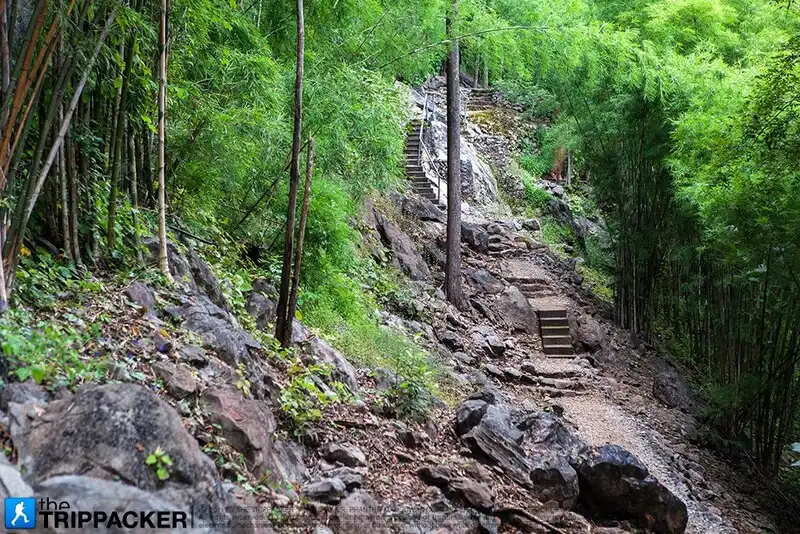
Beyond the indoor exhibitions, the museum’s most important highlight is the nature trail leading to Hellfire Pass itself. This path takes visitors along parts of the former railway alignment through rocky mountain terrain once cut by human labor. Along the route, visitors can still see traces of the railway and remaining structures. Walking this trail allows visitors to sense the scale, difficulty, and brutality of the construction far more vividly than viewing images or reading text alone.
Today, Hellfire Pass is carefully maintained and conserved to keep the site as close as possible to its historical character. The surrounding environment is quiet and natural, creating a visit defined by stillness and reflection. This place does not aim to generate excitement; it encourages understanding and remembrance of the value of peace.
Educationally, Hellfire Pass Memorial Museum plays an important role as an out-of-class learning destination. Students, researchers, and anyone interested in history can learn about World War II through the real location, gaining deeper and more lasting understanding than through documents alone. This kind of learning also supports awareness of human rights and the human consequences of war.
From a travel perspective, Hellfire Pass Memorial Museum is a strong example of historical and memory-based tourism. Visitors are encouraged to show respect, dress appropriately, and behave thoughtfully, helping preserve the atmosphere of remembrance and the quiet dignity of the site.
Getting There is easiest by private car. Take Highway 323 from Kanchanaburi town toward Sai Yok – Thong Pha Phum. The museum is located around kilometer markers 64–65 with clear signage along the route. It is suitable for a day trip or for combining with other nearby attractions.
| Name | Hellfire Pass Memorial Museum |
| Location | Km.64–65, Highway 323, Sai Yok District, Kanchanaburi Province |
| Site Summary | A museum and memorial landscape dedicated to the Death Railway and World War II prisoners of war |
| Highlights | Mini-theater, the Hellfire Pass walking trail, authentic railway remnants, and a reflective memorial atmosphere |
| Nearby Accommodations | 1) River Kwai Jungle Rafts – 12 km, Tel. 034-735-999 2) Home Phutoey River Kwai – 15 km, Tel. 034-512-888 3) Hintok River Camp – 10 km, Tel. 034-245-721 4) Saiyok River House – 18 km, Tel. 034-510-431 5) Pung-Waan Resort Saiyok – 20 km, Tel. 034-540-889 |
| Nearby Tourist Attractions | 1) Sai Yok Noi Waterfall – 25 km 2) Sai Yok Yai Waterfall – 30 km 3) Lawa Cave – 22 km 4) Death Railway (Tham Krasae Curve) – 35 km 5) Sai Yok National Park – 28 km |
| Nearby Restaurants | 1) Khrua Sai Yok – 18 km, Tel. 081-234-5678 2) Riverside River Kwai Restaurant – 20 km, Tel. 089-345-6789 3) Keeree Tara River Kwai – 35 km, Tel. 034-540-889 4) Baan Suan Sai Yok Restaurant – 22 km, Tel. 082-456-7890 5) Raft Restaurant by the River – 15 km, Tel. 083-567-8901 |
Frequently Asked Questions (FAQ)
Q: What is Hellfire Pass Memorial Museum?
A: It is a museum and memorial landscape dedicated to the prisoners of war and forced laborers who suffered and died during the construction of the Death Railway in World War II.
Q: How is Hellfire Pass connected to World War II?
A: It is a section where prisoners of war were forced to cut through solid rock to build the Thailand–Burma Railway, part of Japan’s wartime strategy.
Q: How long should I plan for the visit?
A: Most visitors spend about 2 to 3 hours, especially if they include the walk along the Hellfire Pass trail.
Q: Is it suitable for children?
A: It is best suited for older children and teenagers who can understand historical content, and younger visitors should be accompanied by adults.
Q: How should I prepare before visiting?
A: Wear comfortable walking shoes, dress respectfully, and behave thoughtfully to honor the memorial character of the site.
 Tel: 034531347
 Mobile: 0818147564, 0817542098
 Fax: 034531347
 Hell Fire Pass Memorial Museum Map
 Category:
  Group:
  Last Update: 19 HourAgo
Comment
 Nearby Attractions
| Keyword (Advance) |
 Facebook Fanpage
 Region
 Historical Sites and Monuments(
 Landmarks and Memorials(
 Art, Craft Centres, Tradition(
 Art Gallery(
 University
 Places of Worship
 Temple(
 Church(
 Other religious and spiritural sites(
 Research and Development
 Royal Project(
 Suburban Living
 Village, Community(
 Local Market(
 Nature and Wildlife
 National Parks and Marine Reserves(
 Mountain (Doi)(
 Dam, Reservoir, Lake(
 Waterfalls(
 Hot Springs(
 Caves(
 River, Canal(
 Other natural attractions(
 Entertainment and Agricultural
 Zoos and Aquariums(
 Animal camps and shows(
 Farm, Parks, Gardens and Ecotourism(
 Cinema(
 Outdoor and Adventure Activities(
 Travel Articles, Recipes
 Travel Review, Food Review(