

 Home
Home Chiang Mai(







Rating: 4.5/5 (4 votes)
 |
|  Map
Map 
 Have Map
  No Map
Kanchanaburi attractions
Attractions in Thailand
Open Days: Daily
Opening Hours: Approximately 08:00 – 17:00
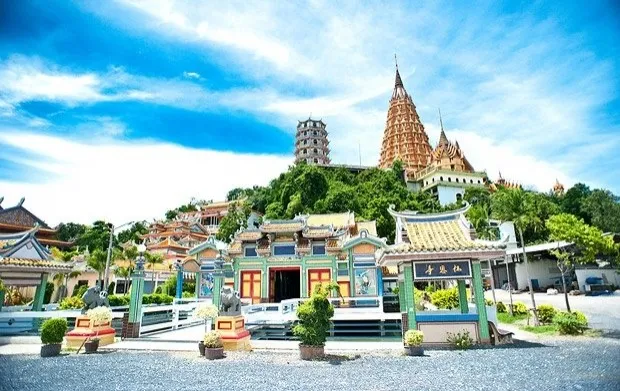
Wat Khao Noi (Wat Tham Khao Noi) in Kanchanaburi Province is a hilltop temple located right next to “Wat Tham Suea” in Tha Muang District. In practice, many visitors plan to explore these “two sister temples” on the same trip because they are so close to each other, while the viewpoints from the hilltops provide noticeably different scenery. Wat Khao Noi is associated with Chinese Mahayana Buddhism (in Thailand, Mahayana contexts are commonly seen through Chinese and Vietnamese traditions), whereas Wat Tham Suea is a Theravada temple, aligned with the Sri Lankan lineage (Lankavamsa) familiar to most Thai Buddhists. The geographical closeness of these two temples therefore becomes a real-life “field lesson,” allowing visitors to experience the diversity of Buddhism in Thailand in a direct and tangible way, without needing highly theoretical explanations.
The charm of Wat Khao Noi begins with how the temple “settles into the mountain.” Built on elevated ground within the limestone ranges of western Thailand, the landscape naturally features caves, rock cavities, and layered stone formations shaped over long geological periods. When a community chooses a mountaintop location for a temple, the act of “climbing up to worship” becomes more than a physical journey: it also elevates the visitor’s mood and intention. The gradual ascent sets a rhythm that helps people leave behind the hurry of the lowlands and enter an atmosphere that feels calmer, breezier, and more expansive. Many visitors describe this as stepping out of the ordinary world before beginning their worship.
In terms of identity, a Chinese-style Mahayana temple often communicates faith through symbols that are easy to recognize: colorful architectural tones, auspicious decorative motifs, and sacred images that convey compassion, wisdom, and protection. The space itself typically invites visitors to walk slowly and appreciate details from one point to the next. This “shift of scenery” is one reason Wat Khao Noi is frequently mentioned as a photogenic spiritual destination with a distinctive character. Even though it stands beside a famous Thai Theravada temple, the experience at Wat Khao Noi feels different from the very first step into its grounds.
When we look at Wat Khao Noi through the lens of Buddhist history in Thailand, one of the most striking themes is the coexistence of Theravada and Mahayana influences within Thai society. While many people grow up primarily familiar with Theravada practice, everyday devotion often includes veneration of bodhisattvas such as Guan Yin, protective deities, and Chinese auspicious figures, in a way that feels natural and non-conflicting. In this sense, Mahayana temples can function as “bridging spaces,” where layered beliefs live together harmoniously. Wat Khao Noi, sitting right beside Wat Tham Suea, makes this coexistence even clearer: visitors can experience two Buddhist atmospheres within a short distance and compare them through their own direct impressions.
The difference between Mahayana and Theravada that many visitors can quickly sense often begins with the “model of sacredness.” Thai Theravada practice commonly centers on the Buddha, arahants, and personal cultivation toward liberation through discipline and meditation. Mahayana, on the other hand, emphasizes the bodhisattva ideal, representing compassion and the aspiration to help all beings overcome suffering. This is why images like Guan Yin are frequently found in Mahayana contexts and feel approachable for many visitors, because the symbolism communicates a clear language of mercy, protection, and support. Wat Khao Noi therefore appeals both to serious devotees and to travelers who want to admire architecture while absorbing spiritual meaning at the same time.
Another aspect that makes Wat Khao Noi rewarding is its hilltop location, which expands the experience into a scenic visit. Once at the higher points, visitors can see wide views across Tha Muang and nearby areas. Early mornings and late afternoons are particularly suitable, because the light is softer and the air tends to feel more comfortable for walking and sightseeing. On clear days, the contrast between the blue sky and the mountain contours creates memorable panoramas, which is why many people consider Wat Khao Noi one of the hilltop photo spots of Kanchanaburi, alongside Wat Tham Suea.
From a practical perspective, hill temples often come with constraints such as steep slopes, narrow walkways, and crowd management challenges. Wat Khao Noi is best enjoyed at a measured pace, with safety prioritized at all times. During the rainy season, pathways may become slippery, and during hot days, climbing up and down stairs can require more effort. Wearing secure footwear, staying on designated routes, and respecting restricted areas are all important. Maintaining quiet and calm is equally essential, because the temple remains an active religious space for monastics and local residents, not merely a tourist attraction.
If your goal is to visit “in a meaningful way,” it helps to clarify what you want from the experience. Some visitors want to understand the contrast between Mahayana and Theravada; others come mainly for architecture and photography; some come to pray for peace of mind and compassion; and some come primarily for the hilltop viewpoint. Once your intention is clear, you can plan your walking route accordingly. A practical approach is to begin with worship and merit-making, and then continue with sightseeing and photography afterward. This keeps the visit grounded in respect and ensures the trip feels deeper than a quick photo stop.
One of the most compelling elements of Wat Khao Noi is how it reflects “Buddhism as shared culture.” Historically, many Thai communities have deep connections with Chinese culture through trade, migration, marriage, and settlement. It is therefore common for blended forms of devotion to emerge naturally. A Mahayana temple becomes a space where Thai visitors can participate comfortably without feeling they must change their identity. In a tourism province like Kanchanaburi, this becomes even more visible, as both Thai and international visitors come with interests that range from faith to art and cultural history. In this way, the temple functions as both a religious site and an informal learning space.
In terms of respectful behavior, the standard guidelines apply clearly at Wat Khao Noi: dress modestly, avoid loud conversations in worship areas, do not step into ritual zones, and be mindful when taking photos. It is generally considerate to avoid flash where people are praying or meditating. Safety should remain a priority when walking on steep steps or narrow paths, especially when passing others. Small gestures such as giving way and keeping a calm pace help maintain a peaceful atmosphere throughout the visit.
When connecting Wat Khao Noi with Wat Tham Suea as a paired narrative, the dynamic becomes especially interesting. Wat Tham Suea offers a familiar Theravada grandeur that many Thai visitors recognize, while Wat Khao Noi presents a more symbol-rich and visually distinctive Mahayana environment. Together, they allow visitors to experience both serenity in a Thai temple setting and a sense of cultural richness through Chinese-inspired religious art, all within the same trip. For travelers who enjoy meaning-based journeys, simply standing at a viewpoint and seeing the two temples within a shared landscape can provoke reflection on the religious diversity that exists in Thai society.
In terms of historical notes, Wat Tham Khao Noi is often described in public sources as a Mahayana temple established in the late 19th century (commonly cited as 1883 / B.E. 2426) and maintained across multiple generations of monastics, leading to the present abbot. Recognizing this history helps visitors understand that the temple was not created for modern tourism, but stands on long-standing local devotion. This perspective encourages a more respectful and meaningful approach to worship and sightseeing.
According to publicly referenced information, the abbot of Wat Tham Khao Noi in current sources is “Ong Palad Wichian Thian-I.” Identifying the caretaker clearly is important for credibility in faith-based travel writing, as it supports transparency and verifiability.
What often makes visitors want to return is not only the beauty of the site, but the overall atmosphere that slows the mind down. Wat Khao Noi’s strengths include cooler hilltop air, quiet worship corners, and a sense of spatial order that supports calm walking. Combined with a visit to Wat Tham Suea next door, the trip can feel both spiritually fulfilling and visually rewarding within a single day. If time allows, arriving early helps avoid crowds and enjoy the most comfortable weather, then moving to the other temple later in the morning keeps the experience smooth and less exhausting.
Getting There From Kanchanaburi town, head toward the Wat Tham Suea area in Tha Muang District. Wat Khao Noi is located right next to it, so visitors can use the same general route. The final segment includes hill access roads and junctions leading into the temple area. Drive carefully, especially when tour buses or vans are present, and allow extra time for stair climbing if traveling with elderly family members or anyone with limited mobility.
| Summary | A Chinese Mahayana hilltop temple in Kanchanaburi located next to Wat Tham Suea. Ideal for a combined visit featuring worship, Chinese-inspired religious art, and panoramic viewpoints. |
| Location / Address | Next to Wat Tham Suea, Tha Muang District, Kanchanaburi Province (the same travel zone commonly referred to as “Wat Tham Khao Noi”) |
| Highlights | Chinese-style Mahayana hill temple, easy contrast with Wat Tham Suea (Theravada), cool atmosphere and viewpoints |
| Abbot (Latest) | Ong Palad Wichian Thian-I |
| Nearby Attractions | 1) Wat Tham Suea ~1 km 2) Wat Ban Tham ~5 km 3) Wat Tham Faed ~6 km 4) Kanchanaburi Skywalk ~10 km 5) Bridge over the River Kwai ~12 km |
| Nearby Restaurants | 1) Krua Tam Lan Thung ~0.3 km Tel. 095-491-9561 2) Balance Cafe House ~0.4 km Tel. 034-623-156 3) Move To Mountain Cafe ~1.6 km Tel. 091-878-2083 4) Phai Rim Khwae ~2.7 km Tel. 087-078-3940, 081-856-5302 5) Khao Tom Je Lek ~3.9 km Tel. 086-998-4846 |
| Nearby Accommodations | 1) Kanokkan Hotel ~12 km Tel. 034-513-260 2) By Hotel Kanchanaburi ~13 km Tel. 092-901-7722 3) River Kwai Bridge Resort ~17 km Tel. 034-514-522 4) The Bridge Service Residence Kanchanaburi ~17 km Tel. 034-515-001, 080-088-8454 5) Bh Place Apartment ~12 km Tel. 089-895-0501 |
Frequently Asked Questions (FAQ)
Q: Are Wat Khao Noi and Wat Tham Khao Noi the same place?
A: In common travel usage, many visitors refer to the Mahayana hill temple next to Wat Tham Suea as “Wat Khao Noi / Wat Tham Khao Noi,” within the same visiting zone.
Q: How is Wat Khao Noi different from Wat Tham Suea?
A: Wat Khao Noi is associated with Chinese Mahayana traditions, while Wat Tham Suea is a Theravada temple familiar to most Thai Buddhists. This difference is reflected in art, symbolism, and worship atmosphere.
Q: What time is most comfortable for visiting?
A: Mornings are usually cooler with fewer people, making stair walking easier. Late afternoons can have beautiful light, but visitors should allow enough time before closing.
Q: What should visitors prepare for a hill temple?
A: Wear secure footwear, walk carefully on steep or slippery paths (especially in rainy season), and dress modestly in respect of the temple.
Q: Can I visit Wat Khao Noi and Wat Tham Suea in one day?
A: Yes. They are located next to each other, so a single-day plan works well. Starting early helps you divide time for worship, walking, viewpoints, and rest breaks.
 Wat Khao Noi Map
 Category:
  Group:
  Last Update: 16 HourAgo
Comment
 Nearby Attractions
| Keyword (Advance) |
 Region
|
 Muang Kanchanaburi(