

 Home
Home Chiang Mai(







Rating: 3.4/5 (5 votes)
 |
|  Map
Map 
 Have Map
  No Map
Kanchanaburi attractions
Attractions in Thailand
Open Days: Daily
Opening Hours: 06.00–18.00
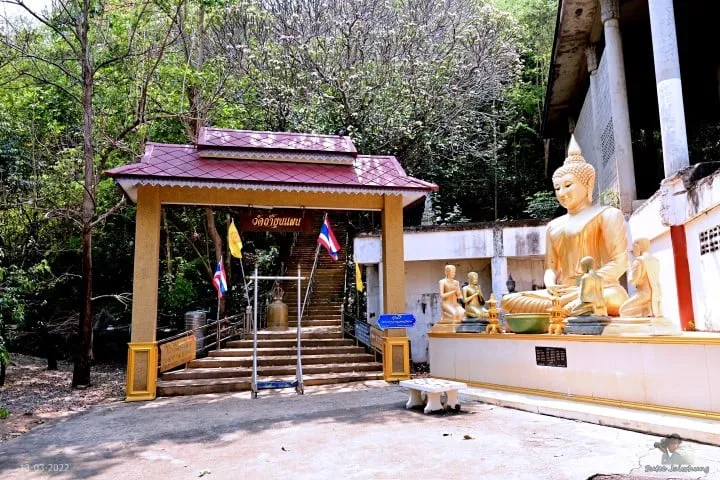
Wat Tham Phutthawat, Kanchanaburi is a distinctive cave temple known for its “large cave set high on a mountain” and for the way the visit naturally shifts your mood from the outside world into the quiet, cool interior of the cave. The temple sits along the Kanchanaburi–Sai Yok route, one of the province’s main travel corridors, so many visitors also recognize it by names often mentioned alongside the cave such as “Tham Phu Phra”; some people, drawing on local legend, refer to it as “Tham Khun Phaen.” What makes the place compelling is not only the landscape, but also its layered sense of story, faith, and the feeling of being a calm stopover where travelers pause, slow down, and reset before continuing their journey.
The first impression that stays with many visitors is not grand architecture in the city-temple sense, but the feeling of being “up high.” Because the cave is on the mountain, reaching it means walking up a flight of steps or a sloped path for part of the way. That small effort gives the visit more depth: you gradually peel away noise and distraction with each step, until the outside light begins to fade and the cave’s temperature changes. The coolness of stone, the dampness of the cave wall, and a silence that arrives on its own often make people speak more softly without any sign asking them to. This is the special quality of the setting—the landscape quietly teaches both manners and mindfulness at the same time.
When people think of caves in the context of Thai temples, they often imagine caves with Buddha images enshrined inside, and Wat Tham Phutthawat carries that familiar atmosphere. Walking within the cave feels sacred in the sense of “calm” rather than “spectacle.” In some sections, the rock surface seems as if nature has carved it deliberately, forming niches, halls, and passages that guide you toward Buddha images or small worship points at the cave’s own rhythm. If you walk without rushing, the route begins to resemble a moving meditation: there are easy stretches, moments where you need to watch your footing, and pauses where you yield to people coming the other way. All of it keeps you present with every step.
Wat Tham Phutthawat is also spoken of through the lens of “legend,” especially stories connected with Khun Phaen and Kuman Thong. In Thai folklore, such narratives often function as bridges between real places and collective belief: a mountain, a cave, or a forest becomes a “scene” where people anchor shared cultural meaning. The Khun Phaen tradition has many versions, and in many areas, communities weave the tale into local caves or forests they know well. Wat Tham Phutthawat is one of the places associated with that style of storytelling. Some visitors treat it as colorful lore, but for others, the legend adds depth to the cave, offering a glimpse of how people in the past imagined and interpreted natural spaces.
In any case, the heart of visiting Wat Tham Phutthawat today is not about judging whether a legend is factual, but about respecting the place and understanding why people link belief to landscapes like this. Caves tend to evoke a strong sense of “presence”—darkness, depth, cool air, and the physical uncertainty of stone underfoot naturally make people feel smaller and more humble. That is why caves have long been meaningful spaces for faith. Worship inside a cave feels different from worship in an open, bright ubosot, and this is one reason cave temples remain enduring destinations for both merit-making visitors and travelers interested in culture.
From a site-history perspective, Wat Tham Phutthawat belongs to Kanchanaburi’s broader landscape of limestone mountains, caves, and forested areas, which has given rise to many temples that feel like “dharma places within nature.” Visitors often receive two experiences at once: the spiritual dimension and the natural dimension. This temple reflects that clearly, because reaching the cave involves walking through some steep sections, and being inside the cave requires care—slippery ground, low light, and narrower passages in parts. That turns the visit into more than a quick stop for photos; it becomes an activity that asks you to cooperate with the place, which is why the memory of it often lasts longer.
If you arrive early in the morning, you’ll usually find the gentlest conditions: cooler air, softer mountain light, and fewer people, which makes the ascent feel calm and unhurried. Visiting later in the morning or in the afternoon gives a sharper contrast between the heat outside and the coolness inside the cave, making the cave feel like a natural refuge. For those traveling with older family members, choosing morning or late afternoon can reduce fatigue from the heat. It is also wise to bring drinking water, because even if the distance is not very long, the climb involves steady effort.
Another practical point is that if certain areas are damp or naturally slick, shoes with good grip make a noticeable difference. Flat-soled fashion shoes can slip easily, especially during the rainy season or after rainfall. Families with small children should keep them close throughout the cave route, as children often get excited exploring and may run in spots that are not suitable. Good preparation does not make the trip less enjoyable; it simply gives you more peace of mind so you can focus on the cave’s beauty and the overall atmosphere.
For photography lovers, Wat Tham Phutthawat offers attractive natural lighting because the cave turns light into beams, streaks, and shifting shadows that change with the time of day. Still, photography inside a sacred cave should be done respectfully: avoid using flash near worship areas or Buddha images. If needed, adjust your camera or phone for low light instead. Respect the temple’s rules and the feelings of worshippers. Often, the best photos are the ones that preserve the calm of the place without disturbing anyone—and sometimes, what you keep in your own memory feels even clearer than what you store on a device.
As part of a Kanchanaburi itinerary, Wat Tham Phutthawat fits comfortably into many travel styles. History-focused travelers can continue to museums or World War II–related sites; nature lovers can head onward toward Sai Yok, waterfalls, or forest routes; and those seeking a relaxed pace can return to Kanchanaburi town for riverside dining along the River Kwai. Having a cave temple as a starting point or a midday pause can balance the trip nicely, because it is a low-cost stop that offers both experience and stillness—exactly the kind of “breathing space” that makes a journey feel complete.
Getting There Wat Tham Phutthawat can be reached by starting from Saeng Chuto Road (Highway 323), crossing Somdet Phra Sangharaja Nyanasamvara Bridge, then continuing for about 9 kilometers as commonly described for this route. The temple lies along the Kanchanaburi–Sai Yok road. Driving a private car is the most convenient option, as it saves time and makes it easier to combine nearby stops. For a smooth visit, set your navigation to “Wat Tham Phutthawat (Tham Phu Phra/Tham Khun Phaen)” and allow extra time for the walk up and down to the cave, including rest time, because the best experience here comes from not rushing.
Overall, Wat Tham Phutthawat is ideal for travelers who want to see another side of Kanchanaburi—not only nature or history alone, but a place where nature, faith, and cultural storytelling share the same space. If you are looking for a stop that offers calm, a sense of sacred atmosphere, and the beauty of a cave you can only appreciate by stepping inside, Wat Tham Phutthawat is worth at least half a day. Give it time, and you may understand why so many people are willing to climb up into a cave to find a silence that feels meaningful.
| Place Name | Wat Tham Phutthawat (Tham Phu Phra/Tham Khun Phaen), Kanchanaburi |
| Address | Kanchanaburi–Sai Yok Road, Kanchanaburi (Please Confirm The Latest Pin On Maps Before You Go) |
| Place Summary | A mountain cave temple with a large cave, ideal for merit-making, nature-minded travelers, and those interested in local legend |
| Highlights | A large cave on a mountain, cool and quiet natural atmosphere, worship points inside the cave, and a well-known Khun Phaen legend that adds cultural depth |
| History/Legend | Local folklore connects this cave with Khun Phaen and Kuman Thong (a cultural narrative layer found in multiple regions of Thailand) |
| Abbot Or Caretaker (Latest) | Phra Khru Kanchanawat |
| Open Days And Hours | Daily 06.00–18.00 |
| Admission Fee | Thai Visitors 20 Baht, Foreign Visitors 30 Baht |
| Facilities | Cave worship area and access steps/paths (Some sections may be damp or slippery, especially after rain) |
| Travel | From Saeng Chuto Road (Hwy 323), cross Somdet Phra Sangharaja Nyanasamvara Bridge and continue about 9 km along the Kanchanaburi–Sai Yok route; private car is recommended and allow time for the cave climb |
| Current Status | Open for visits during the hours above; calling ahead is recommended during festivals or severe weather |
| Contact Number | 085-265-6118 |
| Nearby Attractions (Approx. Distance + Phone) | 1) Thailand–Burma Railway Centre (Approx. 10 km) Tel. 034-512-721 2) JEATH War Museum / WWII Museum (Approx. 11 km) Tel. 034-512-596 3) Skywalk Kanchanaburi (Approx. 12 km) Tel. 034-511-502 4) Wat Tham Khao Pun (Approx. 15 km) Tel. 082-549-7752 5) Kanchanaburi War Cemetery (Approx. 10 km) Tel. 034-511-500 |
| Nearby Restaurants (Approx. Distance + Phone) | 1) Keeree Tara Restaurant (Approx. 11 km) Tel. 034-513-855 2) Keeree Mantra Restaurant (Approx. 12 km) Tel. 034-540-889 3) By de River (Approx. 12 km) Tel. 034-624-477 4) Bell's Pizzeria (Approx. 12 km) Tel. 081-010-6614, 087-170-5263 5) Jolly Frog Restaurant (Approx. 12 km) Tel. 034-514-579 |
| Nearby Accommodations (Approx. Distance + Phone) | 1) Felix River Kwai Resort (Approx. 12 km) Tel. 034-551-000, 098-832-9882 2) U Inchantree Kanchanaburi (Approx. 12 km) Tel. 034-521-584, 086-368-7014 3) Dheva Mantra Resort (Approx. 13 km) Tel. 034-615-999 4) Good Times Resort Kanchanaburi (Approx. 12 km) Tel. 087-162-4949 5) Mida Resort Kanchanaburi (Approx. 35 km) Tel. 034-919-606, 062-601-3320 |
Frequently Asked Questions (FAQ)
Q: Where is Wat Tham Phutthawat located?
A: It is located along the Kanchanaburi–Sai Yok route in Kanchanaburi Province; a common approach is via Saeng Chuto Road (Hwy 323), then crossing Somdet Phra Sangharaja Nyanasamvara Bridge and continuing about 9 km.
Q: Is Wat Tham Phutthawat open every day, and what are the opening hours?
A: It is generally open daily from 06.00–18.00. Calling ahead is recommended, especially during festivals or rainy periods.
Q: How much is the admission fee?
A: The listed fee is 20 baht for Thai visitors and 30 baht for foreign visitors. If you want complete certainty, confirm with the temple before you go.
Q: What should I prepare before visiting the cave?
A: Wear shoes with good grip, bring drinking water, and allow time for the climb. Some sections can be damp and slippery, especially after rain.
Q: How is the temple connected to the Khun Phaen legend?
A: Local folklore links the cave with Khun Phaen and Kuman Thong, adding a cultural storytelling layer to the site.
Q: If I have half a day, what nearby places can I visit next?
A: You can continue to nearby learning sites and viewpoints in Kanchanaburi town such as the Thailand–Burma Railway Centre, Skywalk Kanchanaburi, or war museums near the River Kwai.
 Wat Bhuda ward Map
 Category:
  Group:
  Last Update: 23 HourAgo
Comment
 Nearby Attractions
| Keyword (Advance) |
 Region
|
 Muang Kanchanaburi(