
 Home
Home North(
 Chiang Mai(


Rating: 3.8/5 (4 votes)
 |
|  Map
Map 
 Have Map
  No Map
Nakhon Pathom attractions
Attractions in Thailand
Open Days: Contact the community in advance / Annual community festival on April 14
Opening Hours: By prior arrangement
Thai Song Dam Cultural Tradition and Homestay in Nakhon Pathom is one of the most distinctive cultural tourism experiences in Central Thailand. It is not simply about watching traditional performances or walking through a village, but about immersing yourself in the authentic way of life of the Thai Song Dam, also known as Lao Song. Visitors can experience traditional houses, clothing, beliefs, folk games, music, and the atmosphere of a living community that continues to preserve its cultural roots. Upon arrival, it becomes immediately clear that this is not a staged cultural display for tourism, but a real community where traditions are actively lived and passed down from generation to generation.
The Thai Song Dam community in Nakhon Pathom, particularly in Ban Ko Raet, Bang Pla Subdistrict, Bang Len District, is one of the most important settlements of this ethnic group in Central Thailand. Many residents continue to preserve their cultural identity through language, traditional dress, rituals, ancestral beliefs, and daily customs. The uniqueness of this community lies not only in having a cultural learning center or organized activities, but in the fact that the traditional way of life is still genuinely visible and practiced in everyday life.
The term “Thai Song Dam” comes from their distinctive black clothing, while another commonly known name is “Lao Song” or “Thai Song.” Although the names may differ, they refer to the same ethnic group. The community in Nakhon Pathom reflects a rich history of migration, settlement, adaptation, and cultural preservation, demonstrating how the Thai Song Dam have maintained their identity despite the changes of modern society.
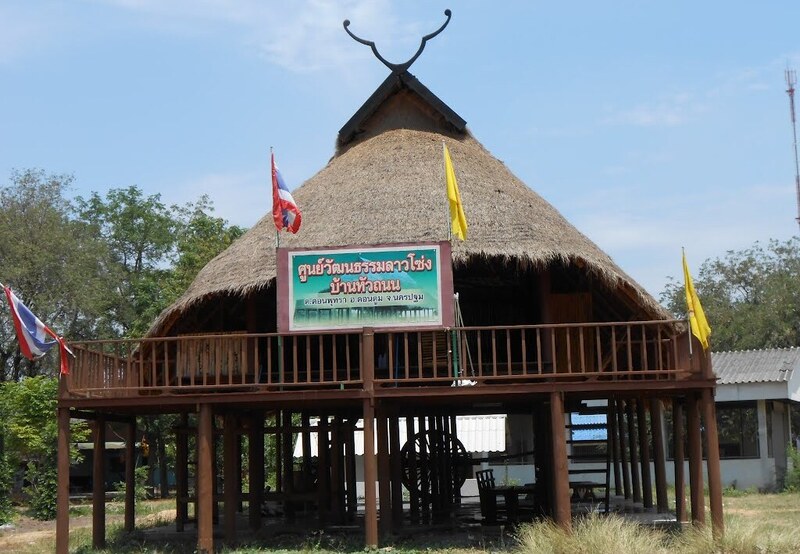
The charm of visiting a Thai Song Dam community is not limited to taking photos in traditional costumes or watching performances. It lies in understanding how these cultural elements are deeply connected to people’s lives. Houses, tools, farming equipment, handicrafts, clothing, and community spaces all help visitors realize that Thai Song Dam culture is not something artificially created for tourism, but a living heritage carefully maintained by the community.
One of the most striking features of the Thai Song Dam is their traditional black attire, which is instantly recognizable. Women typically wear black long-sleeved blouses paired with traditional skirts and silver jewelry, while men dress simply but distinctively. During festivals or community events, the sight of villagers dressed in traditional attire creates a serene, elegant, and proud atmosphere. In this context, black is not merely a color but a symbol of identity, continuity, and shared heritage.
A highlight of the cultural experience is the “Khaen Dance,” a traditional performance accompanied by the khaen, a unique bamboo mouth organ. The music produces a deep, rhythmic sound that blends beautifully with graceful dance movements and traditional costumes. Watching the Khaen Dance is not just entertainment; it represents a cultural language expressing joy, unity, and social connection within the community.
Another fascinating activity is “Luk Chuong,” a traditional game resembling a ball-throwing activity between participants, often associated with courtship and social interaction in the past. Today, it still reflects simplicity, friendliness, and the ways people build relationships within the community. Observing this activity reveals that traditional culture is not only ceremonial but also deeply rooted in fun, communication, and social bonding.
“Kli” is another traditional activity similar to a team sport using sticks to strike a ball. It brings energy and excitement to the event while demonstrating physical strength, teamwork, and unity. From a cultural perspective, Kli represents cooperation and collective spirit, reinforcing the importance of community participation and shared identity.
What makes visiting the Thai Song Dam community in Nakhon Pathom different from typical cultural tourism is the opportunity to stay in a “homestay.” This form of community-based tourism allows visitors to truly experience local life. Staying within the village provides insight into daily routines from morning to evening, interactions with local people, and a deeper understanding of how culture is integrated into everyday living, including food, work, beliefs, and family traditions.
Homestay tourism in the Thai Song Dam community offers more than just accommodation. Visitors may experience local cuisine, observe handicrafts, listen to stories from elders, and participate in activities that reflect the authentic identity of the community. This immersive experience transforms a simple trip into a meaningful cultural journey that fosters a deeper appreciation of history, traditions, and the people who preserve them.
The atmosphere of the community varies significantly between ordinary days and festival periods. During the annual festival, visitors can witness a vibrant display of culture, including traditional clothing, performances, games, and communal gatherings. On regular days, the charm lies in tranquility and simplicity, offering a slower, more reflective experience ideal for those who wish to explore and connect with the community at a deeper level.
In terms of cultural value, the Thai Song Dam community in Nakhon Pathom plays an important role in demonstrating how ethnic traditions can coexist with modern life. The presence of learning centers, open community engagement, and continuous cultural activities ensures that traditions are not frozen in the past but are actively shared and appreciated by both younger generations and visitors.
From a travel perspective, Ban Ko Raet is best accessed by private car, allowing flexibility to explore nearby attractions within Bang Len District. This convenience makes it easier to experience multiple destinations in a single trip while ensuring comfortable access to the community.
Travel From Nakhon Pathom city, head towards Bang Len District and continue to Bang Pla Subdistrict. The Thai Song Dam cultural learning area is located in Ban Ko Raet community. Visitors who wish to participate in organized cultural activities or group visits should contact the community in advance to ensure a smooth and well-arranged experience.
Visitors should keep in mind that this is a living community, not a commercial tourist attraction. Respectful behavior is essential, including modest dress, asking permission before taking photos, and respecting local beliefs, especially those related to ancestral spirits and rituals. Showing respect enhances the experience and fosters meaningful connections with the community.
In summary, the Thai Song Dam cultural tradition and homestay experience in Nakhon Pathom represent a meaningful intersection of ethnic heritage, community life, and experiential tourism. Visitors do not simply observe culture but engage with it—through music, games, community spaces, and stories passed down through generations. For those seeking a destination that offers depth, authenticity, and human connection, the Thai Song Dam community in Nakhon Pathom stands out as a truly enriching cultural journey.
| Place Name | Thai Song Dam Community and Cultural Learning Center, Ban Ko Raet, Bang Len, Nakhon Pathom |
| Highlights | Authentic Thai Song Dam culture, traditional black attire, Khaen dance, Luk Chuong game, Kli activity, handicrafts, and community lifestyle |
| History / Period | An established Thai Song Dam settlement with a cultural learning center preserving traditional knowledge and heritage |
| Address | Ban Ko Raet Village, Bang Pla Subdistrict, Bang Len District, Nakhon Pathom, Thailand |
| Travel | Best accessed by private car from Nakhon Pathom to Bang Len District, then to Bang Pla Subdistrict. Advance contact is recommended |
| Open Days / Hours | By appointment / Annual festival on April 14 |
| Facilities | Cultural learning center, community activity areas, traditional lifestyle experience zones |
| Zones | 1. Cultural Learning Center 2. Village Area 3. Cultural Activity Space 4. Handicraft and Lifestyle Area |
| Nearby Attractions | 1. Wat Ko Raet — approx. 1 km 2. Thai Song Dam Shrine — approx. 1 km 3. F28 Date Palm Farm — approx. 1 km 4. Ko Raet Old Market — approx. 2 km 5. Lam Phaya Floating Market — approx. 15 km |
| Nearby Restaurants | 1. Krua Lung Nong — approx. 8 km — 084-387-0565 2. Krua Lang Baan Bang Len — approx. 13 km — 095-461-5558 3. Ped Palo Nai Liang — approx. 15 km — 081-361-4059 4. Somchai Go Tae — approx. 14 km — 082-263-6361 5. Joe Kung Pao Bang Len — approx. 14 km — 088-020-9869 |
| Nearby Accommodations | 1. Bang Pla Resort — approx. 5 km — 081-430-6542 2. Nonnaka Cafe Homestay — approx. 15 km — 062-897-9288 3. Wangthong Resort — approx. 15 km — 096-271-5028 4. The River Yard Tha Chin — approx. 17 km — 085-552-2224 5. Chawalun Resort — approx. 28 km — 034-968-346 |
Frequently Asked Questions (FAQ)
Q: Who are the Thai Song Dam in Nakhon Pathom?
A: Thai Song Dam, also known as Lao Song, are an ethnic group with distinctive traditions including black clothing, unique language, beliefs, and cultural practices preserved in communities such as Ban Ko Raet.
Q: What makes this destination unique?
A: Visitors can experience authentic Thai Song Dam culture, including traditional dress, performances, games, handicrafts, and real community life.
Q: When is the best time to visit?
A: The annual festival on April 14 offers the most vibrant cultural experience with full activities and traditional performances.
Q: Do I need to book in advance?
A: Yes, especially for group visits or in-depth cultural experiences, it is recommended to contact the community in advance.
Q: How can I get there?
A: The most convenient way is by private car from Nakhon Pathom to Bang Len District and then to Bang Pla Subdistrict.
Q: What can I expect from a homestay experience?
A: A homestay offers a deeper understanding of daily life, including food, local interactions, and cultural immersion within the community.
Q: Are there any etiquette guidelines?
A: Visitors should dress modestly, ask permission before taking photos, and respect local beliefs and traditions.
 Thai Soang Dam Tradition Map
 Category:
  Group:
  Last Update: 7 HourAgo
Comment
 Nearby Attractions
| Keyword (Advance) |
 Region
|
 Muang Nakhon Pathom(