
 Home
Home North(
 Chiang Mai(


Rating: 3.5/5 (6 votes)
 |
|  Map
Map 
 Have Map
  No Map
Phetchaburi attractions
Attractions in Thailand
Open Days: Friday – Sunday (Thursday: Group/School Visits By Appointment Only)
Opening Hours: 09.00 – 17.00 (Last Admission Typically Around 16.00)
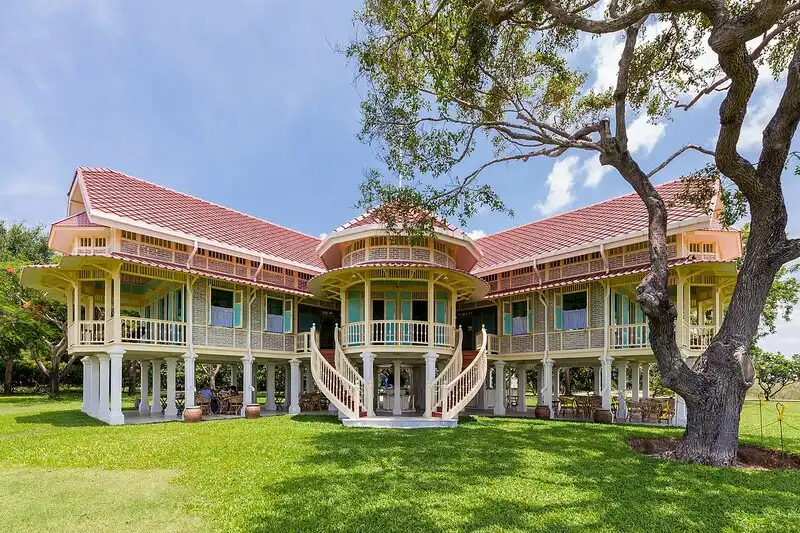
Mrigadayavan Palace (Phra Ratchaniwet Maruekhathaiyawan) is a seaside summer palace with a character that feels very different from the “palaces” many visitors are used to. Instead of emphasizing grandeur, it stands out for its restrained elegance and its intelligent design for coastal wind and humidity. This royal residence served as the private retreat of King Vajiravudh (Rama VI), who intentionally wished for a modest palace that would not overuse royal funds. Because of that vision, the palace became one of the finest examples of Thai applied architecture (a Thai–European blend) along the Upper Gulf of Thailand, admired for how beautifully it uses teak wood, open space, and natural ventilation to create comfort without heaviness.
If you are looking for a “Phetchaburi attraction” that offers both a seaside atmosphere and a meaningful historical narrative, Mrigadayavan Palace is a strong choice. Visiting here is not simply walking through old buildings; it is like slowly reading the builder’s thinking through pillars, verandas, ventilation shutters, and long covered walkways that connect into a continuous wooden complex raised above the sand. As you move along the roofed corridors, you can feel the practical logic behind the high underfloor space, the airy openness, the louvered panels that release heat, and the layout that allows sea breezes to flow throughout. Together, these details reflect genuine lived-in climate knowledge rather than architecture built only to impress.
Historically, Mrigadayavan Palace is closely tied to the final period of Rama VI. There is information that he stayed here twice: the first time in B.E. 2467 (1924) for about 3 months, and he returned again within the same year. After that, he did not stay here again, as only a few months later he passed away at the Grand Palace in Bangkok. For many visitors, this context gives the site a special emotional weight, making it more than a leisure residence. It becomes a place of memory, where mood and time seem preserved in teak, light, and coastal wind.
Today, the palace remains on land belonging to the Crown Property and has been granted for use as Rama VI Camp under relevant authorities. Over time, the buildings deteriorated to the point of serious damage, leading to a major restoration. Princess Bejaratana Rajasuda Sirisobhabannavadi, the only daughter of Rama VI, graciously supported a significant rehabilitation, and the “Mrigadayavan Palace Foundation” was established under royal patronage. The foundation has played a key role in conservation and in developing the palace as a cultural tourism and learning site for Thai arts and heritage.
One of the reasons Mrigadayavan Palace feels so engaging is that many architectural details have clear practical reasoning behind them. The complex is built from teak, arranged as airy two-story structures raised high above the ground, with parts of the underfloor area reinforced in concrete for strength. The roofs are hipped and covered with diamond-shaped tiles, which provide better protection from sun and rain than simpler roofing. High ceilings and louvered panels help release heat. A widely noted feature is the large number of pillars supporting the palace structure—often cited as 1,080 pillars—aligned in orderly rows. Each pillar base includes a raised molded edge and a water-gutter-like rim known as a protective “border molding” designed to deter ants and other animals, reflecting the careful craftsmanship required for coastal conditions.
In overall scale, the three main palace sections stretch to a combined length of about 399 meters. The layout is divided into three primary zones: the Throne Hall area, the Front Residence (outer/private audience and official functions), and the Inner Residence (more private inner quarters). These areas are connected continuously by covered walkways. This continuity is central to the visiting experience, because you do not feel as if you are jumping from one building to another. Instead, you can walk smoothly as if following a single storyline, flowing from ceremonial space to private royal life and onward into the inner quarters. This is why many visitors describe the palace as a place where you keep walking without wanting to stop—the changing play of light, shadow, sea breeze, and shifting veranda views keeps the experience alive.
As you explore with an understanding of the structure, you will encounter many important named buildings that help you imagine how the palace functioned historically. For example, Phra Thinang Samo Sorn Sewekamat (the first main building in the northern area) is a two-story rectangular structure that opens through both levels, with features related to performances and events. The northern area includes an elevated stage-like space, with elements such as lighting control rooms and support areas for performers. This makes the king’s well-known connection to theatre and cultural activities visible through the plan of the palace, not just through written history.
Another feature many visitors notice is the “grandstand” at the entrance, used for royal processions, with separate routes for ascending and descending and a carpeted ceremonial ramp for the upper level. The upper area functioned as a Throne Hall for official audiences, receiving guests, and conducting royal ceremonies. Inside, there is a ceremonial room and related displays connected to King Vajiravudh. This reinforces that Mrigadayavan Palace was not only a vacation residence, but also a royal base capable of supporting certain administrative and ceremonial roles.
You will then reach the Samut Phiman group of buildings, which relates to royal residence and daily life. This includes a front building that served as the residence of Chao Phraya Ram Rakhop (Mom Luang Fuea Phuengbun), a senior royal page official, with rooms such as a reception area, bathroom, bedroom, and office. The second Samut Phiman building was the king’s residential section, including the royal bedroom, working room, bathing room, and dressing room. Across from this area, a front dining hall was used for royal meals and hosting. The overall arrangement shows thoughtful layering of privacy, from more public functions toward the king’s personal living space.
Another story often told is the connection to Queen Suvadhana, later elevated in rank. There is information that one Samut Phiman building was later assigned as her residence, and that during one period she stayed here while pregnant. These narratives are remembered as part of the palace’s personal dimension, reflecting both hope and change near the end of the reign, and adding emotional depth that goes beyond architectural tourism.
Next is the Phisan Sakhon group, associated with inner quarters and relaxation. This area includes a first building that was formerly an Inner Throne Hall and today has been used for certain activities/learning functions, the Inner Dining Hall, and Phra Thinang Phisan Sakhon, which served as the residence of Queen Indrasakdi Sachi (Phra Worachaya). Inside were the bedroom, reception room, bathing room, dressing room, and sea-breeze verandas. There is also the residence of Phra Sucharit Suda (a principal consort), with living quarters and a veranda for coastal wind. The repeated emphasis on sea-breeze verandas throughout multiple buildings becomes an architectural language that clearly communicates the core purpose of this place: to receive wind, light, and coastal calm, rather than to enclose life in heavy, sealed rooms.
Mrigadayavan Palace also includes gardens whose names and concepts are linked to literature and royal writings of Rama VI, adding another layer to the visit beyond buildings alone. For example, Venice Vanich Garden was inspired by the king’s literary work connected to Shakespeare’s The Merchant of Venice, conceived as a place for meeting and exchanging ideas. Sakuntala Garden is a wide courtyard historically used as a performance space and for receptions. Madana Patha Garden was inspired by the king’s work Madana Patha (the legend of the rose) and is carefully arranged with orderly hedges, selecting hardy plants that tolerate sun and sea spray. These garden elements help visitors understand the creator’s character through landscape design, not just through architecture.
In real visiting experience, a highlight many people remember is the rhythm of light filtering through rows of pillars and ventilation openings. When sunlight touches teak, it produces a naturally warm tone, so photographs often look rich and soft without heavy editing. Morning light tends to be sharper and crowds lighter, making it ideal for wide-perspective shots of corridors and pillar lines. Later in the afternoon, light softens and shadows lengthen beautifully, which suits calmer, more atmospheric imagery. Because the palace is a carefully managed heritage site, visitors should photograph respectfully: avoid disruptive posing, keep voices down, and do not disturb other guests, especially in areas with explanations or guided interpretation.
Dress is another practical point to prepare for. Mrigadayavan Palace expects neat and respectful attire. Visitors should wear tops with sleeves and trousers/skirts that cover the knees, both to match the cultural setting and to keep entry smooth. If you intend to take photographs, light or natural-toned clothing works very well with teak textures and coastal light, helping images feel classic and aligned with the palace atmosphere.
Planning a “worthwhile” visit typically falls into two styles. The first is an in-depth learning visit: walking slowly, reading information panels, studying building layouts, and appreciating craftsmanship details, which suits those interested in architecture, history, and culture. The second is a mood-and-photography visit: spending around 1–2 hours to capture key highlights such as long corridors, pillar lines, sea-breeze verandas, and the main garden areas. Both approaches can be combined in a single day, but it is best not to rush. The true charm of Mrigadayavan Palace is in moving unhurriedly and letting the sea breeze set the pace.
Overall, Mrigadayavan Palace is a destination that suits Thai visitors who want to understand Rama VI in a more human and intimate way, as well as international travelers interested in tropical wooden architecture. It demonstrates how beauty and practicality can be seamlessly blended. Simply walking the corridors and listening to the wind often makes people understand why this summer palace is remembered for its quietly romantic atmosphere and why it gives the idea of “Phetchaburi travel” a richer cultural dimension beyond the beach alone.
Getting There From Bangkok, drive south on Phetkasem Road (Highway 4) toward Cha-Am. As you enter Cha-Am District, look for signs to Rama VI Camp / Mrigadayavan Palace. From the main highway, take the designated turn into the camp area, then continue along the internal road to the parking and entrance area. If traveling by van or bus, you can get off in Cha-Am and continue by local taxi or ride-hailing app. Tell the driver clearly that your destination is “Mrigadayavan Palace (Rama VI Camp)” to avoid confusion.
| Place Name | Mrigadayavan Palace (Phra Ratchaniwet Maruekhathaiyawan) |
| Address | Rama VI Camp (Rama VI Camp), Phetkasem Road, Huai Sai Nuea Subdistrict, Cha-Am District, Phetchaburi 76120 |
| Place Summary | A teak-wood seaside summer palace from the reign of King Vajiravudh (Rama VI), noted for Thai applied (Thai–European) architecture, high raised floors, airy open design, and long connected covered walkways. |
| Highlights | 1) Airy Thai applied teak architecture designed for sea breezes 2) Raised underfloor structure with long continuous connected corridors (excellent for photography) 3) Craft details such as the widely cited 1,080 supporting pillars and protective base edging to deter ants/animals 4) Key palace zones plus literary-inspired gardens (Venice Vanich, Sakuntala, Madana Patha) |
| Era / History | A seaside summer palace of King Vajiravudh (Rama VI), intentionally designed to be simple and not overly costly. He is recorded as having stayed here twice (including in B.E. 2467 / 1924). The complex later deteriorated and underwent major restoration under the patronage of Princess Bejaratana Rajasuda Sirisobhabannavadi, with the Mrigadayavan Palace Foundation playing a key role in conservation. |
| Open Days | Friday – Sunday (Thursday: Group/School Visits By Appointment Only) |
| Opening Hours | 09.00 – 17.00 |
| Admission Fee | Adults 90 THB (discounts/donation-based rates may apply for students and special groups; some guided rounds/zones may involve additional donation as announced on-site) |
| Getting There (Summary) | From Bangkok, take Highway 4 (Phetkasem Road) toward Cha-Am. Follow signs to “Rama VI Camp / Mrigadayavan Palace” and drive inside to the parking and entrance area. |
| Facilities | Parking, internal walkways, garden areas, photo spots, and on-site staff (guided interpretation may be available under certain rounds/conditions) |
| Nearby Attractions (Approx. Distance) | 1) Cha-Am Beach (Central Area) – 8 km 2) Rama VI Camp Beach – 3 km 3) King Naresuan Monument (North Cha-Am Beach Area) – 6 km 4) Sirindhorn International Environmental Park – 5 km 5) FN Outlet Hua Hin – 12 km |
| Nearby Restaurants (Approx. Distance + Phone) | 1) Mrigadayavan Tea Room – 0 km – 032-508-444 2) Chan Wang Restaurant – 7 km – 087-058-7643 3) Ja Pring Coffee – 7 km – 061-516-6461 4) Steak Na Wang – 7 km – 092-691-6661 5) Panich Eatery – 10 km – 096-954-1310 |
| Nearby Accommodations (Approx. Distance + Phone) | 1) Dusit Thani Hua Hin – 12 km – 032-520-009 2) The Regent Cha-Am Beach Resort – 16 km – 032-451-240 3) Veranda Resort & Villas Hua Hin – Cha Am – 20 km – 032-709-000 4) Cher Resort – 14 km – 032-508-508 5) Radisson Resort & Spa Hua Hin – 14 km – 032-708-300 |
| Contact Phone | 032-508-444 |
Frequently Asked Questions (FAQ)
Q: Which days is Mrigadayavan Palace open, and what time is best to visit?
A: It is typically open Friday to Sunday from 09.00 to 17.00. Morning visits are recommended for cooler weather, lighter crowds, and excellent light for corridor and pillar-line photography.
Q: How many hours should I plan for a worthwhile visit?
A: For a detailed walk with reading panels and enjoying the gardens, plan around 2–3 hours. For highlights and photography, 1–2 hours is usually enough.
Q: What architectural highlights should I not miss?
A: Key highlights include the raised, airy teak structures designed for sea breezes, the long continuous connected walkways, the many supporting pillars (often cited as 1,080), and ventilation shutters/openings that help release heat.
Q: What should I wear when visiting?
A: Wear respectful attire such as a sleeved top and trousers/skirts covering the knees to match the heritage setting and to keep entry smooth.
Q: If I want to continue my day trip, what nearby places are convenient to visit next?
A: You can continue to Cha-Am Beach, Rama VI Camp Beach, the King Naresuan Monument area, or Sirindhorn International Environmental Park, all of which are nearby and do not require major detours.
 Mrigadayavan Palace Map
 Category:
  Group:
  Last Update: 2 MonthAgo
Comment

Photo Gellery(3) 
 Thank you photo(3) from: Genesis
|
|
|
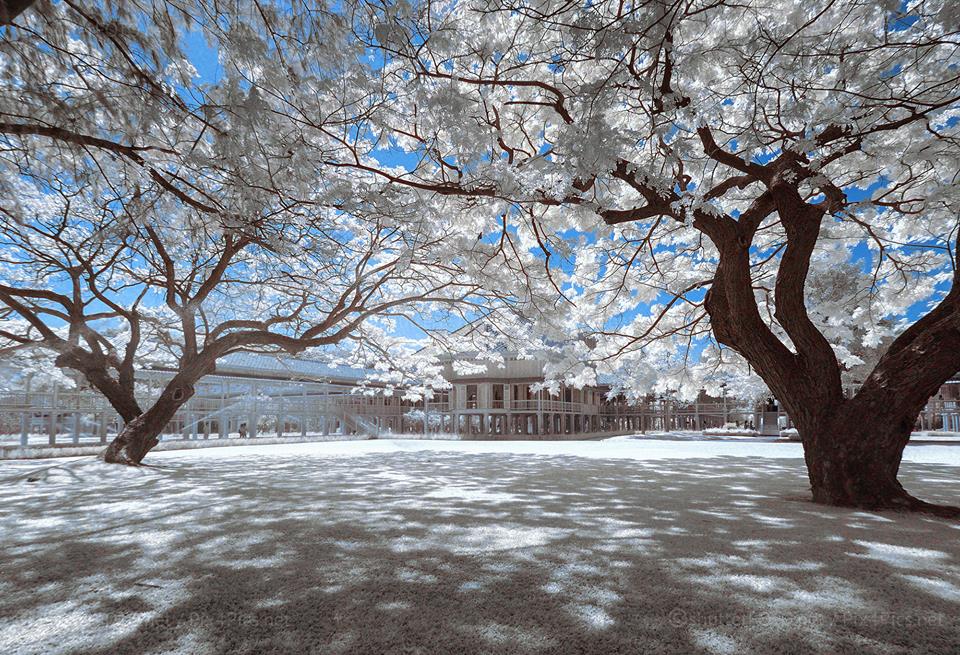
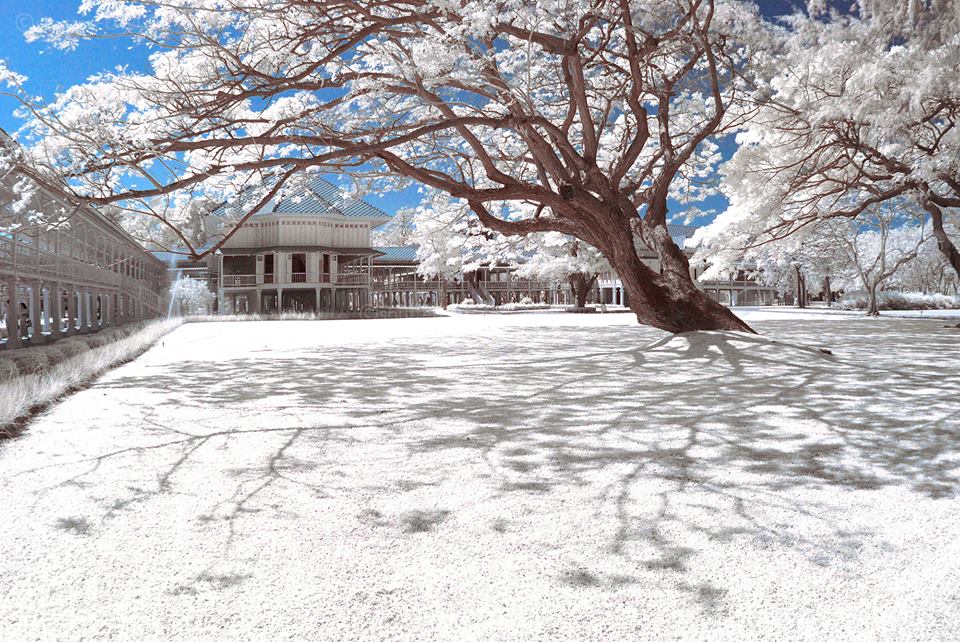
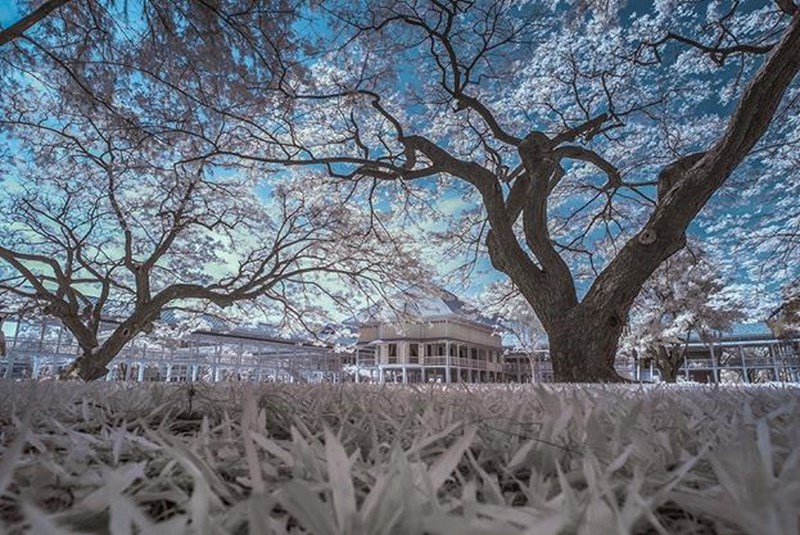
 |
● Photographer: Korawee Ratchapakdee ● Link: flickr.com/photos/gnskrw ● Ref: facebook.com/noi.sft |
● Copyright Photography. (800*500)
● View full size images from the photographer.
● View full size images from the photographer.
 Nearby Attractions
| Keyword (Advance) |
 Region
|
 Muang Phetchaburi(