

 Home
Home Chiang Mai(










Rating: 3.5/5 (4 votes)
 |
|  Map
Map 
 Have Map
  No Map
Chiang Mai attractions
Attractions in Thailand
Open Days: Daily (recommended to check the latest status/activities with the national park before visiting)
Opening Hours: Recommended 08.00–17.00 (hours may vary by season and site management)
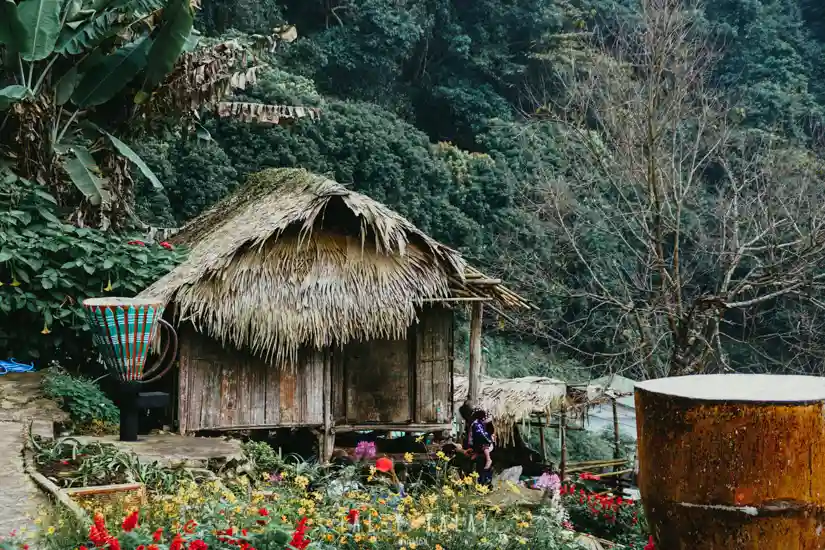
Hmong Hill Tribe Village on Doi Pui (Hmong Doi Pui Village) is one of those easy-to-stop destinations along the Doi Suthep–Doi Pui route that many people naturally add to a Chiang Mai day out. But if you spend a little longer than just browsing souvenir stalls, you start to notice that the village’s charm isn’t only in photos taken in traditional outfits or the bags of souvenirs in your hands. It’s in walking slowly through faint seasonal mist, hearing the everyday sounds of the community, spotting small flower gardens by the path, feeling the cool air change subtly with altitude, and seeing Chiang Mai from a viewpoint that feels far away—even though it’s actually very close.
The village sits on the ascent to Doi Pui, about 4 kilometers beyond the Bhubing Palace. The road is fully paved, though it becomes winding and steep in some sections. That’s why many visitors say it feels “easy to reach” compared with other mountain routes in Northern Thailand. From Chiang Mai city, the drive typically takes around 1 hour (depending on traffic, your starting point, and the travel season). This makes Hmong Doi Pui Village a strong option for both half-day trips and full-day itineraries where you want mountain views, cool air, and a cultural experience—without spending several hours on the road.
One thing people mention again and again is that “the views around the village are stunning.” The landscape here opens up wide sightlines across layered mountain ridges. On clear days, you can see far into the distance, and some visitors say they can even make out the outline of Doi Inthanon. Standing in the breeze and looking down over mountains stacked in soft layers can feel like watching a living topographic map. It’s part of the magic of Chiang Mai’s highlands—no matter how many times you come, the scenery still has a way of quieting you down.
Inside the village, there are many souvenir shops. The goods include items made within the community as well as products brought in from elsewhere. If you’re the kind of traveler who likes to buy thoughtfully, it helps to pay attention to the “origin” of what you’re purchasing. If your goal is to support the community directly, look for distinctive pieces such as embroidered textiles, small handmade crafts, decorative items, or locally rooted products that reflect the life of the area. Asking gently—“Did you make this?” or “Is this from the village?”—usually doesn’t spoil the mood. In fact, it often opens a warm little conversation and turns buying souvenirs into an exchange rather than a quick transaction.
Another iconic activity at Hmong Doi Pui Village is renting traditional hill-tribe clothing for photos. Rental services are typically available near the entrance or in the shopping zone. If you want to do it, it’s absolutely possible and can add fun color to your trip—but a small tip is to take photos in a way that shows “respect” for the culture. Avoid mocking poses, don’t tug on accessories, don’t handle outfit parts without permission, and if you want softer, more flattering images than the typical storefront snapshot, walk a little to find a backdrop with mountain lines and gentle light. Morning or late afternoon usually produces a calmer, softer look than harsh midday sun.
Even though the village is well known as a tourist stop, if you walk a little deeper you’ll see a genuinely simple way of life. Some homes have small gardens; there are corners where locals sit and talk; children run around; adults do household tasks or look after their shops. This is a good moment to remember that the village is not a “living museum” where we come to watch other people’s lives. We are guests. Being a good guest means observing with respect, not pointing a camera at someone’s face without asking, not stepping into private areas, and if you want to photograph people, smiling and requesting permission first often leads to a clear answer and a more comfortable experience for everyone.
What makes Hmong Doi Pui Village different from many places is its “closeness to the city” while still feeling like real mountain country. On cool days, you can feel the temperature shift as soon as you step out of the car, especially from late rainy season into early winter and throughout the winter months. The wind becomes crisp, the sky may turn bright, and on some days a light mist drifts across the treetops. That atmosphere is exactly why many people come back to the Doi Suthep–Doi Pui route more than once—it’s a trip that helps you “reset your head” quickly, without complicated planning, and the reward is simply fresh air and views.
If you want this trip to be “more than a quick souvenir stop,” try setting a slower pace and adding small moments of learning: look closely at embroidery patterns, notice the recurring colors and shapes, try local snacks without rushing, or just sit for a while and watch the flow of people. Some destinations don’t need a long list of activities. They need time. Doi Pui often works that way.
Getting There from Chiang Mai city, head toward Huay Kaew Road and drive up Doi Suthep. Follow the route to Wat Phra That Doi Suthep and Bhubing Palace, then continue upward toward Doi Pui for about 4 kilometers. The road is paved but winding and steep in parts. Drive at a steady speed, use a lower gear on steep climbs and descents, and watch for oncoming vehicles—especially on weekends and during peak travel seasons.
There are small details that make the drive more comfortable and safe: check your brakes before you go (especially if your vehicle is heavily used), fill up fuel in the city because there aren’t many convenient stations up high, bring a light jacket because mountain air changes quickly, and in the rainy season allow extra time because fog and rain can reduce visibility. Some curves may also be slippery in wet conditions.
For timing, if you want fewer crowds and better light, go early. You’ll be able to walk around without squeezing through busy spots, and you’ll likely feel the freshest air. Late afternoon can be great for warm-toned mountain photos, but it’s wise to plan your return before dark, because driving down the mountain at night usually demands more focus and caution.
Many people enjoy viewpoints where Chiang Mai spreads out below, or where distant mountain layers stack into the horizon. If you want photos that don’t feel crowded, try walking slightly away from the main shopfront path. Find a background of pine lines or open ridges. Your photos will look more like “the mountain” than “the market,” and your memory of this trip won’t shrink down to just a souvenir bag.
Another important point is respectful tourism: avoid bargaining so aggressively that it discourages sellers (especially for handmade work), don’t litter, and avoid flying drones over the community without permission—it can disturb residents, pets, and raise privacy concerns. If you want the village to remain livable and worth visiting long term, these small choices matter.
If you’re planning a smooth one-day itinerary without rushing, a popular flow is: visit Wat Phra That Doi Suthep in the morning – stop at Bhubing Palace – continue up to Hmong Doi Pui Village for a walk, shopping, and photos – then head back down to eat around Suthep/Nimman or in the city center. This keeps the day easy and avoids unnecessary backtracking.
Hmong Doi Pui Village suits many types of travelers: families, those who want beautiful mountain photos, visitors who want a gentle introduction to hill-tribe culture, and anyone who wants to escape city noise for a few hours. Most importantly, if you arrive with a mindset of “respect for the place,” the village tends to give back a good atmosphere without you having to force anything.
Finally, if you want confirmed updates before you go—weather conditions, temporary route closures, or park-area regulations—it’s best to contact Doi Suthep–Pui National Park directly. It’s the most reliable source for on-the-ground management information and helps reduce the risk of inaccuracies from unofficial sources.
| Place Name | Hmong Hill Tribe Village on Doi Pui (Hmong Doi Pui Village) |
| Location | Doi Suthep–Doi Pui route, Suthep Subdistrict, Mueang Chiang Mai District, Chiang Mai (about 4 km beyond Bhubing Palace) |
| Highlights | Hmong hill-tribe village on the mountain, beautiful ridge views, cool weather, easy access from the city, souvenir shops, and traditional outfit rental for photos |
| Travel | Drive up Doi Suthep via Huay Kaew Road, pass Wat Phra That Doi Suthep and Bhubing Palace, then continue about 4 km toward Doi Pui. Paved but winding and steep in parts. |
| Current Status | Open for visits (recommended to check announcements/entry conditions with the national park before traveling, especially during heavy rain or temporary road closures) |
| Contact (Area Information) | Doi Suthep–Pui National Park: 053-210244 |
| Nearby Attractions with Distance | 1) Wat Phra That Doi Suthep Ratchaworawihan (approx. 10–12 km) Tel. 053-295003 2) Bhubing Palace (approx. 4 km) Tel. 053-223065, 053-223066 3) Doi Suthep–Pui National Park (park office) (approx. 12–18 km to the lower area) Tel. 053-210244 4) Chiang Mai Zoo (approx. 18–22 km) Tel. 053-221179 5) One Nimman (approx. 20–24 km) Tel. 052-080900 |
| Recommended Restaurants with Distance | 1) Ginger Farm Kitchen (One Nimman branch) (approx. 20–24 km) Tel. 052-080928 2) Huen Muan Jai (approx. 20–26 km) Tel. 053-404998 3) Haan Thueng Chiang Mai (near CMU) (approx. 18–22 km) Tel. 093-9706885, 091-0766100 4) Khao Soi Mae Sai (approx. 22–28 km) Tel. 053-213284 5) Shangri-La Chiang Mai (restaurant/reservations) (approx. 24–30 km) Tel. 053-253888 |
| Recommended Accommodations with Distance | 1) U Nimman Chiang Mai (approx. 20–24 km) Tel. 052-005111 2) Chiang Mai Marriott Hotel (approx. 24–30 km) Tel. 053-253666 3) Shangri-La Chiang Mai (approx. 25–31 km) Tel. 053-253888 4) Duangtawan Hotel Chiang Mai (approx. 25–31 km) Tel. 053-905000 5) 137 Pillars House Chiang Mai (approx. 26–32 km) Tel. 053-247788 |
Frequently Asked Questions (FAQ)
Q: How far is Hmong Doi Pui Village from Bhubing Palace?
A: It is generally about 4 kilometers further up along the same route toward Doi Pui.
Q: Is the drive difficult? What is the road like?
A: The road is fully paved, but it is winding and steep in some sections. Drive carefully, use a lower gear on steep climbs and descents, and allow extra time during peak crowds.
Q: How long does it take to get there from Chiang Mai city?
A: Typically around 1 hour, depending on your starting point, traffic, and the travel season.
Q: What can you do in the village?
A: Walk around to enjoy the atmosphere and community life, shop for souvenirs and handicrafts, take mountain-view photos, and rent traditional outfits for photo shoots near the entrance area.
Q: Where should I check for the latest updates before visiting?
A: Contact Doi Suthep–Pui National Park at 053-210244 to confirm road conditions, entry guidelines, or any important announcements at that time.
 Tel: 053211142, 053210431
 Fax: 053210431 ต่อ 16
 Mong Village Map
 Category:
  Group:
  Last Update: 17 HourAgo
Comment
 Nearby Attractions
| Keyword (Advance) |
 Facebook Fanpage
 Region
 Art, Culture and Heritage
 Historical Sites and Monuments(
 Landmarks and Memorials(
 Royal Palace(
 Art, Craft Centres, Tradition(
 Museums(
 Educational Places
 Museum for Study(
 Educational Gardens, Farm(
 Training Center(
 University
 Places of Worship
 Temple(
 Mosque(
 Other religious and spiritural sites(
 Research and Development
 Royal Project(
 Local Market(
 Nature and Wildlife
 National Parks and Marine Reserves(
 Mountain (Doi)(
 Dam, Reservoir, Lake(
 Waterfalls(
 Hot Springs(
 Caves(
 River, Canal(
 Other natural attractions(
 Entertainment and Agricultural
 Zoos and Aquariums(
 Animal camps and shows(
 Stadium(
 Farm, Parks, Gardens and Ecotourism(
 Waterpark(
 Theater(
 Outdoor and Adventure Activities(
 Shopping
 Shopping and Night Market(
 Restaurant
 Michelin Star(
 Michelin Guide(
 Call Customer Service in Tourism
 Call Customer Service in Tourism(
 Travel Articles, Recipes
 Travel Review, Food Review(
 Food Menu, North Recipes(
 Thai Desserts, North Recipes(