

 Home
Home Chiang Mai(




Rating: 4.2/5 (10 votes)
 |
|  Map
Map 
 Have Map
  No Map
Phetchaburi attractions
Attractions in Thailand
Open Days: Daily
Opening Hours: 08:30 – 16:30
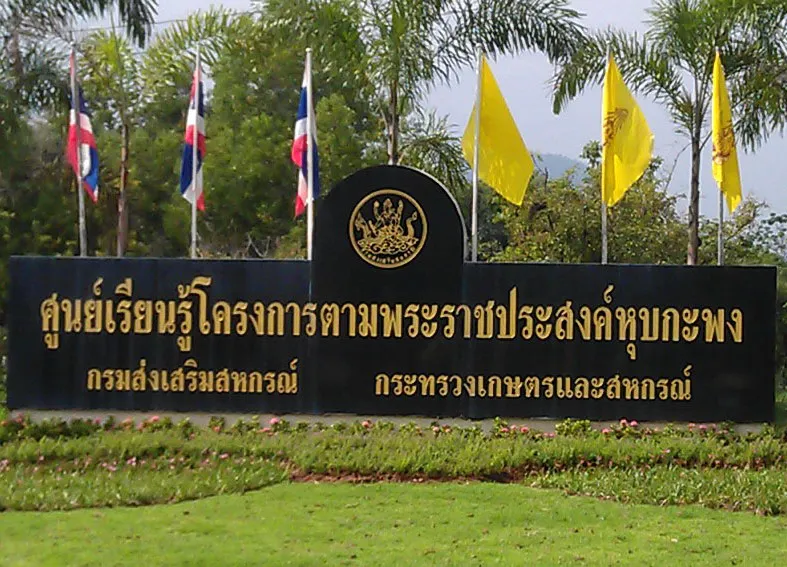
Hub Kapong Royal Initiative Learning Center, Phetchaburi Province is a learning destination dedicated to royal development projects and is recognized as Thailand’s first model cooperative village. The center features exhibitions inside the Khum Klao Building and showcases real agricultural demonstration plots such as asparagus cultivation, dairy farming, and products made from sisal fiber. It is open daily and is well suited for study visits related to the Sufficiency Economy philosophy and community development.
Hub Kapong Royal Initiative Learning Center, Phetchaburi is located in Khao Yai Subdistrict, Cha-Am District, Phetchaburi Province. It represents a historically significant model of community development under royal intention. The site is not only an exhibition space presenting royal development initiatives but also the “first model cooperative village in Thailand,” reflecting the principles of farmer cooperation, resource management, and sustainable livelihood creation.
The Hub Kapong project originated from a royal intention to improve the quality of life for settlers who migrated into an area characterized by dry conditions and limited agricultural infrastructure. His Majesty King Bhumibol Adulyadej (Rama IX) initiated the development of this area as a prototype agricultural cooperative, enabling local people to become self-reliant, manage resources collectively, and build long-term economic stability.
The Khum Klao Building houses a permanent exhibition presenting the history of the royal intention project, archival photographs, early agricultural tools and machinery, and a replica of the first house built by settlers in Hub Kapong. These exhibits provide visitors with a clear understanding of the social, economic, and environmental context during the early stages of the project.
Another key highlight is the display of the “Chaipattana Water Turbine,” an innovation reflecting royal ingenuity in water treatment and environmental restoration. Its inclusion within the center illustrates a systematic, science-based approach to solving water management challenges alongside community development.
Beyond the indoor exhibition, visitors can explore agricultural demonstration plots managed by Hub Kapong villagers. These plots form the core of the model cooperative system. They showcase real production processes, including asparagus cultivation as a major economic crop, cooperative dairy farming systems, and value-added products derived from sisal fiber. This demonstrates how local crops can be transformed into diversified community-based products.
The establishment of the cooperative in Hub Kapong became a prototype for collective agricultural management in Thailand. Members coordinate production planning, marketing, and profit distribution in an organized system, fostering household and community-level economic resilience. This model has since been expanded to other regions across the country.
As a result, the learning center is more than an educational attraction; it is a tangible reflection of rural development lessons in Thailand. Visitors gain insight into how the Sufficiency Economy philosophy, cooperative management, and sustainable livelihood development are interconnected through practical implementation.
From a tourism perspective, the Hub Kapong Learning Center is ideal for those interested in structured development concepts, including students, government agencies, and farmer groups seeking to apply cooperative-based development approaches. The site is well organized, easy to walk through, and typically requires 2–3 hours to explore, or half a day for more in-depth learning.
Getting There From Phetkasem Road, take Route 3203. Around kilometer markers 201–202, you will find a right-hand turn leading to a paved access road extending approximately 6 kilometers. The total distance from the main highway is about 4 kilometers. It is recommended to use navigation apps and contact the center in advance for group visits.
| Place Name | Hub Kapong Royal Initiative Learning Center |
| Address | Khao Yai Subdistrict, Cha-Am District, Phetchaburi Province |
| Contact | 0 3247 1543, 0 3247 1100 |
| Highlights | First Model Cooperative Village, Royal Initiative Exhibition, Asparagus and Dairy Demonstration Plots |
| Nearby Tourist Attractions | 1. Cha-Am Beach – approx. 18 km. 2. Mrigadayavan Palace – approx. 28 km. 3. Phra Nakhon Khiri (Khao Wang) – approx. 45 km. 4. Wat Mahathat Worawihan – approx. 45 km. 5. Kaeng Krachan National Park – approx. 55 km. |
| Popular Restaurants Nearby | 1. Krua Med Sai – approx. 20 km. Tel. 089-800-2299 2. Sangwian Seafood – approx. 22 km. Tel. 032-472-280 3. Krua Lung Mun Seafood – approx. 25 km. Tel. 032-441-234 4. Baan Chok – approx. 30 km. Tel. 032-899-130 5. View Talay Seafood – approx. 24 km. Tel. 087-532-4145 |
| Popular Accommodations Nearby | 1. The Regent Cha-Am Beach Resort – approx. 28 km. Tel. 032-451-240 2. Sheraton Hua Hin Resort & Spa – approx. 32 km. Tel. 032-708-000 3. Dusit Thani Hua Hin – approx. 32 km. Tel. 032-520-009 4. Novotel Hua Hin Cha Am Beach Resort & Spa – approx. 30 km. Tel. 032-708-300 5. Dream D Residence Phetchaburi – approx. 40 km. Tel. 032-400-777 |
Frequently Asked Questions (FAQ)
Q: Is the Hub Kapong Learning Center open every day?
A: Yes, it is open daily from 08:30 to 16:30. Group visits should notify the center in advance.
Q: What is the most distinctive feature of the center?
A: It is Thailand’s first model cooperative village and houses a comprehensive exhibition of royal initiative projects.
Q: Can visitors tour the agricultural demonstration plots?
A: Yes, visits to the demonstration plots are possible according to the schedule and guidance of the staff.
Q: How long does a visit typically take?
A: A standard visit takes about 2–3 hours; in-depth study sessions may require half a day.
Q: Who is the center most suitable for?
A: It is suitable for students, government agencies, farmer groups, and anyone interested in the Sufficiency Economy philosophy.
 Tel: 032471543, 032471100
 Hup Kraphong Map
 Category:
  Group:
  Last Update: 3 DayAgo
Comment
 Nearby Attractions
| Keyword (Advance) |
 Region
|
 Muang Phetchaburi(