

 Home
Home Chiang Mai(




Rating: 3.5/5 (10 votes)
 |
|  Map
Map 
 Have Map
  No Map
Ang Thong attractions
Attractions in Thailand
Open Days: Daily
Opening Hours: 08:00 – 17:00
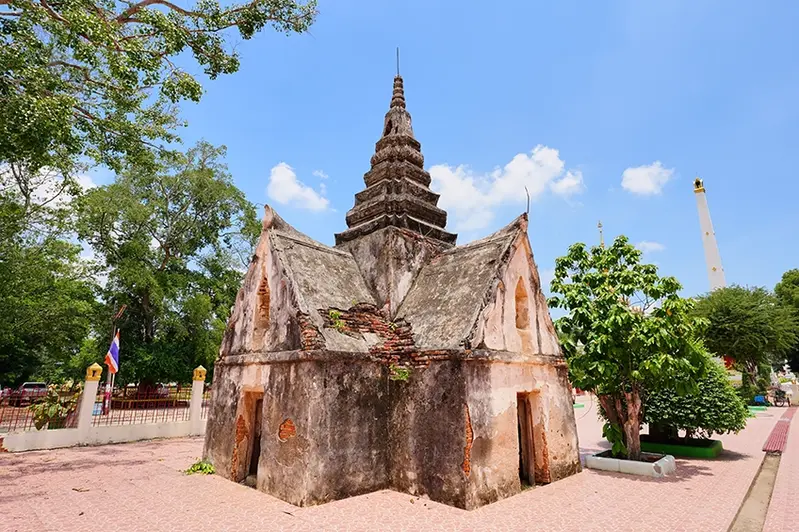
Wat Phinij Thammasan (Bang Plakot Subdistrict, Ang Thong) sits on the eastern bank of the Chao Phraya River in Bang Plakot Subdistrict, along the Ang Thong–Pa Mok–Ayutthaya road around kilometer 15. This is an old riverside temple with a clearly layered historical backdrop tied to the central plains waterways. Visiting here lets you see, in a tangible way, how “faith,” “the river,” and “royal statecraft” once moved together during the Ayutthaya era. Wat Phinij Thammasan is remembered as a calm, leafy riverside temple—a place suited to slowing down, revisiting the past, and paying respects in an unhurried atmosphere.
The appeal of Wat Phinij Thammasan begins with the fact that it is a temple whose name and role shifted over time. It was originally known as “Wat Chee Pa Khao,” with information placing its establishment in the Ayutthaya period around 1726 CE (B.E. 2269). Later, it was also referred to as “Wat Krasob” before becoming “Wat Phinij Thammasan” as it is known today. These name changes are more than a change in wording; they reflect that the temple grounds once sat within important currents of national events and were viewed as a setting connected to careful deliberation, planning, directing, and inspection of major undertakings related to Buddhism and the safeguarding of religious sites along the Chao Phraya River.
Seen through the lens of Chao Phraya river-basin history, it becomes immediately clear why so many riverside temples carry stories and traces connected to kingship and governance. Before the modern road era, the Chao Phraya functioned as the central plains’ main transportation artery—a true “highway” for travel, trade, supply movement, and, in wartime, strategic troop routes. Riverside communities depended on the river in nearly every dimension, and temples served more than strictly religious purposes. They were centers of learning, meeting places, and shared civic spaces where communities gathered around major Buddhist observances, from Makha Bucha and Visakha Bucha to Asalha Bucha, as well as the Rains Retreat (Khao Phansa–Ok Phansa) and the Kathina period after Ok Phansa.
What makes Wat Phinij Thammasan stand out historically is its connection to royal undertakings associated with King Thai Sa (Somdet Phra Chao Thai Sa) of Ayutthaya. Local narratives link the temple to a major operation to relocate a revered reclining Buddha image away from an area threatened by riverbank erosion to a safer location. When currents and erosion encroached near the riverside sanctuary where the reclining Buddha was enshrined, the relocation became a large-scale project requiring organization, manpower, and specialist craftsmanship. The work was assigned to Phraya Ratchasongkhram as the principal leader, and accounts note that King Thai Sa periodically came to oversee, direct, and inspect the progress in person.
Within this same context, Wat Chee Pa Khao—the temple’s earlier name—is described as being close to the operational area and as an important backdrop to events. A “royal pavilion residence” known as Phra Tamnak Phlapphla Chai was said to have been built nearby to support the king’s temporary stays and on-site direction of the reclining Buddha relocation. Even if today’s visitors are not specifically coming to trace the pavilion’s footprint, knowing this background makes a walk through the temple grounds more meaningful. The site is not only a place to pay respects; it is also remembered as a setting connected to policy-level decisions made to protect a major religious symbol from natural threats such as riverbank erosion.
The name “Phinij Thammasan” also carries symbolism that aligns with these narratives. “Phinij” conveys careful, detailed consideration, while “Thammasan” suggests the substance or essence of the Dhamma. Together, the name evokes a place suited to inspection, reflection, and the management of matters carrying significant religious and historical weight. In that sense, visiting Wat Phinij Thammasan is not only an act of devotion; it is also an encounter with a place whose name preserves the idea of careful stewardship embedded in its identity.
Beyond history, Wat Phinij Thammasan is noted for architectural and artistic elements that reflect its long-standing presence. Information indicates the temple grounds cover about 37 rai, 1 ngan, 54 square wah, giving the site an open and comfortable feel. On pleasant days, breezes from the river move through the compound, and the generous space offers real breathing room—never cramped, and suitable for families or older visitors who prefer to walk slowly and pause along the way.
An important feature described within the temple is an old viharn (sanctuary hall) associated with the late Ayutthaya period, retaining the character of traditional architecture. Looking at an older hall in a central-plains riverside temple carries a special value: it helps us understand how builders and communities in the past arranged sacred space to fit local geography. Historically, the river was the primary route, so many people approached temples from a pier or paths linking directly to riverside settlements. In that setting, an old viharn functions as both an artistic record and a social record of life along the Chao Phraya.
Another focal point of local devotion is Phra Phuttha Rup Chinwongsawachirakhaphan Phisut, with information noting it was created in 1979 CE (B.E. 2522). The image is described as Chiang Saen style, seated in the diamond posture, with a poised and dignified presence that conveys a sense of grounded calm. Many devotees see paying respects here as a steady beginning—asking for auspiciousness, stability, and a good simplicity in daily life.
Part of the temple’s appeal is that it feels like a “riverside temple along a convenient road.” It is easy to reach for visitors coming from Ang Thong, Pa Mok, or Ayutthaya, yet it still preserves the atmosphere of an older riverside temple. Standing within the grounds and looking toward the water, you can immediately sense how deeply the central plains were shaped by the Chao Phraya. That context also explains why, in earlier times, kings and officials could travel to inspect or direct major projects: the area naturally connected to the main routes of the era.
If you plan a visit at a comfortable pace, starting by paying respects in the primary worship area helps set a calm, orderly rhythm. From there, a slow walk through the older structures and surrounding space reveals that “age” here does not need to be monumental. Instead, it is an age made of accumulated stories—the temple’s earlier names, the nearby royal pavilion narrative tied to the reclining Buddha relocation, and the multiple renamings that reflect the real movement of history through this landscape.
For travelers interested in cultural exploration, Wat Phinij Thammasan fits well into a one-day route of “important Chao Phraya riverside temples in Ang Thong.” The Pa Mok area and nearby zones contain several temples and learning sites, making a day trip straightforward without long-distance driving. You can combine merit-making with local history and community culture in one itinerary.
Getting There From Bangkok by private car, a common route is Highway 32 (Asian Highway) toward the Ayutthaya–Ang Thong area, then connect to Highway 309 (Ang Thong–Ayutthaya). Continue along the Ang Thong–Pa Mok–Ayutthaya road toward Bang Plakot Subdistrict around kilometer 15, and follow navigation to the temple entrance. By public transport, take a bus/van from Mo Chit to Ang Thong or the Pa Mok area, then continue by local transport (songthaew or motorcycle taxi) to the temple. Searching online maps for “Wat Phinij Thammasan Ang Thong” helps you reach the correct point efficiently, especially if you plan to visit multiple sites in a single day.
When you arrive, dress respectfully, keep noise low, and observe the etiquette of an active community temple where residents continue to come for merit-making and religious activities. The experience is at its best when you do not rush and allow the quiet rhythm of a riverside temple to settle naturally.
| Name | Wat Phinij Thammasan |
| Address | Bang Plakot Subdistrict, Pa Mok District, Ang Thong (Eastern Bank of the Chao Phraya River) |
| Place Summary | An old Chao Phraya riverside temple formerly known as Wat Chee Pa Khao, linked to Ayutthaya-era royal undertakings—especially accounts connected to King Thai Sa during the relocation of a revered reclining Buddha image. Ideal for merit-making and Chao Phraya river-basin heritage travel. |
| Key Highlights | Ayutthaya-era background (B.E. 2269), the Wat Chee Pa Khao–Wat Krasob–Wat Phinij Thammasan naming legacy, narratives linking King Thai Sa and the reclining Buddha relocation, late Ayutthaya-period viharn, Phra Phuttha Rup Chinwongsawachirakhaphan Phisut (B.E. 2522), calm riverside atmosphere |
| Period / Brief History | Originally known as Wat Chee Pa Khao, established in the Ayutthaya period (B.E. 2269). Local narratives link the site to King Thai Sa’s oversight during the relocation of a reclining Buddha image, and to later renamings including Wat Krasob before becoming Wat Phinij Thammasan. |
| Abbot / Current Overseer | Phra Khru Phinij Thammabhimon (Kantasilo) |
| Open Days | Daily |
| Opening Hours | 08:00 – 17:00 |
| Getting There | By Car: Highway 32 (Asian Highway) → connect to Highway 309 (Ang Thong–Ayutthaya) → Ang Thong–Pa Mok–Ayutthaya road → Bang Plakot (Km.15) | Public Transport: bus/van from Mo Chit to Ang Thong or Pa Mok, then local transport (songthaew/motorcycle taxi) to the temple |
| Current Status | Open for worship and visits |
| Contact | 035-615-914, 081-385-0438 |
| Facilities | Parking area, shaded walkways, main worship points, riverside atmosphere |
| Nearby Attractions (Distance + Phone) | 1) Ban Bang Sadet Royal Doll Center – 10 km – Tel. 035-661-157 2) Wat Chaiyo Worawihan – 18 km – Tel. 035-862-669 3) Wat Khun Inthapramun – 25 km – Tel. 035-691-406 4) Wat Muang (Wiset Chai Chan) – 32 km – Tel. 035-631-556 5) Ang Thong Tourist Information Center – 20 km – Tel. 035-611-714 ext. 120 |
| Nearby Restaurants (Distance + Phone) | 1) Krua Khun Kung Floating Restaurant (Pa Mok) – 12 km – Tel. 083-039-1999 2) Suan Ahan Pae Rim Nam (Pa Mok) – 12 km – Tel. 062-936-2249 3) Pinto Restaurant (Pa Mok) – 13 km – Tel. 035-662-589 4) Krua Kai Chon Pa Mok – 13 km – Tel. 035-662-576 5) Jay Waew Old-Style Noodles (Pa Mok) – 14 km – Tel. 081-852-8987 |
| Nearby Accommodations (Distance + Phone) | 1) Bualuang Hotel Ang Thong – 22 km – Tel. 035-611-116 2) Bualuang Boutique Resort Ang Thong – 22 km – Tel. 081-495-8884 3) Thanara Resort (Ang Thong) – 23 km – Tel. 092-940-9104 4) Thinee Mee Dee Resort (Ang Thong) – 24 km – Tel. 094-131-8081 5) Khlong Suan Phlu Resort (Ayutthaya) – 30 km – Tel. 035-242-525 |
Frequently Asked Questions (FAQ)
Q: Where is Wat Phinij Thammasan located?
A: Wat Phinij Thammasan is in Bang Plakot Subdistrict, Pa Mok District, Ang Thong, on the eastern bank of the Chao Phraya River, accessible via the Ang Thong–Pa Mok–Ayutthaya route.
Q: What was the temple’s original name?
A: The temple was originally known as Wat Chee Pa Khao and was later also referred to as Wat Krasob before becoming Wat Phinij Thammasan.
Q: How is the temple connected to King Thai Sa?
A: Local accounts link the temple area to the period when a revered reclining Buddha image was relocated for safety from riverbank erosion, with King Thai Sa said to have visited periodically to oversee and direct the work.
Q: What are the main highlights to worship or see inside the temple?
A: Key highlights include an old viharn associated with late Ayutthaya-period architecture and Phra Phuttha Rup Chinwongsawachirakhaphan Phisut, a revered Chiang Saen-style Buddha image created in B.E. 2522.
Q: What is the most convenient way to get there?
A: Driving is the most convenient: take Highway 32, connect to Highway 309, then follow the Ang Thong–Pa Mok–Ayutthaya road to Bang Plakot around kilometer 15. If using public transport, travel to Ang Thong or Pa Mok first, then continue by local transport to the temple.
Q: If I have one day, what nearby places can I visit after the temple?
A: You can continue to Ban Bang Sadet Royal Doll Center, Wat Chaiyo Worawihan, Wat Khun Inthapramun, Wat Muang, or the Ang Thong Tourist Information Center for local heritage context.
 Wat Phinij Thammasan Map
 Category:
  Group:
  Last Update: 10 HourAgo
Comment
 Nearby Attractions
| Keyword (Advance) |
 Facebook Fanpage
 Region
 Art, Culture and Heritage
 Landmarks and Memorials(
 Royal Palace(
 Art, Craft Centres, Tradition(
 Museums(
 Historical Houses and The Ancient City(
 Educational Places
 Educational Gardens, Farm(
 Other religious and spiritural sites(
 Research and Development
 Royal Project(
 Suburban Living
 Village, Community(
 Local Market(
 Floating Market(
 Nature and Wildlife
 River, Canal(
 Other natural attractions(
 Entertainment and Agricultural
 Farm, Parks, Gardens and Ecotourism(
 Outdoor and Adventure Activities(
 Shopping
 Shopping and Night Market(
 Travel Articles, Recipes
 Travel Review, Food Review(
 Central Thai Cuisine, Central Thai food recipes(