
 Home
Home North(
 Chiang Mai(


Rating: 4/5 (5 votes)
 |
|  Map
Map 
 Have Map
  No Map
Kanchanaburi attractions
Attractions in Thailand
Open Days: Please check with the site before visiting
Opening Hours: Please check with the site before visiting
Tham Bong Ti Cave is located in Moo 1, Bong Ti Subdistrict, Sai Yok District, Kanchanaburi. It suits travelers who want to experience a quieter side of Sai Yok beyond the “main tourist zone” and enjoy a more immersive natural atmosphere. Bong Ti is commonly associated with mountain-and-forest landscapes and a hillside community setting, and the terrain in this part of Sai Yok supports limestone formations where caves can occur across the wider area. When you choose to visit a cave in a place like this, what you take home is often more than photos: it is the experience of gradually getting closer to nature, step by step, from the main road to local routes, from the bustle of major attractions to a calmer rhythm, and from daylight outside to the cave’s interior world that asks for careful observation and steady focus.
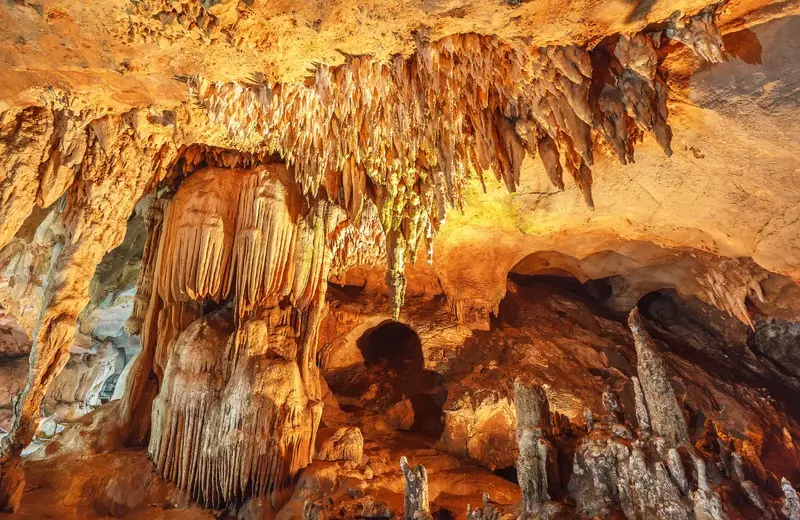
To describe Tham Bong Ti Cave in a way that feels complete and credible, it helps to begin with the broader context of “Sai Yok.” Sai Yok is shaped by nature and topography in a very direct way: mountain ridges, large forested areas, and waterways that sustain ecosystems within protected zones and along community edges. The district is already well known for nature-based destinations such as waterfalls, the Khwae Noi River, scenic viewpoints, and several caves. What makes caves in this region especially compelling is the relationship between limestone and water, which is the core mechanism behind cave formation and the development of stalactites and stalagmites that many visitors recognize as the beauty inside a cave.
While publicly available references that clearly identify the “discovery year” or a specific “discoverer” of Tham Bong Ti Cave are not as easy to confirm as they are for some well-known tourist caves, responsible storytelling can still be done by placing the cave within two grounded frames. The first frame is the reality of Bong Ti as a community setting and as part of Sai Yok’s long-standing mountain-and-forest geography. The second frame is the natural reality of limestone caves themselves: the beauty inside a cave is not created quickly or in a single event, but through long, continuous mineral deposition from water moving through limestone over timescales far beyond a human lifetime. This is why caves should be described with care, and why it is better not to “fill in” details that cannot be verified, because the credibility of travel content matters as much as elegant language.
In general, limestone caves form when rainwater absorbs carbon dioxide from the air and soil, becoming mildly acidic. As the water flows through or seeps into cracks in limestone, it slowly dissolves calcium carbonate into solution. When this mineral-rich water drips from a cave ceiling or runs along cave walls, some carbon dioxide escapes, and calcite precipitates and accumulates little by little, creating stalactites from above and stalagmites from below. This process is extremely slow. That is also why stalactites and stalagmites are highly fragile in a tourism context: even a single touch can leave skin oils that discolor the surface or disrupt ongoing crystal deposition, potentially slowing or stopping growth at that point over time.
For that reason, if your goal in visiting Tham Bong Ti Cave is to appreciate its natural beauty, the most important choice you can make from the start is to set the right “viewing rhythm.” Good cave viewing is not about walking quickly to cover every point; it is about moving slowly, taking short steps, and using light carefully. A bright beam aimed straight on often produces a flat, overexposed whiteness. But if you angle your light and lower it slightly, gentle shadows begin to reveal depth in the rock surface, layers of mineral build-up, flow lines from ancient water movement, and small details that make a cave feel alive to people who truly enjoy cave observation.
Cave travel in Sai Yok also has an extra layer of meaning that many people overlook: the connection between caves and local communities. In Bong Ti, where people have lived alongside forests and mountains for a long time, a cave is not only a scenic feature. It is part of the living landscape that locals have known for generations. Writing about a place like this can be more thoughtful by reflecting a respectful approach: visit with intention, keep noise down, leave no litter, avoid straying into unsafe or sensitive areas, and do not treat the cave as a photo set where anything goes.
As a nature-based destination, Tham Bong Ti Cave is best suited to travelers who enjoy unhurried exploration and the feeling of being genuinely close to nature rather than ticking off a checklist. If you love caves for their grandeur of space and the fine textures of mineral formations, a headlamp and proper traction footwear should be considered standard. A headlamp frees both hands for balance, reduces the risk of slipping, and helps you stay fully present with what you are looking at instead of worrying about footing every second.
Another practical factor that makes cave visits safer and more rewarding is timing. A simple rule is to avoid starting cave activities too late in the afternoon. Even if you exit before dark, returning along rural roads and mountain curves with fading light adds avoidable risk and fatigue. Planning to arrive in the morning or early afternoon gives you enough time to pause for details and keeps a buffer for small issues such as rain making surfaces slick, or needing more rest breaks than expected.
Getting There If you start from Kanchanaburi town, the common main route for reaching Sai Yok is Highway 323, which serves as the primary travel backbone in the district. From there, you will typically transition to local roads toward Bong Ti Subdistrict and Moo 1 according to your destination point. It is recommended to use navigation maps and check current road conditions before departure, especially during the rainy season when certain sections may have standing water or slippery surfaces. Allow extra travel time and avoid night driving if you are unfamiliar with the area, as Sai Yok includes curves and mountain road segments that require higher caution.
Preparation for caves and nature travel in Sai Yok should prioritize “travel light” and “real usability” over carrying many items. A headlamp keeps your hands free, good traction shoes reduce slipping, water helps manage fatigue, quick-dry clothing improves comfort, and a waterproof pouch protects your phone and valuables from rain and humidity. At the same time, it is best to avoid long-hanging bags or bulky accessories, which can bump cave surfaces or affect balance, creating unnecessary risk for a cave visit.
If you want to plan an efficient “Sai Yok–Bong Ti” trip, it helps to treat Tham Bong Ti Cave as a main activity that deserves time rather than forcing it into a short stop. The charm of cave viewing is in gradual discovery. For a 2-day, 1-night plan, staying overnight in the Sai Yok area reduces the pressure to rush back and gives you more flexibility to add riverside viewpoints or nature stops at your own pace. For a day trip, start early, depart early, and decide where to eat in advance to avoid losing time searching along the way.
In the end, the true “value” of visiting Tham Bong Ti Cave is not only the beauty you see, but the way you behave as a visitor. When you view a cave as natural artwork shaped by time, you naturally slow down, use light more gently, avoid touching fragile formations, and leave the place with nothing behind except footprints that can fade. That is what makes nature travel in Kanchanaburi memorable, and what helps places like this remain meaningful for future visitors.
| Place Name | Tham Bong Ti Cave |
| Address / Area | Moo 1, Bong Ti Subdistrict, Sai Yok District, Kanchanaburi |
| Place Summary | A cave in Bong Ti, Sai Yok, suited to nature travelers who want a quieter atmosphere and a responsible cave-exploration experience focused on observation and conservation. |
| Key Highlights | Mountain-and-forest atmosphere of Bong Ti, limestone-cave setting that supports learning about cave formation and mineral deposits, best enjoyed with a slow pace and focused observation, and can be combined with other Sai Yok attractions for a full itinerary. |
| Open Days | Please check with the site before visiting |
| Opening Hours | Please check with the site before visiting |
| Fees | Please check with the site before visiting |
| Facilities | Recommended: headlamp, good traction shoes, drinking water; natural caves may have uneven levels and humidity. |
| Getting There (Summary) | Travel toward Sai Yok (commonly via Highway 323), then continue to Bong Ti Subdistrict, Moo 1 based on your destination point. Check road conditions and travel time updates before departure. |
| Current Status | A nature site that should be visited carefully, with on-site details confirmed before traveling. |
| Contact (Verified) | Sai Yok National Park: 034-686-024 |
| Nearby Tourist Attractions (Approx. Distance) | 1) Sai Yok Noi Waterfall – 60 km 2) Tham Krasae Cave / Tham Krasae Viaduct – 70 km 3) Sai Yok Yai Waterfall – 85 km 4) Hellfire Pass – 105 km 5) Tham Lawa Cave – 95 km |
| Popular Restaurants Nearby (Approx. Distance + Phone) | 1) Krua Phak Wan Ban Rai – 75 km – 083-241-6561 2) View Rim Khwae by Nueang Wang Pho – 80 km – 081-007-1449 3) Suan Ahan Wang Pho – 80 km – 087-152-4654 4) Ray Nu Restaurant (Sai Yok) – 70 km – 081-880-1987 5) Luck Aroi Kitchen – 65 km – 084-507-7745 |
| Popular Accommodations Nearby (Approx. Distance + Phone) | 1) River Kwai Resotel – 85 km – 034-646-109 2) The FloatHouse River Kwai – 90 km – 034-513-015 3) River Kwai Jungle Rafts – 95 km – 034-513-018 4) Home Phutoey River Kwai Resort – 95 km – 034-513-002 5) Hintok River Camp at Hellfire Pass – 105 km – 034-510-979 |
Frequently Asked Questions (FAQ)
Q: Where is Tham Bong Ti Cave located?
A: It is in Moo 1, Bong Ti Subdistrict, Sai Yok District, Kanchanaburi. As it is a nature area in Sai Yok, it is best to confirm the exact navigation point before traveling.
Q: Who is Tham Bong Ti Cave suitable for?
A: It suits nature travelers who prefer a quiet atmosphere, enjoy slow exploration, and prioritize responsible travel, especially avoiding any contact with fragile cave formations.
Q: What should I bring for a cave visit?
A: A headlamp or personal flashlight, good traction shoes, drinking water, and comfortable clothing. Natural caves often have low light, humidity, and uneven surfaces.
Q: What is the most important safety and conservation rule inside a cave?
A: Watch for uneven ground, humidity, and darkness. Walk slowly, light the floor before each step, and do not touch stalactites or stalagmites under any circumstances.
Q: What time of day is best for visiting?
A: Morning or early afternoon is recommended to avoid rushing and to keep a buffer for the return trip. Always confirm the latest opening hours with the site before going.
Q: Who can I contact for up-to-date information before traveling?
A: For general information about routes and travel in the Sai Yok area, you can contact Sai Yok National Park at 034-686-024 and ask about the latest details before your visit.
 Tham Bong Ti Cave Map
 Category:
  Group:
  Last Update: 2 MonthAgo
Comment
 Nearby Attractions
| Keyword (Advance) |
 Facebook Fanpage
 Region
 Art, Culture and Heritage
 Historical Sites and Monuments(
 Landmarks and Memorials(
 Art, Craft Centres, Tradition(
 Museums(
 Art Gallery(
 University
 Places of Worship
 Temple(
 Church(
 Other religious and spiritural sites(
 Research and Development
 Royal Project(
 Suburban Living
 Village, Community(
 Local Market(
 National Parks and Marine Reserves(
 Mountain (Doi)(
 Dam, Reservoir, Lake(
 Waterfalls(
 Hot Springs(
 River, Canal(
 Other natural attractions(
 Entertainment and Agricultural
 Zoos and Aquariums(
 Animal camps and shows(
 Farm, Parks, Gardens and Ecotourism(
 Cinema(
 Outdoor and Adventure Activities(
 Travel Articles, Recipes
 Travel Review, Food Review(