
 Home
Home North(
 Chiang Mai(


Rating: 4.1/5 (7 votes)
 |
|  Map
Map 
 Have Map
  No Map
Kanchanaburi attractions
Attractions in Thailand
Open Days: Daily
Opening Hours: 08.00 – 16.00
Tham Kaeo Kanchanaphisek Cave is located on Khao Hua Raet in Khao Noi Subdistrict, Tha Muang District, Kanchanaburi. This hilltop temple is known for its “beautiful caves” and its calm, quiet atmosphere, making it suitable for both nature-minded travelers and visitors who come to pay respects and prefer a peaceful corner away from crowds. The main highlight is the cave interior, where stalactites and stalagmites have glossy, light-reflective surfaces that many people compare to “cut crystal.” The area is also described in travel information as having a total of 3 scenic caves, so a single visit can combine cave exploration, a walk up the hill for panoramic views, and unhurried time in a tranquil temple setting.
If you want the shortest answer, Wat Tham Kaeo Kanchanaphisek is worth visiting for 3 reasons: (1) the sparkling, glassy-looking stalactites and stalagmites, especially in sections where the cave wall catches the light and shimmers like crystal; (2) the hilltop setting, which opens wide views over the Tha Muang area and the surrounding landscape, making it easy to enjoy both caves and viewpoints in one short trip; and (3) the quiet environment that supports meditation practice and a more mindful temple visit—ideal for travelers who want to slow down and return to simple, calm moments.
In terms of location context, the temple lies in the same general Tha Muang sightseeing zone that many people recognize because of nearby landmarks such as Wat Tham Suea. This makes it possible to plan a one-day route that combines “temple visit + cave viewing + cafe time with rice-field views.” However, the special charm of Wat Tham Kaeo Kanchanaphisek is the feeling that some visitors come here specifically for genuine quiet, not just for quick check-ins. Walking up to higher areas of the temple and entering the cave naturally shifts you from a fast pace into a slower rhythm—listening to your own thoughts and to the mountain’s silence.
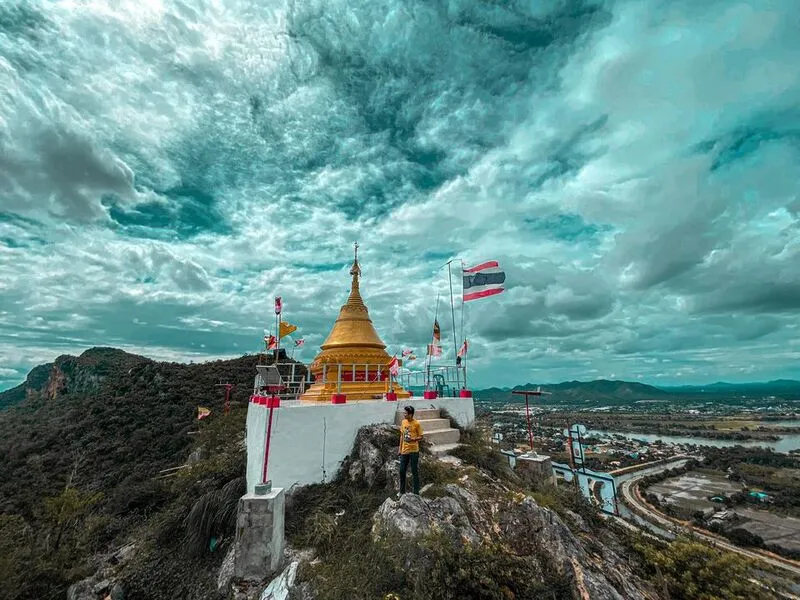
Historically, local narratives describe the site as being connected to a memorial element and a chedi (stupa) on the summit, with references linking it to events around the Thai–Burmese conflicts during the late Ayutthaya period. This gives the visit more than just a scenic-cave dimension, adding a sense of “remembering the past” through religious symbols and hilltop architecture. Still, deeper historical details should be based on verifiable published sources, and if you want more precise information about ceremonies or the site’s full background, it is best to ask the temple or local caretakers directly.
What makes many people remember the phrase “Tham Kaeo” (Glass Cave) is the sight of stalactites and stalagmites that look glossy and glass-like. When you shine a light or when illumination hits certain angles, you can see reflections and sparkle that feel different from many other caves. This type of beauty comes from natural processes in limestone caves: calcium carbonate dissolves in water and gradually redeposits over long periods, forming stalactites, stalagmites, and fine crystalline layers on the rock surface. To enjoy the cave more deeply, you do not need to rush through every corner. Instead, focus on the “surface texture” and “rock layers”—the differences in color, sheen, and patterns. Some sections resemble curtains, some form slender pillars, and some have bumpy textures similar to coral, which is why travel descriptions often mention “Tham Kaeo Pakarang” (Coral Glass Cave) alongside the main cave.
Wat Tham Kaeo Kanchanaphisek is described as having 3 beautiful caves. The main cave shares the same name as the temple, and Tham Kaeo Pakarang is highlighted for its sparkling formations that resemble glass. As for the third cave, various reviews and travel sources frequently mention the number “3 caves,” but the name is not consistently repeated across all sources. Therefore, when you arrive, it is recommended to check on-site signage or ask temple staff/caretakers about the exact route open for visits on that day, since lighting, humidity, or conservation needs may occasionally require restricting access to certain sections.
The key principle of cave viewing in a temple setting is “respect for nature.” Stalactites and stalagmites grow extremely slowly and can be easily damaged by touch. Sweat and skin oils can interfere with natural crystal deposition, and carvings or scratches on cave walls are often irreversible. The right approach is to use a flashlight or phone light only as needed, avoid long close-range shining, and avoid rapid flash bursts—especially if you notice any living creatures in the cave or if the area is meant to remain quiet. For photography, stand firmly, keep distance, and do not squeeze closer to formations just to get a larger shot, because accidents often happen in the moment you think “just a little closer.”
Another distinctive aspect of places like this is the role of the temple as a meditation space. Temples in quiet locations with caves often connect naturally to contemplation and meditation practice because the environment reduces distractions. Caves tend to maintain relatively stable temperature and humidity, outside noise becomes muted, and it becomes easier to feel “present.” Visitors who come to pray or practice meditation often appreciate the more separated atmosphere of a hilltop temple because it naturally creates distance from daily bustle.
Getting There Wat Tham Kaeo Kanchanaphisek is in Khao Noi Subdistrict, Tha Muang District, Kanchanaburi. A common approach is to drive into the Wat Tham Suea area and then follow local signs to Wat Tham Kaeo. Some travel notes describe the route as sharing the same access roads toward Wat Tham Suea with turns at key junctions, then crossing an irrigation canal and following signs for a short distance. Once at the temple area, expect a hill ascent and walking sections to higher viewpoints. Drive carefully, especially during or after rain when some surfaces may be slippery. If you plan to explore the caves seriously, wear shoes with good grip, bring a headlamp or a small flashlight, and allow enough time to walk slowly and safely.
A usable pin location is N 14.07600, E 99.65515, which has been published in local information. Another easy method is to search “Tham Kaeo Kanchanaphisek” in a map app and follow the suggested route. It is also wise to check mobile signal strength and ensure enough battery if you plan to visit multiple nearby stops in one day.
For timing, if you want comfortable walking and attractive views around the hill, mornings through late morning, or late afternoons with angled light, are often best. For cave visits, allow enough time and avoid entering too late in the day, because natural daylight outside helps with overall safety for climbing and walking even though you will still need a light inside the cave. The most enjoyable way to visit a hilltop temple is to keep your pace slow, pay attention to details, and prioritize safety over speed.
For first-time cave visitors, bring shoes with strong traction (uneven surfaces and humidity are common), a headlamp (hands-free stability), a small amount of drinking water, and a towel. If you are traveling with elderly visitors or young children, assess the walking difficulty and choose only the safer sections. You do not need to cover every corner in one trip. Cave exploration is often best experienced gradually—learning the place over time and returning again when you are ready.
Overall, Wat Tham Kaeo Kanchanaphisek is an excellent stop for travelers who want “beautiful caves + a peaceful temple + hilltop views” in a single place, while still being close enough to extend your route to rice-field cafes and nearby landmarks. From a practical experience perspective: do not rush. Spend time in the cave so your eyes and mind can adjust to darkness and silence. Then you begin to notice details that photos cannot fully capture, and you may understand why places like this deserve respect—both as fragile natural resources and as genuinely used religious spaces for meditation and practice.
| Place Name | Wat Tham Kaeo Kanchanaphisek (Tham Kaeo Kanchanaphisek Cave) |
| Address / Area | Khao Hua Raet, Khao Noi Subdistrict, Tha Muang District, Kanchanaburi Coordinates: N 14.07600, E 99.65515 |
| Place Summary | A hilltop temple with scenic caves and viewpoints, best known for glossy, crystal-like stalactites and stalagmites, suitable for nature exploration and a peaceful atmosphere. |
| Highlights | Sparkling, glass-like cave formations, described as having 3 caves, quiet temple environment suitable for meditation practice, hilltop viewpoints and a chedi on the summit. |
| Abbot / Current Caretaker | Recommended to contact the temple directly using the listed phone number for the most current information. |
| Open Days | Daily |
| Opening Hours | 08.00 – 16.00 |
| Travel (Summary) | Access via the Wat Tham Suea area, then follow signs to Wat Tham Kaeo. Expect hill ascent and walking sections; wear grippy shoes and bring a flashlight. |
| Current Status | Open for visits during published hours; a continuing temple and sightseeing spot for cave viewing and worship. |
| Verified Contact | Wat Tham Kaeo Kanchanaphisek: 081-981-8826 |
| Nearby Tourist Attractions (Approx. Distance) | 1) Wat Tham Suea (same zone) – distance depends on your starting point in the area 2) Move To Mountain Cafe / Photo Garden – 4.7 km 3) Tomi Edo Park – 3.9 km 4) I Din Klinn Khao (behind Wat Tham Suea) – 4.1 km 5) Tam Lan Thung (Tha Muang) – 4.3 km |
| Nearby Restaurants (Approx. Distance + Phone) | 1) Meena Cafe – (Wat Tham Suea zone) – 097-283-0990 / 090-992-7670 2) Tomi Edo Park – 3.9 km – 063-224-4341 3) TREE Boundary – (near Wat Tham Suea) – 098-717-9888 4) I Din Klinn Khao Kanchanaburi – 4.1 km – 087-911-8933 5) Tam Lan Thung – 4.3 km – 089-258-7899 |
| Nearby Accommodations (Approx. Distance + Phone) | 1) Chic Inn Hotel Thamuang – 9.5 km – 092-424-1644 2) The Vista Pool Villa – (Tha Muang) – 034-510-959 / 082-492-2228 3) By Hotel Kanchanaburi – (Kanchanaburi City) – 092-901-7722 / 034-512-598 4) NexStation Kanchanaburi – (Kanchanaburi City) – 092-268-1899 5) Love In Kan – (Tha Muang) – 096-850-7293 |
Frequently Asked Questions (FAQ)
Q: Where is Wat Tham Kaeo Kanchanaphisek located?
A: It is on Khao Hua Raet in Khao Noi Subdistrict, Tha Muang District, Kanchanaburi. You can pin “Tham Kaeo Kanchanaphisek” in a map app or use the coordinates N 14.07600, E 99.65515.
Q: Is it open daily, and what are the opening hours?
A: Published travel information commonly lists opening hours at approximately 08.00 – 16.00. If you are visiting during long holidays, it is still recommended to confirm again before departure.
Q: Why is it called a “glass cave” (Tham Kaeo)?
A: The standout feature is the glossy, light-reflective surfaces of stalactites and stalagmites. Under flashlight illumination, some areas appear to shimmer and sparkle like crystal.
Q: How many caves are there at this temple?
A: Travel sources describe a total of 3 scenic caves. The main cave shares the temple’s name, and Tham Kaeo Pakarang is another highlight. For the exact open route on the day, check on-site signage or ask caretakers.
Q: What should I prepare for cave viewing?
A: Wear shoes with good grip, bring a headlamp or flashlight, walk slowly on damp or uneven surfaces, and avoid touching formations to help preserve the cave.
Q: If I want to make the trip more worthwhile, what nearby restaurants or cafes are recommended?
A: The area has several nearby stops such as Meena Cafe, Tomi Edo Park, TREE Boundary, and rice-field-view spots like I Din Klinn Khao, making it easy to build a full one-day route.
 Tham Kaeo Kanchanaphisek Cave Map
 Category:
  Group:
  Last Update: 2 MonthAgo
Comment
 Nearby Attractions
| Keyword (Advance) |
 Facebook Fanpage
 Region
 Art, Culture and Heritage
 Historical Sites and Monuments(
 Landmarks and Memorials(
 Art, Craft Centres, Tradition(
 Museums(
 Art Gallery(
 University
 Places of Worship
 Temple(
 Church(
 Other religious and spiritural sites(
 Research and Development
 Royal Project(
 Suburban Living
 Village, Community(
 Local Market(
 National Parks and Marine Reserves(
 Mountain (Doi)(
 Dam, Reservoir, Lake(
 Waterfalls(
 Hot Springs(
 River, Canal(
 Other natural attractions(
 Entertainment and Agricultural
 Zoos and Aquariums(
 Animal camps and shows(
 Farm, Parks, Gardens and Ecotourism(
 Cinema(
 Outdoor and Adventure Activities(
 Travel Articles, Recipes
 Travel Review, Food Review(