
 Home
Home North(
 Chiang Mai(


Rating: 3.8/5 (10 votes)
 |
|  Map
Map 
 Have Map
  No Map
Kanchanaburi attractions
Attractions in Thailand
Open Days: Daily
Opening Hours: 08:00 – 17:00
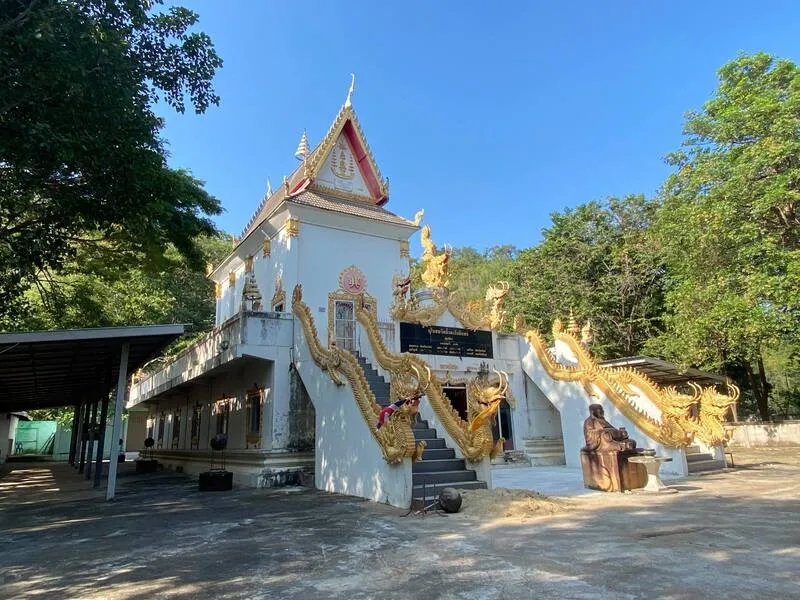
Pha Wang Chan Cave (Wat Tham Pha Wang Chan) in Lum Rang Subdistrict, Bo Phloi District, Kanchanaburi, is one of those destinations that suits travelers who want to “escape the noise” and place themselves closer to mountains, forest, and a sense of calm that has not been overly commercialized. The first impression upon arriving in Nong Kai Chum village is the quietness of rural life, a route that gradually turns down the volume of the town, and the shaded lines of trees that make the journey feel as if you are slowly opening the door to “another world” where time moves a little more gently. People speak of this place as Pha Wang Chan Cave because it features a beautiful natural cave and scenic views around it, while at the same time it sits within the setting of a temple or monastic area that frames the visit with an added layer of peace, composure, and respect for the place.
The charm of Pha Wang Chan Cave lies in its sense of “just right.” It is not “just right” because there is nothing to see, but because everything feels balanced in a way that allows visitors to truly look, breathe, and slow their steps. Caves in limestone terrain are often slightly cooler than the outside air, with humidity that brings the rock surfaces to life when light touches them, and wall textures that invite you to pause as if you were viewing a gallery created by nature itself. Stalactites and stalagmites formed over long periods create a wide range of shapes; some resemble curtains, some resemble pillars, and others form layered steps that immediately set the imagination in motion. The special quality is witnessing “beauty born from stillness” because nature takes an immense amount of time to craft these forms, unlike the instant beauty we often encounter online. Standing in the cave even for a moment can feel like a reminder that nature does not rush, yet it never stops creating.
Beyond the cave itself, the surrounding landscape is another element that makes the visit worthwhile, especially for those who love mountain views, forest scenery, and air that feels more open than the city. When you walk out from the dim interior of the cave and meet the outside light again, it can feel as if your eyes have been “reset.” The green of the trees and the layered mountain ridgelines make this place ideal to visit in the morning or late afternoon, when the light is softer, shadows are more attractive, and temperatures are generally more comfortable than midday. On clear-sky days, the view stretches farther and details of the ridges become sharper; on days with thin clouds, the atmosphere turns gentle and cinematic, like a natural scene that shifts its mood with the weather.
In terms of the site’s history and status, Wat Tham Pha Wang Chan is identified as a community temple under the Mahanikaya sect, with records indicating the temple was established in 1939 and later received official boundary status (wisungkhamsima). This reflects a development from a practice area or monastic retreat into a temple with a clearly recognized status under ecclesiastical law. Understanding this background helps a visit to Pha Wang Chan Cave feel like more than simply “coming to look at a cave”; it becomes a way to understand the place as a religious site and a living community space with real caretakers and rhythms of local faith. In some local contexts, the temple is also referred to by another name, such as “Wat Luang Pho Heng,” which further suggests how the site carries meaning for the community through devotion. Visitors are therefore encouraged to carry themselves appropriately for both the tourism dimension and the religious dimension at the same time.
Caves in the context of Thai temples are often more than sightseeing spots. They can be places where people practice meditation, undertake retreats, or seek quiet for the heart. Pha Wang Chan Cave offers that kind of atmosphere well. Even if visitors are not coming for formal practice, simply walking quietly while listening to footsteps and the sound of wind can noticeably slow the mind. Passing through darker sections tends to increase caution, and that very caution can make it easier to return to the present moment. Many nature travelers feel that cave visits pull them away from screens, because inside a cave you cannot comfortably check your phone all the time. Light is limited, reception may be weak, and walking requires focus. This is part of what makes Pha Wang Chan Cave a strong choice for people seeking a genuine reset, even if they only have half a day.
If you want the best experience, it helps to give yourself time to “receive the place” rather than rushing through. A good approach is to start by observing the overall setting, locating safe footing, and then gradually exploring deeper sections as appropriate. A small flashlight, or your phone’s light, can help reveal details on the rock walls, but what matters most is wearing non-slip footwear because cave areas and limestone paths can be damp and slippery, especially during the rainy season. If you are traveling with children or elderly family members, moving slowly and watching each step together is essential. The cave’s beauty does not need to be traded for risk, and a safe visit is what allows you to appreciate nature longer and return home with the best kind of memories.
Another reason Pha Wang Chan Cave is appealing is its “lack of crowds” compared with many well-known attractions in Kanchanaburi. It feels closer to nature, making it suitable for photographers who enjoy natural compositions and light-and-shadow, or families who want a calm place to walk together. In the morning, the air feels fresh and the light is already pleasing; in late afternoon, you can catch warm tones that add depth to mountains and trees. However, it is wise to avoid going too deep into the cave close to evening, as fading light reduces visibility and can affect safety. Overall, Pha Wang Chan Cave suits a “go-and-return” day trip, or it can serve as a restful stop within a broader itinerary around Bo Phloi and nearby areas.
Getting There: Pha Wang Chan Cave is located in Lum Rang Subdistrict, Nong Kai Chum village. By private car from Bo Phloi District, it is about 8.15 km to the general area, then there is a junction where you turn left and continue for about 8 km. The approach includes approximately 3,000 meters of paved road. Driving conditions are typically quiet rural routes with lighter traffic than main roads, but caution is recommended, especially during rain when surfaces can be slick or have loose dirt and sand. If you plan to enter the cave and walk around, it is best to allow extra time and fuel up in Bo Phloi town area beforehand, as convenience stores and gas stations along the smaller access roads may be less frequent than in town.
Upon arrival, one practical first step is to observe weather and ground conditions. If it has rained recently, extra care is needed because damp limestone or wet soil can be slippery. Bringing drinking water and a small towel can make the visit more comfortable, especially if you plan to spend time enjoying the views around the site. If you are visiting as a family or group, it helps to agree on a meeting point and timing, as natural settings can make it easy to spread out. In terms of etiquette, because this place includes a temple context, dress modestly and keep your voice low. If there are areas for making merit or paying respects, maintain appropriate composure and respect. These courtesies are not limitations; they are part of what makes the experience of visiting a sacred setting within nature feel harmonious and meaningful.
For travelers who enjoy understanding a place beyond the surface, Pha Wang Chan Cave also offers a view of “another side of Kanchanaburi” beyond the province’s most famous landmarks. Bo Phloi has an identity tied to gemstones, along with rural routes and communities that still maintain a simple way of life. Visiting Lum Rang Subdistrict makes it clear that Kanchanaburi has many quiet areas suited to slow travel, ideal for those who want real contact with nature rather than a quick check-in photo. In that sense, Pha Wang Chan Cave is like a small doorway into the province’s broader diversity—its landscapes, local culture, and community faith.
When it comes to making the most of a visit, Pha Wang Chan Cave works well as a half-day plan with a clear rhythm. For example, spend the first part exploring the cave and taking photos, then step back into the outside light to enjoy the view and rest. If you want to add more flavor to the day, you can continue with a meal in Bo Phloi town or stop at a restaurant along the route, since the area has local eateries and cafés that many travelers recognize. This kind of sequencing creates a day that blends nature, calm, and good food without forcing you to rush across multiple districts. Most importantly, allow time to drive back before dark, because rural roads at night often have limited lighting and require more careful driving.
Pha Wang Chan Cave is also well suited to those who want a “real experience” rather than a story told by others. Cave-and-forest temple settings often deliver a form of peace that is hard to find in crowded, high-profile attractions. If you come with the intention to rest your mind, try taking a short moment to sit quietly and listen to the sounds around you. Many people find that wind and natural ambience can bring surprising clarity. And if you want the visit to feel more meaningful, you can make a small offering according to your means, or simply help preserve the place by keeping it clean, not littering, and not damaging natural formations. Places like this remain beautiful over time because of the shared care between local communities and respectful visitors.
Ultimately, Pha Wang Chan Cave can be described as “simple but charming.” It suits nature lovers, those who prefer quiet travel, photography enthusiasts, and anyone who wants to see a side of Kanchanaburi that does not need to be the most famous to become deeply memorable. If you are looking for a new destination for a short trip from Bo Phloi, or you want to add a calm and uncrowded stop to your Kanchanaburi plan, Pha Wang Chan Cave is worth trying at least once. You may discover that the joy of travel is not always in how many places you visit, but in the quality of time you spend truly being present in one place.
| Place Name | Pha Wang Chan Cave (Wat Tham Pha Wang Chan) |
| Address | Nong Kai Chum Village, Lum Rang Subdistrict, Bo Phloi District, Kanchanaburi 71160, Thailand |
| Coordinates (Approx.) | 14.4691732, 99.4199603 |
| Place Summary | A natural cave and scenic viewpoint area in Lum Rang Subdistrict with a temple/religious context, suitable for calm visits, cave exploration, and enjoying the surrounding landscape. |
| Highlights | Beautiful cave features, quiet forest-and-mountain atmosphere, scenic viewpoints around the area, ideal for nature lovers and travelers seeking a peaceful reset. |
| Abbot/Caretaker (Latest) | Phra Khru Wilat Chantarophat (Kuttasaro) |
| Travel (Summary) | By private car from Bo Phloi District: about 8.15 km, then turn left at a junction and continue about 8 km. The access includes roughly 3,000 m of paved road. Drive carefully in rain or on slippery surfaces. |
| Current Status | Open to visitors (recommended from morning to late afternoon for safer cave exploration). |
| Contact Number | 061-652-9951 |
| Nearby Tourist Attractions (Approx. Distance) | 1) Luang Pho Nin, Bo Phloi – approx. 18 km 2) Bo Phloi Market (town area) – approx. 16 km 3) Bo Phloi Gem Area (district zone) – approx. 16 km 4) Grand Prix Golf Club – approx. 14 km 5) Wat Nong Ri (Bo Phloi area) – approx. 20 km |
| Popular Restaurants Nearby (Approx. Distance + Phone) | 1) Krua Tawan Tha Wa – approx. 18 km – 081-870-3911 2) Aura Cafe and The Gang – approx. 16 km – 081-170-6462 3) Krua Ban Siew – approx. 17 km – 081-014-5887 4) Nil Restaurant (Bo Phloi) – approx. 16 km – 086-517-9885 5) Krua Ban Don – approx. 16 km – 087-159-2664 |
| Popular Accommodations Nearby (Approx. Distance + Phone) | 1) Euro Resort – approx. 10 km – 097-954-6222 2) Pakdee Resort – approx. 12 km – 085-879-6649 3) At MuangPloy Resort – approx. 16 km – 034-581-456, 088-194-4656 4) Teewiset Hotel and Resort – approx. 16 km – 085-293-1285 5) Beam & Boom Bungalows (Nong Ri) – approx. 20 km – 083-313-4089 |
Frequently Asked Questions (FAQ)
Q: Where is Pha Wang Chan Cave located?
A: It is in Nong Kai Chum Village, Lum Rang Subdistrict, Bo Phloi District, Kanchanaburi. The site is a natural cave area with the context of Wat Tham Pha Wang Chan.
Q: What is the most convenient way to get to Pha Wang Chan Cave?
A: Driving a private car is the most convenient. From Bo Phloi District it is about 8.15 km, then turn left at a junction and continue about 8 km. The access includes around 3,000 meters of paved road.
Q: What time should I visit for safer cave exploration and better photos?
A: Morning to late afternoon is recommended because the light is better, the temperature is more comfortable, and visibility is generally safer for walking around cave areas. Avoid going deep into the cave close to evening.
Q: Do I need any special equipment to enter the cave?
A: Wear non-slip shoes and bring a small flashlight or use your phone light. Walk carefully, especially when the ground is damp after rain.
Q: Since it is a religious place, how should visitors behave?
A: Dress modestly, keep your voice low, do not litter, do not touch or damage cave formations, and remain respectful within temple areas or merit-making points.
 Pha Wang Chan Cave (Wat Tham Pha Wang Chan) Map
 Category:
  Group:
  Last Update: 2 MonthAgo
Comment
 Nearby Attractions
| Keyword (Advance) |
 Facebook Fanpage
 Region
 Art, Culture and Heritage
 Historical Sites and Monuments(
 Landmarks and Memorials(
 Art, Craft Centres, Tradition(
 Museums(
 Art Gallery(
 University
 Places of Worship
 Temple(
 Church(
 Other religious and spiritural sites(
 Research and Development
 Royal Project(
 Suburban Living
 Village, Community(
 Local Market(
 National Parks and Marine Reserves(
 Mountain (Doi)(
 Dam, Reservoir, Lake(
 Waterfalls(
 Hot Springs(
 River, Canal(
 Other natural attractions(
 Entertainment and Agricultural
 Zoos and Aquariums(
 Animal camps and shows(
 Farm, Parks, Gardens and Ecotourism(
 Cinema(
 Outdoor and Adventure Activities(
 Travel Articles, Recipes
 Travel Review, Food Review(