
 Home
Home North(
 Chiang Mai(


Rating: 4.5/5 (4 votes)
 |
|  Map
Map 
 Have Map
  No Map
Kanchanaburi attractions
Attractions in Thailand
Open Days: Open daily
Opening Hours: 07:00 – 20:00
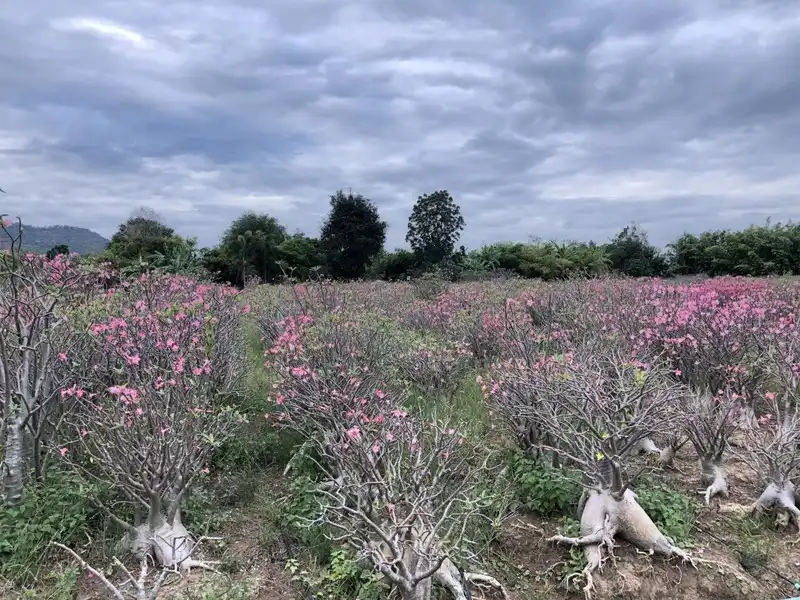
Suan Onanong Chuan Chom in Phanom Thuan District, Kanchanaburi, is the kind of place that turns a simple “garden visit” into something more purposeful than a quick walk-and-go. It is a destination for flower and ornamental-plant lovers who want to see a wide range of adeniums up close and choose quality plants to take home with real confidence. The garden is widely known as one of the largest adenium nurseries in the province, covering around 40 rai, so it offers both scale and variety. More importantly, it feels like a working nursery focused on propagation and plant health, rather than a temporary photo spot. Once you step inside, the atmosphere clearly centers on cultivation and selection, which makes it ideal for anyone who intends to buy plants for home decoration, or wants to begin collecting adeniums in a more systematic way.
The location is along the Kanchanaburi–Suphan Buri road (Highway 324) and is easy to remember because it sits directly opposite the Tam Larket Health Center. Even if you are not familiar with the route, that landmark makes the entrance easier to spot. Being on a main highway is also a practical advantage for planning a half-day outing or a quick stop along the way. For visitors who come specifically to buy plants, driving straight to the nursery makes transport far easier than traveling via multiple connections, and it also leaves you enough time to browse and choose without rushing, which tends to make the overall visit more enjoyable.
In practical terms, a nursery of this size is rarely arranged as a single plot you walk around in one loop. It usually has working zones that reflect how propagation happens, such as areas for younger seedlings, plants still establishing, plants ready for sale, and display-worthy specimens with strong form or standout blooms. Walking through the space can feel like moving through a “gallery of colors,” shifting from softer tones to deeper, vivid hues. Adeniums are admired for bold coloration and distinctive petal markings, and when many varieties are gathered in one place, the overall impression becomes even more lively and visually striking. It works well both for serious buyers and casual visitors who simply want to enjoy beautiful flowers without needing deep prior knowledge.
For experienced collectors, the appeal of adeniums is that they sit between a “bloom showpiece” and a “form showpiece.” They are not only beautiful when flowering, but can also be admired for trunk shape, caudex, roots, and the way the canopy is trained. When a plant has been raised well—with a firm base, well-developed roots, and a balanced canopy—it can look like a small living sculpture in a pot. Then, when flowering season arrives, bright blooms act like a spotlight that makes the entire plant even more dramatic. This is why visitors to Suan Onanong Chuan Chom range from people who want a simple ornamental plant to brighten a home, to those seeking specimens with long-term potential for training and collecting.
From an agro-tourism perspective, a propagation nursery that welcomes visitors to walk in, browse, and purchase offers both enjoyment and learning. Even if you are not a plant person yet, seeing real differences between varieties on-site makes it easy to understand why adeniums are so popular, and why the phrase “good variety” means more than just a pretty name. Some varieties are known for vivid color and frequent flowering, some for elegant petal forms and distinctive markings, while others stand out for a large base and attractive roots even before blooms appear. Seeing these differences in person helps your purchase decision rely on reality rather than online photos alone, which reduces risk and increases value for anyone buying with intention.
If you want your visit to feel “worth the time,” a simple approach is to split it into three phases. First, scan the overall selection and identify what you genuinely like—color tones, plant form, and a rough budget. Second, move into the serious choosing phase by selecting based on both beauty and what fits your home environment. A home that gets strong sun all day is excellent for adeniums, but if you only have partial sun, placement becomes more important. Third, plan for safe transport, especially if you buy multiple plants or larger pots. Ask about packing and positioning in the car, because adeniums can have thorns and branches that may scratch, break, or deform if placed incorrectly. Thinking in these three steps helps you avoid rushed decisions and increases the chance you will choose plants that truly suit your space—not only plants that look great in the moment.
For beginners, a large nursery is helpful because you can compare characteristics side by side in one location. Look at how firm the base feels, how the roots emerge and develop, whether the canopy looks balanced, and whether the leaves appear healthy—fresh, not wilted, and without unusual spots that might suggest pests or disease. Then choose a plant size that matches your experience and time. Medium-sized plants that have already stabilized are usually easier to manage than very small plants, because young plants can be sensitive to watering mistakes and humidity. However, smaller plants can be rewarding if you enjoy learning, because you get to watch the form evolve as the plant grows and branches over time. In the end, it mainly depends on your available time and your home conditions.
It also helps to understand the difference between seed-grown plants, grafted plants, and cuttings, because it affects how consistent the flowers may be and what you should expect later. Seed-grown plants can vary significantly, and flowers may not match the parent plant exactly, but the appeal is uniqueness and the surprise factor. Grafted plants tend to provide more predictable blooms, because a desired variety is grafted onto a strong rootstock, which suits buyers who want a specific flower color or form with higher certainty. Cuttings are another propagation route, where stems are rooted to form new plants; while effective in many cases, it is still important to evaluate root development and overall strength. Even a basic understanding of these differences makes it easier to communicate with nursery staff and to buy according to your real goal rather than depending on luck.
For care after you bring a plant home, the essentials can be summarized as “enough sunlight, airy soil, and the right amount of water.” Adeniums love sun and tend to flower well when light is adequate. Right after relocation or repotting, allow the plant time to adjust and avoid changing many variables at once, such as a heavy soil change and immediate placement under harsh full sun, which can shock the plant. If repotting is necessary, do it carefully to avoid damaging roots, and consider a short adjustment period in partial light before returning the plant to full sun. With watering, adeniums dislike soggy conditions, and a common beginner mistake is watering too frequently until the base rots. A practical rule is to check the soil first and water only when it has dried appropriately. Adeniums generally tolerate dryness better than constant wetness, especially in the rainy season when humidity is high.
The ideal planting medium for adeniums is typically well-draining and airy rather than water-retentive, because the roots need oxygen. Using a porous mix greatly reduces the risk of base rot and fungal issues, and it makes growing in pots more enjoyable because you can clearly see how the plant responds to its conditions. When the medium is right, roots develop well, foliage stays stronger, and flowering tends to become more consistent. Fertilizer can support healthy growth, but it should not be rushed early on. Let the plant establish first, then adjust feeding depending on whether you want to encourage foliage or flowering. Avoid over-fertilizing, which can lead to salt buildup and root damage, especially in smaller plants.
A practical detail that many articles do not explain well is the importance of choosing the right placement in a typical Thai home. In reality, this often determines whether growing adeniums feels easy or frustrating. If you have a spot that receives strong morning or afternoon sun for several hours—such as a front yard, an open balcony, or a side area without a heavy roof cover—adeniums are far more likely to flower well and keep a compact, attractive form. Places that stay shaded all day often cause the plant to stretch, produce sparse leaves, and flower less. Correct placement from the beginning can matter more than fertilizer. If you temporarily move plants indoors during heavy rain, keep it short rather than leaving them in shade for long periods, because prolonged low light can change growth behavior and make flowering harder later.
The nursery is also a solid spot for photography. Adenium blooms are often richly saturated and vivid, and photos look especially good in the morning or late afternoon when the light is softer. The background of many plants arranged in a real nursery setting adds depth, so images rarely look empty. If you want close-up flower shots, step in closer and look for slightly angled light to bring out petal texture. If you want photos that communicate scale, take wider shots that include rows of pots, because those frames immediately show that this is a real propagation garden rather than a small roadside plant shop.
For families, especially those with children or elderly relatives, it is worth prioritizing safety and etiquette in a working nursery. Some adeniums have thorns, and walking among many pots requires care to avoid tripping or knocking plants over. Define a clear walking area and keep children close. Avoid grabbing flowers or branches, and do not move pots yourself even if you want a closer look, because shifting a pot at the wrong moment can disturb roots or damage containers. If you want to examine a plant up close, ask staff to help position it safely. This keeps the visit smooth and respectful while minimizing risk.
One of the best takeaways from visiting a nursery like this is that you can go home with a deeper understanding of how potted plants work, because adeniums teach the idea of “balance” very clearly—light, water, soil, and timing all matter. If you observe your plants over time, you will gradually learn to read signals: which leaf look suggests dryness, which suggests excessive moisture, what a stable healthy base looks like, and what early warning signs might indicate trouble. Starting with a nursery that has real cultivation knowledge often means you receive advice that matches the exact plant you are buying, not generic tips that may or may not work. That is a major advantage compared with buying purely online.
If you want a simple plan that keeps the visit enjoyable, think of it as a short trip that ends with something real to bring home. Browse calmly, then choose 1–3 plants you truly like. If you buy only because a plant looks beautiful but it does not suit your home, you may feel discouraged later. But if you choose based on suitability first and let beauty be the bonus, your success rate rises sharply. When your plant actually thrives and blooms at home, the satisfaction is far greater than the quick excitement of buying a pretty object. Starting with a small number also makes it easier to observe and fine-tune your care routine, and you can always expand your collection in a future visit.
Getting There If you drive from Kanchanaburi town, use Highway 324 (Kanchanaburi–Suphan Buri) toward Phanom Thuan District. The nursery is on the main road and is easy to identify because it is located directly opposite the Tam Larket Health Center. Slow down as you approach the area, look for the entrance signage, and turn in following the internal access road. Driving is the most convenient option for visitors who plan to buy plants and transport them home, especially medium or large pots. It helps to clear space in the trunk and prepare simple supports to prevent pots from sliding or branches from being pressed during the drive.
Overall, Suan Onanong Chuan Chom is a strong choice for anyone who wants to explore adeniums seriously or simply bring home vibrant flowers to brighten a space. You get the pleasure of seeing many varieties, the practical advantage of buying directly from a propagation nursery, and the opportunity to learn how to care for plants in ways that match your home environment. With its easy access from a main highway and the scale of a large nursery, it offers enough options for you to choose accurately rather than guessing from photos alone.
| Name | Suan Onanong Chuan Chom |
| Address | 87 Moo 13, Rang Wai Subdistrict, Phanom Thuan District, Kanchanaburi 71170 |
| Location | On Highway 324 (Kanchanaburi–Suphan Buri), opposite Tam Larket Health Center |
| Summary | A large adenium propagation nursery in Kanchanaburi (around 40 rai) where visitors can browse and purchase many varieties, ideal for collectors and beginners looking for quality plants. |
| Highlights | Large-scale nursery (~40 rai) + a wide range of colorful adenium varieties + direct purchase from a propagation source + easy access from a main highway |
| Background | A propagation-focused adenium nursery recognized as an agro-tourism-style garden where visitors can browse and buy multiple varieties. |
| Open Days | Open daily |
| Opening Hours | 07:00 – 20:00 |
| Current Status | Open |
| Contact | 034-571-193, 081-856-7799, 081-905-5299 |
| Travel | By car: Take Highway 324 toward Phanom Thuan. The nursery is opposite Tam Larket Health Center. Turn in via the entrance and follow the internal road. |
| Nearby Attractions (Approx. Distance) | 1) Phra Phuttha Pusaya Khiri Si Suwannaphum – 3 km 2) Wat Khao Phra Si Sanphetcharam – 5.2 km 3) U Thong National Museum – 8.9 km 4) Lao Song House (Ruen Lao Song) – 9.4 km 5) Giant Buddha Carving at Wat Khao Dee Salak – 16 km |
| Popular Restaurants Nearby (Approx. Distance + Phone) | 1) DELIGHT Bake&Brew – 0.2 km – 063-541-5598 2) The TOTO – 0.3 km – 034-571-019, 089-689-6118 3) Je Kiao Noodles (Rang Pho) – 0.5 km – 081-274-3671 4) Ko Feo Khao Moo Daeng – 0.8 km – 093-539-9308 5) Cafe Namjaidee – 1.3 km – 099-524-7826 |
| Popular Accommodations Nearby (Approx. Distance + Phone) | 1) Wat Caf’e Resort – 24 km – 062-325-4874 2) Tolopoti Hotel Resort – 24 km – 082-333-3308 3) Sa Plai Suan Resort – 32 km – 035-559-839 4) Suan Lung Chan Thai Homestay – 33 km – 061-505-9222 5) Pusayapuri – 37 km – 098-986-5000 |
Frequently Asked Questions (FAQ)
Q: Where is Suan Onanong Chuan Chom located, and what is the easiest landmark to use?
A: The nursery is on Highway 324 (Kanchanaburi–Suphan Buri) in Phanom Thuan District, directly opposite the Tam Larket Health Center, which makes it easy to spot when driving.
Q: What time of day is best for photographing adenium flowers?
A: Morning and late afternoon usually provide softer light, helping the colors look vivid without harsh contrast. Flowering depends on each variety and seasonal timing, so the best blooms vary by visit.
Q: What should a beginner choose to make adeniums easier to grow?
A: Start with a medium-sized plant that has already stabilized, with healthy leaves, a firm base, and a well-draining potting medium. Place it where it receives several hours of sun daily.
Q: How should I care for an adenium right after bringing it home?
A: Let it adjust before making major changes. Keep the soil airy and well-draining, and water only when the medium has dried appropriately. Avoid consistently wet conditions, especially during the rainy season.
Q: How can I transport multiple plants or larger pots safely?
A: Clear space in the trunk, secure pots to prevent sliding, and position plants so branches are not pressed or bent. If you are unsure, ask the nursery staff for packing guidance before leaving.
 Tel: 034571193, 018567799
 Mobile: 0819055299
 Onanong Adenium Nursery Map
 Category:
  Group:
  Last Update: 2 MonthAgo
Comment
 Nearby Attractions
| Keyword (Advance) |
 Facebook Fanpage
 Region
 Art, Culture and Heritage
 Historical Sites and Monuments(
 Landmarks and Memorials(
 Art, Craft Centres, Tradition(
 Museums(
 Art Gallery(
 University
 Places of Worship
 Temple(
 Church(
 Other religious and spiritural sites(
 Research and Development
 Royal Project(
 Suburban Living
 Village, Community(
 Local Market(
 Nature and Wildlife
 National Parks and Marine Reserves(
 Mountain (Doi)(
 Dam, Reservoir, Lake(
 Waterfalls(
 Hot Springs(
 Caves(
 River, Canal(
 Other natural attractions(
 Zoos and Aquariums(
 Animal camps and shows(
 Cinema(
 Outdoor and Adventure Activities(
 Travel Articles, Recipes
 Travel Review, Food Review(