
lovethailand home >North Travel Attractions >Uttaradit Travel Attractions >Ban khok >Bo Bia > Chong Maharaj Border Relaxation Point
TL;DR: Chong Maharaj Border Relaxation Point, Uttaradit attractions : Art, Culture and Heritage, Landmarks and Memorials.
Chong Maharaj Border Relaxation Point
Open Days: Border Trade Temporarily Closed Since 10 August 2025 Until Further Notice
Opening Hours: Former Traditional Market Hours Were Every Sunday, 06.00 – 13.00
Chong Maharaj Border Relaxation Point, also known as Ban Bo Bia Thai-Lao Border Market or Chong Maharaj Market, is located at Moo 1, Ban Bo Bia, Bo Bia Subdistrict, Ban Khok District, Uttaradit Province. It is an important community border area connecting Thailand with Laos and has long served as a traditional trading point for people from both sides of the frontier. Unlike a large permanent border crossing, Chong Maharaj is best understood as a local border market and cultural contact zone where trade, community relations, and shared ways of life meet.
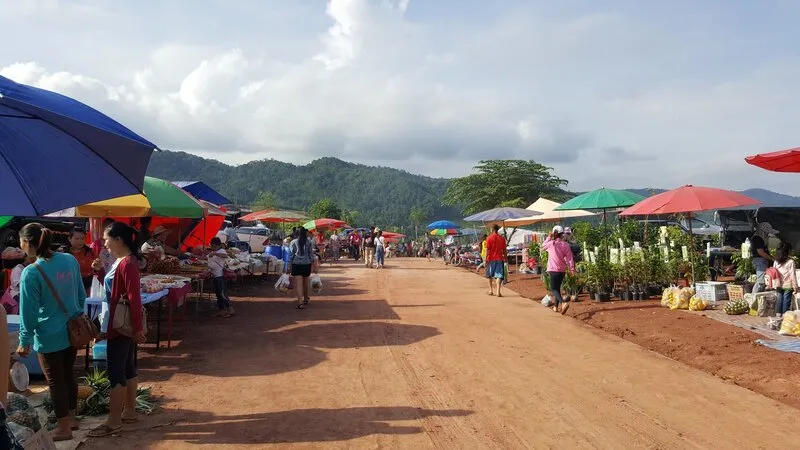
The importance of Chong Maharaj lies in its role as a small but meaningful Thai-Lao border marketplace. When operating normally, it opens as a traditional Sunday market where villagers from Thailand and Laos meet to exchange goods, buy daily necessities, and maintain social relationships. The market reflects a form of grassroots border economy that is more personal and community-based than large-scale commercial trade. It is a place where the border is not only a line between countries, but also a space of contact, conversation, and cooperation.
Ban Bo Bia is located in Ban Khok District, a frontier district of Uttaradit Province characterized by mountains, forests, rural communities, and border routes. The geography of this area gives Chong Maharaj its distinctive atmosphere. Travelers reaching the site pass through rural landscapes and border communities rather than busy urban areas. This gives the market a strong local identity and makes it especially interesting for visitors who want to understand the quieter frontier side of Uttaradit.
For many years, people from both sides of the border have used Chong Maharaj as a place for local trade. Thai villagers bring agricultural products, vegetables, fruits, rice, processed farm goods, and daily household items, while Lao traders may bring bamboo shoots, forest herbs, sticky rice, local vegetables, woven products, and seasonal forest products. The goods change according to the season, but the character of the market remains rooted in local life.
The market is valuable because the exchange is not only economic. Thai and Lao communities in this border region share many cultural similarities in language, food, belief, farming practices, and everyday ways of living. The Sunday market therefore becomes a social and cultural meeting place. Conversations, bargaining, greetings, and repeated weekly encounters help preserve the friendly relationship between communities across the border.
In terms of local economy, Chong Maharaj supports small-scale trade and provides an outlet for community products. Villagers can bring goods directly to buyers without depending entirely on larger market systems. This type of market helps circulate income within the area and gives local households an opportunity to earn from agriculture, gathering, processing, and small trading. Although the market is modest in size, it has real significance for the people who depend on border exchange.
A regulated relaxation point also helps create a more orderly form of border trading. Instead of informal or hidden exchange, people have a designated space where trade can take place under the supervision of local authorities, administrative officials, and security agencies. This balance between livelihood and regulation is important in frontier areas, where community needs and border security must be managed together.
Chong Maharaj also has historical sensitivity because the area across the border is associated with villages and border memories linked to Thai-Lao relations in the past. Local information refers to nearby Lao-side communities and historical border circumstances, including events from 1984. This background gives the place a deeper meaning. It is not merely a temporary market, but part of a border landscape shaped by history, memory, and efforts to maintain peaceful relations.
Although Chong Maharaj has not been upgraded to a permanent international border crossing, its role as a traditional trading point gives it potential as a cultural border tourism destination. If managed carefully, it can serve as a learning space for understanding border livelihoods, Thai-Lao cultural connections, seasonal products, and small-scale local economy. Its charm lies precisely in its simplicity and authenticity, which should be preserved rather than replaced by excessive commercialization.
When the market operated normally, it was most active early on Sunday mornings. Traders needed to arrive before sunrise or very early in the morning, as the market opened from around 06.00 to 13.00. In practice, the liveliest period was in the early morning, and the market often began winding down before noon. Travelers who wanted to experience the real atmosphere needed to arrive early, bring cash, and walk slowly through the market while observing the movement of local trade.
The latest status found for Chong Maharaj indicates that Thai-Lao border trade at this point has been temporarily closed since 10 August 2025 until further notice. Therefore, visitors should understand the Sunday trading atmosphere as the traditional operating pattern when the market is open. Anyone planning to travel specifically for the market should check current announcements from Uttaradit Province, Ban Khok District, Bo Bia Subdistrict Administrative Organization, or relevant security agencies before departure.
Getting There from Uttaradit city requires traveling toward Ban Khok District and continuing to Bo Bia Subdistrict. The route passes through rural and mountainous landscapes before reaching Ban Bo Bia. Because the site is far from the provincial city and public transport is limited, private car or rental car is the most practical option. Travelers should prepare enough fuel, drinking water, cash, and travel time, especially if they plan to visit early in the morning.
The journey to Bo Bia offers a very different impression of Uttaradit from the city center. Instead of urban streets, visitors experience mountains, small villages, farms, and border scenery. Nearby areas can be combined with viewpoints and natural attractions in Ban Khok District, such as Phu Lae Lao and Phu Krabok. This makes Chong Maharaj suitable for travelers who enjoy road trips, rural landscapes, and community-based travel.
Visitors to border areas should always respect local rules. They should avoid entering restricted zones, photographing officers or checkpoints without permission, and bringing prohibited goods across the border. Border areas involve community life, tourism, trade, and security at the same time. Responsible behavior helps keep the visit safe and respectful.
If the market resumes normal operation, travelers should approach it as a local community market rather than a staged tourist attraction. Asking prices politely, bargaining reasonably, requesting permission before taking close-up photos of people, and supporting local products are good practices. Many products are seasonal or locally sourced, so the market experience may vary from week to week.
Chong Maharaj is a strong example of how small border markets support peace and local livelihood. Weekly trade gives people a reason to meet, talk, and rely on one another. When people on both sides of the frontier know each other through ordinary daily exchange, the border becomes not only a dividing line but also a bridge between communities.
For travelers interested in a deeper view of Uttaradit, Chong Maharaj reveals a side of the province beyond temples, fruit orchards, Laplae culture, and the story of Phraya Phichai Dap Hak. It shows Uttaradit as a border province connected to Laos through people, products, roads, mountains, and shared cultural life. Visiting this area helps travelers understand the province from a wider regional perspective.
Chong Maharaj Border Relaxation Point is therefore more than a trading point. It is a community border space, a reflection of Thai-Lao relations, a small economic engine for local people, and a cultural landscape shaped by everyday contact. With appropriate care and future reopening when conditions allow, it can remain one of Uttaradit’s most distinctive border destinations.
| Name | Chong Maharaj Border Relaxation Point / Ban Bo Bia Thai-Lao Border Market |
| Location | Moo 1, Ban Bo Bia, Bo Bia Subdistrict, Ban Khok District, Uttaradit Province |
| Address | Ban Bo Bia, Moo 1, Bo Bia Subdistrict, Ban Khok District, Uttaradit Province 53180, Thailand |
| Highlights | Traditional Thai-Lao Border Market, Local Products From Both Sides, And Community-Based Border Culture |
| History | A Traditional Border Relaxation Point Used For Local Thai-Lao Trade And Community Exchange; Formerly Opened As A Sunday Trading Market When Operating Normally |
| Name Origin | Chong Maharaj Refers To The Border Passage Area At Ban Bo Bia Used For Local Contact And Trading Between Thai And Lao Communities |
| Distinctive Features | A Small Border Market Reflecting Local Livelihoods, Seasonal Products, And Cultural Relations Between Communities On Both Sides Of The Frontier |
| Travel Information | Travel From Uttaradit City Toward Ban Khok District And Continue To Bo Bia Subdistrict; Private Car Or Rental Car Is Recommended, And Current Market Status Should Be Checked Before Departure |
| Current Status | Thai-Lao Border Trade At This Point Has Been Temporarily Closed Since 10 August 2025 Until Further Notice |
| Open Days | Border Trade Temporarily Closed According To The Latest Available Notice |
| Opening Hours | Former Traditional Market Hours Were Every Sunday, 06.00 – 13.00 |
| Facilities | Community Market Area, Local Parking Area, Nearby Shops, And Basic Services In Ban Bo Bia When The Market Is Operating |
| Main Areas / Zones | 1. Thai-Lao Border Trading Area 2. Local Product Stalls 3. Community Parking Area 4. Chong Maharaj Border Route 5. Ban Bo Bia Community |
| Caretaker | Bo Bia Subdistrict Administrative Organization, Ban Khok District, And Relevant Local Security Agencies |
| Main Contact Number | Bo Bia Subdistrict Administrative Organization, Tel. 062-309-6190 |
| Official Website / Official Page | Bo Bia Subdistrict Administrative Organization: www.bobia.go.th |
| Nearby Tourist Attractions | 1. Ban Bo Bia Community, about 0 km 2. Chong Maharaj Border Area, about 0 km 3. Phu Lae Lao Viewpoint, Ban Khok District, about 35 km 4. Phu Krabok Viewpoint, Ban Khok District, about 35 km 5. Ban Khok District Town, about 40 km 6. Phu Du Permanent Border Crossing, about 55 km 7. Fak Tha District, about 70 km |
| Nearby Restaurants | 1. Local Food Stalls In Ban Bo Bia Community, about 1 km 2. Kuai Tiao Ban Na Bua, Ban Khok District, about 40 km 3. Phu Tawan Restaurant, Ban Khok District, about 40 km 4. Paweena Karaoke Restaurant, Ban Khok District, about 40 km 5. Mae Nom Photchana, Ban Khok District, about 40 km 6. lom lom cafe, Ban Khok District, about 40 km |
| Nearby Accommodations | 1. Ban Khok Resort, Ban Khok District, about 40 km, Tel. 083-161-0172 2. Aom Hug Home, Ban Khok District, about 40 km, Tel. 065-253-0583, 061-348-1224 3. Ban Pleng Resort, Ban Khok District, about 40 km 4. Pho Sang Mae Om Hotel, Ban Khok District, about 40 km 5. Daily Rental Rooms In Ban Khok District Town, about 40 km |
Frequently Asked Questions (FAQ)
Q: Where Is Chong Maharaj Border Relaxation Point Located?
A: Chong Maharaj Border Relaxation Point, also known as Chong Maharaj Market, is located at Moo 1, Ban Bo Bia, Bo Bia Subdistrict, Ban Khok District, Uttaradit Province.
Q: When Does Chong Maharaj Market Open?
A: The traditional market formerly opened every Sunday from 06.00 to 13.00. The latest available status indicates that border trade has been temporarily closed since 10 August 2025 until further notice.
Q: Why Is Chong Maharaj Important?
A: It is a local Thai-Lao border trading area that supports community income, small-scale trade, and cultural relationships between people on both sides of the border.
Q: What Goods Are Usually Found At The Market?
A: When operating normally, the market features agricultural products, vegetables, fruits, rice, processed farm goods, bamboo shoots, forest herbs, woven products, and local goods from Thailand and Laos.
Q: Is Chong Maharaj A Permanent Border Crossing?
A: No. Chong Maharaj is a border relaxation point or traditional trading point, not a permanent international border crossing like Phu Du.
Q: How Should Visitors Prepare For A Trip?
A: Visitors should check the current market status before traveling, use a private car or rental car, prepare cash and drinking water, and allow enough time because the area is far from Uttaradit city.
Q: What Nearby Places Can Be Visited With Chong Maharaj?
A: Nearby places include Ban Bo Bia community, Phu Lae Lao Viewpoint, Phu Krabok Viewpoint, Ban Khok District town, Phu Du Permanent Border Crossing, and the route toward Fak Tha District.
Q: Can Visitors Take Photos In The Border Area?
A: Visitors may take photos in general public areas when there is no restriction, but should avoid photographing checkpoints, officers, or restricted border zones without permission.
 Category: ●Art, Culture and Heritage
 Group: ●Landmarks and Memorials
Last Update : 4 MonthAgo
 Last Update : 4 MonthAgo
 Click to Access the Navigation Map GPS
Chong Maharaj Border Relaxation Point Map
Recommend

 Historical Sites and Monuments(2)
Landmarks and Memorials(8)
Historical Sites and Monuments(2)
Landmarks and Memorials(8)
 Art, Craft Centres, Tradition(3)
 Museums(1)
 Historic Homes and Cities(1)
 Places of Worship
 Temple(42)
 Other Sacred Sites(5)
 Suburban Living
 Village, Community(4)
 Nature and Wildlife
 National Parks and Marine Reserves(4)
 Mountain (Doi)(3)
 Dam, Reservoir, Lake(3)
 Waterfalls(11)
 Caves(3)
 River, Canal(3)
 Other natural attractions(3)
 Entertainment and Agricultural
 Farms, Parks and Ecotourism(1)


