
lovethailand home >North Travel Attractions >Uttaradit Travel Attractions >Mueang Uttaradit >Ngiw Ngam > Wat Doi Kaew
TL;DR: Wat Doi Kaew is located at Ban Ngiu Ngam, Ngiu Ngam Subdistrict, Mueang Uttaradit District, Uttaradit Province, open Daily for general merit-making and visits, hours Daytime is suitable for visiting.
Wat Doi Kaew
Open Days: Daily for general merit-making and visits
Opening Hours: Daytime is suitable for visiting
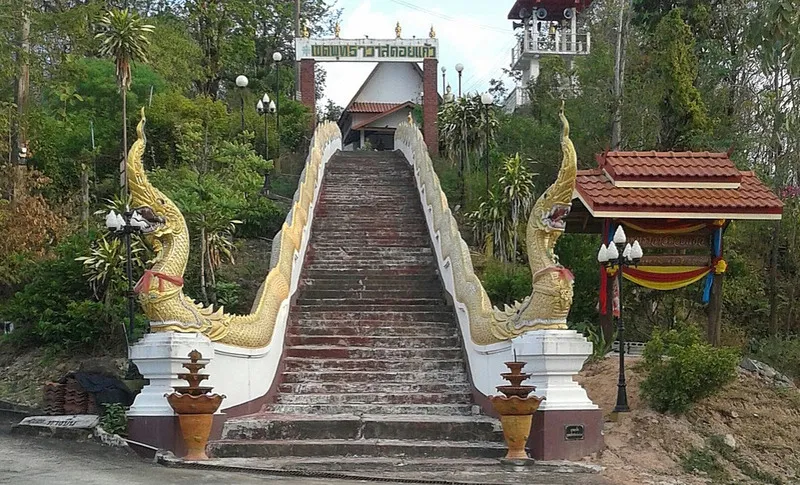
Wat Doi Kaew is located in the Ban Ngiu Ngam area of Ngiu Ngam Subdistrict, Mueang Uttaradit District, Uttaradit Province. It is a hilltop Buddhist sacred area closely connected with the local community, Buddhist faith, and the natural landscape of Ngiu Ngam. The site stands on a hill to the west of the village, offering a peaceful and elevated environment suitable for merit-making, worship, meditation, quiet reflection, and a gentle connection between people and nature. Wat Doi Kaew is not a crowded tourist attraction, but a meaningful spiritual place for travelers who prefer calm, simplicity, and local cultural depth.
The most distinctive feature of Wat Doi Kaew is its hilltop location. From the elevated area, visitors can enjoy views of the surrounding Ngiu Ngam landscape. In the morning and evening, the atmosphere becomes especially peaceful when soft light falls over the trees, hills, and village surroundings. This natural setting makes the temple area suitable for meditation, Buddhist practice, or simply sitting quietly in a calm environment. For visitors looking for a peaceful temple near Uttaradit city, Wat Doi Kaew offers a refreshing alternative to busier sites.
Wat Doi Kaew is meaningful to the Ban Ngiu Ngam community because it has long served as a sacred area associated with local faith. It is more than a place for Buddhist ceremonies. It is a space where villagers connect with religion, memory, nature, and community identity. The hill itself helps create a sense of spiritual separation from everyday life below. When visitors travel up to the temple area, they experience a gradual transition from the village environment to a quieter place of reflection.
The history of Wat Doi Kaew is closely related to Wat Khao Kaew in Ngiu Ngam Subdistrict. Local history records that the Buddhist sacred area of Wat Doi Kaew was an earlier hilltop temple site. Later, the religious center was developed and moved closer to the community, becoming Wat Khao Kaew in the present day. This change was connected with practical conditions in the past. The original hilltop area was distant from the village, difficult to reach, and affected by travel problems during the rainy season. The story therefore reflects how religion, geography, and community life shaped one another.
Although the central temple role is now connected with Wat Khao Kaew, the Doi Kaew area remains important as an original Buddhist sacred site of the Ngiu Ngam community. It continues to hold value as a quiet place for worship, reflection, and spiritual connection. The elevated landscape helps visitors feel the character of an older sacred space that was once closely tied to monastic life and village devotion. This makes Wat Doi Kaew meaningful not only as a scenic hilltop, but also as a place that preserves the memory of local Buddhist development.
The name “Wat Doi Kaew” reflects both geography and auspicious meaning. The word “Doi” means hill or elevated land, directly referring to the site’s location. The word “Kaew” is an auspicious Thai word often associated with purity, value, clarity, and preciousness. Together, the name suggests a sacred hill of spiritual value. This meaning fits well with the atmosphere of the place, where visitors come to worship, calm the mind, and experience nature.
The hilltop terrain is one of the strongest reasons to visit Wat Doi Kaew. Compared with temples located on flat ground, this site feels quieter and more open. The air, shade, trees, and views help create a calm environment for contemplation. Hilltop temples are often suitable for Buddhist practice because the natural surroundings help reduce mental distractions. Wat Doi Kaew offers exactly this kind of atmosphere: simple, quiet, and supportive of inner stillness.
Morning visits offer a particularly beautiful experience. The early light gives the temple area a fresh and peaceful feeling, while mist or soft haze over the hills can make the surrounding landscape even more serene. In the late afternoon, the light becomes gentle and the view over Ngiu Ngam feels calm and warm. These moments are ideal for walking slowly, paying respect, sitting quietly, and appreciating the harmony between sacred space and nature.
Wat Doi Kaew is connected with Buddhist activities of the local community, especially on important religious days such as Makha Bucha Day, Visakha Bucha Day, Asalha Bucha Day, Buddhist Lent, and the end of Buddhist Lent. Local people traditionally gather for merit-making, listening to Dhamma, candlelight procession, and other Buddhist activities. The hilltop setting gives these events a peaceful atmosphere, allowing people to experience both religious devotion and natural calm at the same time.
In addition to annual Buddhist ceremonies, the temple area is suitable for moral education and community learning. Activities related to Dhamma practice, youth training, volunteer work, and the cultivation of gratitude, kindness, and social responsibility can take place in such an environment. When children and young people experience Buddhist learning in a real temple setting surrounded by nature, moral education becomes more tangible and meaningful.
Wat Doi Kaew also plays a cultural role by connecting older and younger generations. Elders in the community help pass down memories of the hilltop site, the development of local temples, and the relationship between Doi Kaew and Wat Khao Kaew. Younger generations can learn that a temple is not only a building, but also a living part of community history. Through merit-making, temple care, and participation in local activities, community memory continues to be preserved.
For cultural and spiritual travelers, Wat Doi Kaew should be approached with respect. Visitors should not see it only as a viewpoint or photo location. It is a sacred area connected with local faith. Appropriate behavior includes modest dress, quiet speech, respect for monks and worshippers, and avoiding disturbance during religious activities. A respectful visit allows travelers to experience the place in a way that supports both the temple and the community.
For meditation and quiet reflection, Wat Doi Kaew is especially suitable during the morning or late afternoon. Visitors can pay respect, sit quietly, or walk mindfully in the temple area. The elevated location helps create a feeling of distance from daily busyness without requiring a long journey from the city. This balance makes the site valuable for people who need a short spiritual break close to Uttaradit city.
Getting There is convenient from Uttaradit city. Travelers can head toward Ngiu Ngam Subdistrict in Mueang Uttaradit District, follow local roads into Ban Ngiu Ngam, and continue toward the Doi Kaew hill area. Traveling by private car, rental car, or local transport is recommended. The trip can be combined with nearby places such as Wat Khao Kaew, Wat Ngiu Ngam, Wat Si Tharam, Wat Tha Thong, Saphan Paramin, and attractions in Uttaradit city.
The route to Ngiu Ngam is suitable for a half-day cultural trip or a temple route around Mueang Uttaradit District. Visitors using map navigation can search for the Wat Doi Kaew location in Ngiu Ngam. Once entering the community area, driving carefully is recommended, especially on local roads and the hill approach. Daytime travel is the most suitable because it allows visitors to see the route clearly and enjoy the surrounding scenery.
After arriving at the temple area, visitors should take time to explore slowly. A meaningful visit can begin with paying respect, walking around the sacred area, looking out over the Ngiu Ngam landscape, and sitting quietly in a peaceful corner. The beauty of Wat Doi Kaew is not based on grandeur. It lies in the balance of hilltop silence, natural surroundings, local faith, and the feeling of being close to both nature and the mind.
Wat Doi Kaew is suitable for people who want to escape the pace of everyday life without traveling far from Uttaradit city. Travelers who appreciate quiet temples, hilltop settings, local culture, and natural views will find this site meaningful. It offers religious, natural, and community perspectives in one place. A visit here is simple, but it can be deeply calming.
From a conservation perspective, Wat Doi Kaew should be cared for as a meaningful trace of the original hilltop Buddhist sacred area of the Ngiu Ngam community. Preserving this place means more than maintaining physical structures. It also means preserving local memory, the story of the temple center moving closer to the village, and the relationship between Wat Khao Kaew and the Doi Kaew sacred area. Accurate storytelling and respect for local context are important parts of cultural preservation.
For cultural travelers, Wat Doi Kaew can serve as an entry point to understanding Ngiu Ngam. The area holds stories of community, temple development, local schools, changing settlement patterns, and adaptation to geography. The site helps visitors understand local history through real landscape rather than through documents alone. For those interested in community history, this makes Wat Doi Kaew more meaningful than a typical scenic stop.
Families visiting Wat Doi Kaew can use the trip as an opportunity to teach children about temple manners, respect for sacred places, and awareness of nature. Children can learn that temples are connected not only with buildings and images, but also with hills, trees, communities, and human stories. This kind of learning makes travel more valuable and helps younger generations appreciate local roots.
Visitors should prepare appropriately by dressing modestly, keeping the area clean, speaking quietly, and avoiding restricted spaces. Any signs or instructions at the temple should be followed. Since Wat Doi Kaew is both a sacred area and a natural hilltop site, responsible behavior helps preserve its peaceful atmosphere. Respectful travel ensures that the place remains meaningful for both visitors and the local community.
Another advantage of Wat Doi Kaew is that it can be included in a wider temple route around Mueang Uttaradit. Travelers can begin with Wat Doi Kaew for the hilltop atmosphere, continue to Wat Khao Kaew and Wat Ngiu Ngam, then return toward the city for food, cafés, or accommodation. This route offers a combination of hilltop sacred space, community temples, and urban convenience in one day.
Overall, Wat Doi Kaew has value in 3 main dimensions: religion, nature, and community. Its religious value comes from being a Buddhist sacred area used for worship and merit-making. Its natural value comes from its hilltop location and peaceful scenery. Its community value comes from its connection with Ban Ngiu Ngam and Wat Khao Kaew, reflecting how local people adapted Buddhist life to the landscape. These dimensions make Wat Doi Kaew more than an ordinary tourist site.
In summary, Wat Doi Kaew in Ban Ngiu Ngam, Ngiu Ngam Subdistrict, Mueang Uttaradit District, is a hilltop Buddhist sacred area worth visiting for those who seek peace, nature, and local cultural meaning. Its highlights include its elevated location, quiet atmosphere, views of Ngiu Ngam, and its connection with Wat Khao Kaew as an original sacred area of the community. For travelers looking for simplicity, calm, and a spiritually meaningful stop near Uttaradit city, Wat Doi Kaew is a place that deserves attention.
| Name | Wat Doi Kaew |
| Location | Ban Ngiu Ngam, Ngiu Ngam Subdistrict, Mueang Uttaradit District, Uttaradit Province |
| Address | Doi Kaew area, Ngiu Ngam Subdistrict, Mueang Uttaradit District, Uttaradit Province 53000 |
| Coordinates | M5CG+WFQ, Ngiu Ngam Subdistrict, Mueang Uttaradit District, Uttaradit Province |
| Highlights | A hilltop Buddhist sacred area with a quiet atmosphere, suitable for worship, merit-making, meditation, and viewing the Ngiu Ngam landscape |
| History | An original hilltop Buddhist sacred area of the Ngiu Ngam community; the central temple role was later developed closer to the village as Wat Khao Kaew |
| Name Origin | The name reflects its hilltop location, while the word Kaew carries an auspicious meaning of purity, value, and spiritual clarity |
| Distinctive Features | A peaceful hilltop temple area with scenic views and a strong connection to local faith and community memory |
| Main Areas / Zones | Hilltop Buddhist sacred area, worship area, meditation space, and natural viewpoint over Ngiu Ngam |
| Travel Information | From Uttaradit city, travel toward Ngiu Ngam Subdistrict, follow local roads into Ban Ngiu Ngam, and continue up to the Doi Kaew area; private car, rental car, or local transport is recommended |
| Current Status | A Buddhist sacred area in Ngiu Ngam Subdistrict under the care of Wat Khao Kaew |
| Open Days | Daily for general merit-making and visits |
| Opening Hours | Daytime is suitable for visiting |
| Facilities | Worship area, quiet reflection space, natural viewpoint, and community Buddhist activity area |
| Abbot / Caretaker | Phra Khru Wijit Thammarot, abbot of Wat Khao Kaew, which oversees the Doi Kaew Buddhist sacred area |
| Nearby Tourist Attractions | 1. Wat Khao Kaew, about 3 km 2. Wat Ngiu Ngam, about 4 km 3. Wat Si Tharam, about 6 km 4. Wat Tha Thong, about 9 km 5. Saphan Paramin, about 11 km 6. Phraya Phichai Dap Hak Monument, about 12 km |
| Nearby Restaurants | 1. Som Tam Yam Jimmy Ban Ngiu Ngam, about 4 km, Tel. 093-287-0114 2. Hor Ahan Tam Sang & Tom Yum Noodles, about 5 km, Tel. 096-365-9859 3. Krua Saeng Phet, about 5 km 4. Liso Restaurant, about 6 km 5. Pa Khai Ngiu Ngam Coffee, Milk & Smoothies, about 6 km 6. Baan Suan Coffee Ngiu Ngam, about 7 km |
| Nearby Accommodations | 1. 89 Hotel, about 6 km, Tel. 055-428-087-8 2. Yiam Resort Hotel, about 7 km, Tel. 063-814-6444 3. NANA FIELD cafe and cabin, about 8 km, Tel. 080-994-2651 4. Araya Hotel, about 9 km 5. Juthamansion Uttaradit, about 10 km 6. Thanakorn Garden Hotel, about 10 km |
Frequently Asked Questions (FAQ)
Q: Where is Wat Doi Kaew located?
A: Wat Doi Kaew is located in the Ban Ngiu Ngam area of Ngiu Ngam Subdistrict, Mueang Uttaradit District, Uttaradit Province.
Q: What is the main highlight of Wat Doi Kaew?
A: Its main highlight is the peaceful hilltop location with natural surroundings and views over Ngiu Ngam Subdistrict.
Q: How is Wat Doi Kaew connected with Wat Khao Kaew?
A: Wat Doi Kaew is an original hilltop Buddhist sacred area of the Ngiu Ngam community and is currently under the care of Wat Khao Kaew.
Q: Is Wat Doi Kaew suitable for meditation?
A: Yes. The temple area is quiet, shaded, and located on a hill, making it suitable for worship, meditation, and peaceful reflection.
Q: How can visitors travel to Wat Doi Kaew from Uttaradit city?
A: Visitors can travel from Uttaradit city toward Ngiu Ngam Subdistrict, follow local roads into Ban Ngiu Ngam, and continue up to the Doi Kaew area.
Q: What nearby attractions can be visited with Wat Doi Kaew?
A: Nearby attractions include Wat Khao Kaew, Wat Ngiu Ngam, Wat Si Tharam, Wat Tha Thong, Saphan Paramin, and the Phraya Phichai Dap Hak Monument.
Q: What type of travelers is Wat Doi Kaew suitable for?
A: It is suitable for travelers who enjoy quiet temples, hilltop views, nature, Buddhist worship, and spiritual travel near Uttaradit city.
 Category: ●Places of Worship
 Group: ●Temple
Last Update : 3 MonthAgo
 Last Update : 3 MonthAgo
 Click to Access the Navigation Map GPS
Wat Doi Kaew Map
Recommend

 Art, Culture and Heritage
 Historical Sites and Monuments(2)
 Landmarks and Memorials(8)
 Art, Craft Centres, Tradition(3)
 Museums(1)
 Historic Homes and Cities(1)
Temple(42)
Historic Homes and Cities(1)
Temple(42)
 Other Sacred Sites(5)
 Suburban Living
 Village, Community(4)
 Nature and Wildlife
 National Parks and Marine Reserves(4)
 Mountain (Doi)(3)
 Dam, Reservoir, Lake(3)
 Waterfalls(11)
 Caves(3)
 River, Canal(3)
 Other natural attractions(3)
 Entertainment and Agricultural
 Farms, Parks and Ecotourism(1)


