
lovethailand home >North Travel Attractions >Uttaradit Travel Attractions >Mueang Uttaradit >Wang Ka Phi > Wat Tha Thong
TL;DR: Wat Tha Thong is located at Village No. 3, Wang Kapi Subdistrict, Mueang Uttaradit District, Uttaradit Province, open Daily for general merit-making and visits, hours Daytime is suitable for visiting.
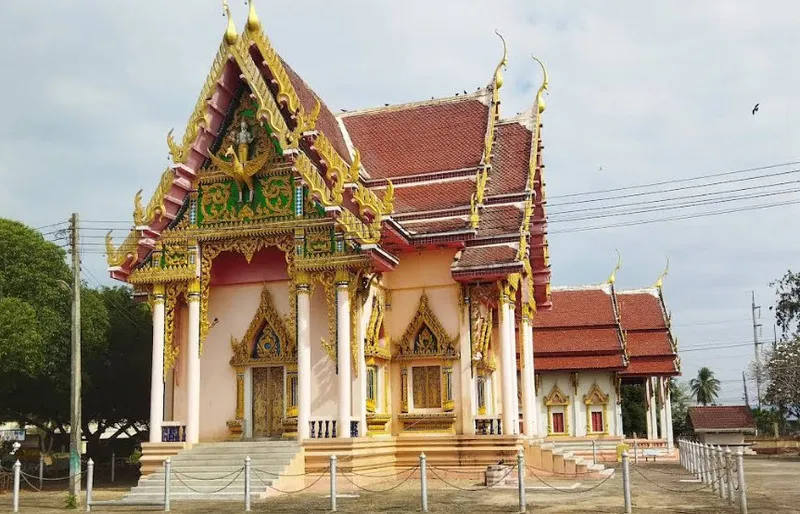
Wat Tha Thong
Open Days: Daily for general merit-making and visits
Opening Hours: Daytime is suitable for visiting
Wat Tha Thong in Wang Kapi Subdistrict, Mueang Uttaradit District, Uttaradit Province, is an old community temple with deep religious, historical, cultural, and spiritual significance. It has long served as a center of faith for local residents and remains an important place for Buddhist ceremonies, merit-making, cultural activities, and Dhamma learning. The temple is located within convenient reach of Uttaradit city, yet it preserves a calm and local atmosphere that makes it suitable for travelers who want to visit a meaningful Buddhist temple rather than a crowded tourist attraction.
Wat Tha Thong is valuable not only because it is a place for religious practice, but also because it preserves the memory of the Wang Kapi community. The temple brings together Buddhist faith, local identity, and respect for revered monks who played an important role in the spiritual life of Uttaradit. Important points within the temple include the Buddha image worship area, the ordination hall, community activity spaces, and places connected with Luang Pu Thongdam Ṭhitavaṇṇo, also known as Phra Nimmanakowit, a highly respected monk associated with Wat Tha Thong.
Temple records identify Wat Tha Thong as a Maha Nikaya community temple established in 1768. It received its consecrated boundary for the ordination hall on October 30, 1936. These dates show that the temple has a long and stable religious foundation. Counting from the year of establishment, Wat Tha Thong is more than 250 years old, making it one of the historically significant temples connected with the development of Wang Kapi and the wider Mueang Uttaradit area.
The year 1768 was a period shortly after the fall of Ayutthaya, when communities across the region were rebuilding social and spiritual order. In such a period, temples were more than religious buildings. They served as spiritual anchors, meeting places, and centers for moral stability. Wat Tha Thong, founded during this historical context, therefore carries meaning as a temple that helped support local life through generations of change.
The name “Wat Tha Thong” has a graceful and auspicious quality. The word “Tha” often suggests a landing place, crossing point, or community access area, while “Thong” means gold and carries a sense of value, prosperity, and good fortune. Although detailed documentary evidence about the exact origin of the name is not clearly available, the name has become part of the identity of Wang Kapi and continues to be remembered by local residents.
The temple is set within a local community environment in Mueang Uttaradit District. It is accessible from main roads and local routes, making it easy for visitors to come for merit-making or a short cultural visit. At the same time, the temple remains simple and calm. This balance between accessibility and peacefulness makes Wat Tha Thong suitable for local worshippers and travelers who want to explore community temples with genuine historical value.
One of the most important reasons Wat Tha Thong is well known is its association with Luang Pu Thongdam Ṭhitavaṇṇo, or Phra Nimmanakowit. He was a respected monk of Uttaradit and served as abbot of Wat Tha Thong from 1925. Throughout his life, he devoted himself to temple development, Buddhist practice, and the moral guidance of local people. His simple conduct, compassion, and dedication made him a deeply respected spiritual figure among villagers and devotees.
For many visitors, coming to Wat Tha Thong is more than a regular temple visit. It is also a pilgrimage to pay respect to Luang Pu Thongdam and reflect on his virtues. His memory gives the temple a strong spiritual dimension. Travelers interested in the history of Thai monks and local Buddhist teachers will find Wat Tha Thong especially meaningful because it connects a community temple with the life and legacy of a respected northern Thai monk.
Within the temple, visitors can pay respect to the principal Buddha image and other sacred objects. The Buddha image worship area is the spiritual center of the temple, where local people come to pray, make merit, and seek encouragement. Such everyday acts of faith show that Wat Tha Thong remains a living religious space, not merely a historical site. It continues to be used by the community for worship, ceremonies, and personal reflection.
The ordination hall of Wat Tha Thong is one of its most important sacred spaces. It is used for Buddhist rites and monastic ceremonies. The building reflects a practical and dignified Thai temple style suitable for a community temple. Inside, the principal Buddha image is respected by local residents and visitors. The atmosphere encourages quiet worship, prayer, and contemplation. The importance of the hall lies not only in architecture, but in its continuing use as a space where monks, villagers, and Buddhist ceremonies come together.
Wat Tha Thong is also connected with Phra Phuttha Suwan Chapphanna Rangsri, also known as Luang Pho Ong Dam. In 2023, a ceremonial foundation-laying rite was held for the construction of a building to enshrine a replica of this important Buddha image. Luang Pho Ong Dam is associated with the Mara-vijaya posture, which represents the Buddha’s victory over temptation and obstacles. For worshippers, this posture carries a powerful meaning of inner strength, success, and spiritual determination.
The story of Luang Pho Ong Dam adds another layer of historical and religious significance to Wat Tha Thong. It connects the temple with its early foundation and with the community’s intention to preserve important sacred objects for future generations. Visitors who are interested in temple history should pay attention to this aspect because it reflects the continuity of faith, the role of temple committees, and the devotion of local people in maintaining sacred heritage.
Wat Tha Thong continues to host important Buddhist ceremonies and merit-making activities. These include Makha Bucha Day, Visakha Bucha Day, Asalha Bucha Day, Buddhist Lent, the end of Buddhist Lent, robe-offering ceremonies, Kathin ceremonies, and chanting on Buddhist holy days. Such activities bring together people of all ages. Elderly residents come to listen to Dhamma and meditate, while younger people learn religious manners, community values, and Buddhist traditions by participating in temple events.
The sermon hall functions as an important multipurpose space for religious and community activities. It is used for Dhamma talks, moral training, meetings, and merit-making events. This makes the temple capable of supporting many roles at once. It is a place of learning, a place for local gathering, and a place where villagers can cooperate during religious festivals and community occasions.
The temple’s role in moral and ethical education is also important. Wat Tha Thong provides a setting where children and young people can learn about Buddhist values such as discipline, gratitude, compassion, mindfulness, and responsibility. Activities such as Dhamma training, summer novice ordination, and volunteer work help younger generations understand that Buddhism is not distant from daily life. It is a practical guide for living with awareness and care for others.
Wat Tha Thong also helps preserve local traditions in Wang Kapi. Kathin ceremonies, forest robe offerings, candle processions, Buddhist holy day observances, and community cultural activities allow residents to work together and pass cultural knowledge from older generations to younger ones. These events are not only religious ceremonies. They are also social processes that strengthen unity, preserve memory, and keep local identity alive.
The bond between Wat Tha Thong and the Wang Kapi community remains strong. Local residents continue to participate in temple activities, help maintain the temple grounds, join annual festivals, and support merit-making events. For many elderly people, the temple is a familiar place for meditation, listening to sermons, meeting neighbors, and sharing a sense of belonging. In this way, the temple functions as a spiritual center that helps hold the community together.
The temple also plays a role in conserving local culture. Traditional chanting, northern-style novice ordination, dance performances during temple festivals, Thai desserts and local food prepared during ceremonies, and other community practices give younger people direct contact with their cultural roots. Wat Tha Thong therefore functions as a living cultural space, connecting the past with the present through actual experience rather than written history alone.
For travelers, Wat Tha Thong is best visited as a cultural and spiritual destination. Visitors should not expect a noisy or highly commercial attraction. The temple is more meaningful when approached as a peaceful community site with deep stories. A respectful visit may include modest dress, quiet behavior, paying respect to the Buddha image, honoring Luang Pu Thongdam, and walking through the temple grounds with mindfulness.
Visitors should remember that Wat Tha Thong is still an active temple used by local worshippers. Photography should be done respectfully, especially around worship areas and ceremonies. Visitors should avoid disturbing monks or people who are praying, chanting, or listening to Dhamma. When temple activities are taking place, following the guidance of caretakers helps preserve the calm and respectful atmosphere of the temple.
Getting There is convenient from Uttaradit city. Travelers can head toward Wang Kapi Subdistrict in Mueang Uttaradit District and follow local roads to Village No. 3. Traveling by private car, rental car, or local transport is the most convenient option. The temple can be combined in the same route with Wat Wang Kapi, Saphan Paramin, Wat Yai Tha Sao, Wat Aranyikaram, the Phraya Phichai Dap Hak Monument, and old Uttaradit railway-related sites.
From the city area, the journey to Wat Tha Thong is not complicated. Visitors can use map navigation to reach Wang Kapi directly. The temple is suitable for a half-day merit-making trip or as part of a 2-day cultural itinerary in Uttaradit. After visiting the temple, travelers can continue to local restaurants, cafés, or hotels in the city area without difficulty.
Wang Kapi itself is an interesting local area because it is close to the city but still retains a community atmosphere. Visitors can see local roads, small restaurants, community life, and temples that still function as centers of faith. A stop at Wat Tha Thong therefore adds depth to a trip to Uttaradit, especially for travelers interested in old temples, community Buddhism, and the stories of respected local monks.
Wat Tha Thong connects several layers of faith: devotion to the Buddha image, reverence for Luang Pu Thongdam, respect for Luang Pho Ong Dam, and the continuous commitment of villagers who have cared for the temple for generations. Visiting this temple allows travelers to enter a space where history and belief remain closely connected to daily life. People still come to make merit, join Kathin ceremonies, support robe offerings, and care for the temple as a shared spiritual home.
From a conservation perspective, Wat Tha Thong deserves to be preserved and introduced to younger generations. Its value includes its establishment in 1768, its consecrated boundary in 1936, the legacy of Luang Pu Thongdam, and its continuing role in the Wang Kapi community. Preserving the temple means preserving not only buildings, but also stories, ceremonies, memory, and the relationship between the temple and local people.
Travelers who enjoy visiting old temples in Uttaradit should include Wat Tha Thong in their route. The temple combines history, Buddhism, revered monks, local culture, and community life. Its appeal is not based on visual spectacle, but on the depth of its story and the calm atmosphere of the place. It is suitable for visitors who prefer meaningful travel rather than hurried sightseeing.
The peacefulness of Wat Tha Thong also gives visitors a chance to slow down. Paying respect to the Buddha image, honoring Luang Pu Thongdam, or simply sitting quietly within the temple grounds can help the mind settle. For people living in a fast-moving world, a visit to an old community temple like this can restore a sense of simplicity and inner calm.
In summary, Wat Tha Thong in Wang Kapi Subdistrict, Mueang Uttaradit District, is an old temple of strong historical, Buddhist, cultural, and community value. Established in 1768 and officially consecrated in 1936, it is associated with Luang Pu Thongdam Ṭhitavaṇṇo, or Phra Nimmanakowit, and remains an active religious center for local people. For travelers looking for a peaceful temple near Uttaradit city where they can make merit, pay respect to a revered monk, and learn about community faith, Wat Tha Thong is a meaningful destination.
| Name | Wat Tha Thong |
| Location | Village No. 3, Wang Kapi Subdistrict, Mueang Uttaradit District, Uttaradit Province |
| Address | Wang Kapi Subdistrict, Mueang Uttaradit District, Uttaradit Province |
| Highlights | An old community temple in Wang Kapi with a principal Buddha image, Luang Pu Thongdam Ṭhitavaṇṇo or Phra Nimmanakowit, and the story of Luang Pho Ong Dam |
| History | Established in 1768 and received its consecrated boundary on October 30, 1936 |
| Name Origin | The name carries an auspicious meaning and is closely associated with the local Wang Kapi community |
| Distinctive Features | A Maha Nikaya community temple with religious, cultural, merit-making, and local spiritual significance |
| Main Areas / Zones | Ordination hall, principal Buddha image area, sermon hall, Luang Pu Thongdam worship area, and community religious activity spaces |
| Important Figure | Luang Pu Thongdam Ṭhitavaṇṇo, also known as Phra Nimmanakowit, former abbot of Wat Tha Thong and a respected monk of Uttaradit |
| Sacred Objects | Principal Buddha image, Luang Pu Thongdam, and Phra Phuttha Suwan Chapphanna Rangsri or Luang Pho Ong Dam |
| Travel Information | From Uttaradit city, head toward Wang Kapi Subdistrict in Mueang Uttaradit District and follow local roads to Village No. 3; private car, rental car, or local transport is recommended |
| Current Status | An active community temple used for Buddhist ceremonies, merit-making, cultural activities, and Wang Kapi community events |
| Open Days | Daily for general merit-making and visits |
| Opening Hours | Daytime is suitable for visiting |
| Facilities | Merit-making area, ordination hall, sermon hall, activity ground, and spaces for community religious events |
| Abbot / Caretaker | Phra Khru Wirun Suwannadit, also known as Phra Achan Sombat Kantadhammo |
| Nearby Tourist Attractions | 1. Wat Wang Kapi, about 2 km 2. Saphan Paramin, about 5 km 3. Wat Yai Tha Sao, about 6 km 4. Wat Aranyikaram, about 7 km 5. Phraya Phichai Dap Hak Monument, about 8 km 6. Old Uttaradit Railway Station area, about 8 km |
| Nearby Restaurants | 1. Yai Duean Noodles Wang Kapi, about 2 km, Tel. 063-426-4428 2. Den-natee at Sam Yaek Wang Kapi Market, about 3 km, Tel. 082-940-1385 3. Kluai Hom Cafe, about 4 km, Tel. 097-273-1593 4. Theview.cafe, about 6 km 5. Heng Pang Pua Uttaradit Branch, about 7 km 6. Wimon Restaurant, about 9 km |
| Nearby Accommodations | 1. Areena Resort Uttaradit, about 8 km, Tel. 055-414-939, 055-414-954, 089-566-4327 2. Grand Wana Hotel, about 9 km 3. K2 Living Hotel Uttaradit, about 9 km 4. O.U.M. Hotel, about 9 km 5. Thepjumras Boutique Hotel, about 10 km, Tel. 093-551-4497 6. Tonthong Resort Hotel, about 11 km |
Frequently Asked Questions (FAQ)
Q: Where is Wat Tha Thong located?
A: Wat Tha Thong is located in Wang Kapi Subdistrict, Mueang Uttaradit District, Uttaradit Province.
Q: When was Wat Tha Thong established?
A: Wat Tha Thong was established in 1768 and received its consecrated boundary on October 30, 1936.
Q: What are the important sacred objects at Wat Tha Thong?
A: Important sacred objects and figures include the principal Buddha image, Luang Pu Thongdam Ṭhitavaṇṇo or Phra Nimmanakowit, and Phra Phuttha Suwan Chapphanna Rangsri or Luang Pho Ong Dam.
Q: How is Luang Pu Thongdam connected with Wat Tha Thong?
A: Luang Pu Thongdam Ṭhitavaṇṇo, also known as Phra Nimmanakowit, was a former abbot of Wat Tha Thong and remains a deeply respected monk in Uttaradit.
Q: What type of travel is Wat Tha Thong suitable for?
A: It is suitable for religious and cultural travel, merit-making, paying respect to revered monks, and learning about an old community temple in Wang Kapi.
Q: Is Wat Tha Thong easy to reach from Uttaradit city?
A: Yes. Visitors can travel from Uttaradit city to Wang Kapi Subdistrict by private car, rental car, or local transport.
Q: What nearby attractions can be visited with Wat Tha Thong?
A: Nearby attractions include Wat Wang Kapi, Saphan Paramin, Wat Yai Tha Sao, Wat Aranyikaram, the Phraya Phichai Dap Hak Monument, and the old Uttaradit railway station area.
 Category: ●Places of Worship
 Group: ●Temple
Last Update : 3 WeekAgo
 Last Update : 3 WeekAgo
 Click to Access the Navigation Map GPS
 Art, Culture and Heritage
 Historical Sites and Monuments(2)
 Landmarks and Memorials(8)
 Art, Craft Centres, Tradition(3)
 Museums(1)
 Historical Houses and The Ancient City(1)
Temple(42)
Historical Houses and The Ancient City(1)
Temple(42)
 Other religious and spiritural sites(5)
 Suburban Living
 Village, Community(4)
 Nature and Wildlife
 National Parks and Marine Reserves(4)
 Mountain (Doi)(3)
 Dam, Reservoir, Lake(3)
 Waterfalls(11)
 Caves(3)
 River, Canal(3)
 Other natural attractions(3)
 Entertainment and Agricultural
 Farm, Parks, Gardens and Ecotourism(1)


