
lovethailand home >North Travel Attractions >Uttaradit Travel Attractions >Mueang Uttaradit >Tha Sao > Wat Doi Tha Sao
TL;DR: Wat Doi Tha Sao is located at Village No. 6, Tha Sao Subdistrict, Mueang Uttaradit District, Uttaradit Province, open Daily for general merit-making and visits, hours Daytime is suitable for visiting.
Wat Doi Tha Sao
Open Days: Daily for general merit-making and visits
Opening Hours: Daytime is suitable for visiting
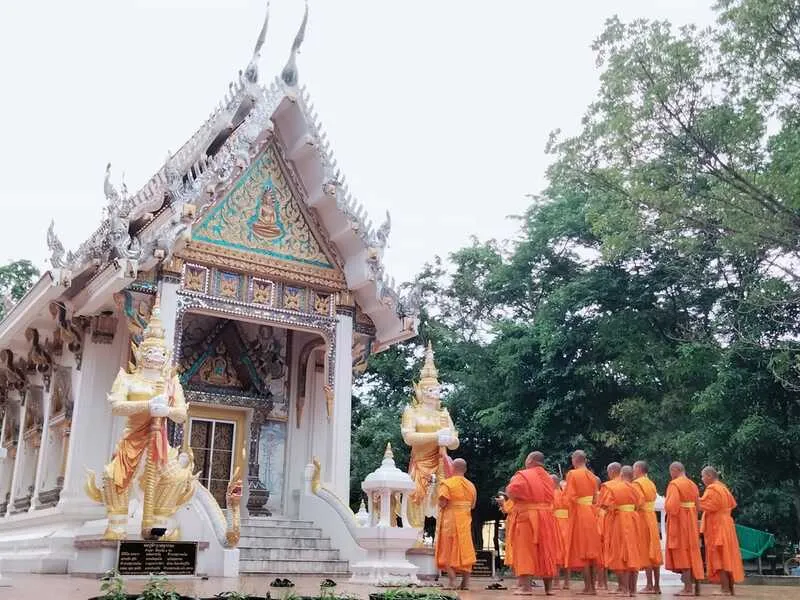
Wat Doi Tha Sao is located at No. 98, Village No. 6, Tha Sao Subdistrict, Mueang Uttaradit District, Uttaradit Province. It is an old community temple with strong historical, cultural, and spiritual significance. The temple stands on a low hill in a peaceful and shaded environment, making it suitable for merit-making, Buddhist worship, meditation, and quiet reflection. Wat Doi Tha Sao is not a large commercial tourist attraction, but its value lies in its calm atmosphere, its long connection with the local community, and its continuing role as a center of faith for the people of Tha Sao.
The temple is an important example of a living community temple in Uttaradit. It is not only a place for religious ceremonies, but also a spiritual center, a place for moral education, and a community gathering point. Visitors can experience the atmosphere of a local Thai temple that remains sincere, simple, and closely connected to everyday life. For travelers who want to understand Uttaradit beyond major landmarks, Wat Doi Tha Sao offers a meaningful view of local Buddhism, rural culture, and community faith.
The history of Wat Doi Tha Sao is believed to reach back to the late Ayutthaya period or the early Rattanakosin period. In its early days, the site was a small monastic residence used by wandering monks and local devotees as a place for meditation and Buddhist practice. The location on a raised hill, surrounded by trees and a quiet natural environment, made it suitable for spiritual practice. This original character as a quiet forest-like retreat remains part of the temple’s identity today.
As the Ban Tha Sao community became more established, monks and villagers worked together to develop the monastic residence into a formal community temple. During the reign of King Rama V, the temple was officially elevated as a recognized Buddhist temple. This development reflects the strong faith of the local people, who wanted a permanent religious center for their community. Wat Doi Tha Sao therefore grew from local devotion, cooperation, and collective effort rather than from a large institutional project.
The name “Wat Doi Tha Sao” is directly connected to its geography and community identity. The word “Doi” refers to a hill or elevated land, while “Tha Sao” refers to the local village and subdistrict where the temple is located. Together, the name describes both the landscape and the community. This makes the temple name more than a label; it is a record of the relationship between place, nature, and local people.
In the past, the temple area was a raised and wooded site with many large old trees. Local people therefore regarded the place as an old and spiritually suitable area. Some villagers once referred to it as a forest temple because of its peaceful natural surroundings. Over time, necessary buildings such as halls, monk residences, and religious structures were gradually constructed. The temple developed step by step from a small place of practice into an important spiritual center for the Tha Sao community.
Inside the temple grounds are an ordination hall, a sermon hall, monks’ residences, and areas for Buddhist and community activities. The buildings are simple but well maintained, reflecting the practical character of a local community temple. The temple is not designed to impress through grandeur. Instead, it offers a warm and accessible atmosphere where visitors can feel close to the rhythm of local Buddhist life. This simplicity is one of the main reasons the temple feels peaceful and authentic.
The ordination hall is one of the most important sacred spaces in Wat Doi Tha Sao. It is used for Buddhist ceremonies and monastic activities. Inside, the principal Buddha image is respected by villagers and visitors. Its calm and dignified appearance suits the quiet atmosphere of the temple. Visitors who enter the hall can pay respect, sit quietly, and reflect on Buddhist teachings. The quietness of the hall makes worship here feel personal and meaningful.
Wat Doi Tha Sao also plays an important role as a center for moral and ethical training. The temple has been associated with community education, youth training, Buddhist camps, and activities that encourage discipline, kindness, gratitude, and public-mindedness. This role makes the temple important not only as a religious site, but also as a place that supports the social and ethical development of local people. For cultural travelers, this is a valuable aspect of the temple because it shows Buddhism as a living part of community life.
During important Buddhist days such as Visakha Bucha Day, Asalha Bucha Day, Buddhist Lent, and the end of Buddhist Lent, Wat Doi Tha Sao becomes a gathering place for local villagers. People come to make merit, listen to Dhamma teachings, offer candles, join ceremonies, and take part in community activities. Annual events such as Kathin and forest robe offering ceremonies also strengthen the relationship between the temple and the community. These activities help preserve Buddhist traditions and pass them on to younger generations.
In addition to regular religious events, the temple is also connected to volunteer and community development activities. Such activities show how local people continue to care for the temple as a shared spiritual space. Villagers often work together to prepare religious events, maintain the temple grounds, support ceremonies, and welcome visitors. This sense of collective responsibility gives Wat Doi Tha Sao a strong community identity.
Another important dimension of Wat Doi Tha Sao is its social role. The temple has been associated with community health and care work, including the operation of a Buddhist care facility for sick monks and people who need long-term support. This reflects the idea that a temple is not only a place for rituals, but also a place of compassion and service. It connects monks, local authorities, health networks, volunteers, and residents in the work of caring for life with dignity.
Because of these roles, Wat Doi Tha Sao is meaningful for visitors interested in cultural and spiritual tourism. The temple demonstrates how Buddhism remains connected with education, social care, healing, and community strength. It is not merely an old temple or a quiet place on a hill. It is a living institution where faith is expressed through daily practice, ceremonies, moral training, and community service.
The low hill setting gives the temple a calm and open atmosphere. Compared with temples located in busier urban areas, Wat Doi Tha Sao feels quieter and more contemplative. Trees, shade, and the elevated terrain help create a peaceful environment for walking meditation, quiet sitting, or simple reflection. This makes the temple suitable for travelers who prefer slow cultural travel and spiritual experiences rather than crowded sightseeing.
For visitors interested in local history, Wat Doi Tha Sao provides a deeper understanding of Uttaradit at the community level. Uttaradit is not only a province of major historical landmarks and city attractions. It also has many community temples that preserve local memory and faith. Wat Doi Tha Sao is one of these places. Its story includes early forest practice, community cooperation, formal temple development, moral education, and social service.
Visitors who come for meditation or quiet reflection should consider visiting during the morning or daytime, when the atmosphere is suitable for worship and walking around the temple grounds. Modest clothing is recommended. Visitors should speak quietly and respect sacred areas such as the ordination hall, sermon hall, and monks’ residences. If ceremonies or temple activities are taking place, visitors should follow the guidance of temple caretakers. Respectful behavior helps make temple visits meaningful and beneficial to the local community.
Getting There is convenient from Uttaradit city. Travelers can use National Highway Route 1043 or local roads within Tha Sao Subdistrict, then continue into Ban Tha Sao, Village No. 6. The temple has signs in the area and parking space for visitors. Traveling by private car, rental car, or local transport is the most convenient option. The temple can be combined with nearby places such as Wat Na Prong, Wat Naeo Khiri, Wat Aranyikaram, Saphan Paramin, and attractions in Uttaradit city.
From the city area of Uttaradit, the trip to Tha Sao Subdistrict does not take long. This makes Wat Doi Tha Sao suitable for a half-day visit, a short merit-making trip, or a quiet stop during a cultural route around Mueang Uttaradit District. The route is not complicated, although visitors should check a map before departure to choose the best access road. Once in Tha Sao, travelers will experience a quieter community atmosphere with local roads, houses, greenery, and a slower pace of life.
A visit to Wat Doi Tha Sao is best enjoyed slowly. Travelers can begin by paying respect in the ordination hall, then walk around the temple grounds, observe the calm hilltop setting, and spend time in quiet reflection. The beauty of this temple is not found in grandeur, but in balance, simplicity, and the feeling that the place has been preserved through genuine community faith. It is a temple that invites visitors to slow down rather than rush.
For travelers planning a temple route in Tha Sao, Wat Doi Tha Sao can be combined with Wat Na Prong, Wat Naeo Khiri, and Wat Aranyikaram. Each temple has its own story and atmosphere. Wat Na Prong is known for its peaceful community setting and Guanyin worship point. Wat Naeo Khiri reflects the story of a local temple connected with Ban Mon Din Daeng. Wat Aranyikaram is another community temple in Mueang Uttaradit. Together, these temples offer a deeper view of Buddhist life in Uttaradit.
Food and accommodation options are available in Tha Sao and Uttaradit city. Visitors can find local restaurants, noodle shops, cafés, and hotels within a short driving distance. Because Wat Doi Tha Sao is not far from the city, it can be visited as a day trip or included in a 2-day itinerary in Uttaradit. This makes the temple convenient for both local residents and travelers from other provinces.
From a conservation perspective, Wat Doi Tha Sao deserves to be preserved and introduced to younger generations. Its value is not limited to buildings. It includes oral history, the memory of early monks, the role of villagers, the temple’s hilltop setting, moral education, and social service. Preserving the temple means preserving the stories and living faith that make it meaningful to the people of Tha Sao.
Wat Doi Tha Sao also helps visitors reflect on the meaning of peace in modern life. In a world that often moves too quickly, a quiet temple on a low hill can help the mind slow down. Many visitors may not be searching for excitement or spectacle. They may simply want a place that feels calm, grounded, and spiritually supportive. Wat Doi Tha Sao answers this need through nature, faith, and simplicity.
In summary, Wat Doi Tha Sao is an important temple in Tha Sao Subdistrict and Uttaradit Province. It is valuable as an old temple with historical roots, a living community center, a place for Buddhist ceremonies, a center for moral education, and a peaceful destination for worship and meditation. For travelers looking for a quiet temple near Uttaradit city, Wat Doi Tha Sao is a meaningful place to visit.
| Name | Wat Doi Tha Sao |
| Location | Village No. 6, Tha Sao Subdistrict, Mueang Uttaradit District, Uttaradit Province |
| Address | No. 98, Village No. 6, Tha Sao Subdistrict, Mueang Uttaradit District, Uttaradit Province 53000 |
| Highlights | An old community temple on a low hill, suitable for merit-making, Buddhist worship, meditation, and learning about local Buddhist life in Tha Sao |
| History | Believed to have roots in the late Ayutthaya or early Rattanakosin period; originally a small monastic residence and later formally developed as a temple during the reign of King Rama V |
| Name Origin | The name comes from its location on a small hill or elevated land and its location in Ban Tha Sao |
| Distinctive Features | A Maha Nikaya community temple with a quiet atmosphere and important roles in religion, moral training, and community activities |
| Main Areas / Zones | Ordination hall, sermon hall, monks’ residences, moral training areas, and spaces for Buddhist community activities |
| Travel Information | From Uttaradit city, use National Highway Route 1043 or local roads in Tha Sao Subdistrict, then continue to Ban Tha Sao, Village No. 6 |
| Current Status | An active community temple used for Buddhist ceremonies, community activities, moral training, and volunteer work in Tha Sao Subdistrict |
| Open Days | Daily for general merit-making and visits |
| Opening Hours | Daytime is suitable for visiting |
| Facilities | Parking area, merit-making area, ordination hall, sermon hall, moral training spaces, and community activity areas |
| Abbot / Caretaker | Phra Khru Phatthara Santikhun / Phra Khru Suphat Santikhun |
| Main Contact Number | 089-960-6990 |
| Nearby Tourist Attractions | 1. Wat Na Prong, about 4 km 2. Wat Naeo Khiri, about 5 km 3. Wat Aranyikaram, about 5 km 4. Wat Yai Tha Sao, about 6 km 5. Saphan Paramin, about 8 km 6. Phraya Phichai Dap Hak Monument, about 10 km |
| Nearby Restaurants | 1. Krua Tam Phloen beside Wat Na Prong, about 4 km, Tel. 096-874-7932 2. Wimon Restaurant, about 5 km 3. Mantra Coffee, about 6 km 4. Phi Yai Ancient Tom Yum Noodles, about 6 km 5. AUF Coffee, about 7 km 6. Rest At The River, about 8 km, Tel. 093-225-2515 |
| Nearby Accommodations | 1. Grand Wana Hotel, about 8 km, Tel. 055-403-333 2. Areena Resort Uttaradit, about 8 km 3. K2 Living Hotel Uttaradit, about 9 km 4. O.U.M. Hotel, about 10 km 5. Thepjumras Boutique Hotel, about 10 km, Tel. 093-551-4497 6. Tonthong Resort Hotel, about 11 km, Tel. 083-623-7117, 055-407-392, 055-407-349 |
Frequently Asked Questions (FAQ)
Q: Where is Wat Doi Tha Sao located?
A: Wat Doi Tha Sao is located at No. 98, Village No. 6, Tha Sao Subdistrict, Mueang Uttaradit District, Uttaradit Province.
Q: Why is Wat Doi Tha Sao important?
A: It is an old community temple with historical roots and important roles in religion, culture, moral training, and community life.
Q: What does the name Wat Doi Tha Sao mean?
A: The name refers to its location on a small hill or elevated land in the Tha Sao community.
Q: Is Wat Doi Tha Sao suitable for meditation?
A: Yes. The temple is quiet, shaded, and located on a low hill, making it suitable for worship, meditation, and peaceful reflection.
Q: Who is the abbot of Wat Doi Tha Sao?
A: The latest listed abbot is Phra Khru Phatthara Santikhun, also referred to as Phra Khru Suphat Santikhun.
Q: How can visitors travel to Wat Doi Tha Sao from Uttaradit city?
A: Visitors can use National Highway Route 1043 or local roads in Tha Sao Subdistrict, then continue to Ban Tha Sao, Village No. 6.
Q: What nearby attractions can be visited with Wat Doi Tha Sao?
A: Nearby attractions include Wat Na Prong, Wat Naeo Khiri, Wat Aranyikaram, Wat Yai Tha Sao, Saphan Paramin, and the Phraya Phichai Dap Hak Monument.
 Category: ●Places of Worship
 Group: ●Temple
Last Update : 1 MonthAgo
 Last Update : 1 MonthAgo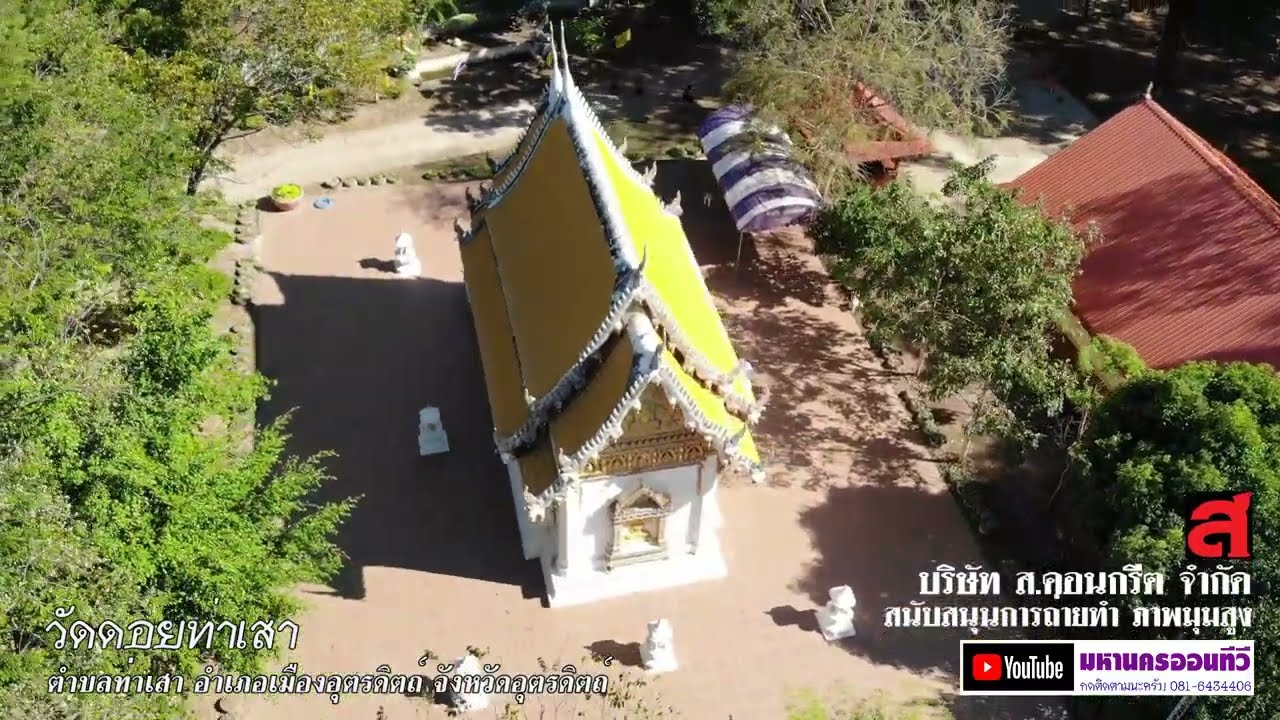
 Click to Access the Navigation Map GPS
Wat Doi Tha Sao Map
Recommend

 Art, Culture and Heritage
 Historical Sites and Monuments(2)
 Landmarks and Memorials(8)
 Art, Craft Centres, Tradition(3)
 Museums(1)
 Historic Homes and Cities(1)
Temple(42)
Historic Homes and Cities(1)
Temple(42)
 Other Sacred Sites(5)
 Suburban Living
 Village, Community(4)
 Nature and Wildlife
 National Parks and Marine Reserves(4)
 Mountain (Doi)(3)
 Dam, Reservoir, Lake(3)
 Waterfalls(11)
 Caves(3)
 River, Canal(3)
 Other natural attractions(3)
 Entertainment and Agricultural
 Farms, Parks and Ecotourism(1)


