
lovethailand home >North Travel Attractions
>Phrae Travel Attractions >Song
>Tao Pun
> Mae Yom National Park
TL;DR: Mae Yom National Park is located at Covering parts of Phrae and Lampang, with the main tourism area on the Phrae side in Sa-iap Subdistrict, Song District, open Daily, hours 09:00–17:00.
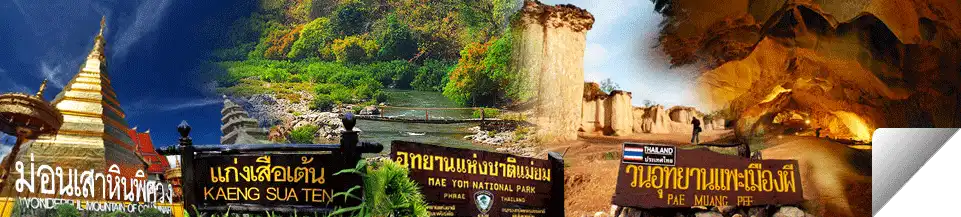
Mae Yom National Park
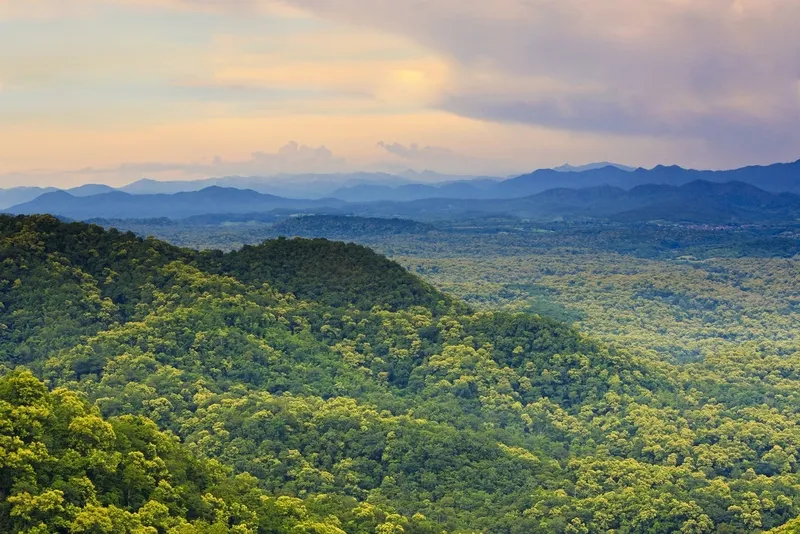
Open Days: Daily
Opening Hours: 09:00–17:00
Mae Yom National Park is one of the most rewarding nature destinations in Phrae for travelers who want more than just a simple forest stop. It combines a broad mountain landscape, the Yom River, scenic rapids, teak forest, hot spring features, mist viewpoints, and upland natural areas in one protected zone. What makes the park especially memorable is the way its landscapes are connected. High mountain ridges rise on both the eastern and western sides, while the Yom River flows through the middle, giving the park a strong natural identity shaped by water, forest, and open river scenery.
The park covers about 284,218.75 rai, or around 454.75 square kilometers, across parts of Phrae and Lampang. On the Phrae side, the best-known access area is in Song District, especially around Sa-iap Subdistrict. Mae Yom was officially declared a national park on 1 March 1986 and became the 51st national park of Thailand. Its protected area includes important forest zones such as Mae Pung, Mae Pao, and Mae Song forests in Phrae, along with parts of the Mae Ngao left-bank forest in Lampang. This gives the park real ecological importance beyond its tourism value.
The terrain is defined by major mountain ranges and headwater landscapes. Important peaks and upland areas in the broader park system include Doi Luang, Doi Yao, Doi Khun Huai Pae, and Doi Ton. These uplands are the source of many streams and tributaries such as Mae Pung, Mae Lam, Mae Ten, Mae Sakuen, Mae Pao, Huai Pha Lat, and Huai Mae Pong, all of which contribute to the wider Yom River system. This watershed role is one of the reasons Mae Yom remains such an important conservation area.
The park is also known for its strong teak-forest identity. Mae Yom is often recognized as one of the major natural teak landscapes in northern Thailand, which gives it a character different from many other national parks. The combination of river scenery, open forest, and teak woodland creates a distinct atmosphere that changes beautifully with the season. This is especially evident in the famous Dong Sak Ngam area, where large teak trees grow densely along the Yom River and form one of the most remarkable forest scenes in the park.
The best-known attraction in the park is Kaeng Sua Ten, located in front of the park headquarters area. This rocky rapid section of the Yom River extends for about 2 kilometers and is one of the strongest visual symbols of Mae Yom National Park. The site combines broad river views, rocky formations, sandy areas, and open space suitable for relaxing in a natural riverside setting. The name Kaeng Sua Ten is linked to local legend about tiger footprints once seen on a rock in the rapid, which adds a cultural layer to the natural landscape.
Kaeng Sua Ten is not just a scenic viewpoint. It is also one of the park’s most popular camping areas, especially for visitors who want a quieter riverside experience. The open setting by the Yom River gives the area a very different feeling from a deep forest campsite. In the morning and evening, the atmosphere becomes especially attractive, with soft light over the river and the sound of flowing water adding to the sense of calm. For many visitors, this is one of the most memorable parts of the Mae Yom experience.
Another major highlight is Dong Sak Ngam, around 25 kilometers from the headquarters. This area is known for its concentration of large old teak trees along the Yom River and is one of the park’s most important forest landmarks. During August and September, blooming teak flowers can add a very distinctive seasonal beauty to the landscape. For travelers who want to appreciate the identity of Mae Yom as a teak-forest national park, Dong Sak Ngam is one of the best places to understand that character directly.
For visitors who enjoy elevated views, the mist viewpoint is another attraction worth including. Located about 14 kilometers from the headquarters, it offers expansive views over layered mountain ridges and forest in the cool season. Early winter mornings are especially attractive here, when low clouds and mist can gather over the landscape and create one of the park’s most peaceful and photogenic scenes.
Lom Dong is another distinctive natural site inside the park area. It is a large natural basin on a mountaintop with a diameter of roughly 100 meters and lies within the wider Mae Pung–Mae Pao forest zone, around 15 kilometers from the headquarters. The site is important as a year-round water source for wildlife and is notable because the water level remains relatively stable throughout the year. The nearby area also includes purple lagerstroemia trees and scenic viewpoints suitable for sunrise and sunset viewing, giving Lom Dong a quiet and special atmosphere.
Mae Yom National Park also has a cultural dimension. Seasonal Akha swing traditions in communities located farther from the headquarters are part of the wider human landscape around the park. This adds another layer to the destination, showing that the forest and mountain environment is not only about scenery, but also about the communities and traditions that continue around it. Travelers interested in this side of the region should check timing in advance, since such activities are seasonal and community-based rather than daily tourism programs.
Getting There is easiest by private car or rental car via Song District in Phrae, then continuing toward Sa-iap Subdistrict, where the headquarters and Kaeng Sua Ten area are located. Having your own vehicle is especially helpful because the attractions inside the broader park area are spread out. If you plan to visit Kaeng Sua Ten, Dong Sak Ngam, the mist viewpoint, and Lom Dong in one trip, a full day or an overnight stay is the better option.
The park offers accommodation houses, camping grounds, rental tents, welfare shops, and basic visitor facilities, which makes overnight stays practical for travelers who want more time with the landscape. Staying inside or near the park gives you the chance to enjoy the river atmosphere in the evening and the cooler, quieter conditions of the early morning. For travelers looking for a deeper natural side of Phrae, Mae Yom National Park is one of the strongest choices in the province.
| Name | Mae Yom National Park |
| Location | Covering parts of Phrae and Lampang, with the main tourism area on the Phrae side in Sa-iap Subdistrict, Song District |
| Address | Mae Yom National Park, Sa-iap Subdistrict, Song District, Phrae 54120 |
| Coordinates | 18.6308, 100.1604 |
| Highlights | Kaeng Sua Ten, Dong Sak Ngam, mist viewpoint, Lom Dong, and the broad natural teak-forest landscape along the Yom River |
| History | Declared a national park on 1 March 1986 and listed as Thailand’s 51st national park |
| Distinctive Features | Mountain ranges on both sides of the Yom River, natural teak forest, river rapids, mist viewpoints, and multiple ecological zones |
| Travel Information | Best reached by private car via Song District and Sa-iap Subdistrict in Phrae, with the main visitor zone centered on Kaeng Sua Ten |
| Current Status | Open to visitors, with accommodation, camping, and riverside recreation in the Kaeng Sua Ten zone |
| Open Days | Daily |
| Opening Hours | 09:00–17:00 |
| Fees | Thai Adult 20 THB, Thai Child 10 THB, Foreign Adult 100 THB, Foreign Child 50 THB, Car 30 THB |
| Facilities | Park houses, camping ground, rental tents, welfare shop, restrooms, and visitor service points |
| Main Areas / Zones | Kaeng Sua Ten, Dong Sak Ngam, mist viewpoint, Lom Dong, hot spring area, Yom riverside camping zone |
| Main Contact Number | 054-556537, 054-522097, 054-520735 |
| Official Website / Official Page | Amazing Thailand, Thailand Tourism Directory, Mae Yom National Park |
| Nearby Tourist Attractions | 1) Kaeng Sua Ten – about 1 km 2) Dong Sak Ngam – about 25 km 3) Mist Viewpoint – about 14 km 4) Lom Dong – about 15 km 5) Hot Spring Area – about 6 km |
| Nearby Restaurants | 1) Food area near Kaeng Sua Ten – about 1 km 2) Welfare shop food service in the park – about 1 km 3) Restaurants in Sa-iap area – about 8 km 4) Restaurants in Song District area – about 30 km 5) Roadside local eateries on the Sa-iap route – about 15 km |
| Nearby Accommodations | 1) Mae Yom National Park Houses – about 1 km 2) Kaeng Sua Ten Camping Ground – about 1 km 3) Sakthong Resort Phrae – about 17 km, Tel. 097-269-6539, 095-697-6901 4) The Mountain Lodge Phrae – about 18 km 5) Accommodations in Song District – about 30 km |
Frequently Asked Questions (FAQ)
Q: Where is Mae Yom National Park located?
A: Mae Yom National Park is in both Phrae and Lampang, with the main tourist area on the Phrae side in Sa-iap Subdistrict, Song District.
Q: What is the main highlight of Mae Yom National Park?
A: The main highlights are Kaeng Sua Ten, Dong Sak Ngam, the mist viewpoint, Lom Dong, and the large natural teak-forest landscape.
Q: Is there an entrance fee?
A: Yes. Thai adults pay 20 THB, Thai children 10 THB, foreign adults 100 THB, foreign children 50 THB, and cars 30 THB.
Q: Can visitors camp at Kaeng Sua Ten?
A: Yes. Kaeng Sua Ten is one of the park’s popular camping areas along the Yom River.
Q: When is the best time to visit?
A: Late rainy season, the cool season, and early winter are especially pleasant for forest scenery, river views, and the mist viewpoint.
Q: How should I plan a trip to see several attractions inside the park?
A: A private car or rental car is the best option, and a full day or an overnight stay is recommended if you want to visit multiple sites.
 Category: ●Nature and Wildlife
 Group: ●National Parks and Marine Reserves
 Last Update : 2 WeekAgo
 Click to Access the Navigation Map GPS
 Art, Culture and Heritage
 Historical Sites and Monuments(
 Landmarks and Memorials(
 Art, Craft Centres, Tradition(
 Museums(
 Historical Houses and The Ancient City(
 Educational Places
 Museum for Study(
 Educational Gardens, Farm(
 University
 Places of Worship
 Temple(
 Other religious and spiritural sites(
 Suburban Living
 Village, Community(
 Local Market(
 Dam, Reservoir, Lake(
 Waterfalls(
 Hot Springs(
 Caves(
 River, Canal(
 Islands(
 Other natural attractions(
 Entertainment and Agricultural
 Farm, Parks, Gardens and Ecotourism(
 Outdoor and Adventure Activities(
 Travel Articles, Recipes
 Travel Review, Food Review(


