
lovethailand home >North Travel Attractions >Phrae Travel Attractions >Muang Phrae >Cho Hae > Wat Phra That Doi Leng
TL;DR: Wat Phra That Doi Leng is located at Cho Hae Subdistrict, Mueang Phrae District, Phrae Province, open Daily, hours Daytime hours are most suitable for worship and viewpoint visits.
Wat Phra That Doi Leng
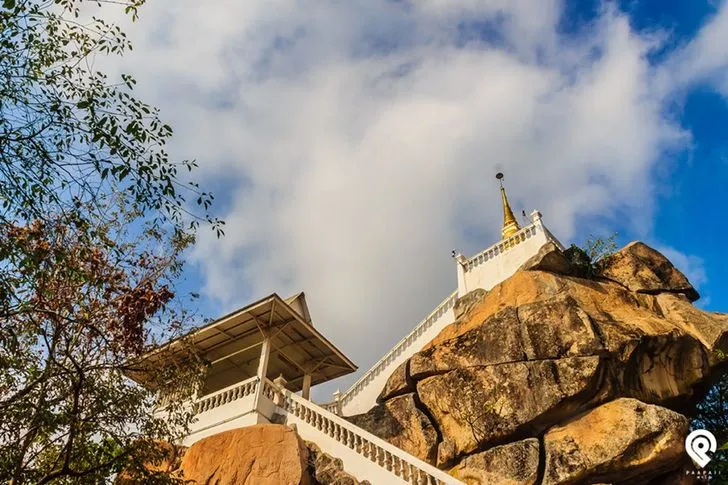
Open Days: Daily
Opening Hours: Daytime hours are most suitable for worship and viewpoint visits
Wat Phra That Doi Leng is one of the most meaningful religious attractions in Phrae Province. It stands on a mountain ridge to the southeast of Wat Phra That Cho Hae and offers a combination of sacred atmosphere, local legend, panoramic city views, and a strong connection to Phrae’s spiritual landscape. For travelers, this is not simply another temple stop. It is a place where faith, topography, and local memory come together in a way that feels distinct from temples in the city center.
In geographical terms, the temple is located on Doi Leng in Cho Hae Subdistrict, Mueang Phrae District. Local descriptions often place it about 2-3 kilometers from Phra That Cho Hae and also link it with Phra That Chom Chaeng. Because of this, Wat Phra That Doi Leng, Phra That Cho Hae, and Phra That Chom Chaeng are commonly understood as three interconnected sacred sites that have existed together in Phrae’s religious landscape for centuries.
One of the most valuable aspects of Wat Phra That Doi Leng is that it preserves not only a sacred monument but also an active body of local storytelling. The exact construction year is not clearly documented, yet local elders in Pa Daeng and Cho Hae have long passed down the belief that the site has stood alongside Phra That Cho Hae and Phra That Chom Chaeng for many hundreds of years. This gives the temple importance not only as a religious site but also as a place of shared memory for the surrounding communities.
According to local tradition, the Buddha once traveled through the mountainous area of ancient Kosai, the old name associated with Phrae. He is believed to have reached a hill near dawn, a place later associated with Phra That Chom Chaeng. After that, he came to Dhajagga Parvat, which local tradition connects with Phra That Cho Hae, where Khun Lua Ai Kom served as his devotee and received hair relics for enshrinement. This story forms a core part of the sacred narrative that still shapes how people understand the mountains and relic sites around Phrae today.
The story continues with the Buddha moving toward the southeast and standing at a high point above the surrounding hills. Local tradition says he placed his alms bowl near what is now known as Doi Phu Kwang and then came to another hill from which he looked out over the landscape of Phrae. Seeing the Yom River and the fertile terrain, he declared that this was a delightful place, suitable for building a settlement. Because he looked out over the land from this point, the hill came to be called Doi Leng. This legend remains the spiritual heart of the site and gives the temple its deep symbolic meaning.
The word “Leng” is especially meaningful in this context because it suggests more than simply looking. It conveys the idea of carefully observing or contemplating the landscape. This matches the real experience of visiting the temple today. Once you reach the top, the open view over Phrae helps explain why the mountain became associated with looking out over the city. As a result, the name Doi Leng feels both legendary and physically grounded in the actual geography of the place.
For travelers, Wat Phra That Doi Leng is special because it offers a very different atmosphere from temples on flat land. City temples in Phrae often provide a sense of closeness to daily life and old urban architecture, while Doi Leng provides a more elevated, quiet, and open environment. The road climbs upward through the hillside, and once visitors reach the top they immediately notice the changing atmosphere: cooler air, broader skies, and a stronger sense of calm. That mountain setting is a major part of the temple’s appeal.
Another important feature of Wat Phra That Doi Leng is its close ritual relationship with Phra That Cho Hae, the most famous sacred stupa in Phrae Province. Local custom holds that after paying respect at Phra That Cho Hae, especially during the annual worship period, devotees should also come to Doi Leng on the final day, the full moon of the sixth lunar month in the northern calendar tradition. This means Doi Leng is not merely an optional side trip. It is part of a meaningful devotional route that still carries ceremonial significance today.
The annual worship tradition keeps the temple alive in the present. It is not only an old monument remembered through stories, but a sacred site that still receives worshippers and remains part of community practice. For visitors interested in local culture, coming during the worship period reveals another dimension of the temple: gatherings of local people, offerings, devotional movement, and the continued role of the temple in community life.
Wat Phra That Doi Leng is also highly valued as a viewpoint. Standing on the mountain makes it easy to understand why the legend of “looking over the city” remains so powerful. The view opens across Phrae’s urban area, surrounding farmland, and distant mountain lines. It is a place where visitors can appreciate not only a sacred monument but also the geographical setting that helped shape the city’s history. This combination of faith and scenery gives the site unusual depth compared with many standard temple visits.
Emotionally, the temple offers a peaceful experience well suited to travelers who prefer quiet, less crowded destinations. The mountain breeze, the silence above the city, and the wide sky create a reflective atmosphere. This makes the temple attractive not only for religious visitors but also for photographers, contemplative travelers, and anyone looking for a slower and more meaningful stop during a Phrae trip.
From a cultural point of view, Wat Phra That Doi Leng is an excellent example of how local communities use sacred stories to interpret real terrain. Doi Chom Chaeng, Doi Cho Hae, Doi Phu Kwang, and Doi Leng form more than a set of place names. Together they create a spiritual map through which people understand the religious geography of Phrae. For travelers who enjoy reading landscapes through legend and tradition, Doi Leng is especially rewarding.
In practical travel terms, Wat Phra That Doi Leng works very well as part of a combined route. Visitors can begin at Wat Phra That Cho Hae, continue up to Doi Leng for the viewpoint and sacred stop, and then return to Phrae city for cultural attractions such as Khum Chao Luang, Vongburi House, or local cafés and restaurants. This makes it ideal for half-day or full-day itineraries that mix spiritual travel with old-town exploration.
Photographers often find the site most beautiful in the morning or late afternoon. In the morning, the air is fresher and the city below slowly becomes visible in the light. In the late afternoon, softer sunlight adds depth to the surrounding hills and the valley. The site is therefore not only about the stupa itself but also about the road, the open temple grounds, the sky, and the visual relationship between mountain and city.
For devotees, the experience of reaching the temple also matters. Because it is located on a hill, the journey upward creates a stronger sense of intention than visiting a temple on flat ground. By the time visitors arrive, the act of worship often feels more focused and deliberate. This is one reason mountain temples continue to hold a special place in Thai religious travel.
At the community level, Wat Phra That Doi Leng remains part of the local identity of Cho Hae and nearby Pa Daeng. The continuing transmission of stories by local elders shows that the temple is not important only as a religious location. It also forms part of the cultural identity of the area. This shared memory is one of the reasons the site still feels meaningful and alive.
Although the exact construction date remains unclear, the temple’s long-standing association with Phra That Cho Hae and Phra That Chom Chaeng is enough to show its age and religious importance within the local belief system. Visitors do not need a precise historical date to understand its significance. That significance can already be felt through the temple’s living traditions, its place in local storytelling, and its role within the sacred landscape of Phrae.
Overall, Wat Phra That Doi Leng offers value on at least four levels at once: religious value as a relic shrine, historical value as an old sacred site linked with other major Phrae stupas, cultural value through its annual worship tradition and oral narratives, and tourism value as a mountain viewpoint with wide scenery over Phrae. For travelers who want to experience Phrae beyond city landmarks alone, Doi Leng deserves a serious place in the itinerary.
Travel Information The most practical way to reach Wat Phra That Doi Leng is by private car. Travelers usually follow the route toward Wat Phra That Cho Hae and then continue up the mountain road to Doi Leng. The road is manageable, but careful driving is recommended, especially during wet weather or early in the morning when mist may appear. Because the site is close to Phra That Cho Hae, it is easy to include both temples in the same trip.
For a balanced Phrae itinerary, a good route is to begin at Wat Phra That Cho Hae in the morning, continue up to Wat Phra That Doi Leng for the mountain atmosphere and viewpoint, and then head back into the city for historic landmarks and local food. This gives travelers a complete sense of both sacred mountain space and Phrae’s old-town culture in one day.
| Name | Wat Phra That Doi Leng |
| Place Summary | An important sacred site in Phrae Province located on a mountain near Phra That Cho Hae, combining relic worship, local legend, and panoramic views over Phrae |
| Location | Cho Hae Subdistrict, Mueang Phrae District, Phrae Province |
| Highlights | Mountain relic shrine, viewpoint over Phrae, connection with Phra That Cho Hae and Phra That Chom Chaeng, annual worship tradition, and local legend of the Buddha looking over the land of Phrae |
| History / Period / Era | The exact construction year is unclear, but the site is regarded as an ancient relic shrine that has long existed alongside Phra That Cho Hae and Phra That Chom Chaeng |
| Name Origin | Local tradition says the Buddha came to this hill to look over the landscape of Phrae, which is why it became known as “Doi Leng” |
| Distinctive Features | A hilltop temple with a peaceful atmosphere where visitors can both worship and enjoy a panoramic view of the province |
| Travel Information | Best reached by private car via the same route used for Wat Phra That Cho Hae, then continuing uphill to Doi Leng |
| Current Status | Still active with ongoing temple activities and remains part of Phrae’s tourism routes |
| Open Days | Daily |
| Opening Hours | Daytime hours are most suitable for worship and viewpoint visits |
| Fees | No general admission fee was found for standard worship visits |
| Latest Abbot | Phra Methee Wachiratham (Boonchit Atithammo) |
| Official Website / Official Page | Facebook Page: Wat Phra That Doi Leng |
| Nearby Tourist Attractions | 1. Wat Phra That Cho Hae Royal Temple, about 3 km, Tel. 054-531208 2. Phra That Chom Chaeng, about 4 km 3. Baan Pratubjai (Sao Roi Ton House), about 11 km 4. Khum Chao Luang Museum, about 9 km 5. Vongburi House, about 9 km |
| Nearby Restaurants | 1. Baan Mon Nokyung, about 7 km, Tel. 098-269-5636, 062-289-4959 2. Krua Mai Mueang, about 9 km 3. Rommaiyai Restaurant, about 10 km, Tel. 085-617-7442 4. Gingerbread House Gallery, about 9 km, Tel. 054-523671 5. Chonlachart Restaurant, about 10 km, Tel. 081-386-9911, 081-402-0086 |
| Nearby Accommodations | 1. Huern Na Na Boutique Hotel Phrae, about 9 km, Tel. 054-524800 2. Taris Art Hotel Phrae, about 9 km, Tel. 054-511122, 088-2523098 3. Gingerbread House Gallery & B&B, about 9 km, Tel. 054-523671 4. Phoomthai Garden Hotel, about 10 km 5. Phrae Nakara Hotel, about 10 km |
Frequently Asked Questions (FAQ)
Q: Where is Wat Phra That Doi Leng located?
A: It is located in Cho Hae Subdistrict, Mueang Phrae District, Phrae Province, on a mountain to the southeast of Phra That Cho Hae.
Q: What is the main highlight of Wat Phra That Doi Leng?
A: Its main highlights are the sacred relic site on the mountain, the panoramic view over Phrae, and the local legend connecting it with Phra That Cho Hae and Phra That Chom Chaeng.
Q: Does Wat Phra That Doi Leng have an annual worship tradition?
A: Yes. The temple is associated with an annual relic worship tradition and is commonly visited together with Phra That Cho Hae.
Q: What kind of transport is best for visiting the temple?
A: A private car is the most practical option because the route continues uphill on a mountain road.
Q: Who would enjoy visiting Wat Phra That Doi Leng?
A: It suits devotees, viewpoint seekers, photographers, and travelers interested in Phrae’s cultural narratives and sacred geography.
Q: What places can be combined with a trip to Doi Leng?
A: A common route includes Wat Phra That Cho Hae, Phra That Chom Chaeng, and old-town attractions in Phrae such as Khum Chao Luang and Vongburi House.
 Category: ●Places of Worship
 Group: ●Temple
Last Update : 6 MonthAgo
 Last Update : 6 MonthAgo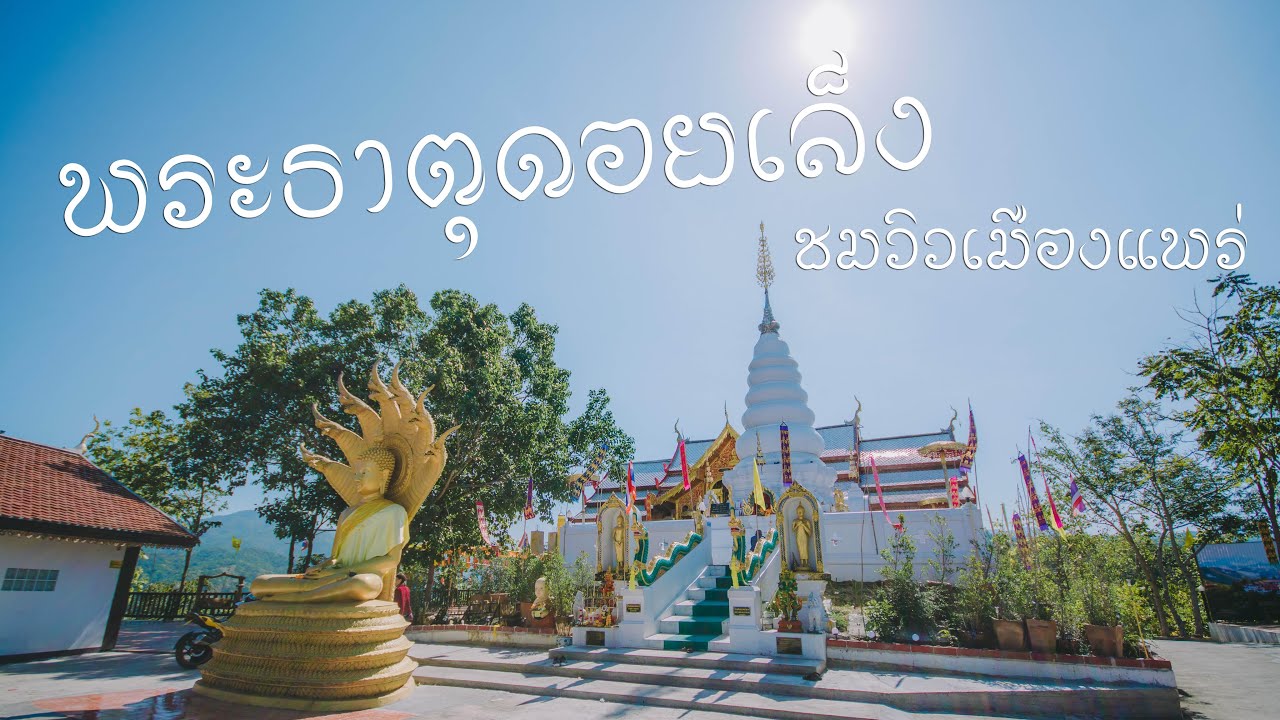
 Click to Access the Navigation Map GPS
Wat Phra That Doi Leng Map
Recommend

 Art, Culture and Heritage
 Historical Sites and Monuments(4)
 Landmarks and Memorials(5)
 Art, Craft Centres, Tradition(3)
 Museums(6)
 Historic Homes and Cities(2)
 Educational Places
 Museum for Study(1)
 Educational Gardens, Farm(2)
Temple(31)
Educational Gardens, Farm(2)
Temple(31)
 Other Sacred Sites(8)
 Suburban Living
 Village, Community(6)
 Local Market(1)
 Nature and Wildlife
 National Parks and Marine Reserves(4)
 Dam, Reservoir, Lake(14)
 Waterfalls(6)
 Hot Springs(1)
 Caves(5)
 River, Canal(3)
 Islands(1)
 Other natural attractions(5)
 Entertainment and Agricultural
 Farms, Parks and Ecotourism(5)
 Outdoor and Adventure Activities(1)
 Travel Articles, Recipes
 Travel Review, Food Review(2)


