
lovethailand home >North Travel Attractions >Phrae Travel Attractions >Wang Chin >Saroi > Royal Monument of Chao Luang Muen Dong Nakhon
TL;DR: Royal Monument of Chao Luang Muen Dong Nakhon is located at Saroi Subdistrict, Wang Chin District, Phrae, open Daily, hours Open For Visits Throughout The Day.
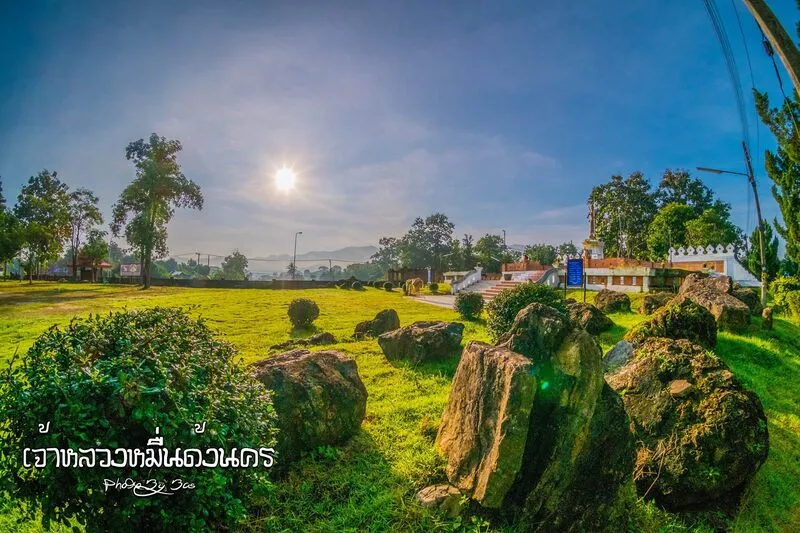
Royal Monument of Chao Luang Muen Dong Nakhon
Open Days: Daily
Opening Hours: Open For Visits Throughout The Day
The Royal Monument of Chao Luang Muen Dong Nakhon in Saroi Subdistrict, Wang Chin District, Phrae, is a cultural and historical attraction that carries far more meaning than a simple roadside monument. This is a place where local faith, regional memory, and Lanna history come together in a very tangible way. For travelers interested in northern Thai heritage, this monument offers an experience rooted in reverence, community identity, and the continuing presence of a heroic figure in local cultural life.
In the clearest sense, this monument stands as a tribute to Chao Luang Muen Dong Nakhon, a revered Lanna hero remembered for courage, loyalty, leadership, and sacrifice. He is honored not only as a warrior but also as a ruler and patron of Buddhism. Because of that, the site is meaningful both historically and spiritually. Visitors do not simply come here to look at a monument. They come to remember, pay respect, and connect with a legacy that still matters deeply to the local community.
Chao Luang Muen Dong Nakhon is remembered in Lanna historical tradition as a distinguished military leader during the reign of King Tilokaraj. His name appears in narratives that emphasize bravery, intelligence, and unwavering loyalty to the land he served. In times of conflict, he is remembered as a defender of the kingdom, and in times of peace, as a respected ruler and figure of authority. That enduring image is one reason his memory has remained so strong across generations.
His historical significance extends beyond warfare. Local accounts and traditional narratives connect him with rule over several important cities in the Lanna realm, including Khelang Nakhon, Chiang Chuen, Chaliang, and Dong Nakhon. This broad role helps explain why he is remembered not merely as a battlefield hero but as a regional leader of considerable influence. That wider political and cultural significance gives the monument even greater depth, especially for travelers who want to understand how local memory preserves important figures from northern Thai history.
Another important part of his legacy is his role in supporting Buddhism. Traditional accounts connect Chao Luang Muen Dong Nakhon with the construction of major religious structures, including an ubosot and a large chedi at Wat Wiang Dong. This helps shape his image as more than a warrior. He is also remembered as a ruler with moral authority, spiritual commitment, and a sense of responsibility toward the religious life of his people. That combination of military strength and religious merit is central to how he is honored today.
One of the most powerful aspects of his memory is the idea of loyalty carried through to the end of his life. Narratives associated with Lilit Yuan Phai preserve the image of a man willing to sacrifice everything for honor and devotion. Whether visitors arrive with prior knowledge or encounter the story for the first time at this site, that moral dimension gives the monument unusual emotional force. It stands not only for victory or power, but for integrity, duty, and personal sacrifice.
The monument in Saroi exists because of local devotion. People from Saroi and Pasak joined together to create this place as a shared center of remembrance and reverence. That community origin is important. The site was not imposed from outside as a formal historical object alone. It was shaped by living faith and collective respect. Because of that, the atmosphere here feels sincere and grounded in real local feeling rather than detached commemoration.
Visitors will usually notice that the monument area feels calm, dignified, and closely tied to the surrounding community. It does not function like a large commercial tourist attraction. Its appeal comes from meaning rather than spectacle. That makes it especially worthwhile for travelers who prefer places with cultural depth, local character, and a strong sense of story. Even a short stop can leave a lasting impression because the site carries emotional as well as historical weight.
One of the most important reasons to visit is that this is still an active place in local cultural life. Ceremonies honoring Chao Luang Muen Dong Nakhon continue to be held here, including the annual Wai Sa tradition. These events show clearly that the monument is not simply a reminder of the past. It remains part of present-day community identity. Rituals, offerings, performances, and gatherings continue to reinforce the bond between the people and the heroic figure they honor.
For travelers interested in Lanna studies, folklore, and regional memory, this monument offers a valuable perspective. It shows how written history, local belief, oral tradition, and ritual practice can coexist in one place. Some parts of Chao Luang Muen Dong Nakhon’s story come from historical texts, while others are preserved through community reverence and annual ceremonies. Together, these layers create a richer understanding of how northern Thai heritage survives and continues to shape local identity.
The monument is also significant as a symbolic center of community values. In many northern Thai communities, places of reverence serve as anchors of identity. Here, that role is especially clear. Chao Luang Muen Dong Nakhon is remembered as a model of courage, honesty, loyalty, and sacrifice. Paying respect at the monument therefore carries both spiritual and moral meaning. It is a way of honoring a historical figure and, at the same time, affirming the values he represents.
From a tourism perspective, this site is best suited to travelers who appreciate thoughtful, slower journeys. It is ideal for those interested in history, regional heritage, spirituality, and community-based culture. It may not be a place filled with large-scale facilities or entertainment, but it offers something more lasting: a sense of connection to local memory and a clearer understanding of Phrae beyond the better-known urban attractions.
Even a brief visit can be rewarding. Travelers can stop to pay respects, take photographs, and spend time reading or reflecting on the story behind the monument. But the experience becomes much richer when visitors understand who Chao Luang Muen Dong Nakhon was and why local people continue to honor him. With that context, the monument becomes much more than a structure. It becomes a living point of contact between the present community and the Lanna past.
For photography, the monument works best as a cultural landmark rather than a dramatic scenic icon. The most meaningful images often include the monument itself, the ceremonial ground, and the wider local setting. If you visit during a community event, the atmosphere becomes even more compelling, with rituals and local participation adding movement and narrative to the scene. On regular days, the quiet surroundings still offer a respectful and reflective mood.
The monument also works well as part of a wider Wang Chin itinerary. Travelers can combine it with viewpoints, local cafés, nature stops, and accommodations in the district to create a route that balances cultural learning with relaxation. For those who want to see a deeper side of Phrae, beyond the most famous town-center stops, Saroi offers a rewarding and distinctive perspective.
Travel Information From Phrae town, travelers can drive toward Wang Chin District and continue to Saroi Subdistrict. The trip usually takes around 1.5 hours depending on traffic and road conditions. For navigation, searching for “The Royal Monument of Chao Luang Muen Dong Nakhon” or “Saroysereewittaya School” is the most practical approach, as the school is a key landmark connected to the monument area. A private car is the most convenient way to visit, especially if you plan to continue to other attractions in Wang Chin afterward.
Overall, the Royal Monument of Chao Luang Muen Dong Nakhon is one of the most meaningful cultural stops in Phrae for travelers interested in history and living tradition. It preserves the memory of a Lanna hero, reflects the devotion of the local community, and gives visitors a chance to experience heritage in a form that is still active and deeply respected. It is not only a monument to the past, but also a place where memory, identity, and belief remain powerfully present today.
| Name | The Royal Monument of Chao Luang Muen Dong Nakhon |
| Location | Saroi Subdistrict, Wang Chin District, Phrae |
| Address | Monument Ground Near Saroysereewittaya School, Saroi Subdistrict, Wang Chin District, Phrae 54160 |
| Highlights | A local spiritual landmark and memorial to a revered Lanna hero from the reign of King Tilokaraj |
| History | Connected to the legacy of Chao Luang Muen Dong Nakhon, a major Lanna military leader and ruler remembered for courage, loyalty, and merit; the monument was later created through community devotion |
| Name Origin | Named in honor of Chao Luang Muen Dong Nakhon, a heroic figure deeply respected in local memory |
| Distinctive Features | A ceremonial monument ground used for worship, remembrance, and community heritage activities |
| Travel Information | Drive from Phrae town toward Wang Chin and continue to Saroi; Saroysereewittaya School is the key landmark for navigation |
| Current Status | Still used as a place of worship and as the venue for the annual Wai Sa ceremony honoring Chao Luang Muen Dong Nakhon |
| Open Days | Daily |
| Opening Hours | Accessible Throughout The Day |
| Fees | No Admission Fee |
| Facilities | Ceremonial Ground, Worship Area, Nearby Parking, Local Cafés And Community Services In Wang Chin District |
| Main Areas / Zones | Monument Area, Worship Ground, Annual Ceremony Space |
| Caretaker | Local Community Of Saroi And Local Administrative Bodies |
| Main Contact Number | Saroi Subdistrict Administrative Organization: 054-658-555-6 |
| Official Website / Official Page | www.saroi.go.th |
| Nearby Tourist Attractions | 1) Wat Sri Bun Rueang - 2 km 2) Mon Sroi - 16 km 3) Mae Ang Reservoir - 18 km 4) Wat Pang Ngun - 8 km 5) Wiang Kosai National Park - 28 km |
| Nearby Restaurants | 1) Khang Ban Cafe' - 3 km - Tel. 095-140-3632 2) Pang Ngun Coffee - 8 km - Tel. 082-561-8202 3) Ma-Chill Viewna Cafe' - 10 km - Tel. 096-520-6571 4) Moo Inter Wang Chin - 21 km - Tel. 065-925-3614 5) Rung Rueang Phochana - 24 km - Tel. 097-958-8315 |
| Nearby Accommodations | 1) Mon Mai Ai Oon - 8 km 2) Pang Ngun Green Village Tourism Stay - 8 km - Tel. 089-851-4603 3) Wang Thong Resort - 22 km - Tel. 054-588-025 4) The Nanda Resort - 23 km - Tel. 089-555-3422, 095-162-9594 5) Phuphakin Wang Chin Resort & Camping - 24 km - Tel. 065-926-8558 |
Frequently Asked Questions (FAQ)
Q: Where is the Royal Monument of Chao Luang Muen Dong Nakhon located?
A: It is located in Saroi Subdistrict, Wang Chin District, Phrae, near Saroysereewittaya School.
Q: Who was Chao Luang Muen Dong Nakhon?
A: He is remembered as a Lanna hero, military leader, ruler, and patron of Buddhism during the reign of King Tilokaraj.
Q: Why is this monument important?
A: It is both a memorial to a major Lanna historical figure and a living center of devotion for local communities in Saroi and nearby areas.
Q: Is there an annual ceremony held here?
A: Yes. The community continues to hold the Wai Sa ceremony honoring Chao Luang Muen Dong Nakhon.
Q: Is there an entrance fee?
A: No. Visitors can stop by, pay respect, and explore the area without an admission fee.
Q: What kind of travelers would enjoy this place most?
A: It is especially suitable for travelers interested in Lanna history, local culture, spiritual landmarks, and community-based heritage experiences.
 Category: ●Art, Culture and Heritage
 Group: ●Landmarks and Memorials
Last Update : 6 MonthAgo
 Last Update : 6 MonthAgo
 Click to Access the Navigation Map GPS
Royal Monument of Chao Luang Muen Dong Nakhon Map
Recommend

 Historical Sites and Monuments(4)
Landmarks and Memorials(5)
Historical Sites and Monuments(4)
Landmarks and Memorials(5)
 Art, Craft Centres, Tradition(3)
 Museums(6)
 Historic Homes and Cities(2)
 Educational Places
 Museum for Study(1)
 Educational Gardens, Farm(2)
 Places of Worship
 Temple(31)
 Other Sacred Sites(8)
 Suburban Living
 Village, Community(6)
 Local Market(1)
 Nature and Wildlife
 National Parks and Marine Reserves(4)
 Dam, Reservoir, Lake(14)
 Waterfalls(6)
 Hot Springs(1)
 Caves(5)
 River, Canal(3)
 Islands(1)
 Other natural attractions(5)
 Entertainment and Agricultural
 Farms, Parks and Ecotourism(5)
 Outdoor and Adventure Activities(1)
 Travel Articles, Recipes
 Travel Review, Food Review(2)


