
lovethailand home >North Travel Attractions >Phrae Travel Attractions >Muang Phrae >Nai Wiang > Free Thai Museum of Phrae
TL;DR: Free Thai Museum of Phrae is located at Behind Paradorn Hotel, Yantrakit Kosol Road, Nai Wiang Subdistrict, Mueang Phrae District, Phrae, open Daily, hours 08:00–17:00.
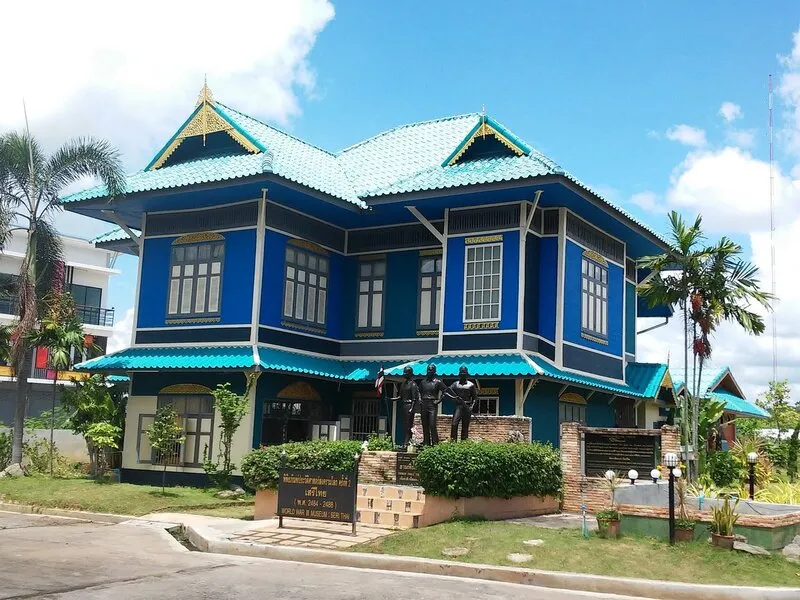
Free Thai Museum of Phrae
Open Days: Daily
Opening Hours: 08:00–17:00
The Free Thai Museum of Phrae is one of the most important historical attractions in Phrae and one of the best places to understand the province beyond its teak mansions, old temples, and quiet northern charm. This museum is devoted to the story of the Free Thai movement in Phrae during World War II, and it preserves the memory of local people who risked their lives for the country during one of the most dangerous periods in modern Thai history.
In simple terms, the museum is a local history museum located behind Paradorn Hotel on Yantrakit Kosol Road in Mueang Phrae District. It was founded in 2007 by Phuchong Kanthatham, the son of Thong Kanthatham, who had served as the head of the Free Thai movement in Phrae. The museum was created as a gesture of respect to the brave people of Phrae and as a public learning space dedicated to their sacrifice, patriotism, and historical role in preserving Thailand’s future.
The real strength of the museum lies in its meaning. This is not just a display of old photographs and wartime documents. It is a place that tells the story of resistance, intelligence work, military cooperation, and the determination of ordinary Thai people who quietly worked against Japanese wartime domination while helping the Allied cause. For visitors, this gives the museum an emotional and moral weight that goes far beyond a standard local attraction.
Phrae held a particularly important place in the Free Thai movement in Northern Thailand. The province became one of the main regional centers of operation, with networks for information gathering, communication, supply storage, and guerrilla planning. This makes the museum especially significant, because it documents not only national events but also the very local and very real role that Phrae played in them.
A central figure in the museum’s story is Thong Kanthatham, the leader of the Free Thai movement in Phrae. He is remembered as one of the most important local figures in the northern branch of the movement, and his legacy is one of the main reasons the museum exists. Through photographs, historical information, and collected materials, visitors can better understand how local leadership and local courage shaped the province’s wartime contribution.
To understand the museum properly, it is useful to recall the wartime background. During World War II, Japanese forces entered Thailand and rapidly expanded through Southeast Asia. Under strong pressure, the Thai government formally cooperated with Japan and later declared war on Britain and the United States. Yet many Thais, both inside the country and abroad, did not accept this as the true national will. From this conflict emerged the Free Thai movement, which secretly coordinated with the Allies in order to protect Thailand’s long-term position and independence.
The Free Thai movement worked in military, diplomatic, and political dimensions throughout the war. Its efforts were especially important because they helped convince the Allied powers that Thailand should not be treated simply as an enemy state after the war. The movement’s credibility, discipline, and intelligence work became a major factor in Thailand’s postwar survival as an unoccupied nation.
In Phrae, operations were concrete and highly practical. They involved intelligence gathering on Japanese troop positions, message transmission, storage of American weapons, supply logistics, training, and guerrilla warfare preparation. More than 500 people were involved in the local movement, showing how broad the support network in the province really was. This was not the work of a few isolated individuals. It was a coordinated effort rooted in local commitment.
One of the most important early operations in Phrae took place in September 1944 and was known as Operation Hotfoot. Lieutenant Boonmak Thetsabut and Sub-Lieutenant Wimon Wiriyawit were dropped by parachute into Phrae together with supplies. This marked an important step in strengthening the Free Thai presence in the North and linking local operations with wider Allied plans.
Later, there were three more aerial support missions after communication through the Siren center in Bangkok had become more systematic. These operations were collectively known as Operation Numeral. They delivered weapons, food, medicine, and trainers, both Thai and foreign, into the Phrae area. This shows how important the province had become in the broader wartime structure of the Free Thai movement.
When Japan surrendered unconditionally on 15 August 1945, the work of the Free Thai movement proved decisive. The Allies informed the Regent in the reign of King Rama VIII, who also led the Free Thai movement, that Thailand would not be regarded as a defeated enemy state, would not be occupied, and could restore its international relations. Because of this outcome, the Free Thai movement remains one of the most respected patriotic movements in Thai history, and 16 August later became the national day of remembrance for its heroism.
The museum makes all of this much more accessible by connecting national history to local people. Visitors see names, faces, and stories tied directly to Phrae. This transforms the subject from distant wartime history into a deeply human story of local courage and national consequence. That is one reason the museum is so valuable: it preserves the emotional reality behind historical events.
Another important aspect of the museum is the intention behind its creation. It was founded not for commercial benefit, but as a tribute to local ancestors and fellow patriots. That gives the museum a strong sense of sincerity. Visitors often feel that they are entering a place of memory and respect rather than simply a tourist site. This atmosphere makes the museum especially meaningful for students, researchers, and thoughtful travelers.
Inside, the museum displays photographs, documents, and historical narratives arranged to explain the Free Thai movement in Phrae and its northern network. The scale of the museum is modest, but the subject matter is powerful. For many visitors, that makes the experience even more effective, because the focus remains direct and easy to follow rather than overwhelming.
The museum is also important as an educational destination. Schools, students, and research groups can visit to deepen their understanding of World War II in Thailand, wartime politics, and the role of underground networks in national history. Group visits can also arrange advance contact for guided explanation, which is especially useful for structured learning.
Its location is another advantage. Because it is behind Paradorn Hotel on a central road in Phrae, the museum can easily be included in a heritage route with Khum Chao Luang, Wat Pong Sunan, Khum Wongburi, and other historic stops in the city. This makes it ideal for travelers who want to combine political history, architecture, and local culture in one day.
In broader cultural terms, the museum represents more than wartime memory. It also reflects values that remain important today: unity, sacrifice, public spirit, and responsibility toward the nation. The Free Thai movement succeeded because people from many backgrounds chose cooperation over fear. That lesson still resonates strongly, which is why the museum continues to matter beyond its historical exhibits.
Travel Information The Free Thai Museum of Phrae is located at 177 Yantrakit Kosol Road, Nai Wiang Subdistrict, Mueang Phrae District, Phrae 54000, behind Paradorn Hotel. It is easy to reach by private car, local transport, or navigation apps. The coordinates are 18.147589, 100.14885. Because the museum is in the city area, it can be comfortably combined with several nearby historical attractions in a half-day or full-day Phrae itinerary.
Overall, the Free Thai Museum of Phrae is far more than a small local museum. It is a memorial to courage, a learning center for wartime history, and a reminder that the survival of a nation often depends on the quiet sacrifice of people whose names are not always widely known. For travelers who want to understand Phrae through its historical depth, this is one of the city’s most meaningful places to visit.
| Name | The Free Thai Museum of Phrae |
| Place Summary | A historical museum dedicated to the Free Thai movement in Phrae during World War II, founded to honor local patriots and preserve their story |
| Location | Behind Paradorn Hotel, Yantrakit Kosol Road, Nai Wiang Subdistrict, Mueang Phrae District, Phrae |
| Address | 177 Yantrakit Kosol Road, Nai Wiang Subdistrict, Mueang Phrae District, Phrae 54000 |
| Coordinates | 18.147589, 100.14885 |
| Highlights | Stories of the Phrae Free Thai network, photographs, documents, Operation Hotfoot, Operation Numeral, and the role of Thong Kanthatham |
| History | Founded in 2007 by Phuchong Kanthatham to honor the role of the Free Thai movement in Phrae during World War II |
| Name Origin | Named after the Free Thai movement, the anti-Japanese resistance network that cooperated with the Allies during World War II |
| Distinctive Features | A specialized museum focused on Northern Free Thai history, local wartime operations, and the human stories behind Thailand’s wartime survival |
| Travel Information | Located in central Phrae behind Paradorn Hotel; easy to reach by car, local transport, and navigation apps |
| Current Status | Still open with free admission every day, and group visits can arrange advance educational guidance |
| Open Days | Daily |
| Opening Hours | 08:00–17:00 |
| Fees | No Admission Fee |
| Facilities | Museum exhibition area, souvenir corner, and parking within the Paradorn Hotel area |
| Main Areas / Zones | Free Thai history zone, photo and document display zone, Phrae operations zone, and souvenir corner |
| Caretaker | Phuchong Kanthatham and the Free Thai Museum of Phrae team |
| Main Contact Number | 086-188-9768, 054-511177 |
| Official Website / Official Page | Facebook: freethaiphrae |
| Nearby Tourist Attractions | 1. Khum Chao Luang – 1 km. Tel. 054-524158 2. Wat Pong Sunan – 1 km. Tel. 063-5253242 3. Khum Wongburi – 2 km 4. The Teak Museum – 2 km. Tel. 054-511048, 054-511270 5. Phrae City Pillar Shrine – 2 km |
| Nearby Restaurants | 1. Kra Pao Pla Lak Lan, Mueang Phrae Branch – 0 km. Tel. 097-1249655 2. @Phrae Mala – 0 km. Tel. 086-9163119 3. Kham Samorn Restaurant – 1 km. Tel. 054-650624, 081-8818432 4. Pan Jai Restaurant – 2 km. Tel. 054-620727 5. Ton Tarn – 2 km. Tel. 091-8568285, 054-534628 |
| Nearby Accommodations | <|vq_1090|>1. Paradorn Hotel – 0 km. Tel. 054-511177, 081-0332002, 098-6383859 2. Phrae Nakara Hotel – 1 km. Tel. 054-521321, 095-1451662 3. Taris Art Hotel Phrae – 2 km. Tel. 054-511122, 088-2523098 4. Phoomthai Garden Hotel – 2 km. Tel. 054-627359 5. Maeyom Palace Hotel – 3 km. Tel. 054-521028, 097-7269645 |
Frequently Asked Questions (FAQ)
Q: Where is the Free Thai Museum of Phrae located?
A: It is located behind Paradorn Hotel at 177 Yantrakit Kosol Road, Nai Wiang Subdistrict, Mueang Phrae District, Phrae.
Q: Is the museum open every day?
A: Yes. It is open daily from 08:00 to 17:00.
Q: Is there an entrance fee?
A: No. Admission is free.
Q: Why is the museum important?
A: It preserves the story of the Free Thai movement in Phrae during World War II and honors the local people who played an important role in protecting Thailand’s future.
Q: Can group visits arrange a guide or lecturer?
A: Yes. Groups can contact the museum in advance to arrange an educational talk or guided explanation.
Q: How long should visitors allow for the museum?
A: Most visits take around 30 to 60 minutes, though history enthusiasts may wish to stay longer.
 Category: ●Art, Culture and Heritage
 Group: ●Museums
Last Update : 6 MonthAgo
 Last Update : 6 MonthAgo
 Click to Access the Navigation Map GPS
Free Thai Museum of Phrae Map
Recommend

 Historical Sites and Monuments(4)
 Landmarks and Memorials(5)
 Art, Craft Centres, Tradition(3)
Museums(6)
Art, Craft Centres, Tradition(3)
Museums(6)
 Historic Homes and Cities(2)
 Educational Places
 Museum for Study(1)
 Educational Gardens, Farm(2)
 Places of Worship
 Temple(31)
 Other Sacred Sites(8)
 Suburban Living
 Village, Community(6)
 Local Market(1)
 Nature and Wildlife
 National Parks and Marine Reserves(4)
 Dam, Reservoir, Lake(14)
 Waterfalls(6)
 Hot Springs(1)
 Caves(5)
 River, Canal(3)
 Islands(1)
 Other natural attractions(5)
 Entertainment and Agricultural
 Farms, Parks and Ecotourism(5)
 Outdoor and Adventure Activities(1)
 Travel Articles, Recipes
 Travel Review, Food Review(2)


