
lovethailand home >North Travel Attractions >Phrae Travel Attractions >Muang Phrae >Nai Wiang > Khum Wichai Racha
TL;DR: Khum Wichai Racha is located at Wichai Racha Road, Nai Wiang, Mueang Phrae, Phrae, open Open Daily, hours 08:30 – 16:30.

Khum Wichai Racha
Open Days: Open Daily
Opening Hours: 08:30 – 16:30
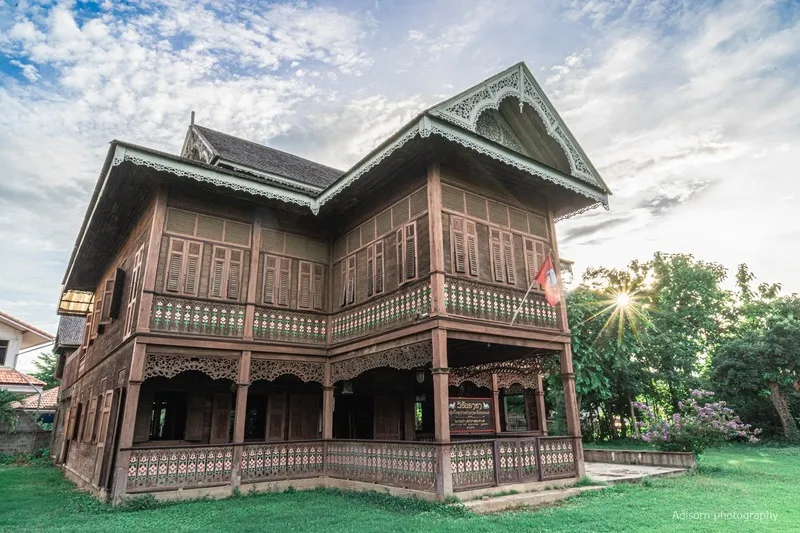
Khum Wichai Racha in Phrae is one of the city’s most valuable historic teakwood houses, admired for both its architectural beauty and its deep connection to local history. This house is far more than an old residence. It is tied to the story of noble families in Phrae, the memory of Wat Si Bun Rueang, the Ngiao Rebellion of 1902, and the legacy of Phra Wichai Racha and the Sansiriphan lineage. For travelers who want more than a quick photo stop, Khum Wichai Racha offers a meaningful look into the layered identity of old Phrae.
The house is especially striking because of its refined blend of styles. It is a teakwood residence influenced by the Manila-style house, Western gingerbread decoration, and traditional Lanna design. The carved wooden fretwork on the gables, balcony screens, eaves, and ventilation panels above the doors and windows gives the building a soft and elegant presence. Rather than copying a foreign model outright, the house adapts outside influences into a form that suits the climate, materials, and cultural taste of Phrae.
The historical background associated with the area comes partly from commemorative writing related to Wat Si Bun Rueang, which suggests that the temple itself had already existed for centuries, even though no definitive founding record survives. Oral accounts passed down through elders speak of Phraya Saen Si Khwa and later Phraya Prasert Chana Songkhram Ratchaphakdi as major patrons involved in restoring the temple. These family connections are important because Khum Wichai Racha stands close to the temple and belongs to the same historical environment shaped by elite families of old Phrae.
Mae Chao Kham Po, a daughter in that line, later married Phra Wichai Racha, originally known as Chao Nhan Khatti. He was the son of Chao Saen Samoechai and a descendant of the ruling family connected to Chao Luang Thepwong Lintong, ruler of Phrae in the early nineteenth century. Chao Nhan Khatti became the ancestor of the Sansiriphan family, while related branches later formed other well-known local lineages. This family network places the house firmly within the social and political history of Phrae.
Khum Wichai Racha is remembered most vividly for its role during the Ngiao Rebellion on 25 July 1902. At that time, rebels seized Phrae and killed many officials and members of their families. Chao Nhan Khatti, who was serving in the treasury administration of the city, hid three central government officials in the ceiling space of the house and protected them from being hunted down. This act of courage became the defining episode associated with the residence and led to his later recognition under the name Phra Wichai Racha.
Because of this episode, the house is not simply an attractive heritage structure. It is also a silent witness to one of the most dramatic moments in Phrae’s history. The residence stands as a reminder that major historical events often unfold not only in palaces and government halls, but also in private homes where decisions of loyalty and bravery are made in moments of crisis.
The current house is believed to have been built sometime between 1891 and 1895, and certainly before 1898. Local accounts suggest that an earlier residence may have existed on the same elevated site before the current structure was built. The location itself is well chosen, sitting in a favorable part of old Phrae near the historic urban core. Over time, the house became associated not only with Phra Wichai Racha, but also with his son Chao Wong Sansiriphan, who was later known as the first member of parliament from Phrae and an important figure in the province’s modern political story.
Architecturally, the house is noteworthy for its balanced proportions and its restrained use of materials. Even though its owners were people of means and were connected to the teak trade, the structural system reflects practical wisdom rather than excess. Traditional accounts emphasize that the house did not use oversized materials beyond what was necessary. This restraint reflects an older Phrae mindset that valued craftsmanship, structural understanding, and moderation in the use of natural resources.
For visitors interested in conservation, Khum Wichai Racha also represents an important survival story. Many historic timber houses in Phrae have disappeared over time, but this residence has continued to be cared for and spoken of as a heritage landmark. More recent references identify Vira Star as the caretaker associated with the house, and the site has also appeared in cultural events and exhibitions in recent years. That continuing use gives the place a living role rather than leaving it frozen as an abandoned relic.
For travel planning, Khum Wichai Racha works very well as part of an old-town route through Phrae. It is close to Wat Si Bun Rueang, Vongburi House, Wat Phra Bat Ming Mueang Worawihan, Khum Chao Luang, and the city museum area. This makes it ideal for travelers who want to explore Phrae slowly and connect architecture, local history, and the atmosphere of the old city in one trip.
Getting There Khum Wichai Racha is located on Wichai Racha Road in Nai Wiang Subdistrict, Mueang Phrae District. It is easy to reach from central Phrae, Phrae Bus Terminal, or Phrae Airport. Travelers by private car can enter the old-town zone through the main city roads and continue to Wichai Racha Road. Since several heritage attractions stand within a short distance of each other, the site is also convenient for a combined old-city walking or short-driving itinerary.
| Name | Khum Wichai Racha |
| Location | Wichai Racha Road, Nai Wiang, Mueang Phrae, Phrae |
| Summary | A historic teakwood residence associated with Phra Wichai Racha, noted for its Manila-style form, gingerbread details, and strong links to Phrae’s political and social history |
| Highlights | Intricate wooden fretwork, heritage teak architecture, links to the 1902 Ngiao Rebellion, and the history of the Sansiriphan family |
| History | Believed to have been built around 1891-1895 and certainly before 1898 as the residence of Phra Wichai Racha (Chao Nhan Khatti Sansiriphan) |
| Name Origin | Named after Phra Wichai Racha, the house owner and a key historical figure of Phrae |
| Distinctive Features | Manila-style teak house with Western gingerbread ornament and Lanna elements, decorated with carved panels on the gables, balcony, and ventilation screens |
| Travel Information | Located in Phrae’s old city and easy to combine with other heritage attractions in the same area |
| Current Status | A cared-for historic residence that has also been used for cultural events and exhibitions in recent years |
| Open Days | Open Daily |
| Opening Hours | 08:30 – 16:30 |
| Fees | No clearly verified entrance fee found; it is best to confirm before visiting |
| Caretaker | Vira Star |
| Main Contact Number | 096-080-2380 |
| Official Website / Official Page | Amazing Thailand / caretaker page for Khum Wichai Racha |
| Nearby Tourist Attractions | 1. Wat Si Bun Rueang – 0.1 km 2. Vongburi House – 0.7 km 3. Wat Phra Bat Ming Mueang Worawihan – 0.9 km 4. Khum Chao Luang – 1.2 km 5. Phrae City Museum – 1.3 km |
| Nearby Restaurants | 1. Gingerbread House Gallery & Cafe – 1.2 km Tel. 054-523-671 2. Hom 2493 – 1.5 km Tel. 064-561-6807 3. Khao Soi Che Lek – 1.7 km Tel. 098-236-9391 4. Krua Khun Chai Lanna – 4.5 km Tel. 066-139-5948 5. Huan Kham Wan Nam Yoi – 6 km Tel. 087-356-9725 |
| Nearby Accommodations | 1. Huern Na Na Boutique Hotel – 1.3 km Tel. 054-524-800 2. Amonruk Hotel – 1.5 km Tel. 054-533-169 3. Maeyom Palace Hotel – 2.2 km Tel. 054-521-028 4. Phoomthai Garden Hotel – 1.8 km Tel. 054-627-359 5. Taris Art Hotel – 1.6 km Tel. 088-252-3098 |
Frequently Asked Questions (FAQ)
Q: Where is Khum Wichai Racha located?
A: It is on Wichai Racha Road in Nai Wiang Subdistrict, Mueang Phrae District, Phrae Province, close to Wat Si Bun Rueang in the old city area.
Q: What makes Khum Wichai Racha special?
A: It is a rare teakwood heritage house that combines Manila-style, gingerbread, and Lanna architectural elements, while also holding an important place in Phrae’s history.
Q: When was the house built?
A: The current house is generally believed to have been built around 1891-1895 and definitely before 1898.
Q: How is the house connected to the Ngiao Rebellion?
A: During the 1902 rebellion, Phra Wichai Racha reportedly hid three central officials in the ceiling space of the house and saved them from being killed.
Q: Is Khum Wichai Racha suitable for general travelers?
A: Yes. It is especially suitable for travelers interested in history, old architecture, teak heritage houses, and Phrae’s cultural identity.
Q: Can I combine this visit with other attractions?
A: Yes. It fits very well into an old-town itinerary with Vongburi House, Khum Chao Luang, Wat Phra Bat Ming Mueang Worawihan, and other historic sites in central Phrae.
 Category: ●Art, Culture and Heritage
 Group: ●Historical Sites and Monuments
Last Update : 6 MonthAgo
 Last Update : 6 MonthAgo
 Click to Access the Navigation Map GPS
Khum Wichai Racha Map
Recommend
 Historical Sites and Monuments(4)
 Landmarks and Memorials(5)
 Art, Craft Centres, Tradition(3)
 Museums(6)
 Historic Homes and Cities(2)
 Educational Places
 Museum for Study(1)
 Educational Gardens, Farm(2)
 Places of Worship
 Temple(31)
 Other Sacred Sites(8)
 Suburban Living
 Village, Community(6)
 Local Market(1)
 Nature and Wildlife
 National Parks and Marine Reserves(4)
 Dam, Reservoir, Lake(14)
 Waterfalls(6)
 Hot Springs(1)
 Caves(5)
 River, Canal(3)
 Islands(1)
 Other natural attractions(5)
 Entertainment and Agricultural
 Farms, Parks and Ecotourism(5)
 Outdoor and Adventure Activities(1)
 Travel Articles, Recipes
 Travel Review, Food Review(2)


