
lovethailand home >North Travel Attractions >Phrae Travel Attractions >Muang Phrae >Thung Kwao > Wat Chom Sawan
TL;DR: Wat Chom Sawan is located at Yantarakit Kosol Road, Nai Wiang, Mueang Phrae, Phrae, open Daily, hours 08:00 - 16:30. Highlights include A rare Tai Yai temple with Burmese-inspired architecture, a full teak monastic hall, and valuable religious antiques.

Wat Chom Sawan
Open Days: Daily
Opening Hours: 08:00 - 16:30
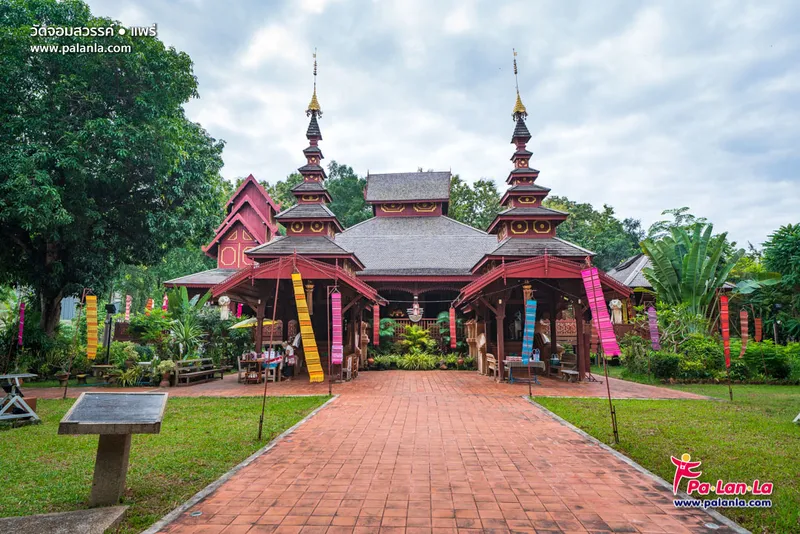
Wat Chom Sawan is one of the most distinctive temples in Phrae and one of the easiest cultural landmarks to include in a city itinerary. Located on Yantarakit Kosol Road in Nai Wiang, Mueang Phrae District, just about 1 kilometer from the provincial hall, the temple stands out for its rare Tai Yai and Burmese-inspired architecture, its teakwood monastic hall, and its collection of important religious antiques. For travelers looking for a historic temple in Phrae that offers more than a quick photo stop, Wat Chom Sawan is one of the strongest choices in the city.
The first thing that makes the temple memorable is its architecture. Unlike many temples in central Thailand, Wat Chom Sawan reflects a strong Burmese and Tai Yai identity. The main teak structure serves as an ordination hall, viharn, and monk residence within the same building. Its layered rooflines rise in graceful tiers, creating a silhouette that immediately feels different from standard Thai temple forms. The carved wooden details, the elevated structure, and the decorative elements on the stairways and exterior all contribute to the temple’s unique atmosphere.
Once inside, the craftsmanship becomes even more impressive. The ceiling and pillars are richly decorated with carved woodwork and colored glass. Some of the wooden pillars are lacquered and gilded, while inscriptions in Burmese script add another layer of historical value. This is not simply decorative beauty. These details reveal the temple’s cultural roots and preserve the story of the Tai Yai community that helped shape Phrae’s identity in the late nineteenth century.
Wat Chom Sawan is especially important because of the sacred and historical objects kept within the temple. Among the best known is Luang Pho San, a Buddha image made from woven bamboo and then lacquered and gilded. This alone makes the temple remarkable, as such craftsmanship is rarely seen today. The temple also preserves an ivory Buddha image in Burmese style, an ivory scripture set or Patimokkha manuscript made from compressed ivory powder sheets coated in red lacquer and inscribed in Burmese script, and an intricately decorated pavilion enshrining a marble Buddha image. Together, these objects make the temple a major cultural treasure rather than simply a visually attractive place of worship.
Historically, the temple dates to the reign of King Rama V. It was established in 1894 by Tai Yai or Ngiao people who had settled in the area after coming to trade in Phrae. During the period following the Ngiao rebellion in Phrae, the temple fell into decline for a time before later being restored by the Tai Yai community. This history gives the site unusual depth. Wat Chom Sawan is not only a religious landmark, but also a living record of migration, commerce, faith, and cultural exchange in northern Thailand.
The Fine Arts Department later recognized the importance of the temple and its heritage objects by registering it as a national treasure. That official recognition adds to its importance for visitors interested in architecture, history, conservation, and religious art. In a city known for old teak mansions and regional heritage, Wat Chom Sawan stands as one of the clearest examples of how Phrae absorbed and preserved outside influences while still maintaining its own local identity.
Another reason the temple is appealing is its atmosphere. Although it sits in the city and is easy to reach, the compound still feels calm once you step inside. The old wooden structure, the subdued light filtering across the carved details, and the quiet rhythm of the temple all help create a reflective setting. It works well for travelers who want to slow down and appreciate details rather than rush through a sightseeing checklist.
For photographers, Wat Chom Sawan is one of the most rewarding temples in Phrae. The layered roof, teak walls, ornate staircases, and finely worked pillars offer strong compositions from nearly every angle. The site is also highly photogenic without feeling overly commercial. It remains a genuine religious place, and that gives the experience more authenticity than many attractions designed mainly for tourism.
Wat Chom Sawan also fits easily into a wider city route. Nearby attractions include Wat Phra Bat Ming Mueang Worawihan, Wat Pong Sunan, Khum Chao Luang, Phrae City Pillar Shrine, and the old market area. Travelers can comfortably combine the temple with old-town architecture, local cafés, and traditional Phrae cuisine in a half-day or full-day city trip. Because everything is relatively close together, it is a practical stop for both first-time visitors and repeat travelers who want to explore Phrae more deeply.
The temple is not only important as a preserved historic site. It also remains active in contemporary religious life. Local and provincial agencies continue to reference temple events, including the annual Magha Puja-related tradition centered on Phra That Chom Sawan. That means the temple still functions as a real spiritual center for the community and not merely as a museum-like attraction. Visitors interested in local tradition may find it especially rewarding to follow the temple calendar during festival periods.
Getting to Wat Chom Sawan is straightforward. Because it is located on Yantarakit Kosol Road in the city area, it is easy to reach by private car, local hired transport, or as part of a short urban sightseeing route. If you begin near the provincial hall or the old city landmarks, the travel time is minimal. This accessibility makes the temple an excellent choice for travelers who want a meaningful cultural stop without leaving the city center.
The best time to visit is during the morning or early afternoon, when the light helps reveal the woodwork and carved details. Visitors should dress respectfully, behave quietly, and remember that the temple remains an active sacred site. Those who appreciate Southeast Asian religious art, old timber architecture, or the historical layers of northern Thailand will find far more substance here than the temple’s compact city location might initially suggest.
In the end, Wat Chom Sawan is one of Phrae’s most rewarding heritage temples. It combines rare Tai Yai-Burmese architecture, a beautifully preserved teak structure, important religious antiques, and a genuinely peaceful setting within easy reach of the city center. For anyone planning a cultural trip to Phrae, this is a place that deserves real time, not just a brief stop.
| Name | Wat Chom Sawan |
| Location | Yantarakit Kosol Road, Nai Wiang, Mueang Phrae, Phrae |
| Address | 202 Yantarakit Kosol Road, Nai Wiang, Mueang Phrae, Phrae 54000 |
| Highlights | A rare Tai Yai temple with Burmese-inspired architecture, a full teak monastic hall, and valuable religious antiques |
| History | Built in 1894 during the reign of King Rama V by Tai Yai settlers and traders in Phrae, later restored by the Tai Yai community |
| Distinctive Features | Tiered roof structure, teakwood hall, carved pillars and ceilings with colored glass, Burmese inscriptions, and a Burmese-style pagoda |
| Main Sacred Objects | Luang Pho San, ivory Buddha image, ivory scripture manuscript, and an ornate pavilion housing a marble Buddha image |
| Travel Information | Located in Phrae city, about 1 km from the provincial hall, and easy to combine with old-town sightseeing and nearby heritage landmarks |
| Current Status | Open to visitors and still active as a community temple with annual religious events |
| Open Days | Daily |
| Opening Hours | 08:00 - 16:30 |
| Latest Caretaker | Phra Khru Sitthichayaphirat (Chayananto), Acting Abbot |
| Main Contact Number | 081-951-6103 |
| Official Website / Official Page | TATSTAR, Tourism Thailand, Facebook: Wat Chom Sawan |
| Nearby Tourist Attractions | 1. Wat Phra Bat Ming Mueang Worawihan, approx. 1 km 2. Wat Pong Sunan, approx. 1 km 3. Khum Chao Luang, approx. 2 km 4. Phrae City Pillar Shrine, approx. 2 km 5. Kad Kong Kao, approx. 2 km |
| Nearby Restaurants | 1. The Pizza Company Phrae, approx. 1 km 2. Hom 2493, approx. 2 km, Tel. 064-561-6807 3. Gingerbread House Gallery, approx. 2 km, Tel. 054-523-671 4. Punjai, approx. 2 km, Tel. 081-885-8727 5. Mae Yom Palace Hotel Restaurant, approx. 1 km, Tel. 054-521-028 |
| Nearby Accommodations | 1. Huern Nana Jomsawan, approx. 1 km, Tel. 054-511-960, 092-705-3024 2. Mae Yom Palace Hotel, approx. 1 km, Tel. 054-521-028 3. Phoomthai Garden Hotel, approx. 2 km, Tel. 054-627-359 4. Taris Art Hotel Phrae, approx. 2 km, Tel. 088-252-3098, 054-511-122 5. Hug Inn Phrae Hotel, approx. 3 km, Tel. 062-572-0077 |
Frequently Asked Questions (FAQ)
Q: Where is Wat Chom Sawan located?
A: It is located on Yantarakit Kosol Road in Nai Wiang, Mueang Phrae District, about 1 kilometer from the Phrae provincial hall.
Q: Is Wat Chom Sawan open every day?
A: Yes. It is open daily from 08:00 to 16:30.
Q: What makes Wat Chom Sawan special?
A: Its Tai Yai-Burmese architecture, teakwood monastic hall, layered rooflines, and rare antiques such as Luang Pho San and the ivory scripture manuscript make it one of Phrae’s most distinctive temples.
Q: When was Wat Chom Sawan built?
A: The temple was built in 1894 during the reign of King Rama V.
Q: What can visitors see inside the temple?
A: Visitors can admire carved wooden ceilings and pillars with colored glass, Burmese inscriptions, Luang Pho San, an ivory Buddha image, and other valuable heritage objects.
Q: Is the temple easy to include in a city itinerary?
A: Yes. It is centrally located and can easily be combined with other Phrae city landmarks such as Khum Chao Luang, Wat Pong Sunan, and the old-town area.
 Category: ●Places of Worship
 Group: ●Temple
Last Update : 6 MonthAgo
 Last Update : 6 MonthAgo
 Click to Access the Navigation Map GPS
Wat Chom Sawan Map
Recommend

 Art, Culture and Heritage
 Historical Sites and Monuments(4)
 Landmarks and Memorials(5)
 Art, Craft Centres, Tradition(3)
 Museums(6)
 Historic Homes and Cities(2)
 Educational Places
 Museum for Study(1)
 Educational Gardens, Farm(2)
Temple(31)
Educational Gardens, Farm(2)
Temple(31)
 Other Sacred Sites(8)
 Suburban Living
 Village, Community(6)
 Local Market(1)
 Nature and Wildlife
 National Parks and Marine Reserves(4)
 Dam, Reservoir, Lake(14)
 Waterfalls(6)
 Hot Springs(1)
 Caves(5)
 River, Canal(3)
 Islands(1)
 Other natural attractions(5)
 Entertainment and Agricultural
 Farms, Parks and Ecotourism(5)
 Outdoor and Adventure Activities(1)
 Travel Articles, Recipes
 Travel Review, Food Review(2)


