
lovethailand home >South Travel Attractions >Yala Travel Attractions >Raman >Talo Halo > Bueng Nam Sai
TL;DR: Bueng Nam Sai is located at Ban Bueng Nam Sai, Village No. 5, Talo Halo Subdistrict, Raman District, Yala Province, open Daily, hours 24 Hours.

Bueng Nam Sai
Open Days: Daily
Opening Hours: 24 Hours
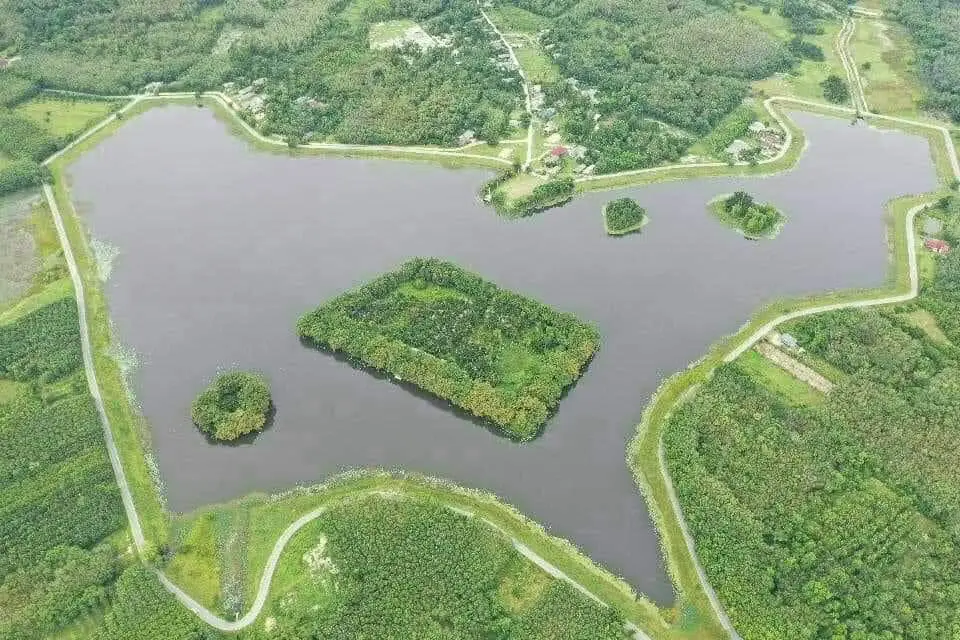
Bueng Nam Sai in Ban Bueng Nam Sai, Village No. 5, Talo Halo Subdistrict, Raman District, Yala Province, is a natural pond and community-based learning site best known as the birthplace of the dragon fish, locally called Pla Krue Sor. This rare freshwater fish is closely connected with the Sai Buri River basin, local Malay Muslim culture, and the belief that keeping dragon fish brings fortune. Bueng Nam Sai is ideal for travelers who want to understand Yala beyond conventional sightseeing, because the place combines ecology, local livelihood, oral history, freshwater biodiversity, and southern border culture in one meaningful landscape.
Bueng Nam Sai is part of Ban Bueng Nam Sai, a rural community in Talo Halo Subdistrict of Raman District. Its local name is “Baroh Kalawas,” referring to a pond with exceptionally clear water. Local accounts describe the pond as once being so clear that fish could be seen several meters below the surface. This clarity and ecological abundance helped make the area an important habitat for freshwater species, especially the dragon fish, which remains the most distinctive identity of Bueng Nam Sai.
From Yala town, travelers can reach Bueng Nam Sai by driving toward Raman District. The overall distance is about 26–30 km, depending on the route. After passing Raman, continue toward Rueso District and turn into Ban Bueng Nam Sai, Village No. 5, Talo Halo Subdistrict. The route is best suited to private cars, rental cars, or local transport arranged within Raman. Daytime travel is recommended because it allows visitors to see the pond, agricultural areas, village landscape, and surrounding community more clearly.
The dragon fish associated with Bueng Nam Sai is a carnivorous freshwater fish with a long, slender body and distinctive scales. In Thailand’s southern border provinces, local people commonly call it Pla Krue Sor, while in some places it is also known as Pla Taphat. The species is associated with freshwater habitats in Southeast Asia, including Malaysia, Indonesia, and southern Thailand. At Bueng Nam Sai, the dragon fish is not just an ornamental fish with high market value; it is a symbol of local ecological richness and community knowledge.
In the past, Pla Krue Sor was commonly found around Bueng Nam Sai, especially during the rainy season when water overflowed from the pond into nearby fields. Local residents were able to catch the fish frequently, but its economic value was not widely recognized at that time. Later, as traders and ornamental fish collectors became interested in the species, Pla Krue Sor became widely known as dragon fish and gained a much higher market value. This popularity increased fishing pressure, making community-based conservation increasingly important.
The belief surrounding dragon fish adds a cultural dimension to Bueng Nam Sai. Many people believe that keeping dragon fish brings luck, prosperity, and auspicious energy. This belief has contributed to the fish’s high value in the ornamental fish market. At the same time, it also highlights the need to protect the natural source of the species. Bueng Nam Sai therefore offers a useful case study of how belief, local economy, and conservation can intersect in one community landscape.
Local information describes several forms of dragon fish, including silver dragon fish with pale scales, golden dragon fish with reddish-gold scales, and another rare type with dark bluish-black scales. These variations help explain why dragon fish attracts strong interest among ornamental fish enthusiasts. For Bueng Nam Sai, however, the most important point is not simply the beauty of the fish, but the role of the pond as a freshwater habitat that needs long-term care and responsible community management.
The people of Ban Bueng Nam Sai have developed conservation practices to protect the dragon fish, especially during breeding periods. This reflects local understanding of the fish’s life cycle and the importance of allowing mature fish to reproduce. Such community-based conservation is valuable because it comes from direct experience. Residents have lived with the pond, observed seasonal changes, and understood how water, fish, farming, and daily life are connected.
The surrounding landscape of Ban Bueng Nam Sai consists of wetlands, agricultural areas, humid forest, grassland, and village settlement. The inner part of the community lies in a low-lying area near the pond, while outer areas sit slightly higher and are used for agriculture such as rubber, durian, longkong, and seasonal fruit cultivation. This combination gives Bueng Nam Sai a distinctive character for travelers interested in natural landscapes, rural farming, and the ecological setting of Yala Province.
Bueng Nam Sai is also important because it functions as a community water resource, not merely as a sightseeing point. The pond is tied to local memory, farming, and everyday life. Ban Bueng Nam Sai once had large rice fields where villagers worked together in traditional farming activities. Although local agriculture has shifted more toward rubber and fruit cultivation, memories of rice fields, seasonal water, and fish moving through the landscape remain part of the community’s identity.
Beyond nature, Ban Bueng Nam Sai has notable cultural value. Most residents are Thai Malays, and Malay remains important in everyday communication. Local life is closely connected with Islam, the Hijri calendar, and annual traditions such as Hari Raya Puasa, Hari Raya Haji, Mawlid al-Nabi, Nisfu Sha’ban night activities, Ramadan fasting, and the Asura communal food tradition. For visitors, a trip to Bueng Nam Sai can therefore be more than a nature visit; it can also be an introduction to Malay Muslim culture in Raman District.
The Asura tradition is a clear example of community solidarity. The word Asura refers to mixing, and villagers prepare a large communal dish by combining many local ingredients, cooking them together for several hours, and sharing the finished food within the community. This practice reflects generosity, cooperation, kinship, and social cohesion. It shows why Ban Bueng Nam Sai should be understood through both its natural and cultural dimensions.
Local livelihoods also add depth to the area. The community has occupational groups such as batik production, while agriculture remains the main economic base. Rubber plantations, fruit orchards, local crafts, freshwater resources, and community traditions all contribute to the identity of the village. With careful management, Bueng Nam Sai has strong potential as a learning-based destination where visitors can understand natural resources, rare fish, local history, and southern border culture within a single trip.
Travelers should remember that Bueng Nam Sai is a living community and natural water source, not a large commercial tourist attraction. Visitors should respect local space, avoid disturbing homes or community areas, keep the pond clean, and never catch fish or other aquatic animals without permission. Anyone who wants to learn specifically about dragon fish should contact local authorities or community representatives in advance so that the visit benefits both travelers and residents.
Bueng Nam Sai is suitable for nature lovers, cultural travelers, students, documentary writers, freshwater fish enthusiasts, and visitors interested in Malay communities in Yala. Its charm lies in authenticity rather than luxury. Visitors can learn why dragon fish is more than an expensive ornamental fish and see how one pond can hold stories of ecology, livelihood, belief, and memory.
A half-day trip can start from Yala town, continue to Raman District, visit Bueng Nam Sai, and then return to Yala town for food and accommodation. Travelers with a full day can add nearby attractions such as Bu Ke Pilo Waterfall, Raman Railway Station, Yala City Municipality Park, Yala Central Mosque, and Yala City Pillar Shrine. This route creates a balanced journey through nature, community, and urban culture.
Getting There from Yala town is straightforward by private car. Drive toward Raman District, continue in the direction of Rueso District, and turn into Ban Bueng Nam Sai, Village No. 5, Talo Halo Subdistrict. Bueng Nam Sai is about 30 km from Yala town and about 10 km from Raman District Office. Travelers using public transport should first reach Raman and then arrange local transport. Daytime travel is the most practical option for route visibility and safety.
Bueng Nam Sai is best approached as a place for learning. Its value is not only in photographing the pond or hearing about dragon fish, but in understanding how a natural water body can sustain local stories, beliefs, livelihoods, traditions, and ecological memory. In this sense, Bueng Nam Sai is one of Yala’s meaningful nature-and-culture destinations, and it deserves careful preservation for future generations.
| Name | Bueng Nam Sai |
| Location | Ban Bueng Nam Sai, Village No. 5, Talo Halo Subdistrict, Raman District, Yala Province |
| Address | Village No. 5, Ban Bueng Nam Sai, Talo Halo Subdistrict, Raman District, Yala Province 95140, Thailand |
| Coordinates | 6.48469990196397, 101.486443430185 |
| Highlights | Birthplace of dragon fish, locally known as Pla Krue Sor, and a natural pond within a Malay Muslim community in Raman District |
| History / Importance | A large community pond known locally as “Baroh Kalawas,” meaning a very clear-water pond, associated with dragon fish, local belief, freshwater ecology, and community conservation |
| Name Origin | The name refers to the clear water of the pond; its local Malay name is “Baroh Kalawas” |
| Distinctive Features | Wetland landscape, pond ecosystem, agricultural surroundings, humid forest, grassland, and Malay Muslim community life |
| Travel Information | From Yala town, travel to Raman District, continue toward Rueso District, and turn into Ban Bueng Nam Sai. The distance from Yala town is about 30 km. Private car or locally arranged transport is recommended. |
| Current Status | A living community and natural water source of Ban Bueng Nam Sai; no permanent closure notice was found in the checked sources |
| Open Days | Daily |
| Opening Hours | 24 Hours |
| Main Areas / Zones | Bueng Nam Sai pond, low-lying wetland area, outer agricultural area, lakeside noodle shop, and Ban Bueng Nam Sai community area |
| Caretaker / Local Authority | Talo Halo Subdistrict Administrative Organization |
| Main Contact Number | Talo Halo Subdistrict Administrative Organization, Tel. 0-7329-9821 |
| Nearby Tourist Attractions | 1. Raman Railway Station, about 10 km 2. Ban Raman / Raman Community, about 10 km 3. Bu Ke Pilo Waterfall, also known as Tawan Ratsami Waterfall, about 27 km 4. Yala City Municipality Park, about 30 km 5. Yala Central Mosque, about 30 km 6. Yala City Pillar Shrine, about 30 km |
| Nearby Restaurants | 1. Kana Khanom Jeen Chao Kao Talo Halo, about 8 km, Tel. 088-398-3180 2. Sami Junee Kitchen, about 10 km, Tel. 080-220-3907 3. Fadel Food, about 12 km, Tel. 096-212-1911 4. OWL CHA Yala Raman Branch, about 12 km, Tel. 098-729-4638 5. Krua Ma Kan Islamic Food, about 12 km, Tel. 084-720-0323 |
| Nearby Accommodations | 1. Ban Benyakat Raman, about 18 km, Tel. 086-110-6555 2. Yala Rama Hotel, about 30 km, Tel. 073-212563, 073-212815, 073-212841 3. Parkview Hotel Yala, about 31 km, Tel. 073-217002 4. Yala Grand Palace Hotel, about 31 km, Tel. 073-215711, 073-215712 5. Butterfly Princess Hotel, about 33 km, Tel. 073-230888 |
Frequently Asked Questions (FAQ)
Q: Where is Bueng Nam Sai located?
A: Bueng Nam Sai is located in Ban Bueng Nam Sai, Village No. 5, Talo Halo Subdistrict, Raman District, Yala Province, Thailand.
Q: What is Bueng Nam Sai famous for?
A: Bueng Nam Sai is famous as the birthplace of dragon fish, locally called Pla Krue Sor, a rare freshwater fish associated with the Sai Buri River basin and local beliefs about good fortune.
Q: How far is Bueng Nam Sai from Yala town?
A: Bueng Nam Sai is about 30 km from Yala town, depending on the route, and about 10 km from Raman District Office.
Q: What type of trip is Bueng Nam Sai suitable for?
A: It is suitable for nature, community, cultural, and learning-focused travel, especially for visitors interested in dragon fish, Malay Muslim communities, and freshwater ecology.
Q: Can visitors catch dragon fish at Bueng Nam Sai?
A: Visitors should not catch fish or other aquatic animals without permission because dragon fish is an important local natural resource and part of community conservation efforts.
Q: What is the best time to visit Bueng Nam Sai?
A: Daytime is the most practical time to visit because travelers can see the pond, route, agricultural areas, and community surroundings more clearly.
Q: Is there a local authority visitors can contact?
A: Visitors can contact Talo Halo Subdistrict Administrative Organization at 0-7329-9821.
 Category: ●Nature and Wildlife
 Group: ●River, Canal
Last Update : 2 WeekAgo
 Last Update : 2 WeekAgo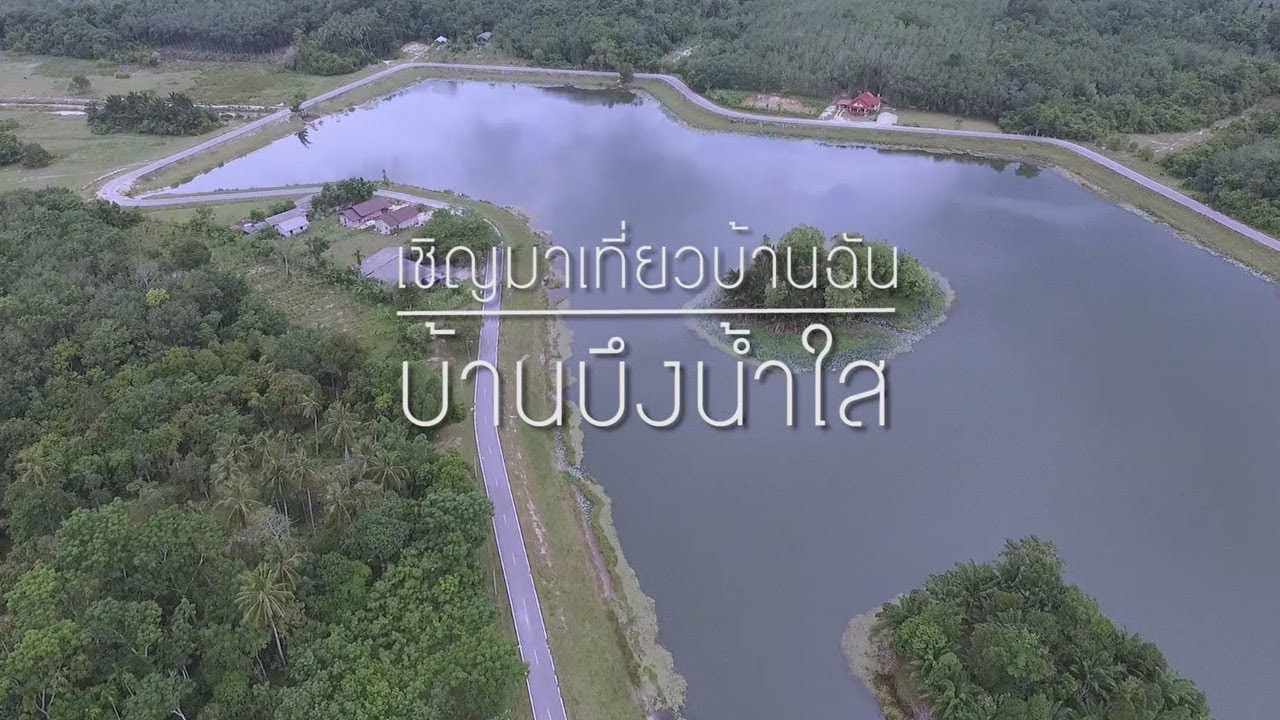
 Click to Access the Navigation Map GPS
 Art, Culture and Heritage
 Landmarks and Memorials(1)
 Art, Craft Centres, Tradition(2)
 Museums(2)
 Educational Places
 Educational Gardens, Farm(1)
 Places of Worship
 Temple(6)
 Mosque(2)
 Other Sacred Sites(3)
 Suburban Living
 Village, Community(4)
 National Parks and Marine Reserves(2)
 Mountain (Doi)(5)
 Dam, Reservoir, Lake(5)
 Waterfalls(13)
 Hot Springs(2)
 Caves(7)
River, Canal(4)
Caves(7)
River, Canal(4)
 Islands(1)
 Other natural attractions(8)
 Entertainment and Agricultural
 Stadium(1)
 Farms, Parks and Ecotourism(4)
 Outdoor and Adventure Activities(1)
 Travel Articles, Recipes
 Travel Review, Food Review(2)


