
lovethailand home >South Travel Attractions >Surat Thani Travel Attractions >Muang Surat Thani >Talat > Types of Muay Thai (Thai traditions)
TL;DR: Types of Muay Thai (Thai traditions).
Types of Muay Thai (Thai traditions)
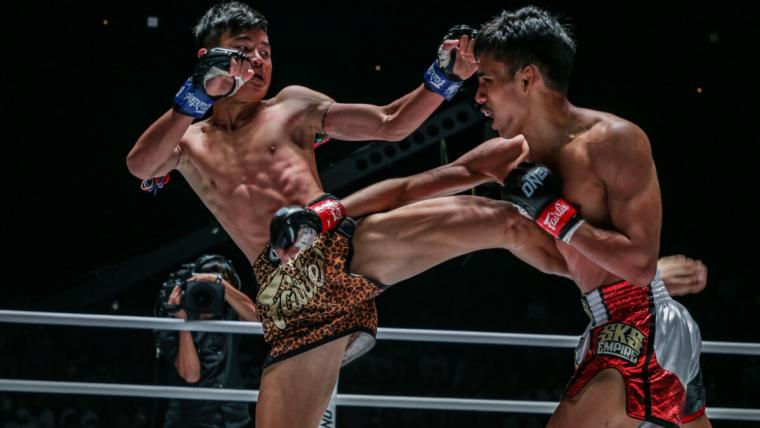
Current Status: Muay Thai is still actively practiced, taught, competed, and promoted in Thailand and internationally
Related National Day: February 6 of every year is recognized as Muay Thai Day
Types of Muay Thai cannot be understood only by looking at modern fights inside a ring. Muay Thai is a Thai martial art, a combat sport, a self-defense system, a cultural practice, and a form of inherited knowledge passed from teachers to students. It includes ancient regional schools, core techniques, fighting styles, ritual practices, and modern competitive formats. When people ask how many types of Muay Thai there are, the most accurate answer is that Muay Thai can be classified in several ways, depending on whether we are looking at region, technique, fighting style, cultural function, or modern use.
Muay Thai is one of Thailand’s most recognizable cultural martial arts. Its defining feature is the use of the body as a weapon, especially fists, feet, knees, and elbows. This makes it different from Western boxing, which focuses mainly on punches. Muay Thai is not only about striking. It also carries values of discipline, endurance, respect, gratitude toward teachers, courage, and self-control. These values explain why Muay Thai has remained important in Thai society from the past to the present.
The history of Muay Thai is difficult to document completely because many early records were lost during wars and political changes, especially around the fall of Ayutthaya. However, historical accounts, local traditions, foreign records, and the transmission of knowledge by boxing masters all show that Muay Thai developed from the practical need for self-defense and national protection. In earlier times, Thai people needed skills to defend themselves against war, wild animals, bandits, and danger during travel. Fighting with the body therefore became an essential skill for warriors, commoners, and rulers.
In the Sukhothai period, Muay Thai was closely related to military training. Warriors had to learn weapons such as swords, spears, shields, and bows, but they also needed unarmed combat skills for close-range fighting. Punches, kicks, knees, and elbows became part of the training of soldiers. When the kingdom was at peace, these skills were still practiced in communities, temple grounds, and training centers. Young men learned martial skills to build strength, courage, discipline, and readiness for service or self-protection.
During the Ayutthaya period, Muay Thai became more visible in both military and royal contexts. Skilled fighters were selected to serve as royal guards or protectors. At the same time, Muay Thai spread among ordinary people through teachers, sword schools, temples, and communities. It was not separated from weapon training because ancient warriors needed both armed and unarmed techniques. When combat became close and weapons could no longer be used effectively, Muay Thai became a decisive skill.
Two important figures are often mentioned in Muay Thai history: King Sanphet VIII, also known as the Tiger King, and Nai Khanom Tom, the legendary Thai fighter. Their stories connect Muay Thai with courage, royal patronage, national memory, and the pride of Thai fighters. Because of these cultural associations, Muay Thai is not seen merely as a sport. It is also a symbol of Thai identity and inherited wisdom.
In the Rattanakosin period, Muay Thai gradually developed from traditional combat into a more organized form of competition. Early matches were held on open ground, later inside roped areas. Fighters once wrapped their hands with rope instead of wearing gloves. Ancient matches were more dangerous and had fewer rules than modern fights. Over time, rules were introduced to improve safety. Matches became divided into rounds, rings became standardized, gloves were used, officials were appointed, weight divisions were created, and Muay Thai became both a professional sport and an amateur sport.
The first major category is Muay Boran, or ancient Muay Thai, classified by regional schools. The best-known traditional schools are Muay Korat, Muay Lopburi, Muay Chaiya, and Muay Tha Sao. These schools developed from local communities and reflect regional conditions, training methods, and fighting priorities. They are often remembered through the phrase that describes their strengths: Korat is known for heavy fists, Lopburi for intelligence, Chaiya for graceful form, and Tha Sao for speed.
Muay Korat comes from the northeastern region of Thailand. It is known for power, toughness, heavy punches, and wide attacks. Its famous technique is often associated with the powerful swinging punch known as the buffalo-swinging fist. The style reflects the fighting spirit of a frontier region where strength and endurance were essential. Muay Korat fighters are usually remembered for forceful strikes and the ability to generate strong impact with fists, kicks, knees, and elbows.
Muay Lopburi is a central Thai style known for intelligence, precision, and tactical movement. It emphasizes clever footwork, timing, deception, and accurate strikes rather than relying only on raw power. A Muay Lopburi fighter uses observation and strategy to create openings. This style shows that Muay Thai is not only physical. It is also an art of reading distance, rhythm, and intention.
Muay Chaiya is a southern Thai style associated with Chaiya District in Surat Thani Province. It is known for defensive structure, refined posture, and close-range techniques. One of its core principles is often summarized as defending, deflecting, covering, and opening. Muay Chaiya values efficient movement, strong balance, careful protection of the body, elbows, knees, grappling, locking, throwing, and counterattacking. It is one of the most culturally distinctive ancient Muay Thai schools still discussed today.
Muay Tha Sao is a northern Thai style associated with the area of present-day Uttaradit Province. It is known for speed, agility, and wide-ranging kicks. The style emphasizes fast movement, quick footwork, and attacks aimed at important points of the body. Muay Tha Sao represents the quick and mobile side of ancient Muay Thai.
The second way to classify Muay Thai is by weapons of the body. In this sense, Muay Thai can be grouped into fist-based fighting, kicking, teeping, knee fighting, and elbow fighting. Fist-based Muay Thai uses straight punches, hooks, swinging punches, back fists, and combinations. Kicking focuses on shin and foot attacks to the legs, body, or head. Teeping uses the sole or ball of the foot to control distance, interrupt attacks, and push opponents away. Knee fighting emphasizes close-range pressure, clinching, and knee strikes. Elbow fighting uses short-range weapons such as horizontal elbows, upward elbows, spear elbows, downward elbows, and spinning elbows.
This classification helps explain why not every Muay Thai fighter looks the same. Some fighters are best at long-range kicks. Some prefer to move forward with punches. Some specialize in clinch and knees. Some are dangerous with elbows at close range. Muay Thai training is therefore not simply about memorizing techniques. It is about developing balance, timing, distance, vision, courage, and decision-making under pressure.
The third important classification is Muay Thai by fighting style. In modern analysis, fighters may be described as Muay Femur, Muay Mat, Muay Khao, Muay Tae, Muay Sok, Muay Bouk, defensive fighters, or counter fighters. Muay Femur refers to a technical fighter who reads the fight well, uses strategy, and selects weapons with precision. Muay Mat is a puncher who relies on heavy hands and forward pressure. Muay Khao is a knee fighter who excels in clinch work and close-range scoring. Muay Tae is a kicking specialist with strong, accurate kicks. Muay Sok is an elbow specialist who is especially dangerous in close exchanges.
Muay Bouk refers to an aggressive pressure fighter who keeps moving forward and relies on toughness, courage, and physical intensity. A defensive or counter fighter waits for the opponent to make mistakes and responds with clean, well-timed attacks. These styles make Muay Thai exciting because a fight is not simply a contest of strength. It is a contest of timing, distance, ring control, strategy, endurance, and mental discipline.
Another essential category is Mae Mai Muay Thai and Luk Mai Muay Thai. Mae Mai refers to the main or fundamental techniques of Muay Thai. These are the core movements and principles used by teachers to train students. Luk Mai refers to secondary, adaptive, or tactical techniques that develop from the main principles. Together, Mae Mai and Luk Mai show that Muay Thai is both a science and an art. It contains structure, beauty, timing, practical application, and tactical creativity.
Muay Thai also has a cultural and ritual category. This includes Wai Kru, Ram Muay, Mongkhon, Pra Jiad, and traditional music. Wai Kru is not merely a pre-fight performance. It is an expression of gratitude toward teachers, parents, ancestors, and sacred forces respected by the fighter. Ram Muay can reflect the boxer’s school, lineage, identity, and mental focus. The use of music, ceremonial movement, and teacher-student tradition makes Muay Thai culturally distinct from many other combat sports.
In the modern context, Muay Thai can be divided into professional Muay Thai, amateur Muay Thai, youth Muay Thai, women’s Muay Thai, Muay Thai for performance, Muay Thai for fitness, and Muay Thai for cultural tourism. Professional Muay Thai is practiced in stadiums and promotions with rules, referees, judges, weight divisions, and scoring systems. Amateur Muay Thai often uses additional protective equipment. Women’s Muay Thai reflects the growing role of female athletes in a sport once dominated by men. Performance Muay Thai helps present the history, techniques, and visual beauty of the art to general audiences.
Modern competitive Muay Thai is regulated more clearly than traditional fighting. Fighters are weighed, medically checked, equipped according to rules, and supervised by officials. Matches are divided into rounds, and the use of fists, feet, knees, and elbows remains central. However, techniques that are too dangerous or likely to cause serious injury are prohibited. This allows Muay Thai to preserve its martial identity while improving athlete safety.
Muay Thai has also expanded into fitness and tourism. Many Thai and international visitors learn Muay Thai for exercise, weight control, mental discipline, self-defense, and cultural experience. Muay Thai gyms now welcome not only professional fighters but also beginners, women, children, travelers, and people seeking a healthier lifestyle. This development keeps Muay Thai relevant in modern society and makes it accessible beyond the professional ring.
Muay Thai is also one of Thailand’s strongest cultural soft-power assets. It includes a recognizable fighting system, traditional dress elements, music, rituals, Thai terminology, famous techniques, and a long historical narrative. Many people around the world first encounter Thailand through Muay Thai. Some begin by watching fights, others by joining a gym, and many eventually travel to Thailand to train with Thai instructors.
At the same time, the global popularity of Muay Thai creates an important responsibility. If Muay Thai is presented only as violence, entertainment, or business, its deeper cultural values may fade. The role of teachers, Wai Kru, regional schools, Mae Mai, Luk Mai, discipline, and gratitude must be preserved. The future of Muay Thai therefore depends on balancing sport, business, education, cultural preservation, and international promotion.
Academic study and formal education also help preserve Muay Thai. Universities and institutions have developed courses and research related to Muay Thai history, technique, sports science, judging, training, cultural heritage, and professional development. This helps transform practical wisdom into organized knowledge that can be studied, verified, taught, and expanded for future generations.
For beginners, the best way to start learning Muay Thai is to focus on the fundamentals: stance, balance, guard, footwork, punches, kicks, teeps, knees, elbows, Wai Kru, and gym etiquette. Learning from a qualified teacher is important because Muay Thai is not only about striking. It is also about respect, control, discipline, safety, and cultural understanding.
In conclusion, there is no single answer to the question “How many types of Muay Thai are there?” If classified by region, there are traditional schools such as Muay Korat, Muay Lopburi, Muay Chaiya, and Muay Tha Sao. If classified by weapons, there are fist, kick, teep, knee, and elbow styles. If classified by fighting character, there are technical fighters, punchers, knee fighters, kickers, elbow fighters, pressure fighters, and counter fighters. If classified by modern function, there are professional, amateur, fitness, performance, educational, and cultural forms of Muay Thai.
All these types are connected. Ancient Muay Thai provides the roots. Ring Muay Thai provides the competitive format. Mae Mai and Luk Mai provide technical structure. Wai Kru provides the spirit. Fitness Muay Thai gives access to new generations. International promotion brings Thai wisdom to the world. Muay Thai is therefore not a static art. It is a living cultural system that continues to adapt while preserving its foundation.
| Topic Name | Types of Muay Thai |
| Category | Thai Tradition, Thai Culture, Martial Art, and Thai Wisdom Sport |
| Key Characteristics | A Thai martial art using fists, feet, knees, and elbows, combined with Wai Kru, traditional music, teacher lineage, and cultural discipline |
| Regional Types | Muay Korat, Muay Lopburi, Muay Chaiya, and Muay Tha Sao |
| Types by Body Weapon | Punching, kicking, teeping, knee fighting, and elbow fighting |
| Types by Fighting Style | Muay Femur, Muay Mat, Muay Khao, Muay Tae, Muay Sok, Muay Bouk, defensive fighters, and counter fighters |
| Important Ancient Schools | 1. Muay Korat: known for heavy punches and powerful impact 2. Muay Lopburi: known for intelligence and precision 3. Muay Chaiya: known for form, defense, and refined tactics 4. Muay Tha Sao: known for speed and kicking range |
| Mae Mai and Luk Mai | Mae Mai are the main fundamental techniques, while Luk Mai are tactical or adaptive techniques developed from the main principles |
| Important Rituals | Wai Kru, Ram Muay, Mongkhon, Pra Jiad, and traditional fight music |
| Important Historical Figures | King Sanphet VIII, also known as the Tiger King, and Nai Khanom Tom |
| Related National Day | February 6 of every year is Muay Thai Day |
| Current Status | Muay Thai remains a national sport, wisdom sport, professional combat sport, self-defense system, fitness activity, and Thai cultural soft power promoted worldwide |
| How to Start Learning | Begin with stance, balance, guard, footwork, punches, kicks, teeps, knees, elbows, Wai Kru, and gym etiquette |
Frequently Asked Questions (FAQ)
Q: How many types of Muay Thai are there?
A: Muay Thai can be classified in several ways. By region, the main ancient schools include Muay Korat, Muay Lopburi, Muay Chaiya, and Muay Tha Sao. By body weapon, it includes punching, kicking, teeping, knee fighting, and elbow fighting. By fighting style, it includes technical fighters, punchers, knee fighters, kickers, elbow specialists, pressure fighters, and counter fighters.
Q: What are the four major ancient Muay Thai schools?
A: The four commonly mentioned ancient schools are Muay Korat, Muay Lopburi, Muay Chaiya, and Muay Tha Sao. Each has a different identity, such as heavy punching, intelligence, refined form, and speed.
Q: What makes Muay Chaiya special?
A: Muay Chaiya is known for defensive structure, refined posture, close-range tactics, elbows, knees, grappling, locking, throwing, and the principle of defending, deflecting, covering, and opening for counterattack.
Q: What is the difference between Mae Mai and Luk Mai Muay Thai?
A: Mae Mai are the main fundamental techniques of Muay Thai, while Luk Mai are tactical, adaptive, or secondary techniques developed from those core principles.
Q: How is Muay Thai different from Western boxing?
A: Western boxing mainly uses punches, while Muay Thai uses fists, feet, knees, and elbows. Muay Thai also includes Wai Kru, Ram Muay, traditional music, teacher lineage, and cultural rituals.
Q: Why do Muay Thai fighters perform Wai Kru before a fight?
A: Wai Kru expresses gratitude to teachers, parents, and respected sacred forces. It also shows the fighter’s discipline, lineage, focus, and cultural identity.
Q: When is Muay Thai Day?
A: Muay Thai Day is observed on February 6 every year in honor of King Sanphet VIII, also known as the Tiger King, who is strongly associated with Muay Thai history.
Q: What should beginners learn first in Muay Thai?
A: Beginners should start with stance, balance, guard, footwork, punches, kicks, teeps, knees, elbows, Wai Kru, and respectful gym etiquette before developing a specific fighting style.
 Category: ●Art, Culture and Heritage
 Group: ●Art, Craft Centres, Tradition
Last Update : 1 MonthAgo
 Last Update : 1 MonthAgo
Recommend

 Landmarks and Memorials(1)
Art, Craft Centres, Tradition(8)
Landmarks and Memorials(1)
Art, Craft Centres, Tradition(8)
 Museums(5)
 Educational Places
 Educational Gardens, Farm(1)
 Places of Worship
 Temple(32)
 Other Sacred Sites(8)
 Research and Development
 Royal Project(1)
 Suburban Living
 Village, Community(6)
 Local Market(1)
 Nature and Wildlife
 National Parks and Marine Reserves(8)
 Mountain (Doi)(2)
 Dam, Reservoir, Lake(8)
 Waterfalls(34)
 Hot Springs(7)
 Caves(18)
 River, Canal(11)
 Bays and Beaches(30)
 Islands(16)
 Other natural attractions(10)
 Entertainment and Agricultural
 Animal camps and shows(6)
 Farms, Parks and Ecotourism(7)
 Outdoor and Adventure Activities(2)
 Shopping
 Shopping and Night Market(1)
 Travel Articles, Recipes
 Southern Food Menu, Southern Food Recipes(1)


