
lovethailand home >South Travel Attractions >Songkhla Travel Attractions >Hat Yai >Khlong Hae > Wat Khlong Hae
TL;DR: Wat Khlong Hae is located at Ban Khlong Toei, Moo 4, Khlong Hae Subdistrict, Hat Yai District, Songkhla Province 90110, Thailand, open Daily, hours 08.00 – 17.00.
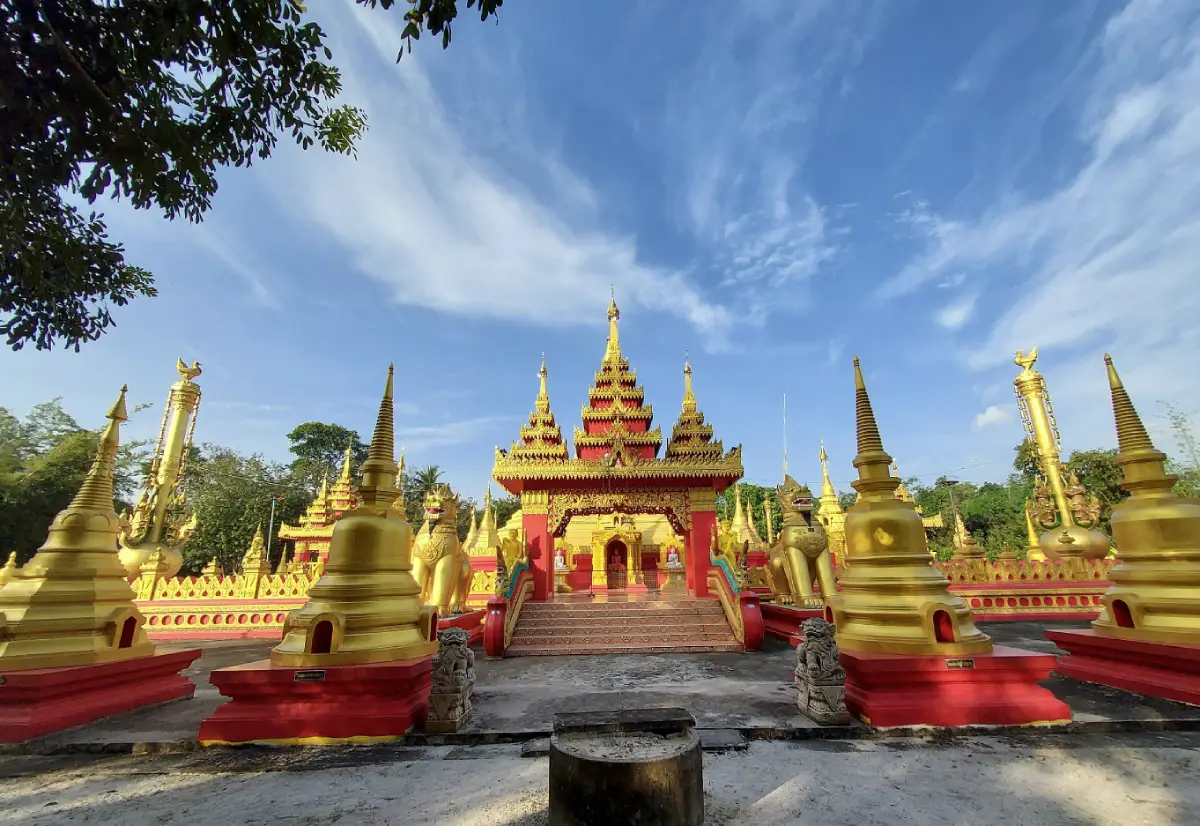
Wat Khlong Hae
Open Days: Daily
Opening Hours: 08.00 – 17.00
Wat Khlong Hae in Songkhla Province is a historic Buddhist temple in Khlong Hae Subdistrict, Hat Yai District. Located in Moo 4, Ban Khlong Toei, the temple stands close to Khlong Hae Floating Market and the old canal-side community that shaped this part of Hat Yai. Wat Khlong Hae belongs to the Mahanikaya order and is important not only as a place of worship, but also as a cultural learning site. Its main attractions include the ordination hall, sermon hall, important Buddha images, Wat Khlong Hae Local Museum, Khlong Hae Chalermraja Cultural Center, traditional household objects, folk art, the legend of Khlong Khong Hae, Khok Nok Khum, and the Shwedagon-style pagoda built from the faith of Myanmar and Thai Buddhist communities. The temple is suitable for worship, merit-making, local-history learning, and a combined visit with Khlong Hae Floating Market.
Wat Khlong Hae is distinctive because it is closely tied to the life of the local community. It is not an isolated religious monument, but a temple that grew alongside the canal, houses, markets, farming routes, and community memories. Khlong Hae lies north of downtown Hat Yai and has long been influenced by the city’s expansion, while still preserving older layers of canal-side culture. A visit to this temple therefore reveals a quieter and deeper side of Hat Yai: a place where Buddhist faith, folklore, local knowledge, environmental restoration, and community economy are woven together.
The history of Wat Khlong Hae dates back to 1717, when Phra Athikan Yok Klin donated ancestral land for the establishment of the temple and became its first abbot. The temple stands on slightly elevated land beside Khlong Hae, a location that directly connects it with water, settlement, and local livelihoods. The temple received its consecrated boundary around 1907, allowing formal monastic ceremonies to be performed. Its ordination hall was built in 1917, while the sermon hall was built in 1954. These milestones show the temple’s long development through the faith and support of the Khlong Hae community.
The former name of Wat Khlong Hae was Wat Khlong Khong Hae. The name is linked to a local legend about a procession carrying treasure from Sai Buri, Kelantan, and Terengganu to be enshrined with Buddha relics in Nakhon Si Thammarat. The story says that the procession beat gongs loudly along the route. When the group reached the Khlong Hae area and learned that the relic-enshrinement ceremony had already been completed, they decided to dedicate the treasure as a Buddhist offering and bury it in the area. The mound associated with the legend became known as Khok Nok Khum, and the canal around the area was called Khlong Khong Hae. Over time, the name was shortened and gradually became Wat Khlong Hae.
This legend gives the temple a strong sense of place. The story of the treasure procession, the sound of gongs, Nok Khum birds, Khok Nok Khum, and the canal surrounding the site is more than a local tale. It is a cultural explanation of names, landscape, faith, and community memory. Such place-name legends are important because they turn ordinary geography into a meaningful cultural landscape. Visitors who understand the legend will see Wat Khlong Hae not only as a temple, but also as a living archive of local imagination and Buddhist devotion.
Wat Khlong Hae also preserves important Buddhist objects and sacred images. Inside the temple are a principal Buddha image in the ordination hall, bronze Buddha images, white-stone Buddha images in the meditation posture associated with Chiang Saen art, and various Buddha images from different periods. These sacred objects reflect the faith of devotees who supported the temple over generations. For visitors interested in Buddhist art, the temple offers a useful opportunity to observe different postures, materials, and meanings of Buddha images within a local southern Thai temple.
Wat Khlong Hae Local Museum, also known as Khlong Hae Chalermraja Cultural Center, is one of the temple’s most valuable features. The museum is located inside Wat Khlong Hae at 123 Moo 4, Khlong Hae Subdistrict, Hat Yai District, Songkhla Province. It was established to collect and present the history of the Khlong Hae community, local heritage, household objects, old photographs, folk art, and objects donated to the temple as Buddhist offerings. For cultural travelers, the museum is an excellent starting point for understanding Khlong Hae through religion, daily life, water culture, and the transition from a canal-side community to a tourism-linked urban area near Hat Yai.
The permanent exhibition inside Khlong Hae Chalermraja Cultural Center is arranged into seven rooms: Royal Commemoration, Stories of the Waterway, Legend of Khong Hae, Transition to the City, Prosperity of Wat Khlong Hae, Cultural Transmission, and Toward the Future. This structure allows visitors to follow the story from national identity and water-based settlement to folklore, urban change, temple history, cultural preservation, and future community development. The museum is therefore not merely a collection of old objects; it is a carefully organized narrative of place and people.
In addition to the indoor museum, Wat Khlong Hae also has outdoor learning areas such as the Khlong Hae wisdom house, herbal garden, waste-trap weir area, and Khok Lang Nok Khum. These areas expand the museum experience into the real landscape of the temple and community. Visitors can learn about traditional knowledge, local plants, canal-side life, environmental restoration, and the relationship between folklore and physical places. This makes the cultural center especially suitable for students, families, researchers, and travelers who prefer meaningful local experiences.
Another important aspect of Wat Khlong Hae is its role in restoring the canal environment. Before Khlong Hae became a cultural tourism area, the canal faced problems from wastewater, waste, and aquatic weeds. The temple and community worked together through local meetings, canal cleaning, water-improvement activities, fish release, and waste-trap construction. These efforts show that the temple has served not only religious purposes, but also community development and environmental care. The revival of the canal later supported the growth of Khlong Hae Floating Market.
Khlong Hae Floating Market is located opposite the temple and is one of the best-known attractions in the area. It is a cultural floating market that combines boat vendors with an old-style land market. Visitors can find southern Thai food, local snacks, desserts, souvenirs, and community products. Sellers dress in traditional-style clothing and use natural containers such as coconut shells, bamboo tubes, and banana leaves. The market is therefore not only a food destination, but also a result of canal restoration, local livelihood development, and cultural presentation.
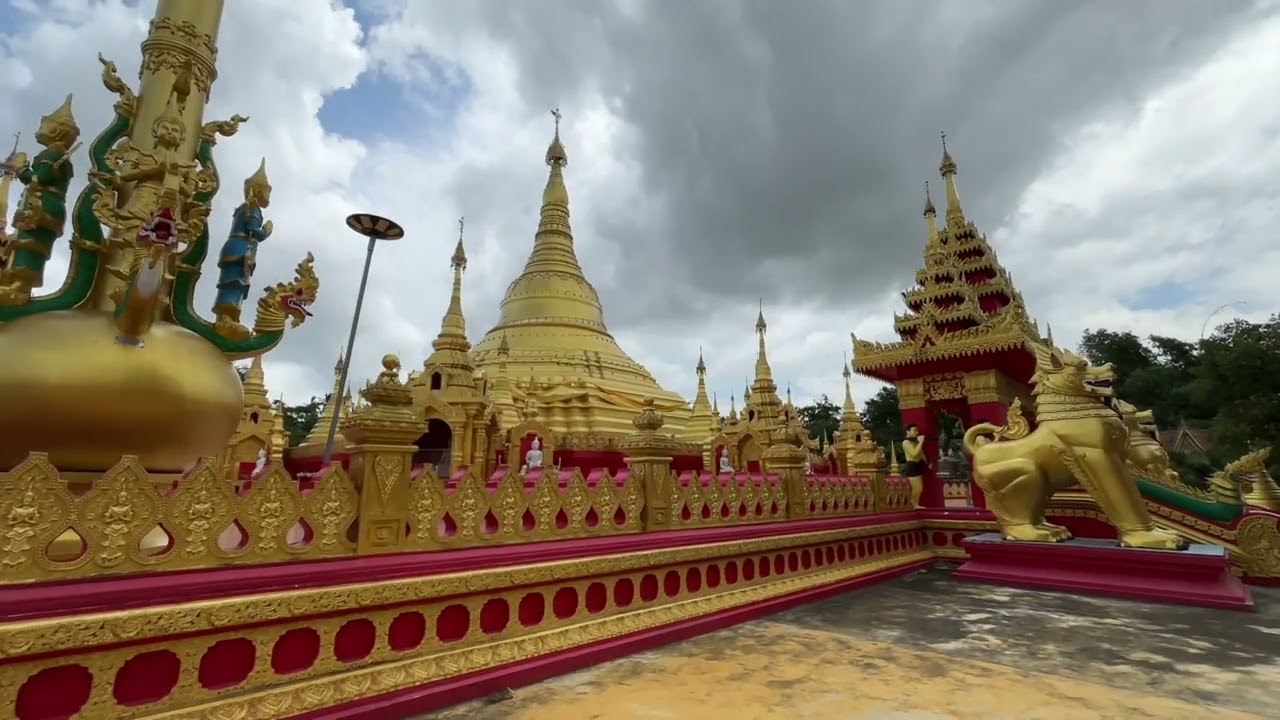
The Shwedagon-style pagoda, also known as Maha Boon Chedi at Wat Khlong Hae, adds a strong multicultural dimension to the temple. It was built through the faith of Myanmar workers living in Songkhla and nearby areas, together with Thai supporters, as a Buddhist offering to the temple. Its design was inspired by Shwedagon Pagoda in Yangon, Myanmar. The presence of this Myanmar-style pagoda inside a Thai Mahanikaya temple reflects the shared Buddhist devotion of different communities living in southern Thailand.
The significance of the Shwedagon-style pagoda lies not only in its architecture but also in the story of its construction. Many Myanmar devotees contributed labor, donations, and expertise to create a sacred monument for the temple. The pagoda therefore represents migration, work, gratitude, Buddhist faith, and peaceful coexistence between Thai and Myanmar communities. For travelers, it provides a meaningful example of how Hat Yai and Songkhla are shaped by multiple cultures, not only by Thai local traditions.
Phra Khru Wapi Thamma-udom has played a central role in the development of Wat Khlong Hae, the cultural center, and community activities. He founded the local museum and helped organize the cultural resources of Khlong Hae into a visible learning space. His work includes collecting old objects, preserving community stories, supporting folk art, connecting the temple with the floating market, and using the temple as a learning space for children, young people, and visitors.
Another important monk in the memory of Khlong Hae is Pho Than Thong, or Phra Athikan Thong Khongkhassaro, the seventh abbot of Wat Khlong Hae and a respected monk in Songkhla Province. He is remembered for his role in community development, road building, education support, and spiritual leadership. Local stories connected with Pho Than Thong, golden bows, golden pagodas, gongs, and golden snakehead fish remain part of the cultural memory that the community uses to explain and strengthen its identity.
Wat Khlong Hae also has a role in preserving southern Thai folk arts such as Nora dance, shadow puppetry, and local performance traditions. Cultural activities, demonstrations, and training connected with the cultural center help keep these traditions visible to younger generations. The temple functions as a meeting point between elders, local artists, students, and visitors. This makes it an active cultural space rather than a passive museum.
Visitors who want to explore the museum should plan the visit in a structured way. A good route begins with the temple entrance and religious buildings, then continues to Khlong Hae Chalermraja Cultural Center and its seven exhibition rooms. After that, visitors can walk through the outdoor learning areas such as the wisdom house, herbal garden, and Khok Nok Khum-related areas. Group visitors should contact the center at least one day in advance so the visit can be properly arranged.
For worshippers, the visit can begin with paying respect to the principal Buddha image, followed by the ordination hall, sermon hall, important Buddha images, the cultural center, and the Shwedagon-style pagoda. Visitors should allow at least one hour because the temple contains religious spaces, museum content, legends, and photography points. Those visiting on Friday, Saturday, or Sunday afternoon can continue to Khlong Hae Floating Market nearby.
The atmosphere of Wat Khlong Hae differs from temples in central Hat Yai. The temple remains connected with the canal, trees, local houses, and the community market. Inside the temple, visitors can experience a calm religious environment, while just nearby the floating market brings movement, food, and local commerce. This combination is part of Khlong Hae’s charm: one area offers worship, local learning, community life, and cultural tourism together.
Getting There is convenient by private car, motorcycle, songthaew, taxi, or ride-hailing service. From central Hat Yai, visitors can use Phetkasem Road or Nipat Songkhro 5 Road to enter the Khlong Hae area and continue to Moo 4, Ban Khlong Toei. The temple is close to Khlong Hae Floating Market and is easy to find with map navigation. From Hat Yai Railway Station, a taxi or ride-hailing service can reach the temple within a short drive under normal traffic conditions.
From Hat Yai International Airport, travelers can enter downtown Hat Yai first and continue to Wat Khlong Hae, or travel directly by airport taxi or ride-hailing service. The temple works well in a half-day itinerary. Visitors can begin with Wat Khlong Hae and Khlong Hae Chalermraja Cultural Center, continue to Khlong Hae Floating Market in the evening, or combine the trip with Songkhla Central Mosque, Wat Khok Saman Khun, Wat Thawon Wararam, Kim Yong Market, and Hat Yai Municipal Park.
The best time to visit depends on the visitor’s purpose. Morning is suitable for worship and a quiet museum visit. Friday, Saturday, and Sunday evenings are better for combining the temple with Khlong Hae Floating Market. During cultural events, Buddhist ceremonies, or community festivals, the area becomes livelier and more meaningful, but visitors should allow extra time for traffic and parking near the temple.
Visitors should dress respectfully and behave with care. Sleeveless tops, very short shorts, and clothing unsuitable for a religious place should be avoided. Shoes should be removed where required. Visitors should not touch Buddha images, religious objects, or museum displays without permission. Photography is possible in many areas, but it should be done respectfully and without disturbing monks, worshippers, or cultural activities.
Wat Khlong Hae is suitable for families, students, cultural travelers, and elderly visitors. The museum helps younger visitors understand old household objects, folk arts, and community stories in a concrete way. Elderly visitors can come for worship and a relaxed temple visit, preferably during cooler hours. Comfortable footwear, drinking water, a hat, or a small umbrella will make the visit easier, especially when combining the temple with the floating market.
As a travel destination, Wat Khlong Hae gives Hat Yai more depth. The city is often associated with shopping, food, hotels, and cross-border travel, but Khlong Hae reveals older layers of local life: canal culture, community faith, folk performance, museum work, and environmental restoration. Visiting this temple allows travelers to see Hat Yai not only as a commercial city, but as a place built from living communities and shared cultural memory.
The most important feature to observe is the continuity between religion and culture. The ordination hall and Buddha images express Buddhist devotion. The museum preserves community memory. The Shwedagon-style pagoda reflects multicultural Buddhist faith. The floating market represents local economy and canal revival. Environmental activities show how temple and community work together. These layers make Wat Khlong Hae a rich cultural site that deserves more than a quick photo stop.
In summary, Wat Khlong Hae is one of the most worthwhile cultural temples to visit in Hat Yai, Songkhla Province. It combines a historic Buddhist temple, local museum, Khlong Hae Chalermraja Cultural Center, the legend of Khlong Khong Hae, Khok Nok Khum, important Buddha images, the Shwedagon-style pagoda, and Khlong Hae Floating Market across the road. Visitors who spend time here will gain a clearer understanding of Khlong Hae as a community shaped by faith, water, folklore, folk art, and southern Thai cultural life.
| Name | Wat Khlong Hae |
| Location | Ban Khlong Toei, Moo 4, Khlong Hae Subdistrict, Hat Yai District, Songkhla Province 90110, Thailand |
| Address | No. 123, Ban Khlong Toei, Moo 4, Khlong Hae Subdistrict, Hat Yai District, Songkhla Province 90110, Thailand |
| Coordinates | 7.0447463, 100.4722737 |
| Highlights | Historic canal-side temple, Wat Khlong Hae Local Museum, Khlong Hae Chalermraja Cultural Center, legend of Khlong Khong Hae, Khok Nok Khum, important Buddha images, Shwedagon-style pagoda, and Khlong Hae Floating Market across the road |
| History | Founded in 1717 when Phra Athikan Yok Klin donated ancestral land for the temple and became its first abbot. The temple received its consecrated boundary around 1907. The ordination hall was built in 1917, and the sermon hall was built in 1954. |
| Name Origin | The former name was Wat Khlong Khong Hae, linked to a legend about a treasure procession from Sai Buri, Kelantan, and Terengganu heading to Nakhon Si Thammarat. The sound of gongs and the canal-side location later shaped the name Khlong Hae. |
| Distinctive Features | A Mahanikaya Buddhist temple that combines religious worship, local museum learning, folk art, community legend, canal restoration, and cultural floating-market tourism in one area |
| Travel Information | Accessible by private car, motorcycle, songthaew, taxi, or ride-hailing service. From central Hat Yai, use Phetkasem Road or Nipat Songkhro 5 Road toward Khlong Hae and continue to Moo 4, Ban Khlong Toei. |
| Current Status | Open to Buddhist worshippers and visitors for worship, merit-making, and local cultural learning |
| Open Days | Daily |
| Opening Hours | 08.00 – 17.00 |
| Fees | No Admission Fee |
| Facilities | Ordination hall, sermon hall, monks’ residences, local museum, Chalermraja Cultural Center, outdoor learning areas, herbal garden, religious activity areas, and parking space depending on temple activities |
| Main Areas / Zones | Ordination Hall Sermon Hall Principal Buddha Image And Important Buddha Images Wat Khlong Hae Local Museum Khlong Hae Chalermraja Cultural Center Seven Exhibition Rooms Khlong Hae Wisdom House Herbal Garden Khok Nok Khum Area Shwedagon-Style Pagoda / Maha Boon Chedi Cultural And Community Activity Areas |
| Abbot / Caretaker | Phra Khru Wapi Thamma-Udom |
| Main Contact Number | 081-990-5604 |
| Official Website / Official Page | Khlong Hae Chalermraja Cultural Center, Wat Khlong Hae |
| Museum Information | Wat Khlong Hae Local Museum presents community history, local ways of life, old household objects, old photographs, folk art, Buddha images, and objects donated to the temple. Group visitors should contact the museum at least 1 day in advance. |
| Nearby Tourist Attractions | 1. Khlong Hae Floating Market, about 0.1 km 2. Shwedagon-Style Pagoda At Wat Khlong Hae, about 0.1 km 3. Songkhla Central Mosque, about 6 km 4. Wat Khok Saman Khun Royal Monastery, about 5 km 5. Wat Thawon Wararam, about 5 km 6. Kim Yong Market, about 5 km 7. Hat Yai Municipal Park, about 8 km |
| Nearby Restaurants | 1. Na Wat Khlong Hae Boat Noodle, about 0.1 km, Tel. 087-289-2544 2. U-KHLONG HAE, about 2 km, Tel. 081-608-4052 3. Krua Ja Ro Rice Curry Khlong Hae, about 2 km, Tel. 089-738-8413 4. Tiao Rong Kua Khlong Hae, about 3 km, Tel. 081-679-2245, 093-118-1886 5. SA-BIANG Café & Cuisine, about 3 km, Tel. 086-384-8188 6. Suan Mae Chee Restaurant, about 4 km, Tel. 081-898-7073 |
| Nearby Accommodations | 1. Boom Forest Hotel, about 1 km, Tel. 081-957-3441 2. Rimnam Khlong Hae Resort, about 2 km, Tel. 081-959-8630 3. Sweet Home Mansion, about 3 km, Tel. 083-654-6642, 074-238-742, 074-238-786 4. Naitawan Resort, about 4 km, Tel. 074-426-161, 086-696-4614 5. Corner One Residence, about 5 km, Tel. 091-046-6389 6. The Ring Hotel, about 5 km, Tel. 074-551-822 |
Frequently Asked Questions (FAQ)
Q: Where is Wat Khlong Hae located?
A: Wat Khlong Hae is located at 123 Ban Khlong Toei, Moo 4, Khlong Hae Subdistrict, Hat Yai District, Songkhla Province, close to Khlong Hae Floating Market.
Q: What are the opening days and hours of Wat Khlong Hae?
A: Wat Khlong Hae is open daily from 08.00 to 17.00.
Q: Is there an admission fee at Wat Khlong Hae?
A: No. Wat Khlong Hae has no admission fee. Visitors may make donations voluntarily.
Q: What is Wat Khlong Hae famous for?
A: The temple is known for Wat Khlong Hae Local Museum, Khlong Hae Chalermraja Cultural Center, the legend of Khlong Khong Hae, Khok Nok Khum, important Buddha images, the Shwedagon-style pagoda, and Khlong Hae Floating Market nearby.
Q: What can visitors see inside Wat Khlong Hae Local Museum?
A: The museum displays Khlong Hae community history, old household objects, old photographs, folk art, Buddha images, and objects donated to the temple as Buddhist offerings.
Q: What is the origin of the name Wat Khlong Hae?
A: The name comes from the old legend of Khlong Khong Hae, which tells of a treasure procession with gongs passing through the area. Over time, Wat Khlong Khong Hae became Wat Khlong Hae.
Q: How can travelers get to Wat Khlong Hae from central Hat Yai?
A: Travelers can use Phetkasem Road or Nipat Songkhro 5 Road toward Khlong Hae and continue to Ban Khlong Toei, Moo 4. The temple is accessible by private car, songthaew, taxi, motorcycle, or ride-hailing service.
Q: What nearby places can visitors combine with Wat Khlong Hae?
A: Visitors can combine the temple with Khlong Hae Floating Market, the Shwedagon-style pagoda, Songkhla Central Mosque, Wat Khok Saman Khun, Wat Thawon Wararam, Kim Yong Market, and Hat Yai Municipal Park.
 Category: ●Places of Worship
 Group: ●Temple
Last Update : 1 MonthAgo
 Last Update : 1 MonthAgo
 Click to Access the Navigation Map GPS
Wat Khlong Hae Map
Recommend

 Art, Culture and Heritage
 Historical Sites and Monuments(2)
 Landmarks and Memorials(7)
 Royal Palace(1)
 Art, Craft Centres, Tradition(4)
 Museums(4)
 Art Gallery(1)
 Educational Places
 Library(1)
 Educational Gardens, Farm(3)
Temple(52)
 Mosque(2)
 Other Sacred Sites(11)
 Suburban Living
 Village, Community(3)
 Local Market(3)
 Floating Market(2)
 Nature and Wildlife
 National Parks and Marine Reserves(5)
 Mountain (Doi)(6)
 Dam, Reservoir, Lake(5)
 Waterfalls(12)
 Caves(4)
 River, Canal(2)
 Bays and Beaches(13)
 Islands(3)
 Other natural attractions(2)
 Entertainment and Agricultural
 Zoos and Aquariums(2)
 Animal camps and shows(1)
 Farms, Parks and Ecotourism(6)
 Waterpark(1)
 Travel Articles, Recipes
 Travel Review, Food Review(1)
 Southern Food Menu, Southern Food Recipes(2)


