
lovethailand home >South Travel Attractions >Songkhla Travel Attractions >Ranot >Ta Keit > Wat Waree Pa Mok
TL;DR: Wat Waree Pa Mok is located at Ban Khlong Takhria, Moo 4, Takhria Subdistrict, Ranot District, Songkhla Province, open Daily, hours 08.00 – 17.00.
Wat Waree Pa Mok
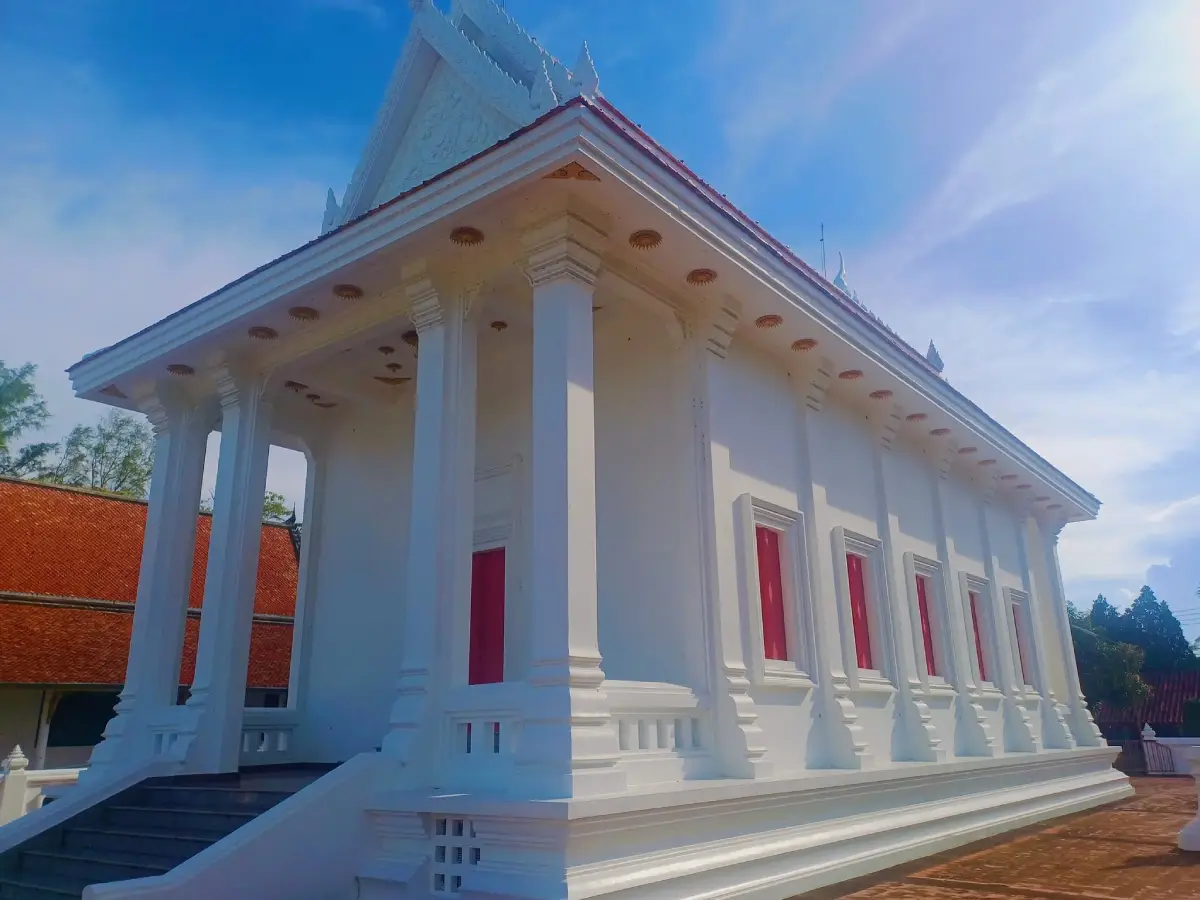
Open Days: Daily
Opening Hours: 08.00 – 17.00
Wat Waree Pa Mok, also written in some travel sources as Wat Waree Pramok, is an old local Buddhist temple in Takhria Subdistrict, Ranot District, Songkhla Province. Located beside Songkhla Lake and along the Ranot – Phatthalung route, the temple is known for its peaceful lakeside atmosphere, community Buddhist life, and the annual Loi Phae Sadao Kro floating-raft ritual of the Takhria community. The temple is suitable for travelers who want to make merit, rest by the lake, understand local water-based culture, and connect the visit with nearby cultural stops such as Wat Hua Pa, Wat Sala Tham, Khlong Ranot Floating Market, Ban Roi Paet Sao, and the 80th Anniversary Bridge.
Wat Waree Pa Mok is located at No. 1, Ban Khlong Takhria, Moo 4, Takhria Subdistrict, Ranot District, Songkhla 90140, Thailand. It is a local Buddhist temple under the Maha Nikaya order. The temple stands on flat lakeside land covering 11 rai and 8 square wah. Its compound lies between the lakeside road and Songkhla Lake, with one side connected to Khlong Takhria and another side connected to the local village area. This setting gives the temple a distinct identity as a living lakeside monastery, where religion, community life, and the water landscape are closely connected.
The temple’s name is directly related to its geography. Wat Waree Pa Mok was formerly known as Wat Takhria Lang, while local people also called it Wat Pak Bang Takhria because of its position near the canal mouth and the waterway leading toward Songkhla Lake. The temple name was later changed in 1939 to Wat Waree Pa Mok. The word “waree” refers to water, preserving the temple’s lakeside identity. The former names also keep the older memory of the Takhria community alive.
The importance of Wat Waree Pa Mok does not come from monumental architecture. Its value lies in its role as a central community temple beside Songkhla Lake. The temple supports merit-making, Buddhist ceremonies, local traditions, and shared community activities. This area belongs to the wider Songkhla Lake cultural basin, where people have long lived with waterways through travel, fishing, agriculture, trade, and rituals connected with water.
Temple databases list Wat Waree Pa Mok as a local Maha Nikaya Buddhist temple in Moo 4, Takhria Subdistrict, Ranot District, Songkhla Province. Recent Kathin data for 2025 also identifies the temple as an active local monastery, with 7 resident monks and Phra Khru Pa Mok Khananurak as the abbot. This confirms that Wat Waree Pa Mok remains a functioning Buddhist temple, not an abandoned site or merely a scenic lakeside point.
Wat Waree Pa Mok was granted its royal monastic boundary on 2 August 1959. In Thai Buddhism, this boundary marks the consecrated area where monks can perform formal monastic acts such as ordination and other important Sangha ceremonies. This status shows the temple’s development from a community lakeside temple into a formally recognized Buddhist religious site with the necessary ritual structure.
The temple’s flat lakeside location shapes the entire visitor experience. From the temple compound, visitors can sense the openness of Songkhla Lake, the airflow from the water, and the rhythm of village life near the canal. Wat Waree Pa Mok is not hidden deep inland. It is positioned at a point where the canal, village, road, and lake meet. A visit therefore offers more than a temple stop; it offers a view into the water-based life of Takhria.
The temple buildings include a sermon hall, monks’ residences, and Buddhist activity areas. The sermon hall measures 12 meters wide and 13 meters long and was built in 1927 with a wooden structure. The monks’ residences include 4 wooden buildings. These details show the character of an older local southern temple built from community faith and local materials rather than from tourism-driven design.
Wat Waree Pa Mok also appears in the historical context of Ranot District. Cultural encyclopedia material mentions Wat Khria, or Wat Waree Pa Mok, among important temples appearing in old Ayutthaya-period map records of Ranot. This gives the temple deeper value than a quiet lakeside stop. It connects Takhria with older temple networks, old settlements, and the cultural geography of the Sathing Phra Peninsula.
Takhria is strongly linked with water. The community developed near canals, the lake, and agricultural lowlands. In earlier periods, waterways supported transport, work, food, trade, and belief. The presence of Wat Waree Pa Mok beside Songkhla Lake is therefore not accidental. It reflects the logic of older settlements, where temples were placed near community gathering points, waterways, and ritual spaces.
The most important tradition associated with Wat Waree Pa Mok is the Loi Phae Sadao Kro floating-raft ritual of Takhria Subdistrict. The event is held during the transition from the old year to the new year. It includes the preparation and celebration of the raft, chanting, merit-making, alms-giving, a raft procession, and floating the raft into Songkhla Lake. The ritual expresses the community’s wish to release misfortune, honor ancestors, pay respect to water and earth guardians, and begin the new year with confidence and merit.
The floating-raft ritual is not only an annual festive event. It combines Buddhism, local belief, gratitude, and water-based community life. People place symbolic items connected with misfortune, suffering, illness, or old troubles into the raft, together with flowers, incense, candles, and ritual offerings. The raft is then carried in procession and floated onto the lake. The meaning is to let harmful things leave with the water and to begin the year with renewed strength.
The tradition also strengthens community unity. Local authorities, community leaders, villagers, and participants work together to prepare and hold the event every year. Wat Waree Pa Mok becomes the shared ritual ground for the community. During the festival, the temple is lively with chanting, merit-making, performance, and procession activities. On ordinary days, it returns to a quieter atmosphere suitable for worship and rest.
For travelers interested in local culture, the floating-raft tradition explains Takhria’s identity clearly. It is not a newly invented tourist show. It comes from a lakeside community whose life has long depended on water. Beliefs about water, ancestors, spirits, guardians, merit, and shared protection are woven into the ritual. Visiting Wat Waree Pa Mok therefore helps travelers understand Ranot beyond food, scenery, or roadside attractions.
The atmosphere of Wat Waree Pa Mok is best appreciated slowly. The temple is peaceful, local, and closely tied to the lake. Visitors can make merit, pay respect, walk through the temple compound, rest under shade, and observe the relationship between the temple, canal, lake, and village. The temple’s charm lies in simplicity, not grandeur. Its strongest appeal is the living connection between Buddhist practice and the lakeside community.
Wat Waree Pa Mok works well as part of a cultural route in Takhria and Ranot. Nearby places include Wat Hua Pa, associated with the revered monk Luang Pho Plot; Wat Sala Tham; Ban Roi Paet Sao; Khlong Ranot Floating Market; the Rice Goddess roundabout; the Ranot Art and Culture Center and Burapha Chan Garden; and the 80th Anniversary Bridge. Together, these places show Ranot as a water-based cultural district rather than only a transit route between Songkhla and Phatthalung.
Wat Hua Pa is especially suitable to combine with Wat Waree Pa Mok because both are connected with Takhria and nearby community history. Wat Hua Pa is associated with Phra Khru Phisit Punyasan, known locally as Luang Pho Plot, an important former monk in the area. A route beginning at Wat Waree Pa Mok can introduce the floating-raft tradition, while a continuation to Wat Hua Pa adds the dimension of local monastic history and devotion.
Khlong Ranot Floating Market and the Ranot Art and Culture Center add further value to the trip. Wat Waree Pa Mok gives the religious and water-ritual context, while Khlong Ranot Floating Market adds food, local products, and canal-side commerce. The art and culture center helps visitors understand local wisdom, important figures, and the memory of Ranot District. This makes the journey more complete than a single temple visit.
A short visit to Wat Waree Pa Mok may take about 45 minutes to 1 hour for worship and a lakeside walk. Travelers who want to include the Takhria cultural route, Khlong Ranot Floating Market, and the 80th Anniversary Bridge should allow at least half a day. During the floating-raft festival, visitors should allow more time because the event includes several activities from the night of 31 December to 1 January.
Getting There is easiest by private car, rental car, or local hired vehicle. Travelers can use the Ranot – Phatthalung road or Rural Road 4010 toward Takhria Subdistrict and Ban Khlong Takhria, Moo 4. From Ranot town, drive toward Takhria along the lakeside route. Travelers coming from Phatthalung can connect from the Thale Noi area or nearby routes toward the Ranot side of Songkhla Lake.
Travelers coming from Hat Yai or Songkhla city should allow enough time because the temple is in northern Songkhla, close to the Phatthalung side of the lake. The route works better as a full-day trip than a short stop. From Songkhla city, travelers can combine Sathing Phra, Ranot, and Takhria. From Phatthalung, travelers can combine Thale Noi, the 80th Anniversary Bridge, Ban Khao, and Wat Waree Pa Mok.
The best time to visit is in the morning or late afternoon, when the lakeside weather is more comfortable and the natural light softens the atmosphere. Photography should be done respectfully, without disturbing monks, worshippers, or local people using the temple. The temple is a living religious site and should be treated as a place of merit-making, not only as a photo location.
Visitors should dress modestly, speak quietly, remove shoes where required, avoid disturbing monks or ceremonies, and keep the temple and lakeside area clean. Because the temple stands beside Songkhla Lake, responsible behavior is important for both religious respect and environmental care. Waste should never be left in the temple compound or near the water.
During the floating-raft festival, visitors should respect the rhythm of the ritual and the local community. It is best to observe from appropriate areas and avoid entering ritual spaces without permission. The event includes devotion, local belief, and celebration, so photography and video recording should be done with restraint and respect for the people who preserve the tradition.
The strength of Wat Waree Pa Mok as a travel destination lies in its context. The temple is an active local monastery, a lakeside religious space, a former Wat Takhria Lang, a community ritual center, and a gateway to the cultural route of Takhria and Ranot. These combined layers make it a meaningful destination for visitors who want to understand Buddhism, water culture, and local life in northern Songkhla.
In summary, Wat Waree Pa Mok in Songkhla Province is more than a quiet temple beside the lake. It is a living Buddhist monastery, the ritual center of the Takhria floating-raft tradition, a place for merit-making, and a cultural stop on the Ranot – Phatthalung route. Travelers seeking a peaceful Songkhla destination with local identity, water-based culture, and meaningful community tradition should include Wat Waree Pa Mok in a Ranot itinerary.
| Name | Wat Waree Pa Mok, or Wat Waree Pramok |
| Location | Ban Khlong Takhria, Moo 4, Takhria Subdistrict, Ranot District, Songkhla Province |
| Address | No. 1, Ban Khlong Takhria, Lakeside Road, Moo 4, Takhria Subdistrict, Ranot District, Songkhla 90140, Thailand |
| Coordinates | 7.79996, 100.26495 |
| Temple Type | Local Buddhist temple under the Maha Nikaya order |
| Temple Land Area | 11 Rai and 8 Square Wah |
| Highlights | Lakeside Buddhist temple beside Songkhla Lake, peaceful atmosphere for merit-making and rest, and the ritual center of Takhria’s floating-raft tradition |
| Former / Local Names | Wat Takhria Lang, Wat Pak Bang Takhria, and Wat Khria in the context of older Ranot temple records |
| History | An old lakeside temple of the Takhria community, renamed Wat Waree Pa Mok in 1939 and granted its royal monastic boundary on 2 August 1959 |
| Distinctive Features | Located between the lakeside road and Songkhla Lake, with one side connected to Khlong Takhria, giving the temple a clear water-community identity |
| Important Areas | Wooden sermon hall, Buddhist activity spaces, monks’ residences, and lakeside areas used for local community traditions |
| Abbot / Caretaker | Phra Khru Pa Mok Khananurak, Abbot of Wat Waree Pa Mok |
| Resident Monks | 7 Monks |
| Main Areas / Zones | Main temple grounds, sermon hall, monks’ residences, merit-making courtyard, lakeside area, Khlong Takhria-side area, and the floating-raft ritual area |
| Traditions / Key Activities | Takhria’s Loi Phae Sadao Kro floating-raft ritual, held from 31 December to 1 January, with raft celebration, chanting, alms-giving, procession, and floating the raft onto Songkhla Lake |
| Travel Information | Accessible by private car, rental car, or local hired vehicle via the Ranot – Phatthalung road or Rural Road 4010 toward Ban Khlong Takhria, Moo 4, Takhria Subdistrict |
| Current Status | Open for visits, merit-making, and Buddhist activities as a local temple in Takhria Subdistrict, Ranot District, Songkhla Province |
| Open Days | Daily |
| Opening Hours | 08.00 – 17.00 |
| Facilities | Worship areas, sermon hall, temple courtyard, lakeside resting area, and Buddhist activity spaces |
| Recommended Visit Duration | About 45 Minutes – 1 Hour, or half a day when combined with Takhria cultural route and Khlong Ranot Floating Market |
| Nearby Tourist Attractions | 1. Wat Kaset Chonlathi, About 4 km 2. Wat Hua Pa, About 8 km 3. Wat Sala Tham, About 10 km 4. Ban Roi Paet Sao, About 13 km 5. Khlong Ranot Floating Market, About 16 km 6. 80th Anniversary Bridge, About 22 km |
| Nearby Restaurants | 1. Pikulthong Restaurant Takhria, About 2 km, Tel. +66 61 949 8989, +66 95 524 6569 2. Ruang Khao Ranot Restaurant, About 15 km, Tel. +66 63 859 1567 3. Living Room Cafe, About 16 km, Tel. +66 98 653 5310 4. Cha May Cafe, About 16 km, Tel. +66 84 395 2872, +66 80 145 1132 5. 595 Home Cafe Ranot, About 18 km, Tel. +66 95 065 9169 |
| Nearby Accommodations | 1. Idin Klinna @ Huapa, About 2 km 2. Pakbang Lake Resort, About 15 km, Tel. +66 93 756 7001 3. Tarin Hotel Ranot, About 16 km, Tel. +66 74 392 538, +66 94 048 1626 4. Baan Lee Bungalows, About 20 km, Tel. +66 62 070 0044 5. Nisa Resort Ranot, About 23 km, Tel. +66 81 541 5592 6. Cheewaporn Resort Ranot, About 25 km, Tel. +66 91 319 4197 |
Frequently Asked Questions (FAQ)
Q: Where is Wat Waree Pa Mok located?
A: Wat Waree Pa Mok is located at No. 1, Ban Khlong Takhria, Moo 4, Takhria Subdistrict, Ranot District, Songkhla 90140, Thailand, beside Songkhla Lake and near the Ranot – Phatthalung route.
Q: What are the opening days and hours of Wat Waree Pa Mok?
A: Wat Waree Pa Mok is open daily from 08.00 to 17.00.
Q: What makes Wat Waree Pa Mok special?
A: The temple is special because of its lakeside location beside Songkhla Lake, its peaceful atmosphere for merit-making and rest, and its role as the center of Takhria’s floating-raft ritual.
Q: What were the former names of Wat Waree Pa Mok?
A: Wat Waree Pa Mok was formerly known as Wat Takhria Lang. Local people also call it Wat Pak Bang Takhria, and older Ranot temple records refer to the site as Wat Khria.
Q: When is the Loi Phae Sadao Kro floating-raft ritual held?
A: Takhria’s Loi Phae Sadao Kro floating-raft ritual is held from 31 December to 1 January, with raft celebration, chanting, alms-giving, procession, and floating the raft onto Songkhla Lake.
Q: Who is the abbot of Wat Waree Pa Mok?
A: The abbot of Wat Waree Pa Mok is Phra Khru Pa Mok Khananurak.
Q: How can travelers get to Wat Waree Pa Mok?
A: Travelers can reach the temple by private car, rental car, or local hired vehicle via the Ranot – Phatthalung road or Rural Road 4010 toward Ban Khlong Takhria, Moo 4, Takhria Subdistrict.
Q: What nearby attractions can be visited after Wat Waree Pa Mok?
A: Nearby places include Wat Kaset Chonlathi, Wat Hua Pa, Wat Sala Tham, Ban Roi Paet Sao, Khlong Ranot Floating Market, and the 80th Anniversary Bridge.
 Category: ●Places of Worship
 Group: ●Temple
Last Update : 2 WeekAgo
 Last Update : 2 WeekAgo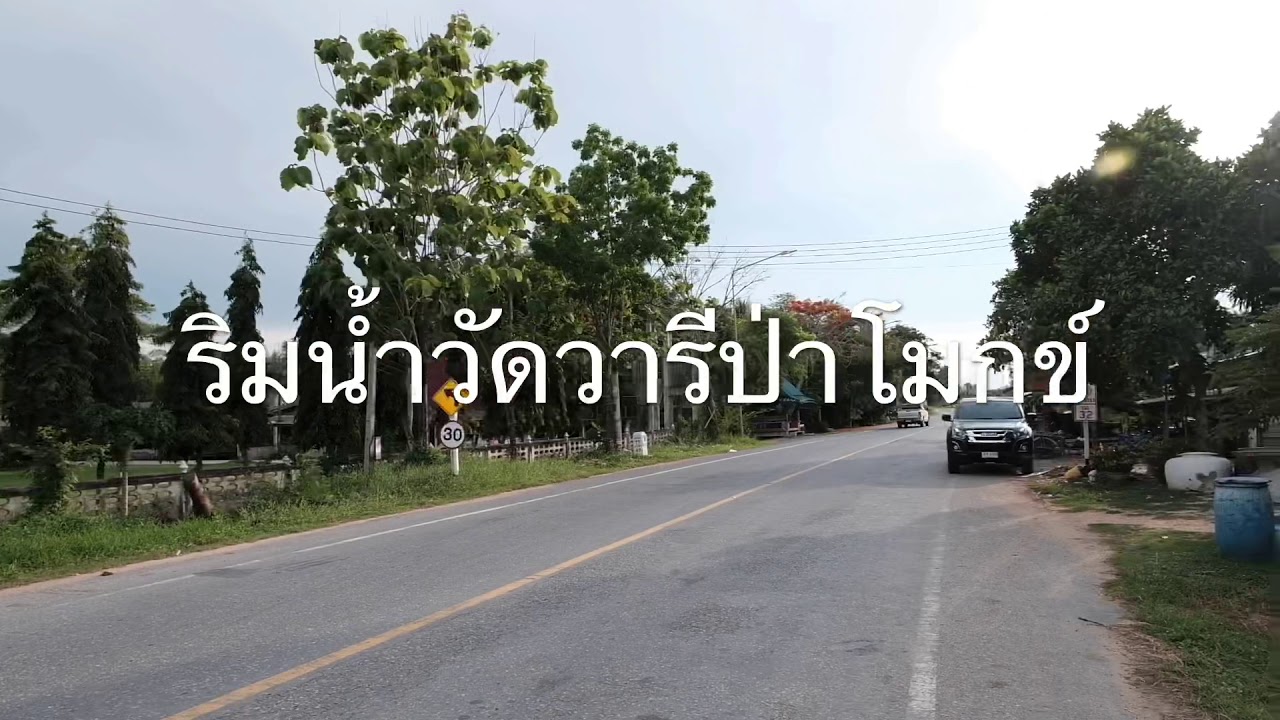
 Click to Access the Navigation Map GPS
Wat Waree Pa Mok Map
Recommend

 Art, Culture and Heritage
 Historical Sites and Monuments(2)
 Landmarks and Memorials(7)
 Royal Palace(1)
 Art, Craft Centres, Tradition(4)
 Museums(4)
 Art Gallery(1)
 Educational Places
 Library(1)
 Educational Gardens, Farm(3)
Temple(52)
Educational Gardens, Farm(3)
Temple(52)
 Mosque(2)
 Other Sacred Sites(11)
 Suburban Living
 Village, Community(3)
 Local Market(3)
 Floating Market(2)
 Nature and Wildlife
 National Parks and Marine Reserves(5)
 Mountain (Doi)(6)
 Dam, Reservoir, Lake(5)
 Waterfalls(12)
 Caves(4)
 River, Canal(2)
 Bays and Beaches(13)
 Islands(3)
 Other natural attractions(2)
 Entertainment and Agricultural
 Zoos and Aquariums(2)
 Animal camps and shows(1)
 Farms, Parks and Ecotourism(6)
 Travel Articles, Recipes
 Southern Food Menu, Southern Food Recipes(2)


