lovethailand home >South Travel Attractions >Songkhla Travel Attractions >Na Thawi >Thap Chang > Ton Chat Waterfall
TL;DR: Ton Chat Waterfall is located at Moo 10, Ban Ko Chong, Thap Chang Subdistrict, Na Thawi District, Songkhla Province, open Daily, hours 08.00 – 17.00.
Ton Chat Waterfall

Open Days: Daily
Opening Hours: 08.00 – 17.00
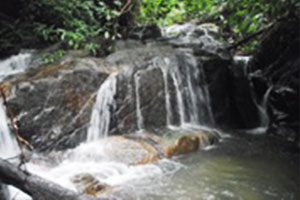
Ton Chat Waterfall is a 7-tier natural waterfall in Khao Nam Khang National Park, located in the Khao Ngai mountain area of Moo 10, Ban Ko Chong, Thap Chang Subdistrict, Na Thawi District, Songkhla Province. The waterfall is surrounded by humid evergreen forest and requires careful travel planning, as the final 3 km from the village should be made by four-wheel-drive vehicle or motorcycle.
Ton Chat Waterfall in Songkhla Province is a distinctive inland nature attraction in Na Thawi District. The waterfall is located at Moo 10, Ban Ko Chong, Thap Chang Subdistrict, within Khao Nam Khang National Park in the Khao Ngai mountain range. Its defining feature is a 7-tier waterfall surrounded by dense humid evergreen forest. Ton Chat Waterfall is not a convenient city-style attraction. It is a destination for travelers who are prepared to enter a deeper natural setting, because the final access route from the village to the park area and waterfall requires a four-wheel-drive vehicle or motorcycle for about 3 km.
Ton Chat Waterfall represents the inland natural side of Songkhla, which is very different from the province’s more familiar coastal image. Many travelers associate Songkhla with Samila Beach, Songkhla Old Town, Ko Yo, and Hat Yai, but Na Thawi District contains forested mountains, headwater streams, waterfalls, and natural routes. Khao Nam Khang National Park covers areas of Na Thawi and Sadao districts, making Ton Chat Waterfall part of a wider landscape of forest, water, and mountain ecosystems in southern Thailand.
The main appeal of Ton Chat Waterfall is its 7-tier structure in a natural forest. Water descends through different levels, creating a more varied experience than a single-drop waterfall. Visitors can observe how the sound and shape of the stream change from one level to another, how water flows over rocks, and how the forest keeps the area cool and moist. Each section of the waterfall contributes to the surrounding ecosystem. Small wet areas around rocks support moisture-loving plants, while the forest helps protect the water source and reduce soil erosion.
The word “ton” is commonly used in Southern Thailand to describe a waterfall or water dropping over rocky levels. In the name “Ton Chat,” the term reflects local language and the way communities describe water features in the landscape. Understanding this word helps travelers see the waterfall as more than a scenic stop. Ton Chat Waterfall is also connected to the language, memory, and local geography of Ban Ko Chong, Thap Chang Subdistrict, and Na Thawi District.
Ton Chat Waterfall lies in the Khao Ngai mountain area, where humid evergreen forest plays an important ecological role. This type of forest helps retain moisture, store rainfall, reduce surface runoff, and provide habitat for many plant species. Important plants reported in the area include rubber trees, niang trees, wild sator trees, and especially large siya trees. The presence of these plants gives the waterfall area value not only as a travel destination, but also as an outdoor learning site for forest ecology.
The humid evergreen forest around Ton Chat Waterfall creates a cooler and wetter atmosphere than open areas. Tall trees cast deep shade, sunlight reaches the forest floor only in patches, and the stream adds moisture to the air. Travelers who reach the waterfall experience a quieter, more natural atmosphere than at highly developed tourist sites. The sound of flowing water, the shade of large trees, insects, and the smell of damp earth are part of what makes Ton Chat Waterfall suitable for serious nature travelers.
Ton Chat Waterfall should not be visited without preparation. From the Na Thawi three-way junction, travelers turn right toward Prakop Subdistrict for about 20 km. Then turn right at the Ban Ko Chong sign and continue for about 10 km to the village. From the village, continue by four-wheel-drive vehicle or motorcycle for another 3 km to reach the park area and waterfall. Because the final section can be rough and affected by weather, travelers should check the vehicle, fuel, route, and local conditions before leaving.
Getting There is best done by private vehicle to Ban Ko Chong, followed by a four-wheel-drive vehicle or motorcycle for the final natural-road section. Standard passenger cars are not suitable for the last part of the route. The road may be uneven, steep in places, and more difficult after rain. Group travel is recommended, and visitors should travel with someone familiar with the route or contact local residents or park staff before entering the area. A morning visit is the safest choice because it leaves enough daylight for the return journey.
Season and weather matter when planning a visit to Ton Chat Waterfall. Khao Nam Khang National Park is influenced by Southern Thailand’s rainfall patterns, and the area can receive frequent rain. During wetter periods, the waterfall carries more water and the forest becomes especially green, but access roads and walking areas can also become slippery. Visitors who want to see flowing water should choose a clear day without continuous heavy rain beforehand. Those planning a nature walk should bring rain protection, suitable footwear, and quick-drying clothing.
Ton Chat Waterfall is suitable for nature travelers, forest lovers, ecological study groups, and visitors who want a real forest waterfall rather than a fully serviced tourist attraction. Its value does not come from shops, built facilities, or staged photo spots. The value comes from the forest, the layered waterfall, the effort required to reach it, and the feeling of entering a quieter natural environment. Visitors should move slowly, respect the area, and leave no trace in the forest.
Water play at Ton Chat Waterfall should be limited to areas that are visibly safe. A 7-tier waterfall includes uneven terrain, slippery rocks, strong currents in some sections, and pools that can vary in depth by season. Visitors should avoid climbing steep rock surfaces, jumping into water, standing near waterfall edges, or entering the stream during or after heavy rain. Children and senior visitors should remain in easy-access areas with close supervision.
Essential items for a trip to Ton Chat Waterfall include shoes with good grip, flexible clothing, drinking water, light food, a personal trash bag, personal medicine, insect repellent, a small flashlight, rain protection, and a waterproof bag for phones or cameras. Good preparation makes the trip safer and reduces pressure on the forest. A waterfall in humid evergreen forest does not offer the same services as urban attractions, so travelers need to take responsibility for themselves and the environment.
From an educational perspective, Ton Chat Waterfall clearly demonstrates the role of headwater forest. The waterfall does not exist as an isolated scenic feature. It depends on the surrounding catchment, forest cover, soil, rock channels, and small streams that gradually feed the waterfall system. When humid evergreen forest remains healthy, water is held and released through natural processes. If forest conditions decline, the balance of water flow and the quality of the waterfall environment also decline. Ton Chat Waterfall is therefore a strong example of the connection between forest conservation and natural tourism.
Khao Nam Khang National Park is an important protected area in Songkhla because it combines natural resources with historical significance. The park covers parts of Na Thawi and Sadao districts, contains fertile forest and several waterfalls, and is linked to historical sites associated with past conflict involving communist insurgent groups. Khao Nam Khang Historical Tunnel is one of the best-known historical attractions in the park area. Ton Chat Waterfall can therefore be understood as part of a larger Khao Nam Khang travel landscape that includes forest, waterfalls, trails, and local history.
Visitors to Ton Chat Waterfall can also plan to continue to Pha Hin Tang, which is located about 2 km deeper from Ton Chat Waterfall. This makes the Ban Ko Chong route more meaningful because the area offers more than a single waterfall stop. However, travelers should carefully assess time, vehicle suitability, weather, and route conditions before continuing deeper into the forest area. Remote natural routes require more caution than standard tourist roads.
A full-day Na Thawi route can begin from Na Thawi town, continue to Ban Ko Chong, and reach Ton Chat Waterfall in the morning. After visiting the waterfall, travelers can return toward Na Thawi town for food and rest, then continue to Phra Ming Khwan Mueang Lak Chai Shrine, Wat Nai Wang, or the main Khao Nam Khang National Park area and Khao Nam Khang Historical Tunnel. This route gives travelers a combined view of nature, local communities, and the historical side of Na Thawi District.
For photography, Ton Chat Waterfall offers natural scenes such as water flowing through rock levels, forest streams, shaded greenery, wet leaves, and plant details along the route. The site produces a deeper forest atmosphere than many more developed waterfalls. Morning or soft-light conditions work best for photography, but visitors should never risk standing on slippery rocks or approaching fast water just for a better angle. Safety is more important than any photograph.
Ton Chat Waterfall is also suitable for conservation-minded travel. Visitors should take all trash out of the area, avoid using soap or shampoo in the stream, avoid damaging plants, avoid disturbing wildlife, and avoid loud music in the forest. These actions may seem small, but they directly affect the waterfall ecosystem and the experience of other visitors. Responsible behavior is essential for small and remote natural attractions.
The main caution for Ton Chat Waterfall is access. The waterfall is located beyond Ban Ko Chong and requires a suitable vehicle for the final route. Visitors should not underestimate the last 3 km simply because the distance sounds short. Natural roads inside forest areas differ from paved roads. Travel time and difficulty depend on road conditions, recent rain, and the vehicle used. Visitors should not travel alone without route knowledge and should avoid entering the area late in the day.
What makes Ton Chat Waterfall worth including in a Songkhla travel plan is its identity as a real forest waterfall. It is not a destination for every traveler, but it is highly suitable for those who want to see Songkhla’s deeper natural side. The quiet forest, dense shade, layered waterfall, and challenging access give Ton Chat Waterfall a character that differs from easier roadside attractions. It rewards careful planning and respectful travel.
Overall, Ton Chat Waterfall is a natural attraction in Khao Nam Khang National Park that suits travelers who truly enjoy forests and waterfalls. Its key strengths are the 7-tier waterfall, the Khao Ngai mountain setting, humid evergreen forest, important plant species, and a route that requires preparation. The waterfall is best visited during daylight, in a group, with a suitable vehicle, and with a strong commitment to low-impact travel. With good planning, Ton Chat Waterfall adds depth and ecological value to a Songkhla itinerary beyond beaches and city attractions.
| Name | Ton Chat Waterfall |
| Location | Moo 10, Ban Ko Chong, Thap Chang Subdistrict, Na Thawi District, Songkhla Province |
| Address | Moo 10, Ban Ko Chong, Thap Chang Subdistrict, Na Thawi District, Songkhla 90160, Thailand |
| Highlights | A 7-tier waterfall in Khao Nam Khang National Park, located in the Khao Ngai mountain area and surrounded by humid evergreen forest |
| History / Natural Setting | A natural waterfall within Khao Nam Khang National Park, formed by streams descending through the Khao Ngai mountain forest landscape |
| Name Origin | “Ton” is a Southern Thai term commonly used for a waterfall or water dropping over rocky levels |
| Distinctive Features | Dense humid evergreen forest with important plant species such as rubber trees, niang trees, wild sator trees, and large siya trees |
| Travel Information | From Na Thawi three-way junction, turn right toward Prakop Subdistrict for about 20 km, turn right at the Ban Ko Chong sign for about 10 km, then continue from the village by four-wheel-drive vehicle or motorcycle for about 3 km to the park area and waterfall |
| Current Status | Open as a natural attraction within Khao Nam Khang National Park |
| Open Days | Daily |
| Opening Hours | 08.00 – 17.00 |
| Fees | Khao Nam Khang National Park rate: Thai adults 20 baht, Thai children 10 baht / foreign adults 100 baht, foreign children 50 baht |
| Facilities | Natural area for waterfall viewing, forest walking, and low-impact recreation inside the national park |
| Main Areas / Zones | 7-tier waterfall, Ban Ko Chong access route, Khao Ngai humid evergreen forest, and Khao Nam Khang National Park area |
| Caretaker | Khao Nam Khang National Park, Department of National Parks, Wildlife and Plant Conservation |
| Main Contact Number | Khao Nam Khang National Park, Tel. 074-531696, 074-329644-5 |
| Visitor Cautions | The final access route is suitable for four-wheel-drive vehicles or motorcycles. Avoid heavy-rain periods, beware of slippery rocks, and check with park staff or local residents before entering the area |
| Nearby Tourist Attractions | 1. Pha Hin Tang, about 2 km 2. Ban Ko Chong, about 3 km 3. Phra Ming Khwan Mueang Lak Chai Shrine, about 33 km 4. Wat Nai Wang, about 34 km 5. Khao Nam Khang Historical Tunnel, about 45 km, Tel. 074-531840-1 6. Khao Nam Khang National Park, about 45 km, Tel. 074-531696, 074-329644-5 |
| Nearby Restaurants | 1. Nan Yuan Na Thawi, about 33 km, Tel. 074-371753 2. Na Thawi Chicken Rice Restaurant, about 33 km, Tel. 074-371341, 093-2423224 3. Na Thawi Sufficient Curry Rice, about 33 km, Tel. 088-7848251 4. Spicy in Front of the Camp, about 34 km, Tel. 094-3141145 5. Baan Som Tum, about 35 km, Tel. 086-2993923 |
| Nearby Accommodations | 1. Kampai Resort & Restaurant Natawee, about 33 km, Tel. 074-373074 2. Sarin Rooms Na Thawi, about 33 km, Tel. 098-4789793 3. Long Lan Resort, about 36 km, Tel. 074-371133 4. the White House Nathawee Resort, about 37 km, Tel. 099-4030822 5. Chomview Resort, about 40 km, Tel. 081-6786644 |
Frequently Asked Questions (FAQ)
Q: Where is Ton Chat Waterfall located?
A: Ton Chat Waterfall is located at Moo 10, Ban Ko Chong, Thap Chang Subdistrict, Na Thawi District, Songkhla Province, within Khao Nam Khang National Park in the Khao Ngai mountain area.
Q: How many tiers does Ton Chat Waterfall have?
A: Ton Chat Waterfall has 7 tiers and is surrounded by humid evergreen forest and diverse plant life.
Q: What days is Ton Chat Waterfall open?
A: Ton Chat Waterfall is open daily from 08.00 to 17.00.
Q: Is there an entrance fee for Ton Chat Waterfall?
A: Ton Chat Waterfall is inside Khao Nam Khang National Park. The park entrance rate is 20 baht for Thai adults, 10 baht for Thai children, 100 baht for foreign adults, and 50 baht for foreign children.
Q: How do travelers get to Ton Chat Waterfall?
A: From Na Thawi three-way junction, turn right toward Prakop Subdistrict for about 20 km, turn right at the Ban Ko Chong sign for about 10 km, then continue from the village by four-wheel-drive vehicle or motorcycle for about 3 km.
Q: Who is Ton Chat Waterfall suitable for?
A: It is suitable for nature travelers, forest lovers, ecological study groups, and visitors prepared for a more remote waterfall route.
Q: What should visitors prepare before visiting Ton Chat Waterfall?
A: Visitors should prepare a suitable vehicle, shoes with good grip, drinking water, rain protection, a trash bag, and should check the route with park staff or local residents before entering the area.
Q: What nearby attractions can be visited after Ton Chat Waterfall?
A: Nearby and related attractions include Pha Hin Tang, Ban Ko Chong, Phra Ming Khwan Mueang Lak Chai Shrine, Wat Nai Wang, Khao Nam Khang Historical Tunnel, and Khao Nam Khang National Park.
Category: ●Nature and Wildlife
Group: ●Waterfalls
Last Update : 2 DayAgo