
lovethailand home >South Travel Attractions >Satun Travel Attractions >Khuan Ka Long >Thung Nui > Darul Aman Mosque
TL;DR: Darul Aman Mosque, Satun attractions : Places of Worship, Mosque.

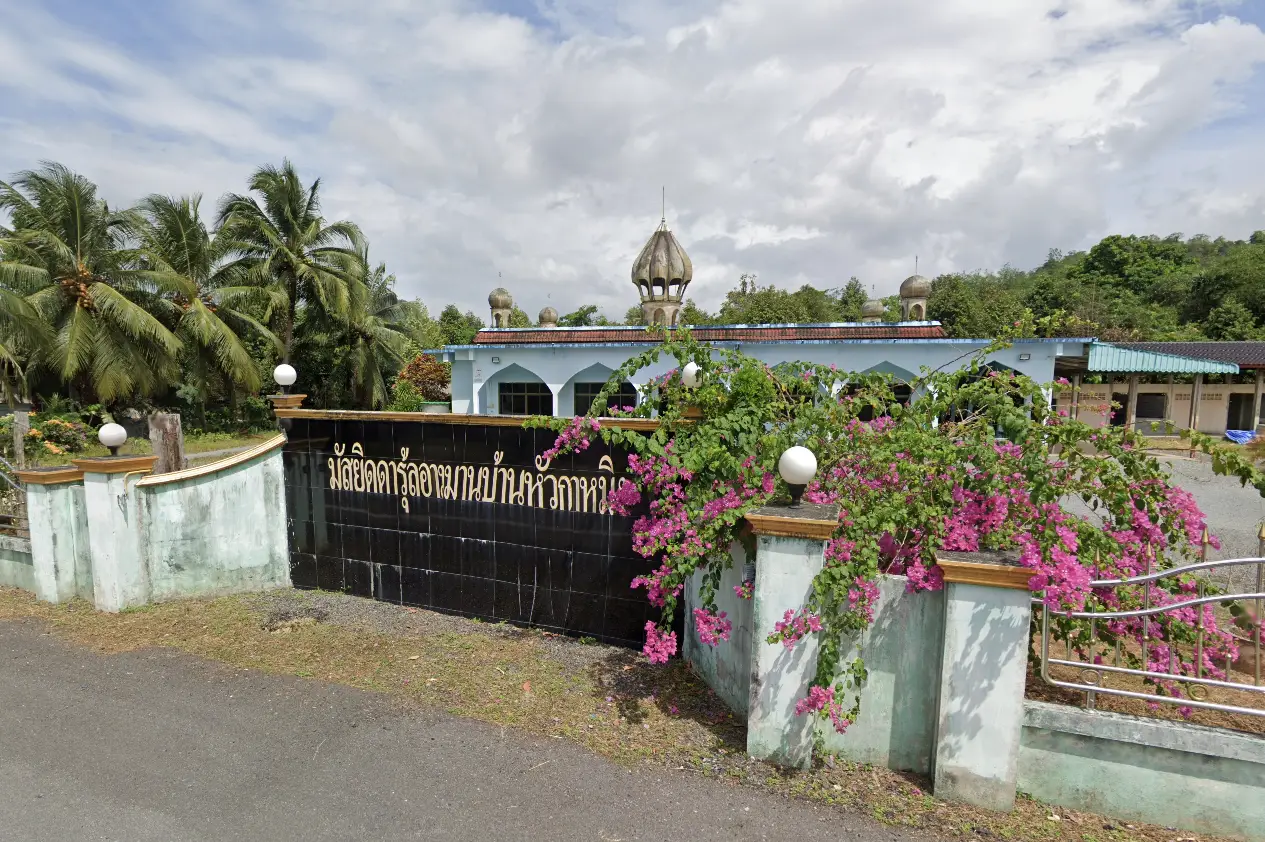
Darul Aman Mosque
Open Days: According To Community Worship Arrangements
Opening Hours: According To Prayer Times And Prior Arrangement With The Mosque Caretaker
Darul Aman Mosque, Ban Hua Kaming, also found in older records under the spelling Darul Ahman Mosque, is located in Village No. 3, Ban Hua Kaming, Thung Nui Subdistrict, Khuan Kalong District, Satun Province 91130, Thailand. It is an important community mosque for Muslims in Ban Hua Kaming and nearby areas. The mosque serves as a place of worship, a center of village relationships, a mosque-based Islamic education space for children and youth, and a community venue connected with public well-being activities in Thung Nui Subdistrict. Its role extends beyond daily prayer, reflecting the close relationship between faith, family, education, health, and inland Muslim community life in Satun.
The mosque appears in the online mosque database under the current registered name “Darul Aman Mosque, Ban Hua Kaming,” with registration number 107/2521. It is located at No. 133, Village No. 3, Thung Nui Subdistrict, Khuan Kalong District, Satun Province. The mosque was founded on 2 February 1978. On 11 November 2020, Satun Province issued an announcement changing the mosque’s registered name from “Darul Ahman Mosque, Ban Hua Kaming” to “Darul Aman Mosque, Ban Hua Kaming.” This explains why older spellings may still appear in earlier travel records while the current registered name is Darul Aman Mosque, Ban Hua Kaming.
The name “Darul Aman” is associated with the idea of a house of safety, security, and peace within the life of faith. As the name of the mosque of Ban Hua Kaming, it reflects the role of the mosque as a place where Muslims pray, build spiritual discipline, listen to religious guidance, and maintain a stable relationship with their faith and community. The mosque is therefore not merely a physical building, but a spiritual and social space that supports shared values in everyday village life.
Ban Hua Kaming is a community in Thung Nui Subdistrict, Khuan Kalong District, Satun Province. The surrounding area has the character of an inland southern Thai community, with transport routes, agricultural land, rubber plantations, fruit orchards, homes, natural water sources, and mountain landscapes. Local life is closely connected with family, work, learning, and religious practice. Darul Aman Mosque, Ban Hua Kaming, stands within this living community context rather than apart from daily village life.
Thung Nui Subdistrict includes both mountains and plains, with much of the local land connected to agriculture and plantation life. This gives the subdistrict the character of a southern rural community closely tied to natural surroundings. In such a setting, village mosques have important roles because they provide prayer spaces, gathering points for worshippers, learning spaces for children, and trusted places where religious leaders can communicate with residents about matters that benefit the community.
Khuan Kalong District is significant for inland Muslim communities in Satun Province. Many mosques are located across its villages, and these mosques often serve more than ritual purposes. They support education, youth care, religious activities, family relationships, and cooperation with local agencies in matters related to health and quality of life. Darul Aman Mosque, Ban Hua Kaming, is one of the community mosques that reflects this wider role clearly.
The primary role of Darul Aman Mosque, Ban Hua Kaming, is to serve as a place of worship for Muslims in Village No. 3 and nearby areas. Local residents use the mosque for prayers, sermons, Friday prayer, and religious activities throughout the year. Coming to the mosque is part of the rhythm of community life because it allows people to meet, exchange news, ask about one another’s well-being, and maintain relationships among families, relatives, and neighbors.
Religious leadership is central to the mosque’s continuity and order. The mosque history names Haji Rahem Daengngam as the first imam and Haji San Daengngam as the current imam. The current committee listing identifies Imam San Daengngam, Khatib Mahamad Tamban, and Bilal Busan Makkakhet. These religious roles allow the mosque to maintain worship, sermons, religious communication, and daily religious functions for the community.
Darul Aman Mosque also has several committee members responsible for different community functions. These include Sumet Makkakhet as secretary, Sakriya Mukem as registrar, Manoon Makkakhet as treasurer, Abdulhalim Daengngam for education, Brahem Lhong Saman for academic affairs, Wahab Mat Thing for halal affairs, Sukri Manleh for zakat and social welfare, Roched Lang Yanai for public relations, Adul Daengngam for buildings and facilities, Adam Chu Chuad for coordination, Sohmad Pang La Ma Sen for special activities, and Abdolloh Lang Yanai for women and youth affairs. This structure shows that the mosque functions as an organized community institution, not only as a prayer hall.
The congregation data of Darul Aman Mosque, Ban Hua Kaming, shows a strong community base. Current records list 164 families, with 313 males and 289 females, totaling 602 congregants. Within the mosque’s area, there are 151 families, with 305 males and 282 females, totaling 587 congregants. The out-of-area congregation includes 13 families, with 8 males and 7 females, totaling 15 people. These figures show that the mosque remains closely connected with many households in Ban Hua Kaming and nearby areas.
A large congregation gives the mosque an important family-level role. When many households share the same mosque, the mosque becomes a place that maintains community relationships, connects elders with youth, circulates village information, and keeps religious leadership close to everyday life. In this sense, Darul Aman Mosque is a social and spiritual center for the Ban Hua Kaming community.
Darul Aman Mosque also has an educational role through its mosque-based Islamic education center, known in older records as Tadika Darul Ahman. The center has 5 teachers and 51 students. Tadika education is an important mechanism in Muslim communities in southern Thailand because it teaches children religious knowledge, Qur’an reading, faith, Islamic practice, ethics, manners, and ways of living properly with others according to Islamic principles.
The presence of a Tadika makes the mosque active beyond prayer times. Children, teachers, parents, and mosque committee members all become connected through the same religious space. Learning does not happen apart from family and community life; it takes place in a mosque that children know and where they regularly see adults praying and participating in religious life. This makes the mosque a bridge between present community life and the next generation.
Tadika Darul Ahman helps children in Ban Hua Kaming grow with religious knowledge and discipline. Students do not simply memorize lessons. They also learn punctuality, respect for elders, proper conduct, polite speech, cooperation with friends, and the application of religious values in daily life. When teachers, parents, and the mosque work together, children receive both knowledge and character formation within the rhythm of their own community.
Darul Aman Mosque, Ban Hua Kaming, is also connected with child and community health work. Local records mention a health and hygiene promotion project for early childhood at the child development center of Darul Aman Mosque, as well as the Model Mosque Health-Care Project of Darul Aman Mosque, Village No. 3, under the Thung Nui Municipal Local Health Fund. These roles show that the mosque is not limited to ritual functions. It is also part of community efforts involving children, families, health, and shared learning.
Using a mosque as a space for community health work is important because it is a trusted and accessible place for villagers. When health, disease prevention, and child care messages are communicated through a familiar local institution, families are more likely to listen, understand, and apply the knowledge. This gives Darul Aman Mosque a contemporary role as a religious site that continues to work directly with the lives of local residents.
Ban Hua Kaming also appears in a 2025 nutrition and food safety promotion project, showing that Village No. 3 continues to be involved in community health and quality-of-life work. When viewed together with the mosque’s role, this presents a picture of a community that uses religious spaces, families, local leadership, and the local health fund system to support everyday life.
The location of Ban Hua Kaming and Thung Nui Subdistrict makes Darul Aman Mosque especially suitable for cultural learning. The area includes not only mosques and homes, but also natural attractions such as Thung Nui Hot Spring, Ton Panan Waterfall, and Thara Sawan Waterfall Forest Park. It also connects with routes toward Khuan Kalong and Khuan Don districts, allowing visitors to create a wider inland Satun route around faith, nature, wellness, food, and community life.
Thung Nui Hot Spring is a natural mineral hot spring in Thung Nui Subdistrict, surrounded by greenery and hills. It is suitable for relaxation and mineral bathing. Traveling from Darul Aman Mosque, Ban Hua Kaming, to the hot spring allows visitors to see both the religious life of the community and the natural wellness resource that gives Thung Nui wider recognition.
Ton Panan Waterfall is an important natural attraction in Thung Nui Subdistrict. Its headwaters come from Khao Kaming, and the waterfall flows through a natural environment associated with the Hua Kaming National Reserved Forest and the Ton Nga Chang Wildlife Sanctuary area. A route from the mosque to the waterfall helps visitors understand the relationship between Muslim village life, forested landscapes, and the natural resources of inland Satun.
Thara Sawan Waterfall Forest Park is another natural site in Khuan Kalong District that can be combined with a visit to the mosque. It has waterfalls, forest scenery, and a calm inland atmosphere. Combining Darul Aman Mosque with these natural attractions creates a route that includes religion, community life, wellness, and nature rather than only beaches and islands.
The route around Ban Hua Kaming can also connect with Ban Ton Panan Moral Community, known for local coffee, community enterprise, the saba game, local food, and Ton Panan Waterfall. This wider community context helps visitors understand Thung Nui Subdistrict more deeply through religious life, Islamic learning, community health, agriculture, local wisdom, food, and nature in the same area.
Duson Market and the Khuan Don route can be added by travelers who want to continue from Khuan Kalong toward Khuan Don. Duson Market reflects local food, community trade, and Muslim life in another inland area of Satun. Connecting Darul Aman Mosque, Ban Hua Kaming, with such places helps reveal the wider network of inland Muslim communities across Satun Province.
Thale Ban National Park is one of Satun’s major inland natural attractions. Although it is farther from Ban Hua Kaming than the natural attractions within Thung Nui Subdistrict, it can be included in a broader inland Satun route. The park features a freshwater lake among mountains, forests, waterfalls, nature trails, and a Thai–Malaysian borderland atmosphere. This allows the mosque route to extend toward Satun’s forest and border landscape.
Visitors should understand that Darul Aman Mosque, Ban Hua Kaming, is an active place of worship used by the local community. Anyone visiting should dress modestly, speak quietly, respect prayer times, and avoid entering interior prayer areas without permission. Those who wish to take photographs, collect cultural information, or visit interior areas should contact the mosque caretaker in advance.
The area around the mosque reflects a rural southern Thai community. Homes, rubber plantations, fruit orchards, village roads, natural water sources, and religious spaces exist in the same local setting. Visitors can see a side of Satun that differs from the familiar image of beaches and islands. This is inland Satun, where a Muslim community uses its mosque as a center, its Tadika as a place for the next generation, and its natural surroundings as part of everyday life.
A visit to Darul Aman Mosque, Ban Hua Kaming, should not be understood as only a short stop at a religious building. It can be arranged as a broader learning route through Ban Hua Kaming and Thung Nui Subdistrict. Visitors can learn about the mosque’s history, Tadika education, mosque-linked health work, village life, and nearby natural attractions such as hot springs, waterfalls, forest parks, local markets, restaurants, and accommodations in Khuan Kalong District.
Getting There is most convenient by private car or rental car. From Satun town, travel toward Khuan Kalong District, then continue to Thung Nui Subdistrict and Village No. 3, Ban Hua Kaming. The route can be combined with Thung Nui Hot Spring, Ton Panan Waterfall, Ban Ton Panan Moral Community, Thara Sawan Waterfall Forest Park, and local restaurants or accommodations in Khuan Kalong. Visitors should plan around prayer times, road conditions, and the operating hours of nearby attractions.
The value of Darul Aman Mosque, Ban Hua Kaming, lies in its multiple roles in Village No. 3. It is a place of prayer, a Tadika learning center, a congregation gathering point, a community institution linked with health work, and part of the cultural landscape of Thung Nui Subdistrict. Since its founding in 1978, the mosque has helped explain inland Satun through religion, education, health, nature, and the everyday life of the Muslim community in Ban Hua Kaming.
| Name | Darul Aman Mosque, Ban Hua Kaming Or Darul Ahman Mosque |
| Location | Village No. 3, Ban Hua Kaming, Thung Nui Subdistrict, Khuan Kalong District, Satun 91130, Thailand |
| Registered Address | No. 133, Village No. 3, Thung Nui Subdistrict, Khuan Kalong District, Satun Province 91130, Thailand |
| Earlier Location Record | Village No. 3, Ban Kaming, Road 4184, Thung Nui Subdistrict, Khuan Kalong District, Satun Province |
| Highlights | A community mosque of Ban Hua Kaming, connected with worship, Tadika education, congregation gatherings, and community health work |
| Mosque Registration | Registration Number 107/2521 |
| History | Founded on 2 February 1978, with the registered name changed to Darul Aman Mosque, Ban Hua Kaming, on 11 November 2020 |
| Former Name | Darul Ahman Mosque, Ban Hua Kaming |
| Current Registered Name | Darul Aman Mosque, Ban Hua Kaming |
| Name Origin | “Darul Aman” is associated with a house of safety, security, and peace within the life of faith |
| Distinctive Features | A mosque connected with prayer, mosque-based Islamic education, a large congregation, and community health activity in Ban Hua Kaming |
| Travel Information | From Satun town, travel toward Khuan Kalong District, then continue to Thung Nui Subdistrict and Village No. 3, Ban Hua Kaming; private car or rental car is recommended |
| Current Status | Listed in online mosque databases and mosque directories, with caretaker information, contact numbers, congregation data, and community health project records |
| Open Days | According To Community Worship Arrangements |
| Opening Hours | According To Prayer Times And Prior Arrangement With The Mosque Caretaker |
| Main Areas / Zones | Mosque building, prayer area, Darul Ahman mosque-based Islamic education center, and community activity space |
| First Imam | Haji Rahem Daengngam |
| Religious Caretaker | Imam San Daengngam |
| Religious Committee | Khatib Mahamad Tamban And Bilal Busan Makkakhet |
| Islamic Education Center | Darul Ahman Mosque-Based Islamic Education Center, With 5 Teachers And 51 Students |
| Congregation Information | 164 Families, 313 Males, 289 Females, Totaling 602 Congregants |
| Related Community Role | Friday prayer, Tadika education, congregation gatherings, the Model Mosque Health-Care Project of Darul Aman Mosque, Village No. 3, and health activities in Ban Hua Kaming |
| Contact Numbers Listed In Directories | 089-5954579, 081-8984365 |
| Official Website / Official Page | MASJiDTHAi Online Mosque Database And The Mosque Directory Of The Central Islamic Council Of Thailand |
| Nearby Tourist Attractions | 1. Thung Nui Hot Spring, about 4 km, Tel. 074-750869 2. Ton Panan Waterfall, about 6 km 3. Ban Ton Panan Moral Community, about 7 km, Tel. 084-7508674 4. Khuan Kalong Municipal Tourist Service Center, about 12 km, Tel. 0-7475-2457 5. Thara Sawan Waterfall Forest Park, about 18 km 6. Satun Agricultural College Reservoir, about 18 km 7. Duson Market, about 22 km 8. Thale Ban National Park, about 39 km, Tel. 083-5331710 |
| Nearby Restaurants | 1. Ban Mai Chaidaen Coffee, about 5 km 2. Kopi Ban Ton / Ban Ton Panan Community Enterprise, about 7 km, Tel. 087-2989936 3. Conner Cafe Khuan Kalong, about 11 km, Tel. 081-5402684 4. Khrua Chaisit, about 12 km, Tel. 074-797076, 089-8790280 5. Satun On View, about 12 km, Tel. 081-9632456 6. B-Hive Hill Resort, about 14 km, Tel. 074-740226 7. Bang Sob Duck Noodle Branch 2, about 16 km, Tel. 086-2848175 8. Cha Na Kalong Cafe, about 17 km, Tel. 086-9551522, 092-8874794 |
| Nearby Accommodations | 1. Ban Mai Chaidaen Coffee And Homestay, about 5 km, Tel. 089-2976702 2. Namra Tara Homestay Satun, about 8 km 3. B-Hive Hill Resort, about 14 km, Tel. 074-740226 4. Rai Somboon Palm Homestay, about 18 km, Tel. 065-6046147 5. PalmPuew Resort Satun, about 19 km, Tel. 074-752403 6. Pa Puk Resort, about 20 km, Tel. 074-797388 7. Baan Thai Homestay & Resort Satun, about 22 km, Tel. 089-1973193 |
Frequently Asked Questions (FAQ)
Q: Where is Darul Aman Mosque, Ban Hua Kaming, located?
A: Darul Aman Mosque, Ban Hua Kaming, is located in Village No. 3, Ban Hua Kaming, Thung Nui Subdistrict, Khuan Kalong District, Satun Province 91130, Thailand. Its registered address is No. 133, Village No. 3, Thung Nui Subdistrict, Khuan Kalong District, Satun.
Q: When was Darul Aman Mosque, Ban Hua Kaming, founded?
A: Darul Aman Mosque, Ban Hua Kaming, is listed under registration number 107/2521 and was founded on 2 February 1978.
Q: Are Darul Aman Mosque and Darul Ahman Mosque the same place?
A: Yes. The current registered name is Darul Aman Mosque, Ban Hua Kaming, while Darul Ahman Mosque is an older spelling that appears in earlier records.
Q: Who is the religious caretaker of Darul Aman Mosque, Ban Hua Kaming?
A: The religious caretaker is Imam San Daengngam. The khatib is Mahamad Tamban, and the bilal is Busan Makkakhet.
Q: Does Darul Aman Mosque, Ban Hua Kaming, have a Tadika learning center?
A: Yes. The mosque is connected with Darul Ahman mosque-based Islamic education center, with 5 teachers and 51 students.
Q: What is the main community role of Darul Aman Mosque, Ban Hua Kaming?
A: The mosque serves as a place of worship, a Tadika learning center, a congregation gathering space, and a community institution linked with health-related activities in Village No. 3.
Q: Can visitors enter Darul Aman Mosque, Ban Hua Kaming?
A: Visitors may visit respectfully by dressing modestly, speaking quietly, respecting prayer times, and contacting the mosque caretaker before entering interior prayer areas.
Q: What nearby places can be visited on the same route?
A: Nearby places include Thung Nui Hot Spring, Ton Panan Waterfall, Ban Ton Panan Moral Community, Thara Sawan Waterfall Forest Park, Khuan Kalong Municipal Tourist Service Center, Duson Market, and Thale Ban National Park.
 Category: ●Places of Worship
 Group: ●Mosque
Last Update : 1 MonthAgo
 Last Update : 1 MonthAgo
 Click to Access the Navigation Map GPS
 Art, Culture and Heritage
 Historical Sites and Monuments(1)
 Landmarks and Memorials(1)
 Art, Craft Centres, Tradition(5)
 Museums(3)
 Temple(3)
Mosque(27)
Temple(3)
Mosque(27)
 Suburban Living
 Village, Community(1)
 Local Market(2)
 Nature and Wildlife
 National Parks and Marine Reserves(7)
 Mountain (Doi)(1)
 Dam, Reservoir, Lake(2)
 Waterfalls(9)
 Hot Springs(1)
 Caves(9)
 Bays and Beaches(10)
 Islands(16)
 Other natural attractions(5)
 Entertainment and Agricultural
 Zoos and Aquariums(1)
 Farms, Parks and Ecotourism(4)
 Outdoor and Adventure Activities(1)
 Travel Articles, Recipes
 Travel Review, Food Review(1)


