
lovethailand home >North Travel Attractions >Phayao Travel Attractions >Dok Kham Tai >Ban Tham > Wat Phra That Chom Sin
TL;DR: Wat Phra That Chom Sin is located at Ban Tham, Ban Tham Subdistrict, Dok Kham Tai District, Phayao Province, open Daily, hours 08.00 – 17.00.
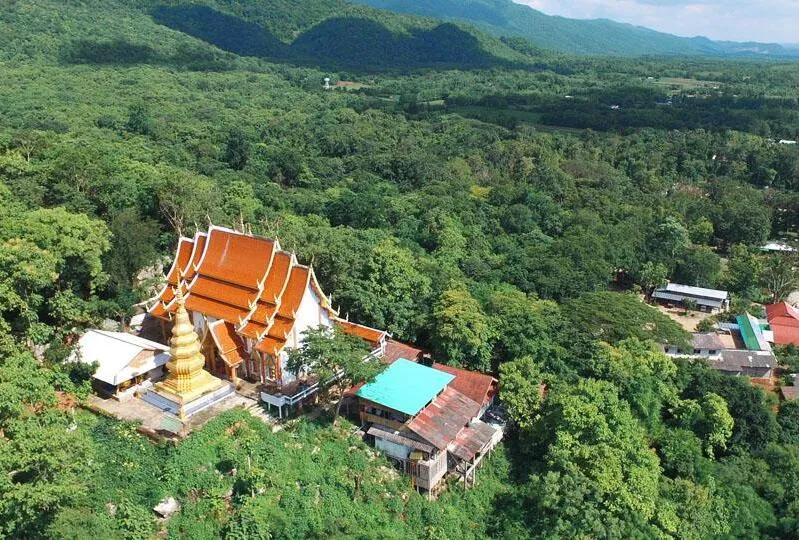
Wat Phra That Chom Sin
Open Days: Daily
Opening Hours: 08.00 – 17.00
Wat Phra That Chom Sin in Phayao Province is located in Ban Tham, Ban Tham Subdistrict, Dok Kham Tai District. The temple sits within the Ban Tham Forest Park area, surrounded by trees, hills, and a peaceful natural atmosphere. It is known for its hilltop pagoda, Lanna-style ordination hall, naga staircase, large principal Buddha image in Phayao craftsmanship, mural paintings, and scenic viewpoint overlooking Dok Kham Tai town. For travelers seeking a quiet temple with both Buddhist significance and natural scenery, Wat Phra That Chom Sin is one of the most meaningful places to visit in Dok Kham Tai.
The temple is especially suitable for visitors who want to combine merit-making, cultural learning, nature, and photography in one trip. Unlike temples in town centers, Wat Phra That Chom Sin is located in a forested hill area, giving it a calm and contemplative feeling. The setting allows visitors to experience a temple that is closely connected with nature, local faith, and the landscape of Dok Kham Tai.
Wat Phra That Chom Sin is about 15 km from Dok Kham Tai District town. Travelers can take Highway 1251 toward Chiang Muan. The entrance to the temple is on the left side of the road. Turn into the road beside the petrol station, pass Wat Suwan Khuha, and continue a short distance to reach Wat Phra That Chom Sin. This route is convenient by private car, motorcycle, or local hired transport.
The temple’s importance begins with its special location. Ban Tham is an area where forest, hills, caves, and community culture come together. The temple stands in a landscape where religion and nature are closely linked. Walking from the lower temple area toward the hilltop pagoda gives visitors the sense of moving gradually from the ordinary world into a sacred space. The 69-step naga staircase leading to the pagoda is therefore more than a physical path; it is also a symbolic approach to a place of worship.
The ordination hall at Wat Phra That Chom Sin was built in 1995 in Lanna style. The staircase is decorated with stucco work, including motifs of the Buddha sheltered by the naga, along with guardian figures, celestial beings, and swans. The doors and windows are carved from wood with scenes related to the life of the Buddha. These artistic details make the building both a place of worship and a cultural learning space.
The naga-sheltered Buddha motif is deeply connected with Buddhist tradition. It refers to the moment after the Buddha’s enlightenment when the naga king protected him from rain. This image symbolizes protection, calmness, and spiritual stability. When combined with celestial beings and swans, the entrance area of the ordination hall creates a sacred atmosphere rooted in Lanna Buddhist art.
The carved wooden doors and windows are also worth observing closely. Their Buddhist narrative motifs allow visitors to learn through visual art. Instead of presenting religious teachings only through text or sermons, the temple uses craftsmanship to communicate Buddhist stories and values. This reflects the traditional role of temple art as a way to educate, inspire, and guide the community.
Inside the ordination hall is the principal Buddha image, a large jeweled Buddha in meditation posture made in the Phayao artistic tradition. The image measures about 5 meters across the lap and serves as the spiritual focus of the hall. Its meditation posture creates a strong feeling of calm and concentration, while the jeweled form gives the image a dignified and sacred presence.
Phayao craftsmanship has a distinct place in northern Thai Buddhist art. Buddha images associated with this tradition often express serenity, balance, and refined local taste. The large principal Buddha image at Wat Phra That Chom Sin therefore adds both artistic and spiritual value to the temple, making the ordination hall a meaningful space for worship and quiet reflection.
The murals inside the ordination hall depict stories from the life of the Buddha, Jataka tales, local ways of life, and children’s traditional play. These paintings give the hall a wide cultural dimension. They communicate Buddhist teachings while also preserving images of community life. As a result, the murals are not only religious decoration but also visual records of social memory.
Visitors should take time to view the murals slowly. The scenes from the Buddha’s life help explain Buddhist history and moral development. Jataka tales communicate virtues such as generosity, patience, wisdom, and sacrifice. The scenes of daily life and children’s play bring the murals closer to local society, showing how temple art can connect religion with ordinary human experience.
Phra That Chom Sin stands behind the ordination hall on the hill. Visitors reach it by climbing the 69-step naga staircase. The pagoda is an old Lanna-style chedi with a base about 8 meters wide and a height of about 20 meters. Once at the top, visitors can pay respect to the pagoda and enjoy a clear view of Dok Kham Tai town and the surrounding landscape.
Naga staircases are common in northern Thai temples, where they symbolize protection and the passage into sacred space. The naga is associated with the guardianship of Buddhism and the boundary between the ordinary and sacred realms. At Wat Phra That Chom Sin, the 69-step staircase is short enough for most visitors but long enough to create a meaningful sense of ascent toward the hilltop pagoda.
The pagoda itself is an important Lanna-style sacred monument. Its hilltop position gives it both religious and landscape significance. For local people, the pagoda is a sacred place connected with protection, merit-making, and community faith. For visitors, it is also a place where architecture, nature, and the view of Dok Kham Tai come together in a memorable way.
From the pagoda platform, visitors can see Dok Kham Tai town, agricultural areas, hills, and the surrounding countryside. The view is one of the main reasons many people visit the temple. Morning and late afternoon are especially pleasant times because the light is softer and the weather is more comfortable. The viewpoint is suitable for photography, quiet rest, and appreciation of the district’s landscape.
Wat Phra That Chom Sin is also known as a place for Dhamma tourism and local relaxation. The temple area is shaded by trees and located within the Ban Tham Forest Park zone, making it ideal for visitors who want to combine worship with a nature-based experience. The visit should not be rushed. Travelers should allow time to see the ordination hall, murals, naga staircase, pagoda, and viewpoint.
The Ban Tham Forest Park area is a pleasant natural setting, and Wat Phra That Chom Sin is one of its important sacred sites. Local traditions include paying respect to Phra That Chom Sin during Makha Bucha and Songkran. These ceremonies reflect the close relationship between the pagoda and the Dok Kham Tai community. Visiting during these periods offers a chance to witness local faith and merit-making, though visitors should be especially respectful during rituals.
The tradition of worshipping local pagodas is common across northern Thailand because pagodas often serve as spiritual centers for communities. Paying respect to Phra That Chom Sin is both an act of Buddhist devotion and a way of maintaining local tradition. It brings people together and strengthens the relationship between the temple, the community, and the sacred landscape.
In addition to the pagoda and ordination hall, the temple offers a peaceful setting for meditation and rest. Trees, birds, wind, and the quiet hill atmosphere help create a contemplative environment. This makes Wat Phra That Chom Sin suitable for visitors who want a short retreat from urban movement and a calm place to reconnect with Buddhist faith and nature.
For travelers interested in Lanna art, the temple contains several details worth studying: the naga staircase, stucco decoration, naga-sheltered Buddha motif, celestial beings, swans, carved wooden doors and windows, large principal Buddha image, and murals. These features show how temple art strengthens sacred atmosphere and communicates Buddhist meaning through visual forms.
Families can also visit Wat Phra That Chom Sin as an educational stop. Children and young visitors can learn about Buddhist stories through murals, see the structure of a Lanna-style pagoda, walk the naga staircase, and experience a temple in a forested setting. This makes the temple both a place of worship and an outdoor classroom for culture, art, and local history.
Photography should be done respectfully. Interesting scenes include the Lanna-style ordination hall, naga staircase, hilltop pagoda, viewpoint, murals, and tree-shaded surroundings. Visitors should avoid touching murals, climbing sacred structures, making loud noise, or disturbing worshippers. Respectful photography helps protect the dignity of the temple.
Facilities at the temple include parking, toilets, resting pavilions, meditation areas, and a small welfare shop selling drinking water and worship items on some days. Visitors who plan to climb to the pagoda should wear comfortable shoes and carry drinking water, especially during hot weather.
Wat Phra That Chom Sin can be combined with nearby attractions such as Ban Tham Forest Park, Ban Tham Folk Culture Center, Wat Suwan Khuha, Dok Kham Tai town, Kwan Phayao, and Wat Si Khom Kham. With half a day, travelers can worship at the temple, see the murals, climb to the pagoda, and enjoy the viewpoint. With more time, they can also explore local culture in Ban Tham.
Getting There from Dok Kham Tai town is straightforward. Take Highway 1251 toward Chiang Muan for about 15 km. The temple entrance is on the left. Turn into the road beside the petrol station, pass Wat Suwan Khuha, and continue a short distance to Wat Phra That Chom Sin. From Phayao city, travelers can first head to Dok Kham Tai and then continue to Ban Tham on the same route.
Visitors should check the weather before traveling, especially during the rainy season. Although access is convenient, the hill area may be damp or slippery in some places. Morning and late afternoon are the best times to visit because the weather is cooler and the view is more pleasant. Weekdays or early morning visits are suitable for travelers who prefer a quieter atmosphere.
Wat Phra That Chom Sin is one of the important places in Dok Kham Tai where Lanna art, an old pagoda, forest scenery, a hilltop viewpoint, and local faith come together. It is suitable for travelers who want to make merit, rest the mind, study Buddhist art, and see Dok Kham Tai from above. A visit to this temple reveals a peaceful and meaningful side of Phayao beyond the better-known attractions in the provincial capital.
| Name | Wat Phra That Chom Sin |
| Location | Ban Tham, Ban Tham Subdistrict, Dok Kham Tai District, Phayao Province |
| Address | Moo 6, Ban Tham, Ban Tham Subdistrict, Dok Kham Tai District, Phayao 56120, Thailand |
| Coordinates | Latitude 19.08304, Longitude 100.07016 |
| Highlights | Hilltop temple in Ban Tham Forest Park, Lanna-style Phra That Chom Sin, 69-step naga staircase, Lanna-style ordination hall, large jeweled Buddha image in Phayao craftsmanship, murals, and viewpoint over Dok Kham Tai |
| History | The ordination hall was built in 1995 in Lanna style, while Phra That Chom Sin is an old Lanna-style pagoda located on the hill behind the hall. |
| Distinctive Features | The ordination hall has stucco decoration, a naga-sheltered Buddha motif, celestial beings, swans, carved wooden doors and windows, and murals depicting the Buddha’s life, Jataka tales, local life, and children’s play. |
| Sacred Objects | Large jeweled Buddha image in meditation posture, about 5 meters across the lap, and Phra That Chom Sin, an old Lanna-style hilltop pagoda |
| Phra That Chom Sin Pagoda | Located on the hill behind the ordination hall, reached by a 69-step naga staircase. The Lanna-style pagoda has a base about 8 meters wide and a height of about 20 meters, with a viewpoint over Dok Kham Tai. |
| Important Tradition | Local worship tradition for Phra That Chom Sin during Makha Bucha and Songkran |
| Travel Information | From Dok Kham Tai town, take Highway 1251 toward Chiang Muan for about 15 km. The temple entrance is on the left. Turn into the road beside the petrol station, pass Wat Suwan Khuha, and continue a short distance to the temple. |
| Current Status | Active Buddhist temple, sacred pagoda site, Dhamma tourism destination, and viewpoint in Ban Tham, Dok Kham Tai |
| Open Days | Daily |
| Opening Hours | 08.00 – 17.00 |
| Facilities | Parking area, toilets, resting pavilions, meditation areas, and a small welfare shop selling drinking water and worship items on some days |
| Main Areas / Zones | Lanna-style ordination hall, principal Buddha image, mural paintings, 69-step naga staircase, Phra That Chom Sin pagoda, viewpoint, and Ban Tham Forest Park area |
| Abbot / Caretaker | Phra Khru Sunthorn Wutthikhun |
| Main Contact Number | 054-457-038, 093-230-6613 |
| Official Website / Official Page | Wat Phra That Chom Sin, Ban Tham Subdistrict, Dok Kham Tai District, Phayao |
| Nearby Tourist Attractions | 1. Ban Tham Forest Park, about 0 km 2. Ban Tham Folk Culture Center, about 1 km, Tel. 086-195-8823 3. Wat Suwan Khuha, about 2 km 4. Dok Kham Tai Town, about 15 km 5. Kwan Phayao, about 35 km 6. Wat Si Khom Kham, about 35 km |
| Nearby Restaurants | 1. Khao Soi Him Kong, about 16 km, Tel. 089-010-1686 2. An Charoen Noodle, Dok Kham Tai, about 16 km 3. Sathan Arroy Dok Kham Tai, about 17 km 4. Van Drip Caffeine Doi Chang Coffee, about 17 km 5. Local Restaurants In Dok Kham Tai Town, about 15 km |
| Nearby Accommodations | 1. Phurimon Resort, about 8 km 2. VC Hotel Dok Kham Tai Phayao, about 18 km, Tel. 054-418-888, 095-453-2692 3. Resort Ban Suan Dok Kham Tai Phayao, about 18 km, Tel. 080-352-6105 4. Green Hill Hotel Phayao, about 35 km 5. Accommodations In Phayao City, about 35 km |
Frequently Asked Questions (FAQ)
Q: Where is Wat Phra That Chom Sin located?
A: Wat Phra That Chom Sin is located in Ban Tham, Ban Tham Subdistrict, Dok Kham Tai District, Phayao Province, within the Ban Tham Forest Park area.
Q: What is Wat Phra That Chom Sin known for?
A: It is known for its hilltop Lanna-style pagoda, 69-step naga staircase, Lanna-style ordination hall, large principal Buddha image, murals, and viewpoint over Dok Kham Tai.
Q: Where is Phra That Chom Sin inside the temple?
A: The pagoda is located on the hill behind the ordination hall and is reached by climbing a 69-step naga staircase.
Q: What are the opening hours of Wat Phra That Chom Sin?
A: The temple is open daily from 08.00 to 17.00.
Q: What important tradition is held at Wat Phra That Chom Sin?
A: Local people hold worship traditions for Phra That Chom Sin during Makha Bucha and Songkran.
Q: How can travelers get to Wat Phra That Chom Sin?
A: From Dok Kham Tai town, take Highway 1251 toward Chiang Muan for about 15 km. The entrance is on the left, beside the petrol station road, passing Wat Suwan Khuha before reaching the temple.
Q: When is the best time to visit Wat Phra That Chom Sin?
A: Morning and late afternoon are the best times because the weather is more comfortable and the viewpoint over Dok Kham Tai is pleasant.
Q: What nearby attractions can be visited with Wat Phra That Chom Sin?
A: Nearby attractions include Ban Tham Forest Park, Ban Tham Folk Culture Center, Wat Suwan Khuha, Dok Kham Tai town, Kwan Phayao, and Wat Si Khom Kham.
Tel : 0895521909
 Tel : 0895521909
 Category: ●Places of Worship
 Group: ●Temple
Last Update : 1 MonthAgo
 Last Update : 1 MonthAgo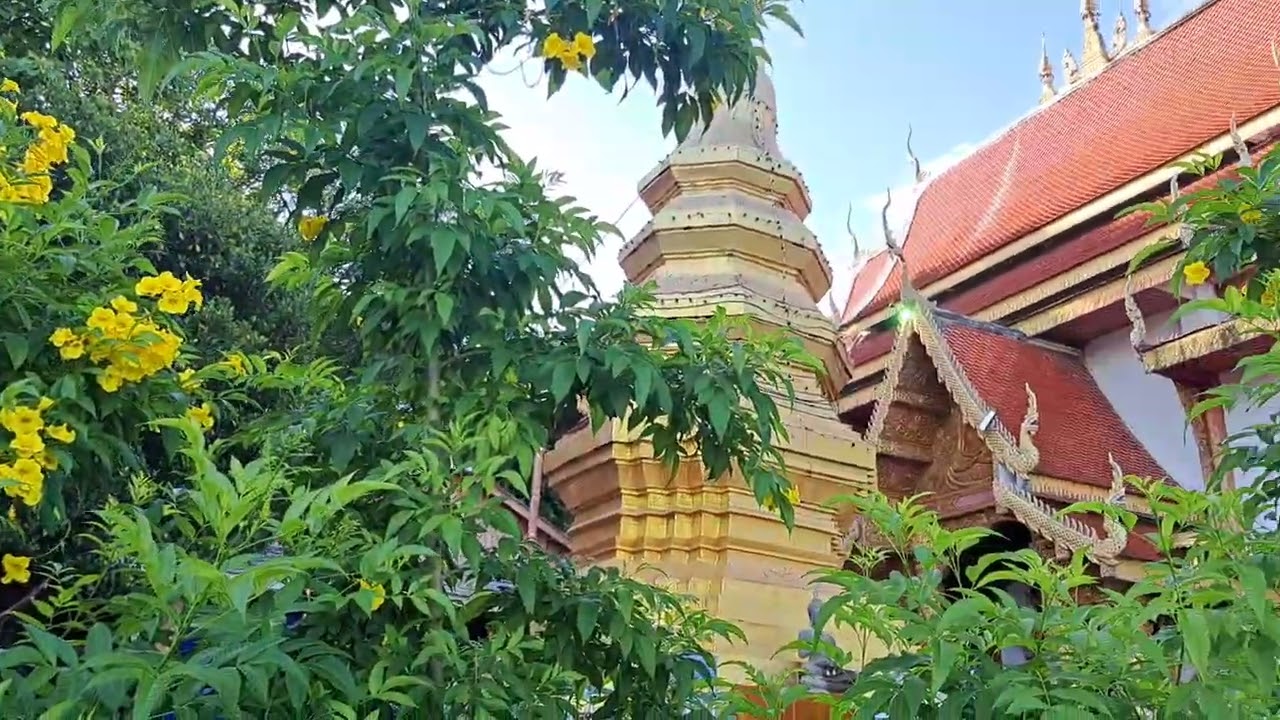
 Click to Access the Navigation Map GPS
Wat Phra That Chom Sin Map
Recommend

 Art, Culture and Heritage
 Historical Sites and Monuments(4)
 Landmarks and Memorials(4)
 Art, Craft Centres, Tradition(1)
 Museums(2)
Temple(39)
Museums(2)
Temple(39)
 Other Sacred Sites(5)
 Research and Development
 Royal Project(1)
 Suburban Living
 Village, Community(2)
 Local Market(4)
 Nature and Wildlife
 National Parks and Marine Reserves(6)
 Mountain (Doi)(2)
 Dam, Reservoir, Lake(11)
 Waterfalls(8)
 Caves(5)
 River, Canal(3)
 Other natural attractions(5)


