
lovethailand home >North Travel Attractions >Phayao Travel Attractions >Muang Phayao >Wiang > Bueng Bua
TL;DR: Bueng Bua is located at Kwan Phayao area, Ban Thung Kio, Moo 10, Ban Tun Subdistrict, Mueang Phayao District, Phayao Province, open Daily, hours 06.00 – 18.00.

Bueng Bua
Open Days: Daily
Opening Hours: 06.00 – 18.00
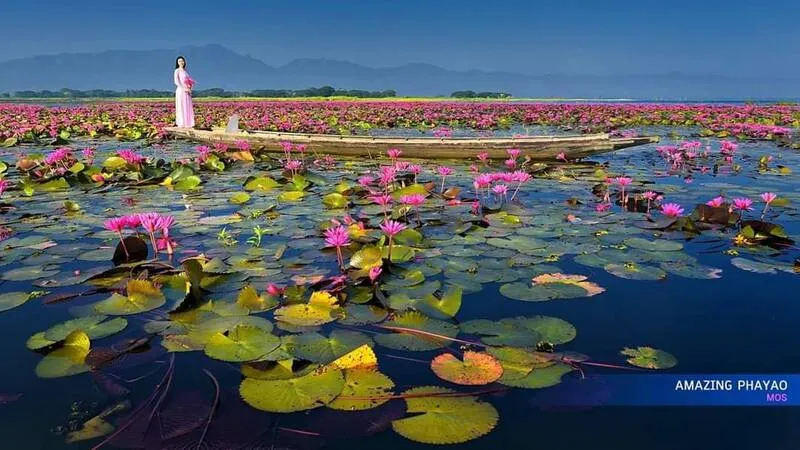
Bueng Bua in Phayao Province is a lotus wetland area connected with Kwan Phayao, the great freshwater lake at the heart of the province. It is not only a seasonal landscape of soft lotus colors. The lotus beds are part of a living freshwater ecosystem that supports fish, birds, aquatic plants, local fishermen, village livelihoods, and the everyday rhythm of communities around the lake. Lotus leaves and stems provide shelter and nursery areas for young fish. Lotus stems and seed pods become food and income for local people. Water hyacinth can be collected and used for woven products. Fish from the lake continue to support local households, while water from surrounding mountains flows into Kwan Phayao before continuing toward the Ing River.
Kwan Phayao is one of northern Thailand’s most important freshwater lakes. The word “kwan” in the local Lanna language refers to a large pond or lake-like wetland. The lake receives water from many streams flowing from nearby hills and mountains. During the rainy season, water from the sky and the land moves down through forested slopes, fields, canals, and smaller wetlands before gathering in the lake. This creates a water system that supports Phayao city, lakeside communities, aquatic plants, fish, waterbirds, and many local livelihoods.
The lotus wetland around Kwan Phayao, especially in the Ban Thung Kio area of Ban Tun Subdistrict, reflects the lake’s ecological richness. During the lotus blooming season, the water surface is covered with pink, white, and green tones from lotus flowers and large leaves. For visitors, this creates a gentle and beautiful landscape. Beneath the flowers, however, the lotus beds serve a practical ecological role. Small fish use them as shelter. Aquatic plants reduce wave action and help trap some organic matter. Roots and stems create microhabitats that make the lake ecosystem more diverse.
Lotus plants are valuable in many ways. Lotus flowers carry cultural and religious meaning in Thailand. Lotus leaves shade parts of the water surface. Lotus stems can be used in local dishes such as curries, stir-fries, or vegetable accompaniments. Lotus seed pods and seeds provide seasonal income. Some flowers are also used in Buddhist activities and daily community life. Bueng Bua is therefore not only beautiful but also useful as food, income, culture, and ecological structure.
During the rainy season, the wetland plants around Kwan Phayao act like a natural buffer. They slow water movement, reduce sediment flow, and give the water system time to balance itself. Some floating plants may appear disorderly in certain seasons, but they can also help trap organic matter and support natural filtering processes. This reminds visitors that wetlands are not empty spaces. They are living systems that clean, slow, shelter, and support life.
When the cool season arrives, migratory birds come to rest and feed together with resident birds around Kwan Phayao. Lotus beds and wetland edges become feeding grounds, resting areas, and shelters for many birds. Visitors who come early in the morning or late in the afternoon may see birds flying over the water, resting among lotus plants, or feeding near the wetland edge. This makes Bueng Bua an interesting place for birdwatchers and travelers who enjoy freshwater ecosystems.
In the hot season, the scene changes again. Strong sunlight helps local people dry fish and preserve food. Fishing communities continue to work with the lake throughout the year, adapting to sun, wind, water level, and fish behavior. Dried fish, fermented fish, and local fish dishes are connected with this seasonal cycle. The lake is therefore not only scenery; it is a food system shaped by weather, water, and human skill.
Local fishermen around Kwan Phayao hold detailed knowledge of water, wind, fish movement, and seasonal changes. This knowledge is learned through everyday life rather than textbooks. Fishermen know when to set gear, when to avoid spawning areas, where water levels are changing, and how wind affects boat movement. The lotus wetland is part of this practical landscape of knowledge. For local people, the condition of lotus beds, water, fish, and birds can all indicate the health of the lake.
Water hyacinth is often seen as a problem plant, but local communities can also use it as a material for handicrafts. When collected and processed, it can be turned into woven products such as mats, baskets, bags, or household items. This reflects local wisdom in transforming aquatic plants into useful materials. At the same time, water hyacinth must be managed carefully because excessive growth can block waterways and reduce open water areas needed by fish and other aquatic life.
Along the lake edge, some villagers grow bananas and other useful plants. These plants provide food, shade, and greenery, showing how homes, gardens, water, and wetlands are closely connected in lakeside life. In such a landscape, nature and daily living are not separate. They form a shared system where people adjust to water levels, seasons, and the resources available around them.
Bueng Bua is ideal for visitors who want more than a simple photo stop. If observed carefully, the area reveals people collecting lotus pods, fishermen working with the lake, birds moving across the wetland, small boats on the water, and lotus plants shifting with the wind. The beauty of the place lies in slow movement and daily life, not only in a still photograph of flowers.
The best time to visit is in the morning. The air is cooler, the light is soft, lotus flowers are often more open, and birds and local activity can be seen more clearly. Late afternoon is also pleasant for reflections on the water and a calmer atmosphere. The exact lotus blooming condition depends on rainfall, water level, and seasonal changes each year, so visitors who want to see a full lotus scene should check with the local community before traveling.
Getting There is convenient from Phayao city. Travelers can head toward Kwan Phayao and Ban Tun Subdistrict, especially the Ban Thung Kio area, which is associated with lotus wetlands and lakeside community life. By private car or motorcycle, the journey from Phayao city generally takes about 15–25 minutes depending on the starting point and selected route. Visitors should drive carefully in community areas and avoid blocking local roads or work areas.
Visitors without private vehicles can use local transport or hire a vehicle from Phayao city to Ban Tun or Ban Thung Kio. Contacting the community in advance is useful for information about lotus conditions, access points, boat possibilities, parking, and appropriate viewing areas. This is especially important for photographers or travelers interested in community-based experiences.
Good manners are important because Bueng Bua is both a natural area and a working community landscape. Visitors should not pick lotus flowers or seed pods without permission, step on lotus beds, leave trash in the water, feed wildlife inappropriately, or disturb birds and local workers. If photographing local residents, visitors should ask permission first. The wetland is not only a scenic background; it is part of real livelihoods.
For ecological learning, Bueng Bua is an accessible outdoor classroom. Visitors can observe how aquatic plants shelter young fish, how birds choose feeding areas, how local people use lotus products, and how changing water levels affect fishing. Asking these questions makes the visit more meaningful and helps travelers understand why wetlands are important beyond their visual beauty.
Bueng Bua can easily be combined with major attractions in Phayao city. A half-day or one-day route may begin with the lotus wetland in the morning, then continue to Wat Tilok Aram in Kwan Phayao, the Pho Khun Ngam Mueang Monument, Wat Si Khom Kham, Wat Phra That Chom Thong, and the lakeside road in the evening. This route brings together nature, faith, city history, and lakeside life in one trip.
Food around Kwan Phayao is another highlight. Visitors can enjoy fish dishes, northern Thai food, local vegetables, chili dips, and seasonal lotus-based ingredients. Lakeside restaurants in Phayao city offer convenient choices, while community food areas around Ban Tun and Ban Thung Kio give a more local atmosphere. Staying in Phayao city is the easiest option for most travelers because it provides hotels, restaurants, and access to the lakefront.
Bueng Bua should not be understood separately from the wider Kwan Phayao ecosystem. Its lotus flowers are beautiful, but its deeper value lies in being a fish nursery, bird habitat, food source, craft material area, and part of the lake’s water system. Once visitors understand this, a trip to the lotus wetland becomes more than sightseeing. It becomes a way to understand how freshwater wetlands continue to support both nature and people.
With respectful travel, Bueng Bua can offer a rich experience. A single lotus flower is connected with fish in the water, birds in the sky, the hands of local people, the rainy season, winter winds, hot-season sunlight, and the Ing River downstream. These relationships make Bueng Bua not only a natural landscape but also one of the living hearts of Kwan Phayao.
| Name | Bueng Bua Phayao / Kwan Phayao Lotus Wetland |
| Location | Kwan Phayao area, Ban Thung Kio, Moo 10, Ban Tun Subdistrict, Mueang Phayao District, Phayao Province |
| Address | Ban Thung Kio, Moo 10, Ban Tun Subdistrict, Mueang Phayao District, Phayao 56000 |
| Highlights | Lotus wetland connected with Kwan Phayao, supporting lotus flowers, fish nursery areas, waterbirds, local fishing, lotus pod income, and aquatic plant use |
| Distinctive Features | A living freshwater wetland where lotus beds, fish, birds, local fishermen, water hyacinth use, and lakeside community life are closely connected |
| Interesting Season | Lotus blooming periods vary according to rainfall and water levels. Morning is best for lotus viewing, birdwatching, and observing local life |
| Travel Information | From Phayao city, travel toward Kwan Phayao, Ban Tun Subdistrict, and Ban Thung Kio. The trip usually takes about 15–25 minutes by private car, motorcycle, or local transport |
| Current Status | A natural wetland and lakeside livelihood area of communities around Kwan Phayao. Visitors should respect community spaces and local work areas |
| Open Days | Daily |
| Opening Hours | 06.00 – 18.00 |
| Facilities | Community lakeside areas, natural viewpoints, nearby lakefront routes, and restaurants and services in Phayao city. Visitors should bring drinking water, a hat, and sun protection |
| Main Areas / Zones | Lotus wetland, lotus beds, Kwan Phayao lakeside area, local boat areas, small-scale fishing zones, Ban Thung Kio community, and Ban Tun community |
| Caretaker | Ban Thung Kio community, Ban Tun Subdistrict, together with local authorities and agencies involved in Kwan Phayao management |
| Main Contact Number | Tourism Authority of Thailand Tourist Information Center, Tel. 1672 |
| Official Website / Official Page | Ban Tun / Ban Thung Kio community pages and Phayao provincial public relations channels |
| Nearby Tourist Attractions | 1. Kwan Phayao, same area 2. Wat Tilok Aram In Kwan Phayao, about 6 km 3. Pho Khun Ngam Mueang Monument, about 7 km 4. Wat Si Khom Kham, about 8 km 5. Wat Phra That Chom Thong, about 9 km 6. Kwan Phayao Walking Street / Lakefront Road, about 7 km |
| Nearby Restaurants | 1. Ban Thung Kio Local Restaurants, about 1 km 2. Ban Tun Local Restaurants, about 3 km 3. Aurora Kwan Phayao, about 7 km 4. Chidlom Chom Kwan, about 7 km 5. So Good Phayao, about 8 km 6. A Ga Li Go Ingkwan, about 8 km 7. Lakefront Restaurants In Phayao City, about 7 km |
| Nearby Accommodations | 1. Phayao Gateway Hotel, about 8 km, Tel. 063-696-2249, 054-411-333, 054-484-333 2. Green Hill Hotel Phayao, about 9 km, Tel. 054-482-277 3. M2 Hotel Phayao, about 9 km 4. Win Hotel Phayao, about 8 km 5. Kwan Phayao Lake House, about 7 km 6. Accommodations Around Kwan Phayao Lakefront, about 7 km |
Frequently Asked Questions (FAQ)
Q: Where is Bueng Bua in Phayao located?
A: Bueng Bua is located around Kwan Phayao, especially in the Ban Thung Kio area, Moo 10, Ban Tun Subdistrict, Mueang Phayao District, Phayao Province.
Q: What makes Bueng Bua at Kwan Phayao special?
A: It is a lotus wetland that combines scenic lotus views with fish nursery areas, bird habitats, local fishing, lotus harvesting, and lakeside community life.
Q: When is the best time to visit Bueng Bua?
A: Morning is the best time because the air is cool, the light is soft, lotus flowers are more open, and birds and local activity can be observed clearly.
Q: How are lotus plants useful in Kwan Phayao?
A: Lotus beds provide shelter for young fish, lotus stems can be used as food, lotus pods create income, and the plants help support wetland biodiversity.
Q: How is Bueng Bua connected with local fishermen?
A: Bueng Bua is part of the Kwan Phayao ecosystem that supports fish and aquatic life, helping local fishermen continue their seasonal livelihoods.
Q: Can visitors pick lotus flowers or lotus pods?
A: Visitors should not pick lotus flowers or pods without permission because many areas are part of local livelihoods and the lake ecosystem.
Q: What nearby attractions can be visited with Bueng Bua?
A: Nearby places include Kwan Phayao, Wat Tilok Aram, Pho Khun Ngam Mueang Monument, Wat Si Khom Kham, Wat Phra That Chom Thong, and the Kwan Phayao lakefront road.
Q: Who is Bueng Bua suitable for?
A: It is suitable for nature lovers, photographers, birdwatchers, cultural travelers, and visitors who want to understand the freshwater ecosystem and local life around Kwan Phayao.
 Category: ●Nature and Wildlife
 Group: ●River, Canal
Last Update : 4 MonthAgo
 Last Update : 4 MonthAgo
 Click to Access the Navigation Map GPS
 Art, Culture and Heritage
 Historical Sites and Monuments(4)
 Landmarks and Memorials(4)
 Art, Craft Centres, Tradition(1)
 Museums(2)
 Places of Worship
 Temple(39)
 Other Sacred Sites(5)
 Research and Development
 Royal Project(1)
 Suburban Living
 Village, Community(2)
 Local Market(4)
 National Parks and Marine Reserves(6)
 Mountain (Doi)(2)
 Dam, Reservoir, Lake(11)
 Waterfalls(8)
 Caves(5)
River, Canal(3)
Caves(5)
River, Canal(3)
 Other natural attractions(5)


