
lovethailand home >North Travel Attractions >Phayao Travel Attractions >Muang Phayao >Tha Wang Thong > Wat Pa Daeng Bunnak
TL;DR: Wat Pa Daeng Bunnak is located at Ban Pa Daeng, Tha Wang Thong Subdistrict, Mueang Phayao District, Phayao Province, open Daily, hours 08.00 – 17.00.
Wat Pa Daeng Bunnak

Open Days: Daily
Opening Hours: 08.00 – 17.00
Wat Pa Daeng Bunnak in Phayao Province is one of the most historically important temples in Mueang Phayao. Located in Ban Pa Daeng, Tha Wang Thong Subdistrict, about 1.5 km north of central Phayao, the temple preserves layers of Buddhist, archaeological, artistic, and community history. It was originally known as Wat Bunnak. Later, another temple called Wat Pa Daeng was built nearby, and the 2 temple areas eventually became one temple known today as Wat Pa Daeng Bunnak.
For travelers who want to understand Phayao beyond Kwan Phayao and the central city temples, Wat Pa Daeng Bunnak is a highly meaningful stop. The temple contains traces of ancient religious architecture, Sukhothai-style and Lanna-style chedis, sandstone Buddha images, old boundary walls, archaeological mounds, and inscriptions that connect the site with the history of Phayao during the early 21st Buddhist century. It is not a temple to visit only for a quick photo; it is a place where visitors can walk through the physical remains of old Phayao.
The temple’s history is especially important because 2 inscriptions were found in the area. The first inscription, dated 1499 CE or 2042 BE, refers to the site as Wat Phraya Ruang. The second inscription, dated 1535 CE or 2078 BE, mentions a royal order from Phra Mueang Ketklao, the king of Chiang Mai, for the ruler of Phayao to build a great mandapa in the city. These inscriptions show that the site was connected not only with local religious practice, but also with wider political and religious networks of Lanna.
Based on the historical events and the Sukhothai-style form of the chedi, Wat Pa Daeng Bunnak is closely associated with the period of Phraya Yutthitthira, the former ruler of Phitsanulok who later moved into the Lanna world and became ruler of Phayao. This connection is important because it helps explain why Sukhothai artistic elements appear in a Phayao temple. Wat Pa Daeng Bunnak therefore provides a valuable case study of how art, politics, and Buddhism moved between Sukhothai, Phitsanulok, Lanna, and Phayao.
One of the temple’s most important features is its ancient chedi architecture. The site includes a Sukhothai-style chedi and a Lanna-style chedi, with some characteristics comparable to the chedi of Wat Pa Sak in Chiang Saen, Chiang Rai Province. These structures reveal a blend of regional artistic forms. Their bases, brickwork, massing, and surviving architectural components show how Phayao absorbed and adapted different Buddhist architectural traditions into its own local setting.
The temple area also contains 25 archaeological mounds and 4 traces of ancient walls. These remains show that Wat Pa Daeng Bunnak was once a large and complex religious site. Today, visitors can still see traces of the older Wat Bunnak area, including remains of a Sukhothai-style chedi, Buddha image bases, an old ordination hall, boundary walls, and other ancient structures. These remains are essential for understanding the scale and importance of the temple in the past.
Another powerful part of the temple’s story is connected with the Second World War. Local accounts record that after an old chedi collapsed, bricks from the chedi were taken and used as bridge supports for military movement. This detail reminds visitors that ancient monuments were not affected only by time and weather, but also by modern historical events. The surviving remains at Wat Pa Daeng Bunnak are therefore even more valuable because they represent what has endured through centuries of change.
At the entrance area, the brick gateway known as the sum pratu khong is an important architectural feature. In northern Thai temple culture, such gateways mark the transition from ordinary space into a sacred Buddhist zone. Passing through the gateway, visitors enter a landscape where the present temple, restored structures, and ancient remains coexist. This makes the temple especially suitable for travelers interested in old temple layouts and Lanna Buddhist architecture.
Wat Pa Daeng Bunnak is also known for its old sandstone Buddha images. Phayao is one of northern Thailand’s important centers of sandstone Buddhist sculpture, and the images preserved at this temple reflect the refined skill of local craftsmen. Sandstone Buddha images from Phayao often show distinctive facial features, body proportions, carving techniques, and a strong connection with local materials. For visitors interested in Buddhist art, this temple offers a direct view of the Phayao school of craftsmanship.
Two important Buddha images associated with the temple are Luang Pho Nak and a sandalwood Buddha image. Both are regarded as significant sacred objects of Phayao. They are now preserved at a national museum, which shows the importance of Wat Pa Daeng Bunnak not only at the community level, but also within Thailand’s broader heritage preservation system. Their movement into museum care reflects the value of conserving fragile and historically important Buddhist objects for future generations.
The temple is also deeply connected with the local community through the Tan Kuai Salak tradition, also known as Salak Phat. Wat Pa Daeng Bunnak is recognized as the first temple in the area associated with this tradition. Tan Kuai Salak is an important northern Thai merit-making practice in which villagers prepare offerings in containers and present them to monks by lottery. The ritual expresses generosity, remembrance of ancestors, community solidarity, and faith in Buddhism. Through this tradition, Wat Pa Daeng Bunnak remains a living cultural site rather than only an archaeological ruin.
Visitors should walk through the temple slowly. A meaningful visit may begin at the entrance gateway, continue to the restored ordination hall and the Pa Daeng chedi, and then proceed toward the wooded area that once belonged to old Wat Bunnak. In this area, visitors can observe ancient mounds, chedi remains, Buddha bases, old walls, and the atmosphere of a historic temple landscape partly absorbed by nature. This experience is different from visiting a fully restored temple; it gives travelers a stronger sense of time, loss, survival, and conservation.
Wat Pa Daeng Bunnak is especially useful as an outdoor learning site. It connects history, archaeology, inscriptions, Buddhist art, architecture, and living tradition in one place. Teachers, students, families, and cultural travelers can use the site to understand how old temples functioned, how communities preserved religious memory, and how Buddhist art developed in Phayao. The temple also helps explain why Phayao is considered one of the important historical cities of northern Thailand.
For a broader cultural route, Wat Pa Daeng Bunnak can be combined with Wat Li and Wiang Phayao Museum, Wat Si Umong Kham, Kwan Phayao, Wat Tilok Aram, Wat Si Khom Kham, and Wat Phra That Chom Thong. Each place tells a different part of Phayao’s story. Wat Pa Daeng Bunnak focuses on ancient remains, Sukhothai influence, Lanna connections, and community ritual. Wat Li presents museum collections and inscriptions. Wat Si Umong Kham highlights important Buddha images, and Kwan Phayao connects the city with its lake landscape.
Getting There is convenient from central Phayao. From the city center, travel north toward Tha Wang Thong Subdistrict and Ban Pa Daeng. The temple is about 1.5 km from town and is located at 61 Moo 3, Tha Wang Thong Subdistrict, Mueang Phayao District, Phayao Province. Private cars, rental cars, motorcycles, local transport, and ride-hailing services are practical options. Because the temple is close to the city, it can be included at the beginning or end of a half-day cultural itinerary.
As Wat Pa Daeng Bunnak is both an active Buddhist temple and an archaeological site, visitors should dress respectfully, avoid climbing on ancient remains, avoid touching old bricks or artifacts, and keep the area clean. Ancient walls, chedi bases, and earth mounds may look simple, but they are important historical evidence. Respectful behavior helps preserve the temple for local people and future visitors.
In summary, Wat Pa Daeng Bunnak is one of Phayao’s most valuable cultural sites. It preserves the memory of Wat Bunnak and Wat Pa Daeng, inscriptions from the 15th and 16th centuries, Sukhothai-style and Lanna-style chedis, 25 archaeological remains, 4 ancient wall traces, sandstone Buddha images, Luang Pho Nak, the sandalwood Buddha image, and the tradition of Tan Kuai Salak. A visit here is not only a temple visit, but also a journey into the historical layers of Phayao.
| Name | Wat Pa Daeng Bunnak |
| Location | Ban Pa Daeng, Tha Wang Thong Subdistrict, Mueang Phayao District, Phayao Province |
| Address | 61 Moo 3, Tha Wang Thong Subdistrict, Mueang Phayao District, Phayao Province 56000 |
| Highlights | Ancient Phayao temple with Sukhothai-style chedi, Lanna-style chedi, 25 archaeological remains, 4 ancient wall traces, sandstone Buddha images, and a strong connection with the Tan Kuai Salak tradition |
| History | Originally known as Wat Bunnak, later combined with Wat Pa Daeng. The temple is associated with inscriptions dated 1499 CE and 1535 CE and with the period of Phraya Yutthitthira in the early 21st Buddhist century. |
| Name Origin | The name comes from the combination of the old Wat Bunnak and the later Wat Pa Daeng, forming the present name Wat Pa Daeng Bunnak. |
| Distinctive Features | A layered ancient temple site with a brick gateway, Pa Daeng chedi, old Wat Bunnak remains, Sukhothai-style chedi remains, Buddha bases, old ordination hall remains, and sandstone Buddha images |
| Key Evidence | Two inscriptions, Sukhothai-style chedi, Lanna-style chedi, 25 archaeological remains, 4 ancient wall traces, sandstone Buddha images, Luang Pho Nak, and the sandalwood Buddha image |
| Tradition / Ritual | Recognized as the first temple associated with Tan Kuai Salak, or the Salak Phat merit-making tradition, in the Phayao area |
| Travel Information | From central Phayao, travel north toward Tha Wang Thong Subdistrict and Ban Pa Daeng. The temple is about 1.5 km from town and can be reached by private car, rental car, motorcycle, local transport, or ride-hailing services. |
| Current Status | Open as a local Buddhist temple and important archaeological site in Tha Wang Thong Subdistrict, Mueang Phayao District |
| Open Days | Daily |
| Opening Hours | 08.00 – 17.00 |
| Fees | Free Admission |
| Facilities | Worship area, ordination hall, chedi area, archaeological remains, parking area, and surrounding community space |
| Main Areas / Zones | Brick gateway, Pa Daeng ordination hall, Pa Daeng chedi, old Wat Bunnak area, Sukhothai-style chedi remains, Buddha bases, old ordination hall remains, and ancient wall traces |
| Abbot / Caretaker | Phra Khru Rattanaphanarak / Phra Khru Rattaphanarak |
| Main Contact Number | 054-481-178 |
| Nearby Tourist Attractions | 1. Kwan Phayao, About 2 km 2. Wat Si Umong Kham, About 2 km 3. Wat Li And Wiang Phayao Museum, About 2 km 4. King Ngam Muang Monument, About 2 km 5. Wat Tilok Aram, About 3 km 6. Wat Si Khom Kham, About 4 km |
| Nearby Restaurants | 1. Malee Mee Gin, About 1 km, Tel. 081-035-7679 2. An Charoen Noodles Behind Phayao Market, About 2 km 3. Nan Nam Tao Hu Nom Sot Soi Wat Boon Yuen, About 2 km 4. Lab Lung Suang, About 2 km 5. Nai Ko Khao Man Kai, About 2 km 6. Pizza Hut Phayao, About 2 km |
| Nearby Accommodations | 1. Mee Hug Guesthouse, About 1 km 2. Baan Makrood, About 1 km 3. Hop Inn Phayao, About 2 km 4. M2 Hotel Waterside, About 2 km 5. Green Hill Hotel Phayao, About 2 km, Tel. 054-482277 6. Phuglong Hotel, About 2 km, Tel. 054-481-915 7. P Bliss Hotel Phayao, About 3 km, Tel. 054-431599 |
Frequently Asked Questions (FAQ)
Q: Where is Wat Pa Daeng Bunnak located?
A: Wat Pa Daeng Bunnak is located at 61 Moo 3, Ban Pa Daeng, Tha Wang Thong Subdistrict, Mueang Phayao District, Phayao Province, about 1.5 km from central Phayao.
Q: What was the original name of Wat Pa Daeng Bunnak?
A: The temple was originally known as Wat Bunnak. Later, another temple called Wat Pa Daeng was built nearby, and the 2 temple areas became the present Wat Pa Daeng Bunnak.
Q: Why is Wat Pa Daeng Bunnak historically important?
A: The temple contains 2 inscriptions, Sukhothai-style and Lanna-style chedis, 25 archaeological remains, and 4 ancient wall traces, making it an important historical site of Phayao.
Q: How is Wat Pa Daeng Bunnak connected with Phraya Yutthitthira?
A: The temple’s historical context and Sukhothai-style chedi suggest a connection with the period of Phraya Yutthitthira, who moved into the Lanna world and became ruler of Phayao.
Q: What important tradition is associated with Wat Pa Daeng Bunnak?
A: Wat Pa Daeng Bunnak is recognized as the first temple associated with Tan Kuai Salak, or the Salak Phat merit-making tradition, in the Phayao area.
Q: What can visitors see inside the temple?
A: Visitors can see a brick gateway, the Pa Daeng chedi, restored temple structures, old Wat Bunnak remains, Sukhothai-style chedi remains, Buddha bases, old walls, and sandstone Buddha images.
Q: Who is the abbot of Wat Pa Daeng Bunnak?
A: The abbot is listed as Phra Khru Rattanaphanarak / Phra Khru Rattaphanarak.
Q: What nearby attractions can be visited on the same route?
A: Nearby attractions include Kwan Phayao, Wat Si Umong Kham, Wat Li and Wiang Phayao Museum, King Ngam Muang Monument, Wat Tilok Aram, and Wat Si Khom Kham.
Tel : 054481178
 Tel : 054481178
 Category: ●Places of Worship
 Group: ●Temple
Last Update : 5 MonthAgo
 Last Update : 5 MonthAgo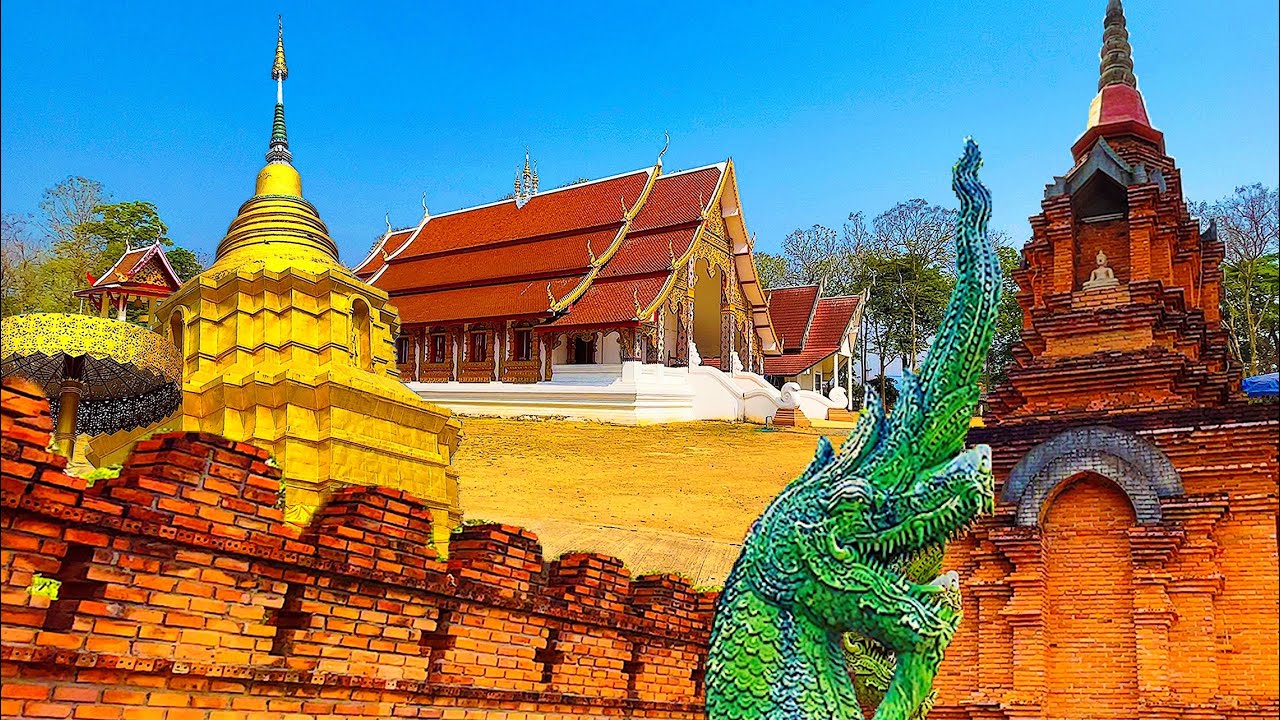
 Click to Access the Navigation Map GPS
Wat Pa Daeng Bunnak Map
Recommend

 Art, Culture and Heritage
 Historical Sites and Monuments(4)
 Landmarks and Memorials(4)
 Art, Craft Centres, Tradition(1)
 Museums(2)
Temple(39)
Museums(2)
Temple(39)
 Other Sacred Sites(5)
 Research and Development
 Royal Project(1)
 Suburban Living
 Village, Community(2)
 Local Market(4)
 Nature and Wildlife
 National Parks and Marine Reserves(7)
 Mountain (Doi)(2)
 Dam, Reservoir, Lake(11)
 Waterfalls(8)
 Caves(5)
 River, Canal(3)
 Other natural attractions(5)
 Travel Articles, Recipes
 Travel Review, Food Review(1)


