
lovethailand home >North Travel Attractions >Phayao Travel Attractions >Muang Phayao >Wiang > Wat Si Umong Kham
TL;DR: Wat Si Umong Kham is located at Wiang Subdistrict, Mueang Phayao District, Phayao Province, open Daily, hours 08.00 – 16.00.
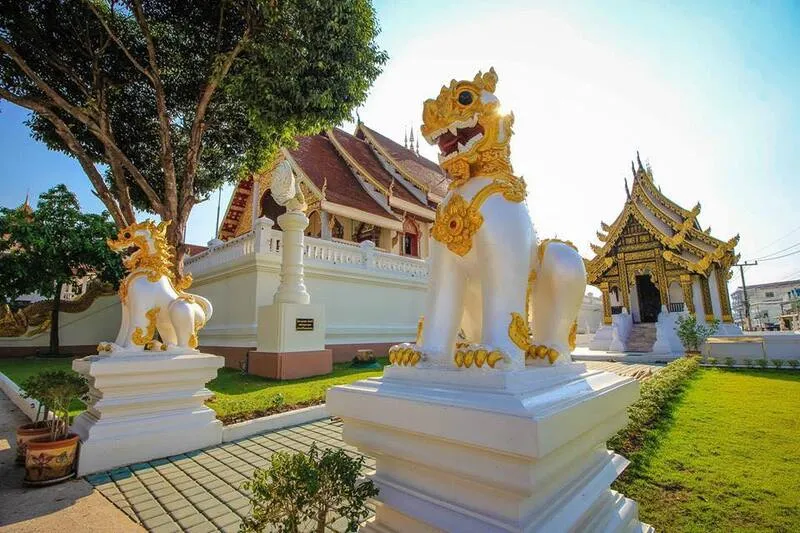
Wat Si Umong Kham
Open Days: Daily
Opening Hours: 08.00 – 16.00
Wat Si Umong Kham in Phayao Province, locally known as “Wat Sung” or the High Temple, is one of the most distinctive temples in Phayao city. Its nickname comes from its elevated location: the ordination hall, chedi, and main religious structures stand on a raised mound, making the temple clearly visible from different directions and from the Kwan Phayao lakeside area. For travelers exploring Phayao beyond its famous lake views, this temple offers an important combination of sacred Buddha images, Lanna art, Phayao sandstone craftsmanship, local belief, and city history.
The temple is located at 3 Tha Kwan Road, Wiang Subdistrict, Mueang Phayao District, Phayao Province. It is set within the municipal area of Phayao city and is easy to include in a half-day cultural route with Kwan Phayao, King Ngam Muang Monument, Wat Li and Wiang Phayao Museum, Wat Tilok Aram, Wat Si Khom Kham, and Wat Phra That Chom Thong. Although the temple is close to the city center, its raised setting gives it a quiet and dignified presence that separates it from the surrounding urban rhythm.
The main reason many visitors come to Wat Si Umong Kham is to pay respect to Phra Chao Lan Tue and Phra Chao Khaeng Khom. These 2 important Buddha images are enshrined inside the ordination hall and are deeply respected by local people. Phra Chao Lan Tue is a gilded bronze Buddha image in the subduing Mara posture, combining Sukhothai and Phayao artistic influences. Phra Chao Khaeng Khom is a sandstone Buddha image in the same posture, known for its distinctive angular shins. Together, they represent 2 different but complementary expressions of Buddhist art in Phayao.
Phra Chao Lan Tue is also known as Phra Chao Saen Sae or Luang Pho Ngam Mueang Rueang Rit. The word “tue” belongs to an old Lanna counting system and suggests an idea of great magnitude and sacred value. The image is admired for its beautiful proportions, calm expression, and golden surface. Its artistic character reflects both the grace of Sukhothai Buddhist sculpture and the local identity of Phayao craftsmanship. For travelers interested in Buddhist art, this image is one of the most important highlights of the temple.
Phra Chao Khaeng Khom is especially important as a sandstone Buddha image of the Phayao artistic tradition. The image measures about 1.3 meters across the lap and about 1.9 meters in height. Its name refers to the sharp or angular appearance of the shins, which makes it different from many other Buddha images. The image is associated with the period of Phraya Yutthitthira and the artistic relationship between Phayao and Chiang Mai during the Lanna period. While the Chiang Mai version of Phra Chao Khaeng Khom was cast in bronze, the Phayao image was made from sandstone, reflecting the strong local tradition of stone carving.
Inside the ordination hall, the contrast between the gilded bronze Phra Chao Lan Tue and the sandstone Phra Chao Khaeng Khom gives visitors a clear sense of Phayao’s artistic diversity. The bronze image appears refined, luminous, and gentle, while the sandstone image feels solid, grounded, and closely connected to the local material culture. Seeing both images together helps visitors understand why Phayao is widely recognized for its sandstone Buddha images and distinctive Buddhist sculpture.
Behind the ordination hall stands a golden chedi in Chiang Saen style. The chedi rises from a 3-tiered square base, followed by an octagonal recessed chamber with niches on the 4 sides. Above this are the rounded bell-shaped body, throne, stacked rings, and finial. Because the chedi stands on the elevated temple ground, it appears particularly prominent when seen from nearby streets and from the lakeside direction. The golden surface enhances the temple’s visual identity and reinforces the local name Wat Sung.
The name Wat Si Umong Kham also carries cultural meaning. “Si” or “Sa-Ri” in northern pronunciation is associated with auspiciousness and the sacred Bodhi tree. “Umong” refers to a tunnel or cave, connected with local belief that there is a tunnel or underground chamber beneath the base of the ordination hall. “Kham” means gold. The name therefore combines auspiciousness, underground sacred space, and golden beauty, all of which correspond with the character of the temple.
Another important image at the temple is Phra Chao Than Chai, a sandstone Buddha image in the subduing Mara posture with a lap width of about 2 meters. It is enshrined in a small viharn near the area of Phinit Prasat School. In northern Thai belief, Phra Chao Than Chai images are often associated with quick fulfillment of wishes. Local people visit to pray for success, good fortune, work, study, health, and personal well-being. Visitors should approach this space with respect and calmness, as it remains part of the living religious life of the community.
The temple also houses Phra Chao Kwan, a sandstone Buddha image in the subduing Mara posture with a lap width of about 1 meter. This image was found in an ancient chedi in the middle of Kwan Phayao. Its presence at Wat Si Umong Kham connects the temple directly with the lake, which is not only a scenic landmark but also a historical and sacred landscape. Through Phra Chao Kwan, visitors can better understand how temples, ancient sites, Buddha images, and the lake are linked in Phayao’s cultural memory.
Wat Si Umong Kham is therefore more than a place for a short temple visit. It contains several layers of meaning: a raised temple landscape, a respected bronze Buddha image, a distinctive sandstone Buddha image, a golden Chiang Saen-style chedi, a wish-fulfilling Buddha image, and a lake-related Buddha image from Kwan Phayao. These elements make the temple valuable for both religious visitors and travelers interested in history, art, and local identity.
For visitors interested in art history, the temple offers a compact but meaningful lesson in Phayao’s Buddhist sculpture. Phra Chao Lan Tue shows how Sukhothai influence was absorbed into local Phayao aesthetics, while Phra Chao Khaeng Khom shows the strength of Phayao sandstone carving. The chedi adds another layer through its Chiang Saen-style form. Together, these features reveal Phayao as a city where different Lanna artistic currents met and developed into local expressions.
For visitors interested in architecture and spatial experience, the temple’s elevated site is equally important. Walking up to the ordination hall and chedi changes the visitor’s sense of perspective. The temple rises above the surrounding area, creating a feeling of separation from ordinary city space. This raised setting gives the temple dignity and makes the chedi, ordination hall, and sacred images feel more visually powerful.
Visitors should allow at least 45 minutes to 1 hour for Wat Si Umong Kham. This gives enough time to pay respect to Phra Chao Lan Tue, Phra Chao Khaeng Khom, Phra Chao Than Chai, and Phra Chao Kwan, as well as to view the golden chedi behind the ordination hall. Travelers with a deeper interest in Buddhist sculpture or photography may want to spend more time, especially in the morning or late afternoon when the light is softer.
As Wat Si Umong Kham is an active Buddhist temple, visitors should dress respectfully, remove shoes before entering sacred buildings, keep their voices low, avoid touching Buddha images or ancient objects, and follow the temple’s local guidelines. These simple practices help preserve the peaceful atmosphere and show respect for the monks, local residents, and sacred heritage of Phayao.
Getting There is easy from central Phayao. From Pratu Chai Intersection, follow Pratu Chai Road toward Don Sanam Road, then turn left onto the old Phahonyothin Road and continue for about 300 meters; the temple is on the right-hand side. Visitors can also reach the temple via Tha Kwan Road within the municipal area. Private cars, rental cars, local transport, and ride-hailing services are practical options. Because the temple is close to Kwan Phayao and other central attractions, it fits well into a half-day city route.
A recommended route is to begin at Wat Si Umong Kham in the morning, continue to Wat Li and Wiang Phayao Museum for a deeper look at Phayao’s ancient objects, visit King Ngam Muang Monument and Kwan Phayao, then continue to Wat Si Khom Kham to pay respect to Phra Chao Ton Luang. This route gives travelers a strong overview of Phayao through religion, lake scenery, local history, and Lanna art.
For first-time visitors to Phayao, Wat Si Umong Kham is worth more than a quick stop. It shows that Phayao is not only a lakeside destination but also a city with deep Buddhist heritage and a strong tradition of local craftsmanship. The raised temple, golden chedi, Phra Chao Lan Tue, Phra Chao Khaeng Khom, Phra Chao Than Chai, and Phra Chao Kwan together make this temple one of the most meaningful cultural places in the city.
| Name | Wat Si Umong Kham, Phayao Province |
| Location | Wiang Subdistrict, Mueang Phayao District, Phayao Province |
| Address | 3 Tha Kwan Road, Wiang Subdistrict, Mueang Phayao District, Phayao Province 56000 |
| Highlights | Elevated temple locally known as Wat Sung, home to Phra Chao Lan Tue, Phra Chao Khaeng Khom, Phra Chao Than Chai, Phra Chao Kwan, and a golden Chiang Saen-style chedi |
| History | An important temple in Phayao associated with Buddhist art and sandstone sculpture from the 20th–21st Buddhist centuries, with a prominent Chiang Saen-style chedi |
| Name Origin | “Si” or “Sa-Ri” suggests auspiciousness, “Umong” refers to a tunnel or cave, and “Kham” means gold. The local name Wat Sung comes from the temple’s elevated position. |
| Distinctive Features | The ordination hall and chedi stand on a raised base, making the temple visible from many directions and from the Kwan Phayao lakeside area. |
| Key Evidence | Phra Chao Lan Tue, Phra Chao Khaeng Khom, Phra Chao Than Chai, Phra Chao Kwan, Chiang Saen-style chedi, and traces of Phayao sandstone art |
| Travel Information | From Pratu Chai Intersection, follow Pratu Chai Road toward Don Sanam Road, turn left onto the old Phahonyothin Road, and continue about 300 meters; the temple is on the right. It is accessible by private car, rental car, local transport, or ride-hailing services. |
| Current Status | Open as a local Buddhist temple and cultural attraction in Phayao city |
| Open Days | Daily |
| Opening Hours | 08.00 – 16.00 |
| Fees | Free Admission |
| Facilities | Worship area, ordination hall, viharn, chedi, parking area around the temple, and surrounding community space |
| Main Areas / Zones | Ordination hall with Phra Chao Lan Tue and Phra Chao Khaeng Khom, golden chedi behind the ordination hall, Phra Chao Than Chai viharn, and Phra Chao Kwan worship area |
| Abbot / Caretaker | Phra Thep Yanawethi (Sri Mun Munsiri, Pali Grade 6) |
| Main Contact Number | 054-413-105 |
| Nearby Tourist Attractions | 1. Kwan Phayao, About 1 km 2. King Ngam Muang Monument, About 1 km 3. Wat Li And Wiang Phayao Museum, About 1 km 4. Wat Tilok Aram, About 2 km 5. Wat Si Khom Kham, About 2 km 6. Wat Phra That Chom Thong, About 3 km |
| Nearby Restaurants | 1. Khao Soi Saeng Phian, About 1 km, Tel. 054-482-006, 054-482-996 2. Kuai Tiao Pa Phan Wat Li, About 1 km, Tel. 099-142-6157 3. An Charoen Meatball Noodles, About 2 km, Tel. 054-410-966 4. Sen Yai Phayao, About 3 km, Tel. 089-033-0002 5. Aurora Kwan Phayao, About 3 km, Tel. 054-410-493 6. So Good Phayao, About 2 km |
| Nearby Accommodations | 1. P Bliss Hotel Phayao, About 1 km, Tel. 054-431599, 092-5017441 2. Phuglong Hotel, About 2 km, Tel. 054-481-915, 063-789-1999 3. Phayao Gateway Hotel, About 2 km, Tel. 063-696-2249, 054-484-333, 054-411-333 4. Green Hill Hotel Phayao, About 2 km 5. Hop Inn Phayao, About 2 km 6. KM Kwanphayao Hotel, About 2 km |
Frequently Asked Questions (FAQ)
Q: Where is Wat Si Umong Kham located?
A: Wat Si Umong Kham is located at 3 Tha Kwan Road, Wiang Subdistrict, Mueang Phayao District, Phayao Province, close to Kwan Phayao and other central city attractions.
Q: Why do local people call Wat Si Umong Kham Wat Sung?
A: Local people call it Wat Sung, meaning the High Temple, because the temple stands on an elevated mound and its ordination hall and chedi are set on a high base.
Q: What are the most important Buddha images at Wat Si Umong Kham?
A: The important Buddha images include Phra Chao Lan Tue, Phra Chao Khaeng Khom, Phra Chao Than Chai, and Phra Chao Kwan.
Q: Why is Phra Chao Lan Tue important?
A: Phra Chao Lan Tue is a gilded bronze Buddha image in the subduing Mara posture, combining Sukhothai and Phayao artistic influences, and is admired as one of the beautiful Buddha images of Lanna.
Q: What makes Phra Chao Khaeng Khom distinctive?
A: Phra Chao Khaeng Khom is a sandstone Buddha image with distinctively angular shins, making it different from many other Buddha images and important for understanding Phayao sandstone art.
Q: What are the opening hours of Wat Si Umong Kham?
A: The temple is open daily from 08.00 to 16.00.
Q: Who is the abbot of Wat Si Umong Kham?
A: The abbot is Phra Thep Yanawethi, also known as Sri Mun Munsiri, Pali Grade 6.
Q: What nearby places can travelers visit on the same route?
A: Travelers can visit Kwan Phayao, King Ngam Muang Monument, Wat Li and Wiang Phayao Museum, Wat Tilok Aram, Wat Si Khom Kham, and Wat Phra That Chom Thong on the same route.
Tel : 054413105
 Tel : 054413105
 Category: ●Places of Worship
 Group: ●Temple
Last Update : 5 MonthAgo
 Last Update : 5 MonthAgo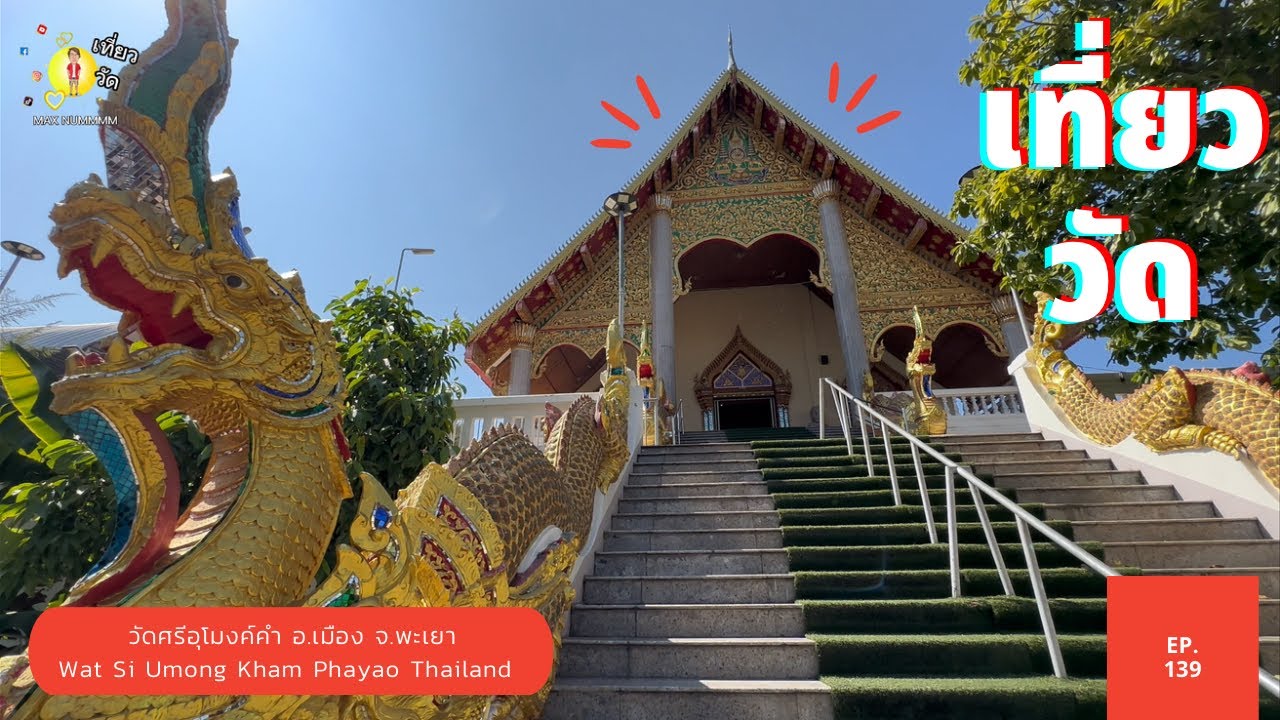
 Click to Access the Navigation Map GPS
Wat Si Umong Kham Map
Recommend

 Art, Culture and Heritage
 Historical Sites and Monuments(4)
 Landmarks and Memorials(4)
 Art, Craft Centres, Tradition(1)
 Museums(2)
Temple(39)
Museums(2)
Temple(39)
 Other Sacred Sites(5)
 Research and Development
 Royal Project(1)
 Suburban Living
 Village, Community(2)
 Local Market(4)
 Nature and Wildlife
 National Parks and Marine Reserves(7)
 Mountain (Doi)(2)
 Dam, Reservoir, Lake(11)
 Waterfalls(8)
 Caves(5)
 River, Canal(3)
 Other natural attractions(5)
 Travel Articles, Recipes
 Travel Review, Food Review(1)


