
lovethailand home >North Travel Attractions >Phayao Travel Attractions >Muang Phayao >Wiang > Wat Li
TL;DR: Wat Li is located at Wat Li, Ban Lai Ing, Wiang Subdistrict, Mueang Phayao District, Phayao Province 56000, open Daily, hours 09.00 – 15.00.

Wat Li
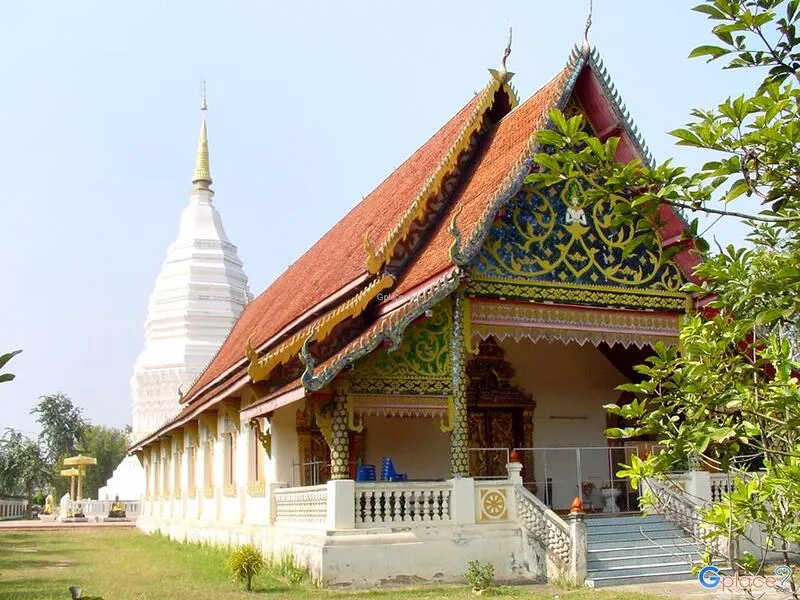
Open Days: Daily
Opening Hours: 09.00 – 15.00
Wat Li and Wiang Phayao Museum (Wat Li) is one of the most meaningful cultural stops in Phayao city. It is not only an old Buddhist temple, but also a local museum that preserves the historical memory of ancient Phayao through sandstone Buddha images, inscriptions, ceramics, bronze objects, ritual items, and everyday tools once used by local communities. For travelers who want to understand Phayao beyond the lakeside scenery of Kwan Phayao, Wat Li is one of the best places to begin.
Wat Li is located in Ban Lai Ing, Wiang Subdistrict, Mueang Phayao District, Phayao Province. The temple stands within the area known as Wiang Phayao, an ancient walled settlement often described as a gourd-shaped city. This historic area was once surrounded by moats and contained several abandoned temple sites. Today, Wat Li remains one of the most important surviving religious and cultural landmarks within this old urban landscape.
The temple was established in 1495 CE, or 2038 BE, during a period when Phayao was an important part of the wider Lanna cultural world. The name “Li” is associated with an old northern Thai term connected with a market or trading area. This meaning reflects the temple’s role within a living community, where religion, local exchange, merit-making, and daily life were closely connected. Wat Li therefore represents not only a sacred site, but also a historical community center of old Phayao.
The surrounding ancient city of Wiang Phayao is significant for understanding the early development of Phayao. Scholars have associated the area with the early phases of the city’s formation, although archaeological evidence that can be firmly dated to the time of Khun Chom Tham has not been clearly confirmed. The strongest material evidence found in this area belongs mainly to the 20th and 21st Buddhist centuries, a period when Phayao reached an important stage of prosperity, especially after the rise of Phraya Yutthitthira’s influence in the city from 1474 CE onward.
Visiting Wat Li is best understood as walking through several layers of history at once. The first layer is the living temple where Buddhist practice continues. The second is the old city landscape of Wiang Phayao, with its memory of moats, abandoned temples, and ancient settlement patterns. The third is Wiang Phayao Museum, where archaeological and artistic objects from Phayao are preserved and displayed. Together, these layers make Wat Li more than a simple temple visit; it is an accessible introduction to the historical identity of Phayao.
Wiang Phayao Museum was established through the conservation efforts of Phra Khru Anurak Buranan, also known as Phra Wimon Yanamuni, who recognized the value of ancient objects scattered across abandoned temples and archaeological sites in Phayao. Many of these objects had been neglected or left without proper care. By collecting and preserving them at Wat Li, the temple and community created a local museum that now serves as a learning center for archaeology, art, Buddhism, and local wisdom.
The museum is especially important for its collection of sandstone Buddha images from the Phayao school of art. These Buddha images, some complete and some fragmentary, reveal the distinctive craftsmanship of local artisans. Many show influences from Sukhothai art, yet they also developed their own regional character through facial expression, body proportions, carving style, and the use of sandstone. For travelers interested in Buddhist art, this collection provides a clear view of how Phayao developed its own artistic identity within the Lanna world.
Among the museum’s highlights is the sandstone Buddha image from Wat Tilok Aram, an important archaeological site now associated with the area of Kwan Phayao. This Buddha image, in the subduing Mara posture, links the museum directly with the submerged and lakeside heritage of Phayao. Seeing the original image inside the museum helps visitors understand how temples, the lake, the old city, and religious art are connected in Phayao’s historical landscape.
The museum also displays bronze Buddha images, Fak Kham script inscriptions, Sangkhalok ceramics, pottery, Chinese wares, ritual objects, agricultural tools, weaving equipment, household utensils, and everyday items from local life. These displays expand the story beyond Buddhism alone. They show how ancient Phayao was shaped by faith, craftsmanship, trade, agriculture, domestic life, and local knowledge. For foreign travelers, this makes the museum particularly useful because it gives cultural context to the city rather than presenting isolated objects.
The inscriptions displayed at the museum are important historical evidence. They help reveal how local people recorded religious acts, donations, temple construction, and social relationships. When seen together with Buddha images and architectural fragments, these inscriptions show that Phayao had a well-developed cultural system involving rulers, monks, artisans, and local communities. The museum therefore allows visitors to read the history of Phayao not only through written records, but also through objects that survived from earlier centuries.
The pottery and ceramic sections are also worth attention. These objects reflect the economic and cultural connections of Phayao with other production centers in northern Thailand and beyond. Bowls, jars, ritual containers, and domestic vessels show that the city was part of broader networks of exchange. They also reveal how daily life, religious practice, and material culture were closely intertwined.
Another valuable part of the museum is the collection of everyday tools and household objects. Agricultural implements, weaving tools, kitchenware, and domestic items allow visitors to imagine how local people lived, worked, cooked, farmed, and produced textiles. These objects are modest compared with large Buddha images, but they are essential for understanding the human side of Phayao’s history. They show that the city was built not only by rulers and temples, but also by ordinary people and their daily labor.
Phra Wimon Yanamuni, or Khru Ba Boonchuen Thitathammo, is a central figure in the story of Wat Li and Wiang Phayao Museum. His conservation work helped protect many ancient objects that might otherwise have been lost. His role reflects the strong relationship between Buddhism, local heritage preservation, and community education in northern Thailand. Thanks to this effort, Wat Li became a place where faith and historical learning coexist.
Visitors should allow at least 45 minutes to 1 hour for Wat Li and the museum. Those with a strong interest in history, archaeology, inscriptions, or Buddhist art may want to spend more time. A quick visit will give a general impression, but a slower walk allows visitors to notice the differences between Buddha images, the details of inscriptions, the variety of ceramics, and the connection between objects and the wider story of Phayao.
The atmosphere of Wat Li is quiet and local. It is located within the city, yet it still retains the feeling of a community temple. Travelers can begin with a respectful visit to the temple area, continue into the museum, and then connect the visit with nearby attractions such as Kwan Phayao, Wat Si Khom Kham, Wat Tilok Aram, King Ngam Muang Monument, and Wat Phra That Chom Thong. This route provides a balanced view of Phayao through religion, history, lakeside scenery, and local culture.
Wat Li is especially suitable for cultural travelers, families, students, and visitors who prefer meaningful travel experiences. It is also a useful stop for anyone who wants to understand why Phayao has so many sandstone Buddha images and why the local community places strong value on heritage preservation. Rather than being a large modern museum, Wiang Phayao Museum is a local cultural space rooted in temple life and community responsibility.
When visiting, travelers should dress respectfully because Wat Li is still an active Buddhist temple. Ancient objects should not be touched unless permission is given, and visitors should avoid loud behavior inside the museum. Photography should follow the rules of the site. These simple practices help protect the objects and respect the temple, monks, and local community who care for this cultural heritage.
Getting There is convenient from central Phayao. Travelers can reach Wat Li by private car, rental car, local transport, or ride-hailing services available in the city. The temple is close to the main urban attractions around Kwan Phayao, making it easy to combine with a half-day city route. A practical itinerary is to visit Wat Li and Wiang Phayao Museum in the morning or early afternoon, then continue to Wat Si Khom Kham, King Ngam Muang Monument, Kwan Phayao, and Wat Tilok Aram.
For first-time visitors to Phayao, Wat Li should not be overlooked. It provides a deeper understanding of the province’s historical roots, artistic traditions, Buddhist heritage, and local identity. While many travelers know Phayao for its lake, sunset views, and relaxed atmosphere, Wat Li reveals another side of the city: a place of ancient craftsmanship, inscriptions, community memory, and living faith. A visit here turns Phayao from a scenic stop into a destination with historical depth.
| Name | Wat Li And Wiang Phayao Museum (Wat Li) |
| Location | Wat Li, Ban Lai Ing, Wiang Subdistrict, Mueang Phayao District, Phayao Province 56000 |
| Address | 51 Wat Li Road, Wiang Subdistrict, Mueang Phayao District, Phayao Province 56000 |
| Highlights | Historic temple within the ancient Wiang Phayao area and a local museum preserving sandstone Buddha images, inscriptions, ceramics, and Phayao heritage objects |
| History | Wat Li was established in 1495 CE, or 2038 BE, within the ancient Wiang Phayao area. The strongest archaeological evidence in this area belongs mainly to the 20th–21st Buddhist centuries, an important period of Phayao prosperity. |
| Name Origin | The word “Li” is associated with an old northern Thai term connected with a market or trading area, reflecting the temple’s location in a community zone. |
| Distinctive Features | Learning center for ancient Phayao, Wiang Phayao, Phayao-school sandstone Buddha images, inscriptions, ceramics, and community heritage |
| Key Evidence | Sandstone Buddha images, Phra Yim, sandstone Buddha heads, Buddha image from Wat Tilok Aram, Fak Kham script inscriptions, Sangkhalok wares, pottery, and local household objects |
| Travel Information | Accessible from central Phayao by private car, rental car, local transport, or ride-hailing services. It can be combined with Kwan Phayao, Wat Si Khom Kham, Wat Tilok Aram, and King Ngam Muang Monument. |
| Current Status | Open and operating as a temple and local museum |
| Open Days | Daily |
| Opening Hours | 09.00 – 15.00 |
| Fees | Free Admission |
| Facilities | Museum building, temple area, Buddhist worship area, artifact exhibition areas, and surrounding community space |
| Main Areas / Zones | Artifact storage and display area, sandstone Buddha image section, ritual object section, pottery section, and everyday life object section |
| Abbot / Caretaker | Phra Wimon Yanamuni (Boonchuen Thitathammo) / Managed By The Temple And Local Community |
| Main Contact Number | 054-431835, 062-5013711, 089-8525887 |
| Official Website / Official Page | www.watleephayao.com / Wat Li Wiang Phayao Museum |
| Nearby Tourist Attractions | 1. Kwan Phayao, About 1 km 2. King Ngam Muang Monument, About 1 km 3. Wat Si Khom Kham, About 2 km 4. Wat Tilok Aram, About 2 km 5. Wat Phra That Chom Thong, About 3 km 6. Ho Watanatham Nithat At Wat Si Khom Kham, About 2 km |
| Nearby Restaurants | 1. Kuai Tiao Pa Phan Wat Li, About 1 km, Tel. 099-142-6157 2. Kaphrao Khai Khon Wat Li, About 1 km, Tel. 096-561-4719 3. Chobcha Charoenphan Nai Wiang Phayao, About 1 km, Tel. 099-295-3331, 099-239-3335 4. Aurora Kwan Phayao, About 2 km, Tel. 093-136-6655 5. So Good Phayao, About 2 km 6. Chid Lom Chom Kwan, About 2 km |
| Nearby Accommodations | 1. Green Hill Hotel Phayao, About 1 km, Tel. 054-482277 2. P Bliss Hotel Phayao, About 1 km, Tel. 054-431599 3. Phuglong Hotel, About 2 km, Tel. 054-481-915, 063-789-1999 4. Phayao Gateway Hotel, About 2 km, Tel. 063-696-2249, 054-484-333, 054-411-333 5. Hop Inn Phayao, About 2 km 6. Schinn Tumnon & Homestay, About 1 km |
Frequently Asked Questions (FAQ)
Q: Where is Wat Li and Wiang Phayao Museum located?
A: It is located at Wat Li, Ban Lai Ing, Wiang Subdistrict, Mueang Phayao District, Phayao Province, close to the main attractions of central Phayao.
Q: Why is Wat Li historically important?
A: Wat Li was established in 1495 CE and stands within the ancient Wiang Phayao area, an old settlement connected with Phayao’s Buddhist art, inscriptions, and urban history.
Q: What can visitors see inside Wiang Phayao Museum?
A: Visitors can see sandstone Buddha images, the Buddha image from Wat Tilok Aram, Fak Kham script inscriptions, ceramics, ritual objects, and everyday tools from old Phayao.
Q: What are the opening hours of Wiang Phayao Museum?
A: The museum is open daily from 09.00 to 15.00.
Q: Is there an admission fee?
A: No. Admission is free, making it suitable for travelers, students, families, and cultural visitors.
Q: Who is the abbot of Wat Li?
A: Phra Wimon Yanamuni, also known as Boonchuen Thitathammo, is associated with Wat Li and played an important role in preserving Phayao’s ancient objects.
Q: How long should visitors spend at Wat Li and Wiang Phayao Museum?
A: Most visitors should allow about 45 minutes to 1 hour. Those interested in Buddhist art, inscriptions, and archaeology may want to spend more time.
Q: What nearby places can be visited on the same trip?
A: Nearby places include Kwan Phayao, King Ngam Muang Monument, Wat Si Khom Kham, Wat Tilok Aram, Wat Phra That Chom Thong, and Ho Watanatham Nithat.
Tel : 054431835
 Tel : 054431835
Mobile : 0896367194
 Mobile : 0896367194
 Category: ●Places of Worship
 Group: ●Temple
Last Update : 5 MonthAgo
 Last Update : 5 MonthAgo
 Click to Access the Navigation Map GPS
 Art, Culture and Heritage
 Historical Sites and Monuments(4)
 Landmarks and Memorials(4)
 Art, Craft Centres, Tradition(1)
 Museums(2)
Temple(39)
Museums(2)
Temple(39)
 Other Sacred Sites(5)
 Research and Development
 Royal Project(1)
 Suburban Living
 Village, Community(2)
 Local Market(4)
 Nature and Wildlife
 National Parks and Marine Reserves(7)
 Mountain (Doi)(2)
 Dam, Reservoir, Lake(11)
 Waterfalls(8)
 Caves(5)
 River, Canal(3)
 Other natural attractions(5)
 Travel Articles, Recipes
 Travel Review, Food Review(1)


