
lovethailand home >North Travel Attractions >Phayao Travel Attractions >Chiang Muan >Sa > Wat Tha Fa Tai
TL;DR: Wat Tha Fa Tai is located at Ban Fa Si Thong, Moo 11, Sa Subdistrict, Chiang Muan District, Phayao Province, open Daily, hours 08.00 – 17.00.

Wat Tha Fa Tai
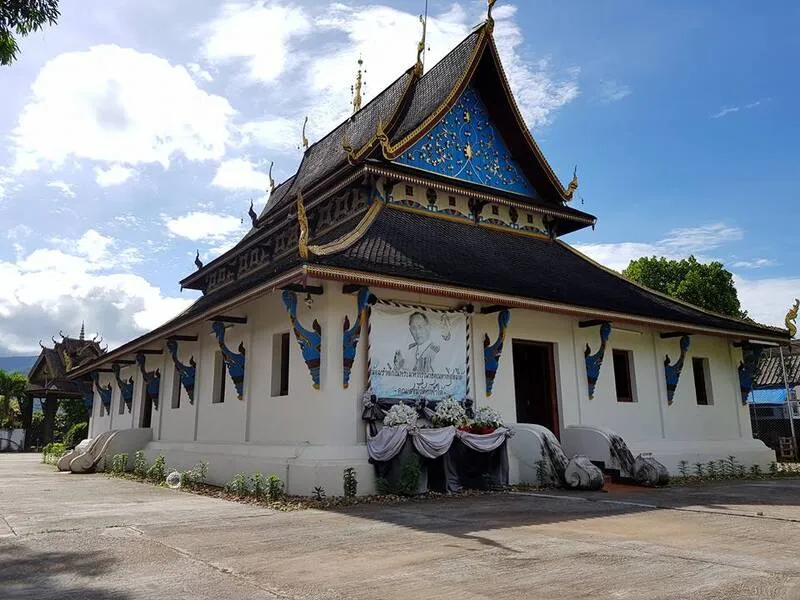
Open Days: Daily
Opening Hours: 08.00 – 17.00
Wat Tha Fa Tai in Phayao Province is located in Ban Fa Si Thong, Moo 11, Sa Subdistrict, Chiang Muan District. It is an old Tai Lue community temple built in 1768 by Khru Thammasena and Pho Thao Saen Atthi, leaders of the Tai Lue people who migrated from Sipsongpanna. The temple is highly valued for its Tai Lue architecture, low brick-and-plaster ordination hall and viharn, three-tiered wooden shingle roof, carved Pradu wood Buddha image, decorated chukchi base, and an ornate pulpit covered with stucco patterns, gilding, and colorful glass decoration.
For travelers who want to understand Tai Lue culture in Chiang Muan, Wat Tha Fa Tai is one of the most meaningful places to visit. It is not only a beautiful temple, but also a record of migration, settlement, craftsmanship, faith, and community memory. Visitors can pay respect to the principal Buddha image, observe rare Tai Lue architectural details, study the temple’s decorative art, and experience the quiet rural atmosphere of a community connected with the Yom River.
The history of Wat Tha Fa Tai is closely connected with the Tai Lue community of Ban Tha Fa Tai. The Tai Lue people who settled here carried with them language, belief, Buddhist practice, dress traditions, and artistic knowledge from Sipsongpanna. Establishing a temple in the new settlement was therefore a way to create spiritual stability, maintain cultural identity, and build a shared center for the community. The temple became both a sacred place and a symbol of continuity from the ancestral homeland.
The temple stands near the Yom River, an important waterway for community life in the past. The name “Tha Fa Tai” is associated with the idea of a river landing or local crossing point. In older communities, waterways were not only natural features but also routes for travel, trade, agriculture, and social contact. Wat Tha Fa Tai therefore reflects a close relationship between temple, river, village, and local livelihood.
The most distinctive feature of Wat Tha Fa Tai is its Tai Lue-style ordination hall and viharn. The building is low in form, made of brick and plaster, and covered with a three-tiered roof using wooden shingles. The first roof tier is in a hipped style covering all four sides, while the second and third tiers rise like a small castle or prasat form. On the western side, the gable and protective awnings create an elegant layered profile that makes the building visually different from many other northern Thai temples.
The wooden shingle roof is an important feature to observe. It reflects both local material knowledge and Tai Lue architectural taste. The layered roof creates a gentle rhythm and gives the building a warm, modest, and refined character. Instead of relying on monumental height, the temple expresses beauty through proportion, texture, and handcrafted detail.
The principal Buddha image inside the temple is a Maravijaya posture Buddha carved from Pradu wood. The image measures 117.5 centimeters across the lap and 227.5 centimeters in height. It was brought from Sipsongpanna and is enshrined on a Tai Lue-style rectangular indented chukchi base decorated with stucco vine motifs, lacquer, gilding, and mirror glass. This Buddha image is not only a sacred object but also a cultural link between the Tai Lue homeland and the community in Chiang Muan.
Carving the Buddha image from Pradu wood gives it both artistic and spiritual significance. Pradu is a strong hardwood often valued for durability and beauty. The fact that the image was brought from Sipsongpanna makes it even more meaningful. It served as a spiritual anchor for the migrant community and continues to represent the connection between old homeland, new settlement, and Buddhist faith.
The temple’s pulpit is another major highlight. It resembles a small mondop or castle-like structure, with a twenty-indented square base decorated with stucco vine patterns and figures of animals such as deer, elephants, horses, and peacocks. Floral motifs sparkle with colorful glass decoration. This pulpit reflects the skill of Tai Lue craftsmen and the importance of the sermon space within the Buddhist community.
A pulpit is more than a ritual object. It represents the elevated place from which Buddhist teachings are delivered. In traditional communities, the temple was an important center of learning, and sermons played a major role in moral education. The decorated pulpit at Wat Tha Fa Tai therefore reflects both devotion to the Dhamma and the artistic imagination of the local community.
The interior details of the temple clearly express Tai Lue identity. The building form, chukchi base, stucco vine motifs, glass decoration, animal patterns, and pulpit all work together as a visual language. Visitors can read the history of the community through architecture and objects, not only through written records. A slow walk through the temple allows small details to reveal the patience and refinement of earlier generations.
Wat Tha Fa Tai is also important as a Tai Lue historic site in Phayao Province. It shows that Tai Lue culture in Phayao is not limited to Chiang Kham. Chiang Muan also has old Tai Lue communities and valuable religious architecture. The temple helps broaden the understanding of Tai Lue settlement patterns in northern Thailand and shows how cultural identity was preserved in different local landscapes.
The atmosphere of Wat Tha Fa Tai is peaceful, shaded, and closely tied to the rural community. The temple is surrounded by a quiet village landscape and the natural setting of the Yom River area. This makes it suitable for worship, slow cultural observation, photography, and quiet reflection. It offers a deeper experience than a quick sightseeing stop because the value of the place lies in its layers of history and community memory.
During community events or cultural activities, the temple can also become a living space for Tai Lue traditions such as merit-making, tung banner offerings, traditional sweets, weaving demonstrations, and Tai Lue dance. These activities show that the culture connected with Wat Tha Fa Tai is not merely preserved in buildings; it continues through people, rituals, and community participation.
The Tai Lue people are known for peacefulness, diligence, patience, and strong preservation of traditional customs. Wat Tha Fa Tai reflects these qualities through its architecture, sacred objects, and community care. A visit to the temple allows travelers to see how a migrant community built a new home while keeping its religious and cultural roots alive.
For those interested in ethnic history, Wat Tha Fa Tai is especially valuable. It was founded by Tai Lue leaders who migrated from Sipsongpanna and established a religious center for their community. In this context, building a temple was not only an act of faith. It was also an act of identity, stability, and collective memory in a new land.
Visitors should explore the temple slowly. Begin with the overall form of the viharn and ordination hall, then look closely at the roof, wooden shingles, principal Buddha image, chukchi base, pulpit, stucco motifs, and glass decoration. This approach helps reveal how large architectural forms and small decorative details work together to express Tai Lue art.
As Wat Tha Fa Tai remains a sacred Buddhist place, visitors should dress modestly and behave respectfully. Shoulders and knees should be covered. Shoes should be removed where required. Avoid touching old decorative elements, sacred objects, or architectural details unnecessarily. Respectful travel helps preserve both the physical site and the relationship between visitors and the local community.
Wat Tha Fa Tai can be included in a wider Chiang Muan travel route together with Doi Phu Nang National Park, Than Sawan Waterfall, Kaeng Luang Dinosaur Forest Park, Phra That Phu Po, Wat Si Mueang Mang, and Kaeng Luang Phayao. This route combines culture, nature, geology, Buddhism, and local community life within one district.
Compared with Tai Lue temples in Chiang Kham, such as Wat Saen Mueang Ma, Wat Yuan, and Wat Phra That Sop Waen, Wat Tha Fa Tai is distinctive because it represents the Tai Lue heritage of Chiang Muan and its relationship with the Yom River. It expands the cultural map of Tai Lue Phayao beyond the better-known Chiang Kham area and highlights Chiang Muan as another important cultural district.
For photography, the temple offers several meaningful scenes: the low Tai Lue-style viharn, wooden shingle roof, Pradu wood Buddha image, glass-decorated pulpit, and quiet village atmosphere. Morning light is suitable for peaceful architectural photographs, while late afternoon light gives more depth to the textures of the roof and decorative details. Photography should always be done respectfully and without disturbing worshippers or caretakers.
Getting There to Wat Tha Fa Tai is convenient by private car or motorcycle. The temple is located in Ban Fa Si Thong, Moo 11, Sa Subdistrict, Chiang Muan District, Phayao Province, along the Pong-Chiang Muan route. From Chiang Muan town, head toward Sa Subdistrict and Ban Fa Si Thong. The temple is located within the local community near the Yom River.
Travelers coming from Phayao city should first head toward Chiang Muan District, then continue to Sa Subdistrict and Ban Fa Si Thong. A private car is the most flexible option, especially for visitors planning to combine the temple with natural attractions such as Doi Phu Nang National Park and Kaeng Luang Dinosaur Forest Park.
The best time to visit is from morning to afternoon, when natural light helps reveal the details of the wooden roof, stucco patterns, and glass decoration. Visitors interested in cultural study should allow at least one hour to explore the building, principal Buddha image, pulpit, and overall temple atmosphere without rushing.
Wat Tha Fa Tai is one of the places that shows how deep and diverse Tai Lue culture in Phayao really is. The Buddha image from Sipsongpanna, the decorated pulpit, the wooden shingle roof, and the temple’s founding by Tai Lue migrant leaders all make this temple an important heritage site. For travelers seeking a deeper view of Phayao through local communities, old temples, and ethnic craftsmanship, Wat Tha Fa Tai is a highly worthwhile destination.
| Name | Wat Tha Fa Tai |
| Location | Ban Fa Si Thong, Moo 11, Sa Subdistrict, Chiang Muan District, Phayao Province |
| Address | Ban Fa Si Thong, Moo 11, Sa Subdistrict, Chiang Muan District, Phayao 56160, Thailand |
| Coordinates | Latitude 19.001746, Longitude 100.280847 |
| Highlights | Tai Lue ordination hall and viharn, three-tiered wooden shingle roof, Pradu wood Buddha image from Sipsongpanna, Tai Lue-style chukchi base, and ornate pulpit decorated with stucco, gilding, and colored glass |
| History | Built in 1768 by Khru Thammasena and Pho Thao Saen Atthi, Tai Lue leaders who migrated from Sipsongpanna. The temple is a community Buddhist temple under the Mahanikaya order. |
| Name Origin | The name Tha Fa Tai is associated with the community’s riverside location near the Yom River and an old local landing or water-route area. |
| Distinctive Features | Low brick-and-plaster building, three-tiered wooden shingle roof, hipped first roof tier, castle-like second and third roof tiers, western gable, and protective side awnings |
| Sacred Object | Maravijaya posture Buddha image carved from Pradu wood, 117.5 cm wide across the lap and 227.5 cm high, brought from Sipsongpanna |
| Important Artworks | Tai Lue-style rectangular indented chukchi base with stucco vine motifs, lacquer, gilding, and mirror glass; castle-like pulpit with a twenty-indented square base decorated with vine patterns, deer, elephants, horses, peacocks, floral motifs, and colorful glass |
| Travel Information | From Chiang Muan town, head toward Sa Subdistrict and Ban Fa Si Thong. The temple is located along the Pong-Chiang Muan route near the Yom River and can be reached by private car, motorcycle, or local hired transport. |
| Current Status | Active Buddhist temple, historic site, Tai Lue art learning place, and spiritual center of Ban Tha Fa Tai community |
| Open Days | Daily |
| Opening Hours | 08.00 – 17.00 |
| Facilities | Temple courtyard, worship area, historic site viewing area, community parking area, and restaurants/cafes in Sa Subdistrict and Chiang Muan town |
| Main Areas / Zones | Ordination hall, viharn, Pradu wood Buddha image, Tai Lue chukchi base, glass-decorated pulpit, temple courtyard, and community area near the Yom River |
| Abbot / Caretaker | Phra Chonnaphat Thawaro |
| Official Website / Official Page | Wat Tha Fa Tai Historic Viharn |
| Nearby Tourist Attractions | 1. Wat Si Mueang Mang, about 2 km 2. Phra That Phu Po, about 8 km 3. Kaeng Luang Dinosaur Forest Park, about 15 km 4. Kaeng Luang Phayao, about 18 km 5. Doi Phu Nang National Park, about 30 km 6. Than Sawan Waterfall, about 33 km |
| Nearby Restaurants | 1. Ban Tha Fa Cafe, about 1 km, Tel. 080-898-9662, 095-685-1965 2. Aun Ruean Restaurant, about 4 km, Tel. 064-269-2263 3. Local Cafe In Chiang Muan Town, about 4 km 4. Noodle Shops In Chiang Muan Town, about 5 km 5. Local Som Tam And Northern Food Shops In Chiang Muan Town, about 5 km |
| Nearby Accommodations | 1. P&P House Chiang Muan, about 5 km, Tel. 086-001-2011, 061-252-8615 2. Deetorjai Resort Chiang Muan, about 6 km, Tel. 085-627-6422 3. Suan Siri Homestay, about 6 km, Tel. 096-772-5214 4. Warinda Garden Resort, about 7 km 5. Daily Stays In Chiang Muan Town, about 5 km |
Frequently Asked Questions (FAQ)
Q: Where is Wat Tha Fa Tai located?
A: Wat Tha Fa Tai is located in Ban Fa Si Thong, Moo 11, Sa Subdistrict, Chiang Muan District, Phayao Province, along the Pong-Chiang Muan route near the Yom River.
Q: What is Wat Tha Fa Tai known for?
A: It is known for Tai Lue architecture, a low brick-and-plaster viharn, a three-tiered wooden shingle roof, a Pradu wood Buddha image from Sipsongpanna, and an ornate glass-decorated pulpit.
Q: When was Wat Tha Fa Tai built?
A: The temple was built in 1768 by Khru Thammasena and Pho Thao Saen Atthi, Tai Lue leaders who migrated from Sipsongpanna.
Q: Why is the principal Buddha image important?
A: The principal Buddha image is carved from Pradu wood, was brought from Sipsongpanna, and is enshrined on a Tai Lue-style chukchi base decorated with stucco, gilding, and mirror glass.
Q: How is Wat Tha Fa Tai connected with Tai Lue culture?
A: The temple was founded by Tai Lue migrants and preserves Tai Lue identity through its architecture, Buddha image, decorative art, roof style, pulpit, and community traditions.
Q: Is Wat Tha Fa Tai open every day?
A: Yes. The temple is open daily for worship, cultural visits, and viewing Tai Lue historic architecture.
Q: What nearby attractions can be visited with Wat Tha Fa Tai?
A: Nearby attractions include Wat Si Mueang Mang, Phra That Phu Po, Kaeng Luang Dinosaur Forest Park, Kaeng Luang Phayao, Doi Phu Nang National Park, and Than Sawan Waterfall.
Q: How can travelers get to Wat Tha Fa Tai?
A: From Chiang Muan town, travel toward Sa Subdistrict and Ban Fa Si Thong. The temple is located along the Pong-Chiang Muan route and can be reached by private car, motorcycle, or local hired transport.
Mobile : 0861806775
 Mobile : 0861806775
 Category: ●Places of Worship
 Group: ●Temple
Last Update : 5 MonthAgo
 Last Update : 5 MonthAgo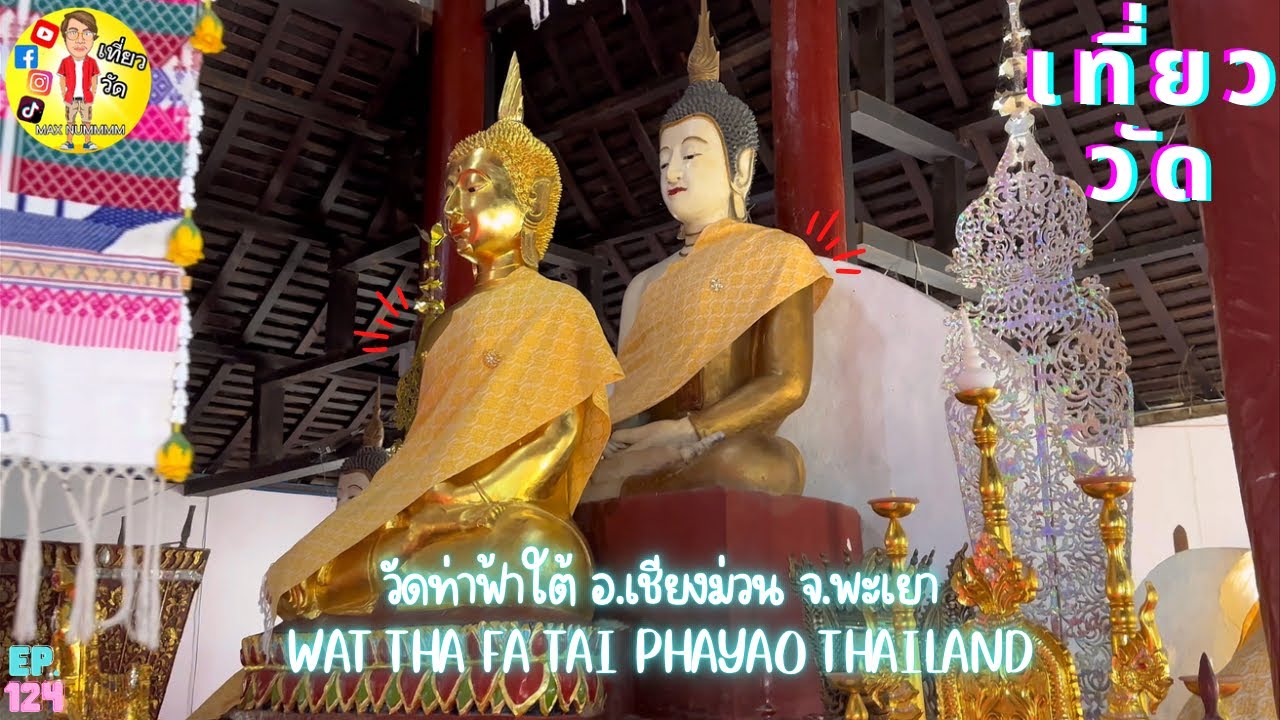
 Click to Access the Navigation Map GPS
Wat Tha Fa Tai Map
Recommend

 Art, Culture and Heritage
 Historical Sites and Monuments(4)
 Landmarks and Memorials(4)
 Art, Craft Centres, Tradition(1)
 Museums(2)
Temple(39)
Museums(2)
Temple(39)
 Other Sacred Sites(5)
 Research and Development
 Royal Project(1)
 Suburban Living
 Village, Community(2)
 Local Market(4)
 Nature and Wildlife
 National Parks and Marine Reserves(7)
 Mountain (Doi)(2)
 Dam, Reservoir, Lake(11)
 Waterfalls(8)
 Caves(5)
 River, Canal(3)
 Other natural attractions(5)
 Travel Articles, Recipes
 Travel Review, Food Review(1)


