
TL;DR: Yom River, Phayao attractions : Nature and Wildlife, River, Canal.
Yom River
Open Days: No official opening days specified; daytime visits and local route confirmation are recommended
Opening Hours: No official opening hours specified; morning to late-afternoon visits are recommended
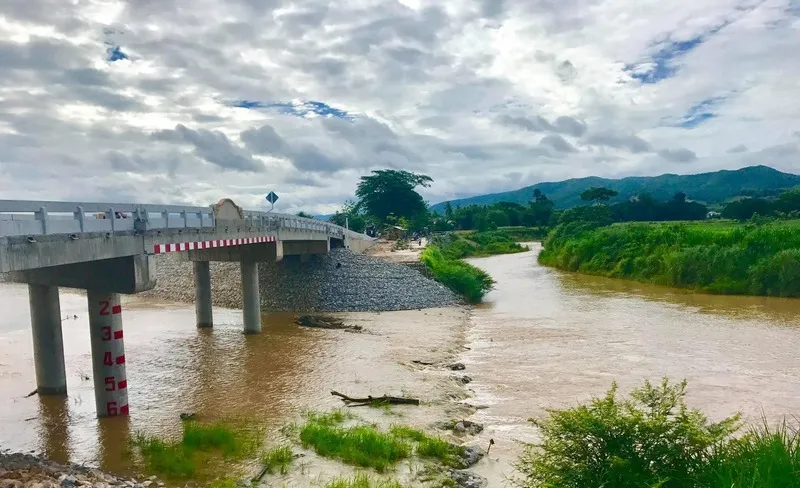
The source of the Yom River in Phayao Province is an important natural and geographical point in Pong District, where 2 streams, Nam Ngim and Nam Khuan, meet and form the Yom River. This river later flows through several provinces in northern and upper central Thailand, becoming one of the significant waterways connected with communities, agriculture, ecology, and settlement patterns. The confluence is located not far from Pong town, about 1 km from the main road. Visitors can follow local signs or ask residents for directions. The attraction is not dramatic like a waterfall or mountain viewpoint, but it is meaningful because it represents the beginning of a major river system.
The Yom River does not begin as a large river immediately. It starts from smaller mountain streams that flow down from forested highlands. Nam Khuan and Nam Ngim are the 2 key streams that meet in Pong District, Phayao Province. Nam Khuan is associated with the Phu Langka area and the Phi Pan Nam mountain range, while Nam Ngim flows from mountainous terrain connected with the Daen Lao range before entering Pong District. When these 2 streams converge, they form the beginning of the Yom River.
This confluence is valuable in many ways. It is a natural learning site, a geographical landmark, a riverside observation point, and a place that reflects the relationship between people and water. The Yom River has long supported agriculture, ecosystems, and communities along its basin. Standing at the source area helps visitors understand how a major river begins from small streams flowing out of mountains and forests.
The landscape around the source of the Yom River is simple and local. It is a natural riverside area near communities rather than a heavily developed tourist attraction. Visitors can see the 2 streams joining in the quiet atmosphere of Pong District, with local roads, villages, agricultural areas, and mountains forming the surrounding landscape. This simplicity makes the site suitable for travelers interested in geography, rivers, community life, and watershed stories.
The phrase “source of the Yom River” means more than the point where 2 streams meet. It represents a larger ecological system that begins with forests, mountains, rain, soil, stones, and many smaller tributaries. Nam Khuan and Nam Ngim collect water from highland areas, where rainfall filters through forest soil and gradually forms streams. This process shows the importance of forests and mountains in creating rivers and sustaining downstream communities.
Nam Khuan is one of the important streams of Pong District. It is connected with the Phu Langka area and the Phi Pan Nam mountain range. The stream carries moisture and nutrients from forested highlands down to local communities. As it passes through villages and agricultural areas, it becomes part of daily life in Pong District, supporting farming, ecology, and the natural landscape.
Nam Ngim is another major stream that contributes to the formation of the Yom River. It flows from mountainous terrain before entering Pong District and joining Nam Khuan. This meeting point helps visitors clearly see how smaller streams combine to form a larger river system. It is a useful site for understanding watershed geography in a simple and direct way.
For travel, the source of the Yom River is suitable for visitors who enjoy learning-based natural attractions. It can be included in a route around Pong District together with Pong town, Phu Langka, Doi Phu Nang National Park, local waterfalls, or nearby community attractions. This is a meaningful stop for travelers who want to understand Phayao beyond mountains, temples, and viewpoints.
Visitors should take time to observe the surrounding environment: the direction of water flow, riverbanks, plants along the stream, local land use, and the relationship between roads, villages, and waterways. These details show that a river is not only scenery. It is part of the structure of community life. Many people rely on rivers and streams for farming, local ecology, and everyday living.
The best time to visit is in the morning or late afternoon, when the weather is more comfortable and the light is suitable for photography. During the rainy season, the water volume may increase and the surrounding landscape becomes greener, but visitors should be careful around riverbanks and changing water levels. The cool season is suitable for combining the visit with Phu Langka or mist-view routes in Pong District.
Although the confluence is close to Pong town and only about 1 km from the main road, visitors should still check the local route before traveling. Access may involve village roads or local paths. Asking residents, nearby shops, or Na Prang Subdistrict Administrative Organization for updated directions is recommended. Private car or motorcycle travel is the most convenient option because visitors can control timing and combine the stop with nearby attractions.
Getting There can begin from Pong District town. Travel toward Na Prang Subdistrict and Ban Boon Yuen, where Nam Ngim and Nam Khuan meet. From the main road in Pong town, the confluence area is about 1 km away. Visitors can look for local signs or ask residents for directions. Travelers coming from Mueang Phayao should allow enough time, as Pong District is some distance from Phayao city.
Private vehicle travelers should first set the destination to Pong District or Na Prang Subdistrict, then ask for the smaller route to the confluence. Driving through village areas should be done slowly and carefully. Roads may be narrow, and visitors should avoid blocking local houses, farms, or community access routes.
Travelers without private vehicles can first reach Pong District town, then arrange local transport or a hired vehicle to Na Prang and the river confluence. Since this is not a large commercial tourist site with frequent public transport, return transportation should be arranged in advance.
Recommended items include drinking water, a hat, rain protection depending on the season, comfortable walking shoes, a camera, and a personal trash bag. Visitors who walk near the riverbank should choose safe ground, avoid unstable banks, and stay away from strong currents during high water. Children and elderly visitors should be supervised closely.
The source of the Yom River is also suitable for learning about watersheds and river conservation. Students, nature travelers, and anyone interested in geography can use the site to understand how a river begins from tributaries and mountain water systems. Understanding the source of a river helps people see why forest conservation, clean streams, and careful waste management are important.
Culturally, the Yom River matters to many communities beyond Pong District and Phayao Province. After forming in Pong, the river flows through several provinces and supports far-reaching agricultural and community landscapes. Visiting the source helps travelers understand how the condition of upstream areas can affect people and ecosystems far downstream.
Visitors should treat the site respectfully. Trash should not be left near the water. Chemicals, soap, or food waste should not be placed in the stream. Plants along the riverbank should not be damaged. Quiet and careful behavior helps preserve both the natural environment and the local community atmosphere.
A one-day itinerary can begin in Pong town with a visit to the source of the Yom River in the morning, followed by lunch in town and nearby nature attractions such as Doi Phu Nang National Park, Than Sawan Waterfall, or a route toward Phu Langka depending on available time. Because travel distances in Pong District can be significant, visitors should avoid planning too many stops in one day.
For a two-day trip, travelers can stay in Pong District or along the Phu Langka route. This allows more time for the Yom River source, Phu Langka viewpoints, local cafes, waterfalls, and mountain scenery. Staying overnight is especially useful for travelers coming from Phayao city, Chiang Rai, Nan, or Lampang.
For food and accommodation, Pong town is the most practical base. It has restaurants, cafes, lodging, and basic services. Visitors can stop for meals before or after visiting the river confluence, then continue to other natural attractions in the district.
The site is suitable for nature learners, families, geography enthusiasts, river lovers, photographers, and travelers who want to understand Pong District more deeply. It is not a highly developed tourist attraction, so visitors should come prepared and appreciate it as a meaningful natural and geographical point rather than expecting extensive facilities.
Standing at the meeting point of Nam Ngim and Nam Khuan gives visitors a quiet but powerful image: 2 modest streams merging to become a river that travels far beyond Phayao. This reminds us that many large natural systems begin from small sources, and protecting upstream areas is essential for the future of downstream communities.
Overall, the source of the Yom River in Phayao Province is a worthwhile stop when visiting Pong District. It is a place where nature, geography, community life, and watershed meaning come together. With respectful behavior, local route confirmation, and careful attention to the environment, this small riverside point can become a memorable and educational part of a journey through Phayao.
| Name | Source Of The Yom River, Phayao Province |
| Location | Na Prang Subdistrict / Ban Boon Yuen Area, Pong District, Phayao Province |
| Address | Confluence of Nam Ngim and Nam Khuan, near Pong District town, Phayao 56140 |
| Highlights | The point where Nam Ngim and Nam Khuan streams meet to form the Yom River, an important river flowing through several provinces in northern and upper central Thailand |
| Distinctive Features | A natural and geographical learning point near Pong District town, about 1 km from the main road |
| History / Importance | The Yom River begins from 2 streams: Nam Khuan, associated with Phu Langka and the Phi Pan Nam mountain range, and Nam Ngim, flowing from mountainous terrain linked with the Daen Lao range before entering Pong District |
| Name Origin | The name “Yom River” refers to the river formed by the meeting of Nam Ngim and Nam Khuan in Pong District before flowing onward through multiple provinces |
| Travel Information | From Pong District town, travel toward Na Prang Subdistrict and Ban Boon Yuen. The confluence is about 1 km from the main road. Visitors can follow local signs or ask residents for directions |
| Current Status | A natural and educational riverside point marking the source of the Yom River in Pong District, Phayao Province |
| Facilities | A natural riverside area near local communities; visitors should bring drinking water, a hat, comfortable walking shoes, and confirm the route locally before traveling |
| Main Areas / Zones | Nam Ngim and Nam Khuan confluence, riverbank area, nearby community zone, and local access route to the Yom River source |
| Caretaker | Na Prang Subdistrict Administrative Organization, Pong District, Phayao Province, and local authorities |
| Main Contact Number | Na Prang Subdistrict Administrative Organization, Tel. 054-429-313 |
| Official Website / Official Page | Na Prang Subdistrict Administrative Organization Website And Official Facebook Page |
| Nearby Tourist Attractions | 1. Pong District Town, about 1 km 2. Ban Boon Yuen / Na Prang Subdistrict, same area 3. Wat Phra That Khing Kaeng, about 8 km 4. Doi Phu Nang National Park, about 35 km 5. Than Sawan Waterfall, about 36 km 6. Phu Langka / Pha Chang Noi Viewpoint, about 55 km |
| Nearby Restaurants | 1. Hom Nua Restaurant, Pong District, about 2 km, Tel. 063-676-0895 2. Muan Pak Restaurant, Pong District, about 2 km 3. Ban Tong Moo Kratha, Pong District, about 3 km 4. @Home Cafe, Pong District, about 3 km 5. Mon Ing Nam, Pong District, about 5 km 6. Restaurants In Pong District Town, about 1 km |
| Nearby Accommodations | 1. Inbhirom Resort, Pong District, about 2 km, Tel. 061-935-4922 2. Nongporn Resort, Pong District, about 4 km, Tel. 089-484-8757 3. Accommodations In Pong District Town, about 1 km 4. Doi Phu Nang National Park Accommodation And Camping Area, about 35 km, Tel. 095-690-0605, 054-476-302 5. Accommodations Along The Phu Langka / Pha Chang Noi Route, about 55 km |
Frequently Asked Questions (FAQ)
Q: Where is the source of the Yom River located?
A: The source of the Yom River is located in Pong District, Phayao Province, around the area where Nam Ngim and Nam Khuan meet near Na Prang Subdistrict and Ban Boon Yuen.
Q: Which streams form the Yom River?
A: The Yom River is formed by 2 streams: Nam Ngim and Nam Khuan, which meet in Pong District, Phayao Province.
Q: Is the source of the Yom River far from Pong town?
A: No. The confluence is not far from Pong town and is about 1 km from the main road. Visitors can ask local residents for directions.
Q: Who is this place suitable for?
A: It is suitable for nature learners, geography enthusiasts, families, river lovers, photographers, and travelers interested in local watershed stories.
Q: When is the best time to visit the source of the Yom River?
A: Morning or late afternoon is best for comfortable weather and photography. During the rainy season, visitors should be careful around riverbanks and changing water levels.
Q: How do visitors get to the source of the Yom River?
A: Travel to Pong District, Phayao Province, then continue toward Na Prang Subdistrict and Ban Boon Yuen. The confluence of Nam Ngim and Nam Khuan is about 1 km from the main road.
Q: Are there many facilities at the site?
A: The site is a natural riverside point near local communities, not a large commercial attraction. Visitors should bring drinking water, a hat, comfortable shoes, and a personal trash bag.
Q: What nearby attractions can be visited with the Yom River source?
A: Nearby places include Pong District town, Wat Phra That Khing Kaeng, Doi Phu Nang National Park, Than Sawan Waterfall, and the Phu Langka route.
 Category: ●Nature and Wildlife
 Group: ●River, Canal
Last Update : 3 MonthAgo
 Last Update : 3 MonthAgo
 Click to Access the Navigation Map GPS
 Art, Culture and Heritage
 Historical Sites and Monuments(4)
 Landmarks and Memorials(4)
 Art, Craft Centres, Tradition(1)
 Museums(2)
 Places of Worship
 Temple(39)
 Other Sacred Sites(5)
 Research and Development
 Royal Project(1)
 Suburban Living
 Village, Community(2)
 Local Market(4)
 National Parks and Marine Reserves(6)
 Mountain (Doi)(2)
 Dam, Reservoir, Lake(11)
 Waterfalls(8)
 Caves(5)
River, Canal(3)
Caves(5)
River, Canal(3)
 Other natural attractions(5)


