
lovethailand home >North Travel Attractions >Phayao Travel Attractions >Chiang Kham >Yuan > Wat Yuan
TL;DR: Wat Yuan is located at Yuan Subdistrict, Chiang Kham District, Phayao Province, open Wednesday – Sunday, hours 09.00 – 17.30.
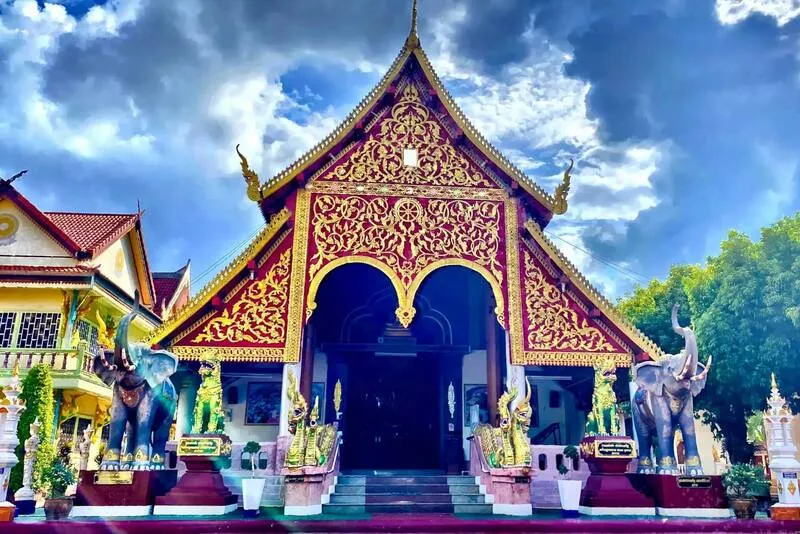
Wat Yuan
Open Days: Wednesday – Sunday
Opening Hours: 09.00 – 17.30
Wat Yuan is located in Yuan Subdistrict, Chiang Kham District, Phayao Province. It is an important temple and cultural learning site for the Tai Lue community of Mueang Mang and Mueang Yuan. The temple is best known as the home of the Tai Lue Cultural Center, a community-based cultural space that displays Tai Lue art, textiles, heritage objects, and traditional weaving knowledge. For travelers interested in ethnic culture, handwoven textiles, northern Thai Buddhism, and local history, Wat Yuan is one of the most meaningful places to visit in Chiang Kham.
Wat Yuan is more than a Buddhist temple. It is a place where religion, community life, local craftsmanship, education, and cultural preservation meet. Visitors can learn about the history of the Tai Lue people, see colorful Tai Lue textiles, study old ritual cloths, understand the community’s connection with Sipsongpanna, and appreciate how a temple can serve as both a spiritual center and a cultural museum for the local people.
The Tai Lue Cultural Center inside Wat Yuan was established to present the artistic and cultural achievements of the Tai Lue people and to support vocational training, especially in traditional weaving. Tai Lue textiles are known for their vivid colors, distinctive patterns, and refined handwoven quality. These textiles are not only beautiful craft products, but also cultural records that preserve memory, identity, belief, and skill across generations.
For the Tai Lue community, weaving is more than a household activity. It is a form of knowledge inherited from elders, a way of expressing identity, and a craft connected with everyday life and ritual occasions. A woven textile may represent social meaning, personal skill, family memory, or religious belief. The cultural center at Wat Yuan allows visitors to understand this depth through displays of Tai Lue cloth and related heritage materials.
The Tai Lue people originally lived in Sipsongpanna in southern China. Their historical homeland covered a large area of around 25,000 square kilometers, mostly composed of valleys, mountains, and river basins. These landscapes shaped the way Tai Lue communities lived, farmed, traveled, traded, and built settlements. The Mekong River, which the Tai Lue people call Mae Nam Khong, is one of the most important rivers flowing through Sipsongpanna and has long been central to life in the region.
The geography of Sipsongpanna helped form a culture deeply connected with waterways and fertile valleys. Houses, agriculture, dress, ritual life, and community patterns were all shaped by the environment. When Tai Lue communities moved and settled in northern Thailand, especially in provinces such as Phayao, Nan, Chiang Rai, Chiang Mai, Lampang, and Lamphun, they carried with them their language, textile knowledge, Buddhist traditions, and social customs.
The Tai Lue people are often described as peaceful, hardworking, patient, and strongly committed to preserving their traditional customs. Their culture remains visible in clothing, language, rituals, weaving, architecture, and community festivals. A visit to Wat Yuan allows travelers to see this living heritage in a clear and accessible way. Tai Lue culture here is not only something from the past; it is still present in the objects, textiles, stories, and community spaces maintained within the temple.
Wat Yuan is especially important because it provides a structured cultural learning space. The Tai Lue Cultural Center presents different aspects of Tai Lue life, including migration history, settlement, clothing, household items, craft traditions, and ritual textiles. For visitors, this helps transform a temple visit into a deeper cultural experience. Instead of seeing only buildings, travelers can understand the people, stories, and inherited knowledge behind the place.
Among the most important objects displayed at the center are Tai Lue woven textiles and old ritual cloths. Some textiles were used in daily life, while others were connected with religious or ceremonial occasions. These cloths show how weaving is linked with belief and identity. The patterns, colors, and techniques reveal the knowledge of the weavers and the values of the community that preserved them.
The role of Wat Yuan as a vocational training center is also significant. Traditional weaving requires time, practice, patience, and intergenerational teaching. Without spaces where the craft can be practiced and appreciated, local textile knowledge could gradually disappear. By placing weaving and cultural display inside the temple area, Wat Yuan helps preserve this knowledge while also giving local artisans a place to share their work with visitors.
Wat Yuan is conveniently located close to other cultural landmarks in Chiang Kham. It is about 500 meters north of Wat Saen Mueang Ma and not far from Chiang Kham Bus Station. This makes it easy for travelers to visit both temples in one cultural route. Wat Saen Mueang Ma is known for Tai Lue architecture and mural paintings, while Wat Yuan is known for its cultural center, textiles, and broader interpretation of Tai Lue identity.
Visitors should take time to explore Wat Yuan slowly. The cultural center is best appreciated by reading the displays, observing the textiles, looking closely at patterns, and speaking respectfully with caretakers or local people when possible. A slow visit helps travelers see that Tai Lue culture is not a single object or image, but a layered way of life shaped by history, geography, Buddhism, craft, and community memory.
Wat Yuan is also an active Buddhist temple under the Mahanikaya order, with Phra Khru Suphat Phrommakhun serving as abbot. This means the temple continues to function as a religious place while also serving as a cultural learning center. Monks and local people play an important role in keeping the temple clean, meaningful, and active. The combination of faith and cultural preservation gives Wat Yuan a distinctive character.
Because the cultural center is located within a temple, visitors should dress modestly and behave respectfully. Avoid touching displayed objects without permission, speak quietly, and ask before photographing people or weavers. Respectful behavior helps protect the dignity of the place and supports a positive relationship between visitors and the local community.
The charm of Wat Yuan lies in its ability to act as a gateway into the Tai Lue world of Chiang Kham. Within the temple area, visitors can trace connections from Sipsongpanna to northern Thailand, from the Mekong River to the valleys of Phayao, and from traditional weaving to present-day community learning. The temple helps make ethnic heritage visible, understandable, and meaningful.
For travelers interested in textiles, Wat Yuan is especially rewarding. Tai Lue woven cloth is known for vivid colors and rhythmic pattern arrangements. Some patterns may appear decorative at first glance, but they are connected with long-established systems of skill, taste, and cultural memory. Seeing the textiles in a cultural setting allows visitors to appreciate them not only as beautiful products, but also as expressions of identity and inherited knowledge.
Wat Yuan is also a suitable educational destination for families, students, researchers, and cultural travelers. It connects several fields of learning, including history, geography, social studies, art, Buddhism, and community economics. Young visitors can see that culture is not limited to textbooks; it exists in textiles, tools, stories, temple spaces, and the work of local people.
The temple demonstrates a creative way of using religious space for cultural preservation. Rather than serving only ritual functions, Wat Yuan has become a place for collecting, displaying, teaching, and sustaining community knowledge. This makes the temple relevant in contemporary life because it supports faith, education, local pride, and cultural tourism at the same time.
Photography at Wat Yuan can be rewarding, especially around the textile displays, local objects, and temple atmosphere. However, visitors should photograph respectfully. Do not move objects for better pictures, and ask permission before photographing caretakers, artisans, or elderly community members. This approach allows cultural tourism to remain considerate and sustainable.
Buying Tai Lue textiles or community products from the center is another way to support local culture. When visitors purchase textiles directly from a community learning space, they help sustain weaving knowledge and provide economic value to local artisans. This allows traditional craft to remain part of living community life rather than becoming only a museum display.
Wat Yuan fits well into a cultural route around Chiang Kham. Travelers can begin at Wat Saen Mueang Ma, continue to Wat Yuan, then visit Wat Nantaram, Wat Phra That Sop Waen, Wat Phra Nang Din, or the 2324 Memorial Museum. This route offers a strong overview of Tai Lue, Tai Yai, Lanna, Buddhist faith, textile heritage, wooden architecture, mural painting, and local history within one district.
Getting There to Wat Yuan is convenient from Chiang Kham town. The temple is located in Yuan Subdistrict, not far from Chiang Kham Bus Station, and about 500 meters north of Wat Saen Mueang Ma. From Phayao city, travel toward Chiang Kham District and enter the Yuan Subdistrict area. Visitors can reach the temple by private car, motorcycle, or local hired transport. Travelers arriving by bus can continue from Chiang Kham Bus Station by a short local ride.
A private car is the most flexible option for travelers who want to visit several cultural sites in one day. From Wat Yuan, it is easy to continue to Wat Nantaram, Wat Phra That Sop Waen, Wat Phra Nang Din, and restaurants around Chiang Kham town. Visitors should plan the trip according to the opening days of the Tai Lue Cultural Center, especially if they want enough time to explore the displays in detail.
The best time to visit is from morning to afternoon, when there is enough time to explore the cultural center, read the displays, observe the textiles, and support local products. During weekends or holiday periods, travelers may want to allow extra time because Chiang Kham has several cultural attractions that are often visited together.
Wat Yuan is therefore one of the most important cultural stops in Chiang Kham, Phayao Province. It helps visitors understand the Tai Lue people through history, Sipsongpanna roots, the Mekong River connection, traditional dress, handwoven textiles, peaceful community values, and the continued preservation of customs. A visit to Wat Yuan is not only a temple visit, but a chance to encounter the heart of Tai Lue culture in Chiang Kham.
| Name | Wat Yuan / Tai Lue Cultural Center at Wat Yuan |
| Location | Yuan Subdistrict, Chiang Kham District, Phayao Province |
| Address | Wat Yuan, 177 Moo 3, Yuan Subdistrict, Chiang Kham District, Phayao 56110, Thailand |
| Coordinates | Latitude 19.522923, Longitude 100.301321 |
| Highlights | Tai Lue Cultural Center, Tai Lue textiles, old ritual cloths, craft training area, and cultural learning space for the Tai Lue community of Mueang Mang and Mueang Yuan |
| History | The Tai Lue Cultural Center was established within Wat Yuan to display Tai Lue art and culture and to support vocational training, especially traditional weaving. |
| Distinctive Features | A temple and cultural center presenting Tai Lue heritage from Sipsongpanna, daily life, textiles, clothing, customs, and handwoven craft traditions in one place |
| Cultural Importance | Important Tai Lue learning center in Chiang Kham and a place preserving colorful Tai Lue weaving wisdom and community identity |
| Travel Information | From Chiang Kham town, head to Yuan Subdistrict. Wat Yuan is near Chiang Kham Bus Station and about 500 meters north of Wat Saen Mueang Ma. It is accessible by private car, motorcycle, or local hired transport. |
| Current Status | Active Buddhist temple, Tai Lue Cultural Center, community learning site, and cultural tourism destination in Chiang Kham District |
| Open Days | Wednesday – Sunday |
| Opening Hours | 09.00 – 17.30 |
| Fees | No admission fee |
| Facilities | Worship area, cultural center, textile display area, craft learning area, parking space, and nearby community shops |
| Main Areas / Zones | Temple area, Tai Lue Cultural Center, Tai Lue textile display, old ritual cloth display, and community craft training area |
| Abbot / Caretaker | Phra Khru Suphat Phrommakhun |
| Main Contact Number | 087-182-6731, Khun Hathai Thip |
| Official Website / Official Page | Tai Lue Cultural Center at Wat Yuan |
| Nearby Tourist Attractions | 1. Wat Saen Mueang Ma, about 500 m 2. Wat Nantaram, about 1 km 3. Wat Phra That Sop Waen, about 3 km 4. Wat Phra Nang Din, about 4 km 5. 2324 Memorial Museum, about 5 km |
| Nearby Restaurants | 1. Pa Ko Chiang Kham 1994, about 1 km 2. Kim Hiang Restaurant, about 1 km 3. Live Cafe, about 2 km 4. Lap Mo Yo Lue Restaurant, about 2 km, Tel. 084-948-4599 5. Hotel De One Dee Cafe, about 3 km |
| Nearby Accommodations | 1. Chiang Kham Ruk Khun Hotel, about 1 km, Tel. 097-389-8998 2. Phu View Place, about 2 km, Tel. 083-519-6445 3. Chiang Kham Grand Villa, about 3 km, Tel. 084-811-5585 4. I Waree Resort, about 4 km, Tel. 065-994-4191 5. Hotel De One Dee, about 3 km |
Frequently Asked Questions (FAQ)
Q: Where is Wat Yuan located?
A: Wat Yuan is located in Yuan Subdistrict, Chiang Kham District, Phayao Province, near Chiang Kham Bus Station and about 500 meters north of Wat Saen Mueang Ma.
Q: What is Wat Yuan known for?
A: It is known for the Tai Lue Cultural Center, which displays Tai Lue culture, handwoven textiles, old ritual cloths, and community craft knowledge.
Q: When is the Tai Lue Cultural Center at Wat Yuan open?
A: It is open Wednesday to Sunday from 09.00 to 17.30.
Q: Is there an admission fee?
A: No. There is no admission fee for visiting the Tai Lue Cultural Center at Wat Yuan.
Q: How is Wat Yuan connected with Tai Lue culture?
A: Wat Yuan is a cultural center for the Tai Lue community of Mueang Mang and Mueang Yuan, preserving textiles, customs, clothing, history, and craft traditions.
Q: Why are Tai Lue textiles important at Wat Yuan?
A: Tai Lue textiles reflect weaving wisdom, colors, patterns, beliefs, and local identity, making them both craft products and cultural records.
Q: What nearby attractions can be visited with Wat Yuan?
A: Nearby attractions include Wat Saen Mueang Ma, Wat Nantaram, Wat Phra That Sop Waen, Wat Phra Nang Din, and the 2324 Memorial Museum.
Q: How can travelers get to Wat Yuan?
A: From Phayao city, travel toward Chiang Kham District and enter Yuan Subdistrict. The temple can be reached by private car, motorcycle, or local hired transport.
 Category: ●Places of Worship
 Group: ●Temple
Last Update : 5 MonthAgo
 Last Update : 5 MonthAgo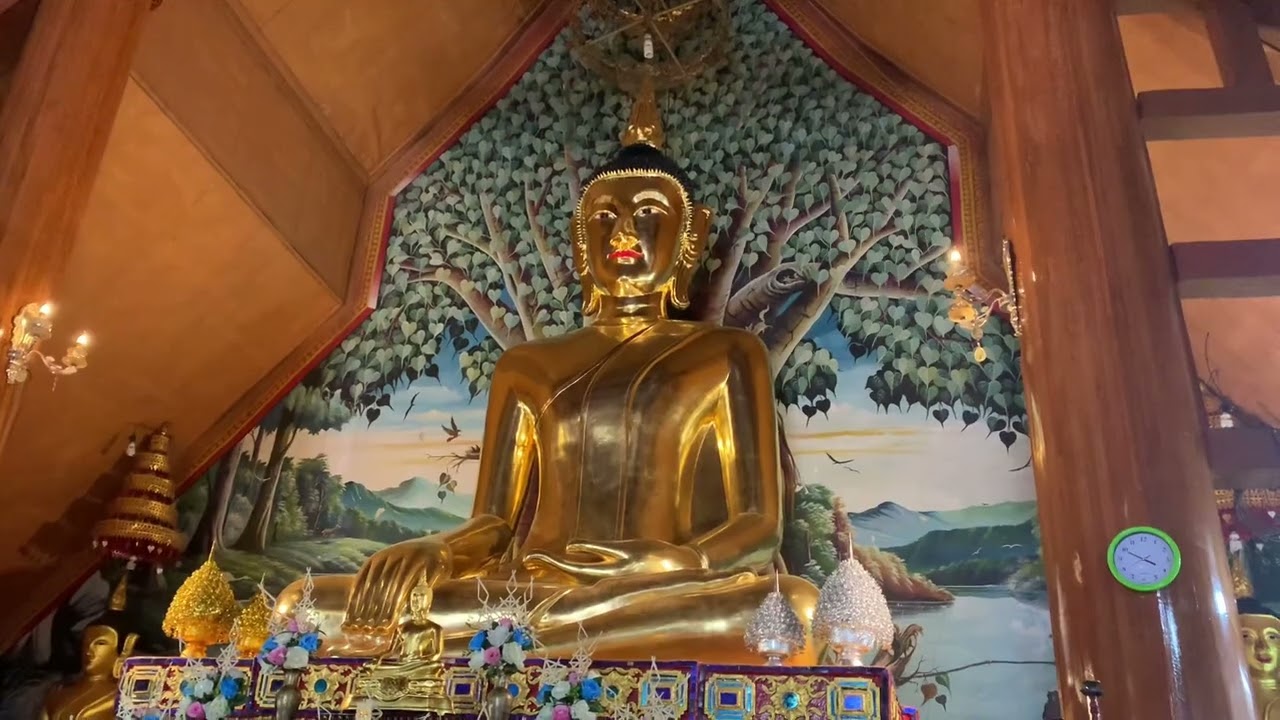
 Click to Access the Navigation Map GPS
 Art, Culture and Heritage
 Historical Sites and Monuments(4)
 Landmarks and Memorials(4)
 Art, Craft Centres, Tradition(1)
 Museums(2)
Temple(39)
Museums(2)
Temple(39)
 Other Sacred Sites(5)
 Research and Development
 Royal Project(1)
 Suburban Living
 Village, Community(2)
 Local Market(4)
 Nature and Wildlife
 National Parks and Marine Reserves(7)
 Mountain (Doi)(2)
 Dam, Reservoir, Lake(11)
 Waterfalls(8)
 Caves(5)
 River, Canal(3)
 Other natural attractions(5)
 Travel Articles, Recipes
 Travel Review, Food Review(1)


