
lovethailand home >North Travel Attractions >Phayao Travel Attractions >Phu Sang >Phu Sang > Ban Huak Thai-Lao Border Market
TL;DR: Ban Huak Thai-Lao Border Market is located at Ban Huak Permanent Border Checkpoint Area, Phu Sang Subdistrict, Phu Sang District, Phayao Province, open The 10th And 30th Of Every Month, hours Morning To Noon.

Ban Huak Thai-Lao Border Market
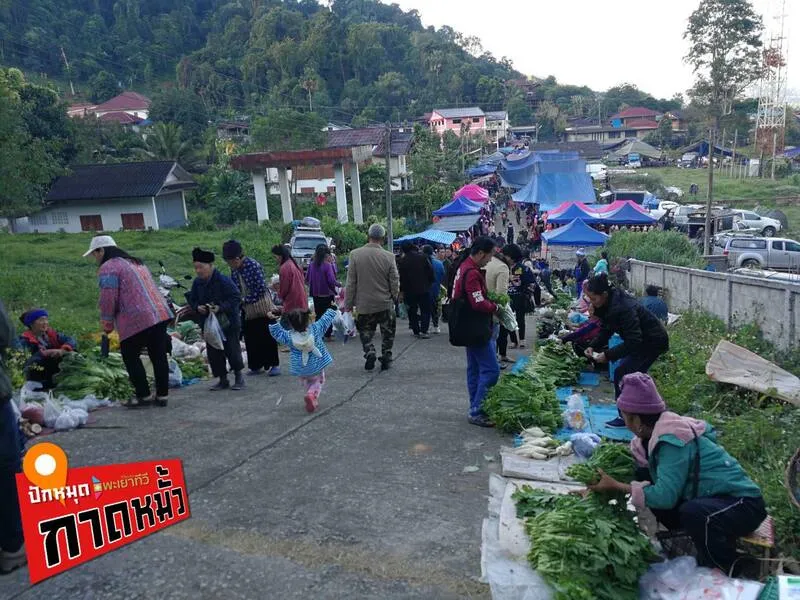
Open Days: The 10th And 30th Of Every Month
Opening Hours: Morning To Noon
Ban Huak Thai-Lao Border Market in Phayao Province is a distinctive cross-border market in Phu Sang District, located around the Ban Huak permanent border checkpoint in Phu Sang Subdistrict. The market connects local communities on the Thai side with communities from the Lao PDR side, creating a lively space where goods, food, textiles, household items, and local products are traded. Known locally for its market days on the 10th and 30th of every month, this border market is a meaningful stop for travelers who want to experience community trade, border culture, local textiles, forest ingredients, and the mountain atmosphere of northern Phayao.
The attraction of Ban Huak Border Market is not only shopping. It is the atmosphere of a real border economy. Vendors and visitors from both sides bring goods into one shared space, making the market feel different from ordinary town markets. From the Lao side, visitors may find seasonal forest products that can be legally traded, nam lai patterned textiles, traditional fabrics, woven goods, local food, and community products. From the Thai side, common goods include kitchenware, clothing, daily necessities, dry food, seasonings, and household items. The market therefore reflects practical exchange between neighboring communities rather than a staged tourist attraction.
Ban Huak is a border community surrounded by mountains, forests, and rural roads. Traveling to the market already feels like part of the experience. The route to Ban Huak passes through the landscape of Phu Sang District and connects with Phu Sang National Park, Phu Sang Waterfall, and the road toward Phu Chi Fa. This geographical setting gives the market a strong sense of place. Visitors are not only going to buy products; they are entering a border zone where nature, trade, local identity, and cross-border relationships meet.
The market plays an important role for local communities in several ways. Economically, it gives small traders from both Thailand and Laos an opportunity to sell directly to customers. Socially, it works as a meeting point for people whose communities have long been connected across the border. Culturally, it shows the exchange of food, clothing, textiles, household tools, and local knowledge. For tourism, it adds depth to a visit to Phu Sang by giving travelers a chance to experience a living border community before or after visiting natural attractions nearby.
One of the most interesting products from the Lao side is nam lai patterned textile. The pattern is often associated with flowing water and graceful movement, making it visually distinctive and meaningful. These textiles are suitable as clothing, shawls, home decoration, or cultural souvenirs. Travelers who appreciate handmade fabric should take time to examine the weave, colors, edge finishing, and pattern details. Asking vendors about the origin and care of the cloth can make the purchase more meaningful because textile products are not only goods but also expressions of local craftsmanship.
Seasonal forest products should be purchased responsibly. Suitable items may include mushrooms, bamboo shoots, forest vegetables, herbs, and other legal seasonal ingredients used in local cooking. Visitors should not buy wildlife, wildlife parts, protected plants, or any prohibited products. Responsible travel at a border market means supporting legal community products while respecting conservation and local regulations. This is especially important because the Phu Sang area is closely connected with forests, mountains, and national park landscapes.
Products from the Thai side are often practical items for everyday life, such as kitchenware, clothing, household goods, dried food, seasonings, and essential supplies. These items are important in the daily exchange between communities on both sides of the border. Thai traders bring goods that may be useful for Lao buyers, while Lao traders bring local products and traditional goods into the Thai market. This reciprocal trade gives the market its lively and practical character.
On market days, the area becomes active from the morning. Vendors set up stalls, arrange textiles, display food, prepare local products, and welcome customers. People walk between stalls, comparing fabrics, buying household goods, choosing seasonal ingredients, and tasting local food. Arriving early is recommended because the market atmosphere is more complete, the weather is cooler, and travelers still have time to continue to nearby attractions later in the day.
First-time visitors should walk through the market once before buying. Each stall has a different character. Some focus on textiles and handmade goods, others sell natural ingredients, local food, household items, or daily necessities. If buying textiles, check the weave, color, size, and quality of finishing. If buying food or fresh produce, ask vendors how to store and prepare the items. This is especially useful for visitors who plan to continue traveling for several hours after leaving the market.
Ban Huak Border Market is suitable for travelers who enjoy local markets, border communities, textiles, food culture, and slow travel. Photographers will find scenes of cross-border trade, fabric displays, colorful goods, local vendors, and mountain surroundings. Photography should be done respectfully. Visitors should avoid blocking sales, should not photograph controlled checkpoint areas, and should ask permission before taking close-up photos of people or private stalls.
Historically, Ban Huak has become an important border point for Phayao Province. The Ban Huak checkpoint connects Thailand with Xayaburi Province in Lao PDR and has developed from a local border crossing into a permanent border checkpoint. This development has strengthened local movement, trade, and administrative importance in the area. The permanent checkpoint operates daily during official hours, while the border market takes place on specific market dates, creating periodic peaks of local economic activity.
Another reason the market is worth visiting is its proximity to Phu Sang National Park and Phu Sang Waterfall. Phu Sang Waterfall is a limestone waterfall known for its warm water, flowing year-round with a temperature of around 33 to 35 degrees Celsius. Because the waterfall is on the same general route as Ban Huak, travelers can easily combine the market with a nature stop. A morning at the border market followed by time at Phu Sang Waterfall makes a balanced itinerary of local culture and natural scenery.
Wat Phra That Phu Sang is another nearby cultural stop. Located in Phu Sang Subdistrict, the temple is associated with the local spiritual identity of the district and offers views of the surrounding hills and communities. Travelers who want to combine border culture, nature, and Buddhist heritage can visit Ban Huak Border Market, Phu Sang Waterfall, and Wat Phra That Phu Sang in one route.
Ban Huak village itself is also worth attention. It is a border community with local products, community life, and traditional textile knowledge. Visitors can learn more about local weaving, especially Ban Huak traditional textiles, and observe how the market is connected to daily life in the village. This helps travelers understand that the market is not separate from the community; it is part of the economic and cultural life of Ban Huak.
Travelers coming from Mueang Phayao or Chiang Kham should allow enough travel time. Ban Huak is in the northern part of Phayao Province, and some sections of the route pass through rural and mountain areas. Driving carefully is important, especially early in the morning or during the rainy season. Since the market operates on specific dates and for a limited period during the day, arriving early helps visitors enjoy the full market experience before stalls begin to slow down.
Preparation is important for a border market visit. Bring small cash, a reusable bag, comfortable walking shoes, and sun or rain protection. If you plan to deal with checkpoint procedures or travel further, carry personal identification documents. Visitors who only walk around the market on the Thai side should still follow checkpoint rules, avoid entering restricted areas, avoid photographing prohibited zones, and never purchase illegal or restricted goods. A border market involves legal and security considerations that ordinary town markets may not have.
For families, the market can be an educational experience. Children can learn how communities on both sides of a border exchange food, clothing, household goods, and local products. Adults can explain legal trade, border rules, community livelihoods, and responsible shopping in a practical setting. This makes the visit more meaningful than a simple shopping stop.
Food and ingredients at the market often reflect seasonal changes. Mushrooms, bamboo shoots, forest vegetables, herbs, and preserved foods may appear depending on the time of year. These products help express the mountain food culture of the border region. Visitors should choose clean, clearly displayed products and ask how to prepare them before eating. This is especially important for unfamiliar forest ingredients.
When buying nam lai textiles or other traditional fabrics, take time to appreciate the craftsmanship. Some pieces are suitable for daily wear, others for shawls, home decoration, or gifts. Ask about the pattern, production source, washing method, and intended use. Traditional fabric carries cultural meaning, often connected to water, landscape, fertility, and the artistic preferences of local ethnic communities in the border region.
The special quality of Ban Huak Border Market is the feeling of reaching the edge of the country. Visitors see checkpoint signs, cross-border routes, transport activity, vendors from different places, and goods that represent exchange between two neighboring countries. This atmosphere cannot be found in ordinary city markets. It gives the visit a stronger sense of geography, movement, and community connection.
A half-day itinerary can begin at Ban Huak Border Market in the morning. Spend time walking through the stalls, buying textiles or local products, and observing the border atmosphere. After that, explore Ban Huak village, then continue to Phu Sang Waterfall for a nature break. Travelers with more time can add Wat Phra That Phu Sang or other stops in Phu Sang National Park. This route is comfortable for those who enjoy local culture and natural scenery without rushing.
Ban Huak Thai-Lao Border Market is therefore a worthwhile stop in Phu Sang District. It offers a different experience from ordinary markets by combining community trade, border atmosphere, traditional textiles, seasonal ingredients, and access to nearby natural attractions. Visitors can see how local people trade across the border, buy products from both Thailand and Laos, learn about Ban Huak community life, and continue to Phu Sang Waterfall, Wat Phra That Phu Sang, and other attractions in the same journey.
Getting There is most convenient by private car. From Chiang Kham District or Mueang Phayao, drive toward Phu Sang District, then continue to Phu Sang Subdistrict and Ban Huak permanent border checkpoint. The route connects with Phu Sang National Park, Phu Sang Waterfall, and the road toward the border area. Travelers starting from Chiang Kham can follow the Chiang Kham-Phu Sang route, while those starting from Mueang Phayao should allow more travel time. Drivers should check vehicle condition, fuel up in advance, and drive carefully on mountain and rural roads, especially during the rainy season.
Visitors should plan their trip to match the market dates, the 10th or 30th of the month, and arrive in the morning. After exploring the market, it is easy to continue to Phu Sang Waterfall, Wat Phra That Phu Sang, or Ban Huak community areas. In the evening, travelers can stay in Phu Sang or Chiang Kham, or continue to other destinations in Phayao and Chiang Rai depending on their route. The market is ideal for travelers seeking a local experience that combines border life, nature, community products, and cultural exchange.
| Name | Ban Huak Thai-Lao Border Market / Ban Huak Border Market |
| Location | Ban Huak Permanent Border Checkpoint Area, Phu Sang Subdistrict, Phu Sang District, Phayao Province |
| Address | Ban Huak, Phu Sang Subdistrict, Phu Sang District, Phayao 56110 |
| Highlights | A Thai-Lao border market with products from both countries, including legal seasonal forest products, nam lai textiles, kitchenware, clothing, and daily necessities |
| History / Local Context | Ban Huak is a Thai-Lao border area in Phu Sang District, Phayao Province. Ban Huak was upgraded to a permanent border checkpoint on October 10, 2018. |
| Name Origin | Named after its role as a border trading market in the Ban Huak area of Phu Sang Subdistrict |
| Distinctive Features | A periodic border market with real cross-border trade atmosphere, community products, textiles, food, household goods, and nearby natural attractions |
| Products From Laos | Legal seasonal forest products, nam lai textiles, traditional fabrics, woven goods, local food, and community products |
| Products From Thailand | Kitchenware, clothing, essential household items, dried food, seasonings, and daily-use products |
| Travel Information | Best reached by private car from Chiang Kham or Mueang Phayao via Phu Sang District, continuing to Ban Huak and the permanent border checkpoint area |
| Current Status | A periodic border market held on the 10th and 30th of the month; Ban Huak permanent border checkpoint operates daily during checkpoint hours |
| Open Days | The 10th And 30th Of Every Month |
| Opening Hours | Morning To Noon |
| Ban Huak Checkpoint Hours | 06.00 – 18.00 |
| Fees | No Market Admission Fee |
| Facilities | Market stalls, walking areas, border checkpoint area, and access routes to Ban Huak, Phu Sang Waterfall, and Phu Sang District |
| Main Areas / Zones | Lao Products Zone, Thai Products Zone, Textile And Local Craft Zone, Food And Seasonal Ingredients Zone, Daily Necessities Zone |
| Caretaker | Local agencies in Phu Sang Subdistrict and authorities operating at Ban Huak permanent border checkpoint; Phu Sang Subdistrict Administrative Organization is the local administrative body in the area |
| Main Contact Number | Phu Sang Subdistrict Administrative Organization Tel. 054-465067 |
| Nearby Tourist Attractions | 1. Ban Huak Community, About 1 km 2. Ban Huak Traditional Textiles, About 1 km 3. Phu Sang Waterfall / Phu Sang National Park, About 7 km 4. Phu Sang Warm Spring Source, About 7 km 5. Wat Phra That Phu Sang, About 10 km 6. Phu Sang Ban Mun, About 9 km 7. Phu Sang-Phu Chi Fa Scenic Route, About 45 km |
| Nearby Restaurants | 1. Suan Homphaya, About 9 km, Tel. 095-453-8904, 089-135-4349, 085-621-5168 2. Cafe De Phu, About 10 km, Tel. 086-032-9925 3. Hug Carp Cafe, About 15 km, Tel. 091-756-3300 4. Koi Northern Thai Restaurant, About 27 km, Tel. 085-707-2184 5. Local Food Stalls At Ban Huak Border Market, About 0 km |
| Nearby Accommodations | 1. Ban Huak Homestay, About 1 km, Tel. 089-558-2451 2. Phu Sang Huan Thai Resort, About 18 km, Tel. 081-672-2062 3. Ruean Mai Phai Phu Sang, About 17 km, Tel. 081-472-7727 4. Chiang Kham Ruk Khun Hotel, About 30 km, Tel. 097-389-8998 5. Chiang Kham Grand Villa, About 32 km, Tel. 084-811-5585 |
Frequently Asked Questions (FAQ)
Q: Where is Ban Huak Thai-Lao Border Market located?
A: It is located around Ban Huak permanent border checkpoint in Phu Sang Subdistrict, Phu Sang District, Phayao Province.
Q: When is Ban Huak Border Market open?
A: The market is known for its periodic market days on the 10th and 30th of every month. Arriving in the morning is recommended.
Q: What can visitors buy at Ban Huak Border Market?
A: Visitors can find nam lai textiles, traditional fabrics, legal seasonal forest products, kitchenware, clothing, household items, local food, and community products from both Thailand and Laos.
Q: Is there an admission fee for Ban Huak Border Market?
A: No. Visitors can walk around the market without paying a market admission fee.
Q: What should visitors be careful about when buying forest products?
A: Buy only legal seasonal products such as mushrooms, bamboo shoots, herbs, or forest vegetables. Do not buy wildlife, wildlife parts, protected plants, or prohibited goods.
Q: What nearby attractions can be visited after the market?
A: Nearby places include Ban Huak Community, Ban Huak Traditional Textiles, Phu Sang Waterfall, Phu Sang National Park, Phu Sang Warm Spring Source, and Wat Phra That Phu Sang.
Q: Who is Ban Huak Border Market suitable for?
A: It is suitable for travelers who enjoy local markets, border communities, textiles, food culture, mountain scenery, and community-based travel.
Q: What should visitors prepare before going to Ban Huak Border Market?
A: Bring small cash, a reusable bag, comfortable shoes, sun or rain protection, and follow all checkpoint rules, especially around restricted areas and photography zones.
 Category: ●Suburban Living
 Group: ●Local Market
Last Update : 4 MonthAgo
 Last Update : 4 MonthAgo
 Click to Access the Navigation Map GPS
Ban Huak Thai-Lao Border Market Map
Recommend

 Art, Culture and Heritage
 Historical Sites and Monuments(4)
 Landmarks and Memorials(4)
 Art, Craft Centres, Tradition(1)
 Museums(2)
 Places of Worship
 Temple(39)
 Other Sacred Sites(5)
 Research and Development
 Royal Project(1)
 Village, Community(2)
Local Market(4)
Village, Community(2)
Local Market(4)
 Nature and Wildlife
 National Parks and Marine Reserves(6)
 Mountain (Doi)(2)
 Dam, Reservoir, Lake(11)
 Waterfalls(8)
 Caves(5)
 River, Canal(3)
 Other natural attractions(5)


