
lovethailand home >North Travel Attractions >Phayao Travel Attractions >Mae Chai >Ban Lao > Wiang Hao
TL;DR: Wiang Hao is located at Ban Dong Inta Nuea, Moo 11, Ban Lao Subdistrict, Mae Chai District, Phayao Province, open Daily, hours Exterior Viewing Is Possible Throughout The Day; Daytime Visits Are Recommended.

Wiang Hao
Open Days: Daily
Opening Hours: Exterior Viewing Is Possible Throughout The Day; Daytime Visits Are Recommended
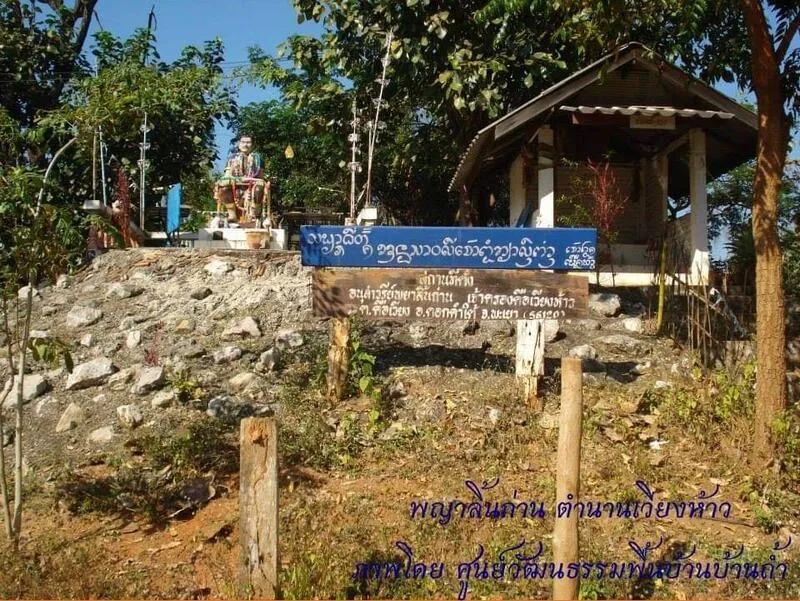
Wiang Hao in Phayao Province is an important ancient town site in Mae Chai District. Located at Ban Dong Inta Nuea, Moo 11, Ban Lao Subdistrict, the site is known for its circular ancient moat pattern, local oral history, and the legend of a powerful wild elephant named “Pu Kam Nga Khiao.” Unlike large archaeological sites with monumental brick structures, Wiang Hao is valuable because of its landscape, moat traces, community memory, place name, and living local legend. It is a destination for travelers interested in local history, ancient settlement patterns, Lanna cultural landscapes, and the folklore of northern Thailand.
Wiang Hao is not a place that should be understood only through visible ruins. Its significance lies in the relationship between landform, old moat lines, oral tradition, and community identity. Ancient sites of this type often survive as earthworks, old place names, village memory, and landscape traces rather than complete buildings. A visit therefore requires slower observation and an awareness that history can remain in the ground, in stories, and in the way local people continue to identify their homeland.
Local information identifies Wiang Hao as one of the important ancient towns of Mae Chai District and suggests that it may have been an ancient settlement of the Lua people, one of the early ethnic groups associated with northern Thailand. This possibility gives Wiang Hao additional historical depth. Before and during the rise of Lanna culture, many early communities lived in lowlands, near water sources, close to forest edges, and along natural routes. Wiang Hao may represent one of these older settlement layers in the Mae Chai landscape.
The most famous story connected with Wiang Hao is the legend of Pu Kam Nga Khiao, a fierce and powerful elephant. According to local tradition, this elephant was so dangerous that if it turned its face toward any direction, the people of that town would die. Out of fear, the community hurriedly dug a protective moat around the settlement. The work was done in great haste and caused the loss of many laborers. This urgent and restless digging became associated with the word “hao,” meaning hasty, impatient, or hurried, and the settlement came to be known as Wiang Hao.
The legend of Pu Kam Nga Khiao should not be dismissed as a simple folk tale. It is a cultural way of preserving memory. In northern communities, elephants have long been powerful symbols associated with strength, labor, forest life, sacredness, and authority. A story about a terrifying elephant that forced people to build a moat may preserve an older memory of danger, social fear, wild animals, warfare, disease, or a sudden crisis that required collective action. In this sense, folklore becomes a local historical language.
The moat pattern is one of the most important features of Wiang Hao. Local tourism planning documents and community information describe the ancient town as having a clearly visible circular moat form when seen from aerial images, with four gates. A circular moat is significant because it reflects a defined settlement boundary. Ancient moats and earthworks could serve defensive, symbolic, hydrological, and social purposes. They marked the difference between inside and outside, helped manage water, and expressed the organized nature of the settlement.
The presence of four gates also adds meaning to the site. Gates were practical points of movement, but in many old northern settlements they also carried symbolic value. They connected the settlement to routes, fields, forests, and neighboring communities. Looking at Wiang Hao as a whole therefore helps visitors understand it as an ancient settlement system rather than as a single point on a map.
Although Wiang Hao has not been widely publicized like some larger ancient cities in Phayao, its preservation in community memory makes it highly valuable. Some heritage places are important because they contain many artifacts or large structures. Others are important because they remain part of the identity of a living community. Wiang Hao belongs strongly to the second type. Its value is carried through the name, the moat, the legend, and the relationship between Ban Dong Inta Nuea and its past.
Ban Dong Inta Nuea, where Wiang Hao is located, is part of Ban Lao Subdistrict in Mae Chai District. The community also has local knowledge, craft traditions, and village heritage. Visiting Wiang Hao therefore gives travelers a broader view of Mae Chai as a place of local wisdom, rural life, and historic memory. The ancient town should be seen together with the surrounding community rather than as an isolated archaeological point.
Wiang Hao is best suited for learning-based travel. Visitors should not expect large visitor facilities or a fully restored ancient monument. Instead, the site rewards those who are willing to ask questions, observe the land, and listen to local explanations. Contacting local authorities or asking community members can help visitors identify the moat traces and understand the legend more clearly. Places like Wiang Hao often reveal their meaning through local guidance.
A good way to understand the site is to first imagine the entire settlement as a wiang, or enclosed ancient town. After that, visitors can observe the landform, old water channels, earthworks, routes, and village layout. This approach helps reveal Wiang Hao as a cultural landscape hidden within a present-day community. The remains are not always dramatic, but the historical meaning becomes clearer when viewed in context.
Wiang Hao also helps expand the image of Mae Chai District. Many travelers know Mae Chai for Nong Leng Sai, local temples, and the route between Phayao and Chiang Rai. Wiang Hao adds another layer: ancient settlement, Lua-related oral history, and the memory of a community protected by a moat. This makes Mae Chai more than a transit district. It is a place with deep local history and cultural identity.
The name Wiang Hao itself is important. In northern Thai cultural context, “wiang” refers to an enclosed settlement or town with a moat, wall, or embankment. “Hao” is explained locally through the story of hurried moat digging. The name therefore preserves both the physical character of the settlement and the legend of its origin. Place names often act as short histories, keeping old memories alive in everyday language.
Conserving Wiang Hao means preserving both the physical area and the story. Protecting the moat and earthworks is important, but so is recording oral tradition, explaining the legend, creating local learning routes, and helping younger generations recognize the value of their community heritage. If the earthworks remain but the story disappears, much of the meaning of Wiang Hao would be lost. If both landscape and story are preserved, the site can continue to function as a living local history classroom.
Wiang Hao can be combined with nearby attractions in Mae Chai District. Nong Leng Sai is one of the most relevant places to visit because it is a large natural wetland and the source of the Ing River. Wat Phra That Chom Ko is another important religious site in the district, located on a hill with views over the surrounding communities. Combining Wiang Hao with these places creates a route that includes ancient settlement, water landscape, local faith, and rural life.
Nong Leng Sai is especially important because it shows the role of water in the Mae Chai area. The wetland covers about 5,500 rai and supports agriculture, local fishing, and recreation. Visiting Nong Leng Sai after Wiang Hao helps travelers understand how water has shaped settlement and livelihood in Mae Chai. While Wiang Hao represents an ancient enclosed community, Nong Leng Sai represents the wider natural water system that supports local life.
Wat Phra That Chom Ko is also worth including in the same route. As a hilltop religious site associated with Mae Chai beliefs, it adds the spiritual dimension of the district. A trip that combines Wiang Hao, Nong Leng Sai, and Wat Phra That Chom Ko gives visitors a fuller picture of Mae Chai: ancient settlement, wetland ecology, local faith, and community identity.
The best time to visit Wiang Hao is in the morning or late afternoon. The weather is cooler and more suitable for walking around the outdoor area. During the rainy season, visitors should be cautious of wet ground, tall grass, and slippery areas along old moat lines. During the hot season, a hat, drinking water, and comfortable shoes are recommended. Because the site is part of a living community, visitors should walk respectfully and avoid entering private or agricultural land without permission.
Getting There is most convenient by private car, rental car, or motorcycle. From Phayao city, travel toward Mae Chai District, then continue to Ban Lao Subdistrict and Ban Dong Inta Nuea, Moo 11. The distance from Phayao city is about 30–35 km, depending on the route. Visitors who are unfamiliar with the area should use navigation to Ban Dong Inta Nuea or ask Mae Chai Subdistrict Municipality and local residents for the appropriate viewing point.
Visitors should be mindful of community etiquette. Wiang Hao lies close to homes and agricultural areas. Do not drive into areas not intended for vehicles. Do not damage earthworks, dig, move soil, collect objects, litter, or disturb private property. If photographing residents, houses, or private spaces, ask permission first. Responsible behavior helps preserve both the ancient site and the goodwill of the community.
Restaurants near Wiang Hao are mostly located in Mae Chai District and around Nong Leng Sai. Options include local restaurants, cafés, Thai food shops, and small community eateries. Travelers can visit Wiang Hao in the morning, then stop for lunch or coffee around Nong Leng Sai, Si Thoi, or central Mae Chai before continuing to Wat Phra That Chom Ko or returning to Phayao city.
Accommodation near Wiang Hao includes local stays in Mae Chai District and hotels toward Phayao city. Travelers who want to stay close to Mae Chai can consider Eden’s Home, Baan Manao, Leng Sai Resort, or other small local accommodation. Those who prefer more hotel options can stay in Phayao city and visit Wiang Hao as a half-day trip. The distance is manageable for a day route.
Wiang Hao is suitable for students, local history researchers, cultural travelers, and visitors interested in folklore. The site teaches that archaeology is not always about large ruins. Sometimes the most meaningful heritage remains in moats, earthworks, village names, oral legends, and community memory. Visiting Wiang Hao is therefore a lesson in reading cultural landscapes.
In summary, Wiang Hao is an important ancient town of Mae Chai District in Phayao Province. Its value lies in its circular moat, the legend of Pu Kam Nga Khiao, the possible connection with ancient Lua settlement, and its continuing role in the identity of Ban Dong Inta Nuea. Although it requires careful observation and local context to understand, Wiang Hao is a meaningful heritage site that preserves the roots of Mae Chai through land, story, and community memory.
| Name | Wiang Hao |
| Location | Ban Dong Inta Nuea, Moo 11, Ban Lao Subdistrict, Mae Chai District, Phayao Province |
| Address | Wiang Hao, Ban Dong Inta Nuea, Moo 11, Ban Lao Subdistrict, Mae Chai District, Phayao 56130, Thailand |
| Highlights | Circular ancient town site of Mae Chai District, old moat and earthwork traces, four-gate layout, Pu Kam Nga Khiao elephant legend, and local memory of ancient Lua settlement |
| History | An important ancient town of Mae Chai District, locally believed to have been an ancient Lua community, with a legend of hurried moat digging to protect the settlement from the powerful elephant Pu Kam Nga Khiao |
| Name Origin | “Wiang” refers to an enclosed ancient settlement, while “Hao” is linked to the local story of rushed and impatient moat digging to protect the town from Pu Kam Nga Khiao |
| Distinctive Features | Circular moat pattern visible in the landscape and aerial imagery, four gates, community heritage, and a strong local legend connected with Mae Chai identity |
| Travel Information | From Phayao city, travel to Mae Chai District, then continue to Ban Lao Subdistrict and Ban Dong Inta Nuea, Moo 11. The distance is about 30–35 km from Phayao city. Private car, rental car, or motorcycle is recommended |
| Current Status | Open as an ancient town landscape and local learning site within Ban Dong Inta Nuea community. Visitors should walk carefully and respect local homes and farmland |
| Open Days | Daily |
| Opening Hours | Exterior Viewing Is Possible Throughout The Day; Daytime Visits Are Recommended |
| Fees | No Admission Fee |
| Facilities | Community area, walking area around the ancient town landscape, local inquiry points, restaurants and cafés in Mae Chai District, and appropriate community parking areas |
| Main Areas / Zones | Circular moat line, earthworks, four gates, Ban Dong Inta Nuea community, and the historic landscape of Ban Lao Subdistrict |
| Caretaker | Mae Chai Subdistrict Municipality, Ban Dong Inta Nuea community, Ban Lao Subdistrict, and local authorities |
| Main Contact Number | Mae Chai Subdistrict Municipality, Tel. 054-499040, 054-499041 |
| Official Website / Official Page | Mae Chai Subdistrict Municipality And Ban Dong Inta Nuea Community Information |
| Nearby Tourist Attractions | 1. Ban Dong Inta Nuea Community, about 0 km 2. Nong Leng Sai, about 8 km 3. Central Mae Chai District, about 10 km 4. Wat Phra That Chom Ko, about 14 km 5. Wat Si Suphan / Phra Chao Thong Thip Area, about 12 km 6. Kwan Phayao, about 30 km 7. Phayao City, about 30–35 km |
| Nearby Restaurants | 1. Khrua Nong Leng Sai Mae Chai, about 8 km, Tel. 082-883-7468, 087-786-2807 2. Hug View Cafe, Si Thoi Subdistrict, Mae Chai District, about 9 km, Tel. 095-705-5601 3. Mee Pao Restaurant, Si Thoi Subdistrict, Mae Chai District, about 9 km, Tel. 080-465-9868 4. Ploykan Restaurant, Mae Chai District, about 10 km, Tel. 093-619-1397 5. Kod Rak Cafe Mae Chai, about 12 km 6. Loi Lamduan Cafe And Farm, about 12 km 7. 108 Coffee Ban Din, about 12 km |
| Nearby Accommodations | 1. Eden’s Home Mae Chai, about 10 km, Tel. 080-306-7030 2. Baan Manao Mae Chai, about 10 km, Tel. 081-883-0878, 089-892-4252 3. Leng Sai Resort, Si Thoi Subdistrict, Mae Chai District, about 12 km, Tel. 065-970-2284 4. I Ya Guesthouse Phayao, about 20 km, Tel. 095-315-0757 5. M.T. Resort Pa Faek, about 18 km, Tel. 061-359-2492 6. Hop Inn Phayao, Phayao City, about 30 km, Tel. 02-080-2222 |
Frequently Asked Questions (FAQ)
Q: Where is Wiang Hao located?
A: Wiang Hao is located at Ban Dong Inta Nuea, Moo 11, Ban Lao Subdistrict, Mae Chai District, Phayao Province.
Q: Why is Wiang Hao important?
A: Wiang Hao is an important ancient town of Mae Chai District, known for its circular moat pattern, four-gate layout, and the local legend of Pu Kam Nga Khiao.
Q: How is Wiang Hao connected with the Lua people?
A: Local information suggests that Wiang Hao may have been an ancient settlement of the Lua people, an early ethnic group associated with northern Thailand.
Q: What is the legend of Pu Kam Nga Khiao?
A: Pu Kam Nga Khiao is a fierce elephant in local legend. People were said to have hurriedly dug a moat around the settlement to protect themselves, which led to the name Wiang Hao.
Q: Is Wiang Hao open to visitors?
A: Visitors can view the exterior ancient town landscape daily. Daytime visits are recommended, and visitors should respect the local community and farmland.
Q: Is there an admission fee?
A: No. There is no admission fee for general exterior viewing of the ancient town area.
Q: What nearby attractions can be visited with Wiang Hao?
A: Nearby attractions include Nong Leng Sai, Wat Phra That Chom Ko, central Mae Chai District, Kwan Phayao, and Phayao city.
Q: Who can visitors contact for local information?
A: Visitors can contact Mae Chai Subdistrict Municipality at 054-499040 or 054-499041 for local area information.
 Category: ●Art, Culture and Heritage
 Group: ●Historical Sites and Monuments
Last Update : 4 MonthAgo
 Last Update : 4 MonthAgo
 Click to Access the Navigation Map GPS
 Historical Sites and Monuments(4)
 Landmarks and Memorials(4)
 Art, Craft Centres, Tradition(1)
 Museums(2)
 Places of Worship
 Temple(39)
 Other Sacred Sites(5)
 Research and Development
 Royal Project(1)
 Suburban Living
 Village, Community(2)
 Local Market(4)
 Nature and Wildlife
 National Parks and Marine Reserves(6)
 Mountain (Doi)(2)
 Dam, Reservoir, Lake(11)
 Waterfalls(8)
 Caves(5)
 River, Canal(3)
 Other natural attractions(5)


