
lovethailand home >North Travel Attractions >Phayao Travel Attractions >Mae Chai >Ban Lao > Wat Dong Bun Nak
TL;DR: Wat Dong Bun Nak is located at Ban Lao Subdistrict, Mae Chai District, Phayao Province, open Daily, hours Open During Temple Hours.

Wat Dong Bun Nak
Open Days: Daily
Opening Hours: Open During Temple Hours
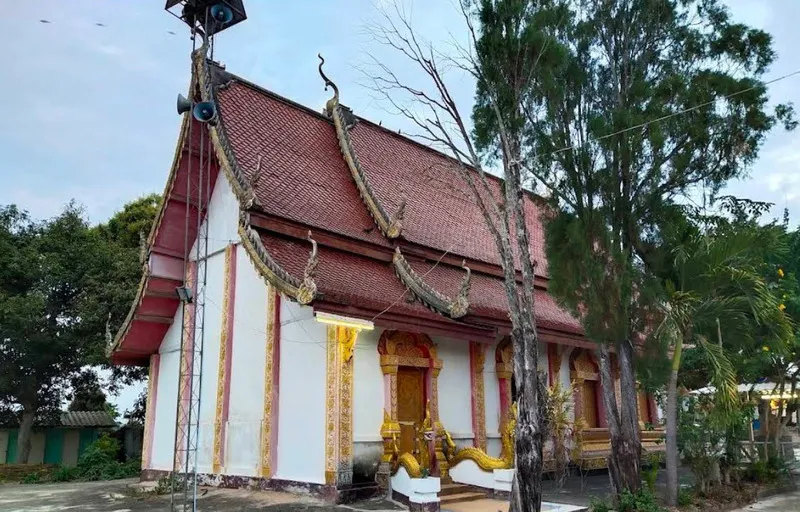
Wat Dong Bun Nak in Phayao Province is an important community temple in Ban Lao Subdistrict, Mae Chai District. It is best known as the home of Phra Chao Hin Tip, also known as Phra Chao Hin Thip, an ancient sandstone Buddha image associated with the Phayao school of craftsmanship and the second generation of Chiang Saen-style Buddha images. For travelers interested in Buddhist art, Lanna history, local faith, and quiet temple visits, Wat Dong Bun Nak offers a meaningful cultural experience beyond the better-known attractions of Phayao.
Wat Dong Bun Nak is located in Ban Lao Subdistrict, Mae Chai District, Phayao Province. It is a local Buddhist temple that remains closely connected to the surrounding community. The temple’s main highlight is the ancient sandstone Buddha image known as Phra Chao Hin Tip or Phra Chao Hin Thip. This sacred image is not only an object of worship but also a valuable example of Buddhist art connected with the historical development of Phayao and northern Thailand.
Phra Chao Hin Tip is believed to have been created in R.S. 829, corresponding to 1467 CE or B.E. 2010, by artisans of the Phayao school. It is classified as a second-generation Chiang Saen-style Buddha image. This makes the image significant both artistically and historically, as it reflects the craftsmanship, religious devotion, and regional artistic identity of Phayao during an important period of northern Thai Buddhist culture.
The Buddha image was originally enshrined at Wat Phra That Kom Ko, located to the east of the present temple. Over time, the original structures and monastic buildings at that site deteriorated and disappeared, leaving only the Buddha image. The survival of the sandstone Buddha amid the loss of the surrounding structures made the image even more meaningful to local people. It became a sacred object that the community wished to preserve, protect, and continue to worship.
On April 15, 1969, which corresponds to Phaya Wan, an important day in the Lanna New Year period, the Buddha image was brought to Wat Dong Bun Nak. This date is culturally meaningful because Phaya Wan is associated with merit-making, blessings, renewal, and auspicious beginnings. The relocation of the image on this day gave the event a deep spiritual meaning and helped strengthen the bond between the temple, the Buddha image, and the local community.
After being enshrined at Wat Dong Bun Nak, the image became widely known as Phra Chao Hin Tip or Phra Chao Hin Thip. The name reflects both the material of the image and the reverence of the local community. For worshippers, the image is not merely an ancient artifact. It is a sacred Buddha image that connects the present community with the spiritual and artistic heritage of the past.
The use of sandstone gives Phra Chao Hin Tip a distinctive artistic character. Sandstone requires great skill to carve, as the material is firm but can also be delicate. The artisans had to understand proportion, expression, posture, and symbolic details in order to create a Buddha image that expresses calmness and dignity. When viewed as a work of the Phayao school, the image becomes a valuable example of the relationship between Buddhist faith and local craftsmanship.
The Phayao school of craftsmanship is an important part of northern Thai art history. Phayao was not only a lakeside city known for its landscape, but also a historic center with deep Buddhist and artistic roots. Buddha images associated with Phayao often express serenity, balance, and a sense of grounded spiritual presence. Phra Chao Hin Tip at Wat Dong Bun Nak allows visitors to appreciate this heritage in a living temple setting rather than only through museum displays.
The connection with Chiang Saen-style Buddha images also gives the image a wider regional context. Chiang Saen art is one of the most important traditions in the history of Thai Buddhist imagery. Its forms are often associated with dignity, stillness, and spiritual strength. By visiting Wat Dong Bun Nak, travelers can see how this artistic tradition was interpreted through the local craftsmanship of Phayao and preserved within a village temple.
Beyond the Buddha image itself, Wat Dong Bun Nak represents the role of a Buddhist temple in northern Thai community life. Temples in this region are not only places for ceremonies. They are also centers of merit-making, communal gathering, seasonal festivals, moral education, and intergenerational memory. Wat Dong Bun Nak continues to function as a spiritual center for local residents while also welcoming visitors who come to pay respect to Phra Chao Hin Tip.
For the local community, Phra Chao Hin Tip carries a story of preservation. Moving the image from the older site of Wat Phra That Kom Ko to Wat Dong Bun Nak was not simply a physical relocation. It was an act of safeguarding faith and cultural memory. The image now stands as a bridge between the vanished structures of the past and the living temple of the present. This connection gives the temple a special emotional and historical depth.
Wat Dong Bun Nak is especially meaningful during important Buddhist occasions such as Buddhist Lent, the end of Buddhist Lent, Kathin robe-offering ceremonies, forest-robe offerings, and local New Year merit-making. Because the image was brought to the temple on April 15, Phaya Wan also holds special relevance to the story of Phra Chao Hin Tip. Visitors who come during the Lanna New Year season can better understand how Buddhist faith, family traditions, and community identity are closely connected in northern Thailand.
Phaya Wan is one of the most important days in the traditional Lanna New Year period. It is a day for merit-making, bathing Buddha images, receiving blessings, honoring elders, and beginning the year with positive intentions. The relocation of Phra Chao Hin Tip on this day adds a layer of cultural meaning to the temple’s history. For foreign travelers, it also provides insight into Songkran as a spiritual and cultural celebration, not only as a water festival.
A visit to Wat Dong Bun Nak should begin with respectful worship of Phra Chao Hin Tip. Visitors can take time to observe the image quietly, noticing the sandstone material, the serene presence, and the historical background behind the image. It is best to approach the Buddha image not merely as a photo subject, but as a sacred object with centuries of meaning for the people of Phayao.
The temple atmosphere is calm and suitable for slow travel. Visitors can walk through the temple grounds, observe the local setting, and appreciate the rhythm of a northern Thai community temple. Unlike large tourist destinations, Wat Dong Bun Nak offers a more grounded and authentic experience. It is a place where religious practice, local memory, and everyday community life continue to exist together.
Getting There is most convenient by private car. Travelers can drive to Mae Chai District in Phayao Province and continue to Ban Lao Subdistrict. The temple’s coordinates are 19.41684, 99.82188. From Phayao town, the temple can be included in a half-day or full-day cultural route around Mae Chai, together with nearby attractions such as Wat Phra That Chom Ko, Wat Phra That Mung Mueang, Nong Leng Sai, Mae Puem National Park, and Doi Luang National Park.
Visitors should dress modestly and behave respectfully while inside the temple. Shoes should be removed before entering religious buildings. It is also important not to touch sacred objects unnecessarily and to avoid disturbing monks or worshippers. Photography should be done with respect, especially around Phra Chao Hin Tip, which is both a sacred Buddha image and an important cultural heritage object.
Wat Dong Bun Nak is a worthwhile stop for travelers who want to explore Phayao beyond its most famous landmarks. The temple shows that important cultural stories are often preserved in local communities, not only in large monuments or museums. Through Phra Chao Hin Tip, visitors can understand the depth of Phayao’s Buddhist art, the history of Mae Chai District, and the ongoing role of temples in northern Thai society.
The story of the Buddha image also helps keep the memory of Wat Phra That Kom Ko alive. Although the original monastic structures have disappeared, the image and its story continue at Wat Dong Bun Nak. This makes the temple a place where past and present meet. The Buddha image links an older sacred site with the living faith of the current community.
The beauty of Phra Chao Hin Tip lies not only in its age, but in the quiet power of its sandstone form. The simplicity of the material gives the image a calm and grounded presence. Knowing that the image has survived for centuries and has been preserved by the community makes the experience of visiting it even more meaningful.
For travelers interested in Buddhist art, Wat Dong Bun Nak offers a rare opportunity to see a historic sandstone Buddha image within a living temple environment. For those interested in local culture, it offers a window into the way faith, memory, and community responsibility continue to shape rural life in Phayao. For those simply seeking a peaceful place to visit, the temple provides a quiet and respectful atmosphere.
Overall, Wat Dong Bun Nak is an important cultural and religious destination in Mae Chai District, Phayao Province. Its main highlight is Phra Chao Hin Tip, an ancient sandstone Buddha image associated with the Phayao school of craftsmanship and second-generation Chiang Saen art. With its story of relocation from Wat Phra That Kom Ko on April 15, 1969, the temple preserves not only a sacred image but also a meaningful chapter of local history.
| Name | Wat Dong Bun Nak |
| Location | Ban Lao Subdistrict, Mae Chai District, Phayao Province |
| Coordinates | 19.41684, 99.82188 |
| Highlights | Home of Phra Chao Hin Tip, an ancient sandstone Buddha image associated with the Phayao school of craftsmanship and Lanna Buddhist art |
| History | The sandstone Buddha image is believed to have been created in R.S. 829, corresponding to B.E. 2010, by Phayao artisans and is classified as a second-generation Chiang Saen-style Buddha image |
| Key Evidence | Phra Chao Hin Tip, originally enshrined at Wat Phra That Kom Ko and brought to Wat Dong Bun Nak on April 15, 1969 |
| Name Origin | The name Phra Chao Hin Tip or Phra Chao Hin Thip refers to the revered sandstone Buddha image worshipped by the local community |
| Distinctive Features | A local temple in Mae Chai District with an important ancient sandstone Buddha image, suitable for worship, merit-making, and learning about Phayao Buddhist art |
| Traditions / Main Activities | Buddhist Lent, end of Buddhist Lent, Kathin ceremonies, forest-robe offerings, local New Year merit-making, and Buddhist community activities |
| Travel Information | Best reached by private car via Mae Chai District, then continuing to Ban Lao Subdistrict; suitable for a cultural route around Mae Chai |
| Current Status | An active community temple where visitors can pay respect to Phra Chao Hin Tip |
| Open Days | Daily |
| Opening Hours | Open During Temple Hours |
| Facilities | Temple grounds, religious buildings, worship areas, and parking areas within or near the temple |
| Main Areas / Zones | Area enshrining Phra Chao Hin Tip, temple buildings, courtyard, and Buddhist ceremonial spaces |
| Abbot / Caretaker | Phra Khru Suthat Noppakit |
| Nearby Tourist Attractions | 1. Wat Phra That Chom Ko, about 6 km 2. Wat Phra That Mung Mueang, about 8 km 3. Nong Leng Sai, about 11 km 4. Mae Puem National Park, about 18 km 5. Doi Luang National Park, about 25 km 6. Phayao Lake, about 28 km |
| Nearby Restaurants | 1. Kod Rak Cafe Mae Chai, about 5 km 2. Mae Bai Tong Northern Thai Food, about 6 km 3. PunThai Coffee Mae Chai, about 6 km 4. Hug View Cafe, about 8 km 5. Loi Lamduan Cafe And Farm, about 10 km 6. Khrua Nong Leng Sai Mae Chai, about 11 km |
| Nearby Accommodations | 1. Eden’home Mae Chai, about 6 km, Tel. 080-3067030 2. Baan Manow Mae Chai, about 7 km 3. Leng Sai Resort, about 11 km, Tel. 065-970-2284 4. I Ya Guesthouse Phayao, about 23 km, Tel. 095-315-0757 5. ABIZZ Hotel Kwan Phayao, about 28 km 6. Phayao Northern Lake Hotel, about 30 km |
Frequently Asked Questions (FAQ)
Q: Where is Wat Dong Bun Nak located?
A: Wat Dong Bun Nak is located in Ban Lao Subdistrict, Mae Chai District, Phayao Province.
Q: What is the main sacred image at Wat Dong Bun Nak?
A: The main sacred image is Phra Chao Hin Tip, also known as Phra Chao Hin Thip, an ancient sandstone Buddha image associated with the Phayao school of craftsmanship.
Q: When was Phra Chao Hin Tip created?
A: The image is believed to have been created in R.S. 829, corresponding to B.E. 2010, by Phayao artisans.
Q: Where was Phra Chao Hin Tip originally enshrined?
A: It was originally enshrined at Wat Phra That Kom Ko, located east of Wat Dong Bun Nak.
Q: When was Phra Chao Hin Tip brought to Wat Dong Bun Nak?
A: It was brought to Wat Dong Bun Nak on April 15, 1969, which corresponds to Phaya Wan in the Lanna New Year period.
Q: Who is the abbot of Wat Dong Bun Nak?
A: The abbot of Wat Dong Bun Nak is Phra Khru Suthat Noppakit.
Q: How can visitors get to Wat Dong Bun Nak?
A: The most convenient way is by private car via Mae Chai District, then continuing to Ban Lao Subdistrict. The temple coordinates are 19.41684, 99.82188.
Q: What nearby attractions can be visited with Wat Dong Bun Nak?
A: Nearby attractions include Wat Phra That Chom Ko, Wat Phra That Mung Mueang, Nong Leng Sai, Mae Puem National Park, Doi Luang National Park, and Phayao Lake.
 Category: ●Places of Worship
 Group: ●Temple
Last Update : 4 MonthAgo
 Last Update : 4 MonthAgo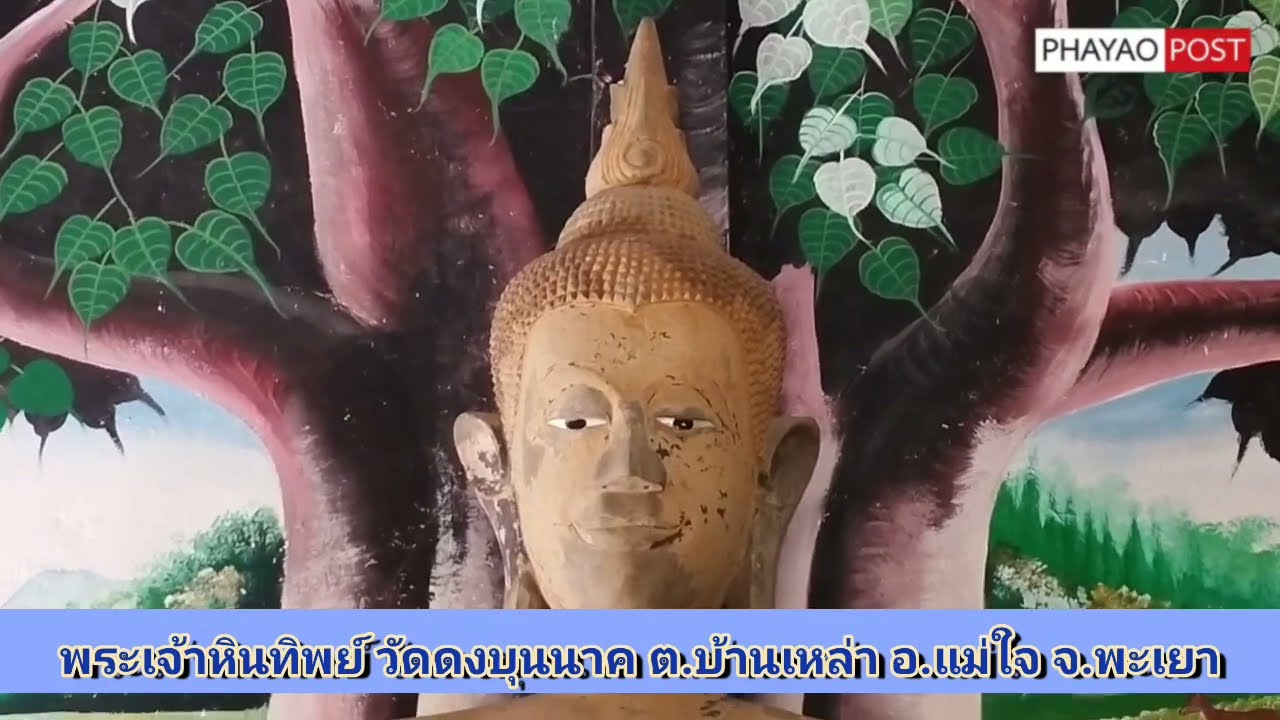
 Click to Access the Navigation Map GPS
Wat Dong Bun Nak Map
Recommend

 Art, Culture and Heritage
 Historical Sites and Monuments(4)
 Landmarks and Memorials(4)
 Art, Craft Centres, Tradition(1)
 Museums(2)
Temple(39)
Museums(2)
Temple(39)
 Other Sacred Sites(5)
 Research and Development
 Royal Project(1)
 Suburban Living
 Village, Community(2)
 Local Market(4)
 Nature and Wildlife
 National Parks and Marine Reserves(6)
 Mountain (Doi)(2)
 Dam, Reservoir, Lake(11)
 Waterfalls(8)
 Caves(5)
 River, Canal(3)
 Other natural attractions(5)


