
lovethailand home >North Travel Attractions
>Phayao Travel Attractions >Mae Chai
>Pa Faek
> Wat Pa Faek Tai
TL;DR: Wat Pa Faek Tai is located at Moo 5, Ban Pa Faek Tai, Pa Faek Subdistrict, Mae Chai District, Phayao Province, open Daily, hours Open During Temple Hours.
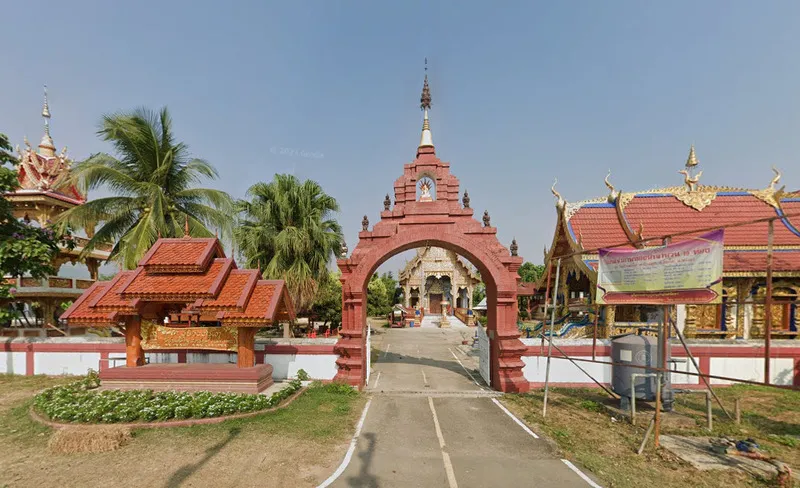
Wat Pa Faek Tai
Open Days: Daily
Opening Hours: Open During Temple Hours
Wat Pa Faek Tai in Phayao Province is a local Buddhist temple in Ban Pa Faek Tai, Pa Faek Subdistrict, Mae Chai District. It represents the quiet cultural identity of northern Thailand through its Lanna-style temple architecture, carved wooden details, religious buildings, and close relationship with the surrounding community. For travelers looking beyond major tourist sites, this temple offers a calm and meaningful way to experience local faith, community life, and the gentle character of rural Phayao.
Wat Pa Faek Tai is located in Moo 5, Ban Pa Faek Tai, Pa Faek Subdistrict, Mae Chai District, Phayao Province. It is not only a place for Buddhist ceremonies but also a spiritual and cultural center for the local community. The temple remains closely connected to the everyday lives of villagers, especially during important Buddhist occasions and local merit-making traditions. Its charm lies in its peaceful atmosphere, Lanna architectural character, and the sense that it is still a living temple used by local people rather than a purely commercial tourist attraction.
The most distinctive feature of Wat Pa Faek Tai is its northern Thai temple architecture. The viharn, ubosot, sermon hall, and wooden decorative elements reflect the craftsmanship of local Lanna artisans. The carved woodwork, delicate patterns, and balanced forms of the buildings express both artistic beauty and religious devotion. Visitors who take time to look closely will notice that these details are not merely decorative. They represent the skill, faith, and cultural memory of the community that helped build and maintain the temple over generations.
As a community temple, Wat Pa Faek Tai plays a role far beyond its physical structures. It serves as a gathering place for villagers during religious ceremonies, merit-making events, and seasonal festivals. Elderly residents come to make merit and listen to sermons, while younger generations participate in communal activities during important occasions. The temple therefore functions as a bridge between generations, preserving both Buddhist practice and local traditions in a natural community setting.
The temple grounds are calm and shaded, making them suitable for prayer, meditation, quiet walking, and cultural observation. Unlike larger attractions that focus on constant visitor traffic, Wat Pa Faek Tai offers a slower and more reflective experience. Visitors can appreciate the rhythm of a northern Thai village temple, where religious life, architecture, trees, open spaces, and community participation come together in a simple but deeply meaningful way.
Wat Pa Faek Tai is also associated with important Buddhist and Lanna cultural activities throughout the year. These include Buddhist Lent, the end of Buddhist Lent, Kathin robe-offering ceremonies, Tan Kuai Salak merit-making, and the northern Thai New Year known as Pi Mai Muang. During such events, villagers gather to prepare offerings, decorate the temple, cook food, welcome participants, and support the monks. These activities show how the temple continues to function as a living cultural space, not just a historical or architectural site.
Tan Kuai Salak is one of the most meaningful Lanna merit-making traditions. It is commonly practiced to dedicate merit to ancestors, deceased relatives, and others who have passed away. Villagers prepare baskets or containers filled with food, useful items, and offerings for monks and novices. The value of the tradition lies not only in the objects offered but also in the intention behind the act: gratitude, remembrance, generosity, and community solidarity. A temple such as Wat Pa Faek Tai provides the right setting for this tradition to remain meaningful in daily life.
During Pi Mai Muang, or the northern Thai New Year, temples in northern communities become important centers for merit-making, Buddha image bathing rituals, blessings, and family gatherings. At Wat Pa Faek Tai, visitors can understand how the New Year in Lanna culture is connected with renewal, respect, and spiritual preparation. For foreign travelers, this offers a valuable perspective on Songkran beyond water festivities, revealing the deeper religious and cultural meaning of the season.
The wider Pa Faek Subdistrict is a Buddhist community area with several temples and annual traditions. This helps place Wat Pa Faek Tai within a broader cultural landscape rather than viewing it as an isolated destination. The temple belongs to a network of local faith, village identity, and seasonal rituals in Mae Chai District. Travelers who visit with this context in mind will gain a fuller understanding of how Buddhist temples shape community life in northern Thailand.
For those interested in Lanna art and architecture, Wat Pa Faek Tai is a good example of how beauty is preserved in local temples outside major city centers. Northern Thai temple design often emphasizes layered roof forms, wooden structures, carved details, and symbolic decorative patterns. While every temple has its own character, the overall impression at Wat Pa Faek Tai is one of refinement, serenity, and devotion. The temple architecture speaks quietly through proportion, texture, and craftsmanship.
Photography at Wat Pa Faek Tai is best approached respectfully. Good subjects include the viharn, ubosot, sermon hall, carved wooden details, shaded temple grounds, and overall atmosphere of the village temple. Visitors should avoid disturbing monks, worshippers, or ongoing ceremonies. When photographing religious spaces, it is important to dress modestly, move quietly, and follow basic temple etiquette. This makes the visit more respectful and helps preserve the dignity of the place.
Wat Pa Faek Tai is especially suitable for travelers who prefer slow cultural travel. It is not a place to rush through, but a place to observe, reflect, and understand the relationship between Buddhism and northern Thai community life. The temple can be included in a Mae Chai travel route together with nearby attractions such as Wat Phra That Chom Ko, Wat Phra That Mung Mueang, Nong Leng Sai, Mae Puem National Park, Doi Luang National Park, and Phayao Lake. This type of route combines spirituality, nature, rural scenery, and local culture.
Getting There is most convenient by private car. Travelers can drive to Mae Chai District in Phayao Province, then continue to Pa Faek Subdistrict and Ban Pa Faek Tai. Since the temple is located within a local community area, checking the map before departure is recommended. From Phayao town, the temple can be included in a half-day or full-day route around Mae Chai. It can also serve as a quiet cultural stop for travelers continuing between Phayao, Chiang Rai, and nearby northern provinces.
When visiting Wat Pa Faek Tai, travelers should dress modestly and behave respectfully. Shoes should be removed before entering religious buildings. Visitors should avoid loud conversation, refrain from touching sacred objects unnecessarily, and be considerate of monks and local people using the temple for religious purposes. These simple practices help make the visit respectful and allow travelers to experience the temple in a meaningful way.
What makes Wat Pa Faek Tai memorable is not grandeur or mass tourism, but authenticity. It remains a temple of the community, with monks, merit-making activities, seasonal traditions, and local people who continue to maintain their relationship with the place. Travelers who spend time quietly in the temple grounds will notice small details that reveal its value: carved wood, shaded spaces, calm sounds, and the living connection between temple and village.
For visitors interested in northern Thai culture, Wat Pa Faek Tai shows that important cultural experiences are not limited to famous temples in large cities. Local temples in districts such as Mae Chai also preserve valuable architecture, craftsmanship, ritual life, and community memory. The wooden carving and Lanna-style religious buildings represent artistic heritage, while the festivals and temple activities represent living tradition. Together, they make the temple a meaningful cultural learning space.
Wat Pa Faek Tai is a suitable destination for making merit, paying respect to Buddha images, appreciating Lanna temple architecture, and learning about the Pa Faek community. On ordinary days, the atmosphere is quiet and ideal for reflection. During temple fairs or merit-making events, the area becomes more lively and shows the warmth of local participation. Both experiences reveal different but equally important aspects of the temple.
Overall, Wat Pa Faek Tai should be appreciated as a local Lanna community temple with religious, artistic, and cultural value. Visitors do not need to rush. They can walk slowly, observe the architecture, pay respect, and understand how faith continues to shape rural life in Phayao Province. For travelers seeking a calm and authentic northern Thai temple experience, Wat Pa Faek Tai is a worthwhile stop in Mae Chai District.
| Name | Wat Pa Faek Tai |
| Location | Moo 5, Ban Pa Faek Tai, Pa Faek Subdistrict, Mae Chai District, Phayao Province |
| Address | 290 Moo 5, Pa Faek Subdistrict, Mae Chai District, Phayao 56130, Thailand |
| Highlights | A local Buddhist temple with Lanna-style architecture, carved wooden details, a viharn, ubosot, sermon hall, and a strong community role |
| History | A community temple under the Maha Nikaya order, established in 1875 and granted consecrated boundary status in 1974 |
| Distinctive Features | Peaceful village-temple atmosphere, Lanna-style religious buildings, wood craftsmanship, and an active role in local Buddhist life |
| Traditions / Main Activities | Buddhist Lent, end of Buddhist Lent, Kathin robe-offering ceremonies, Tan Kuai Salak, Pi Mai Muang, and local Lanna merit-making events |
| Travel Information | Best reached by private car via Mae Chai District, then continuing to Pa Faek Subdistrict and Ban Pa Faek Tai; suitable for a cultural route around Mae Chai |
| Current Status | An active local Buddhist temple used for religious ceremonies and community activities |
| Open Days | Daily |
| Opening Hours | Open During Temple Hours |
| Fees | No Admission Fee |
| Facilities | Temple grounds, religious activity areas, shaded spaces, and parking areas within or near the temple |
| Main Areas / Zones | Viharn, ubosot, sermon hall, temple courtyard, and Buddhist ceremonial areas |
| Abbot / Caretaker | Phra Mano Atthapo |
| Main Contact Number | 054-426-178 |
| Official Website / Official Page | Wat Pa Faek Tai, Pa Faek Subdistrict, Mae Chai District, Phayao Province |
| Nearby Tourist Attractions | 1. Wat Phra That Chom Ko, about 3 km 2. Wat Phra That Mung Mueang, about 13 km 3. Nong Leng Sai, about 16 km 4. Mae Puem National Park, about 25 km 5. Doi Luang National Park, about 28 km 6. Phayao Lake, about 32 km |
| Nearby Restaurants | 1. Khrua Chan Hom, about 8 km, Tel. 054-417231 2. PunThai Coffee Mae Chai, about 9 km 3. Kod Rak Cafe Mae Chai, about 10 km 4. Mae Bai Tong Northern Thai Food, about 10 km 5. Hug View Cafe, about 12 km 6. Khrua Nong Leng Sai Mae Chai, about 16 km |
| Nearby Accommodations | 1. Eden’home Mae Chai, about 9 km, Tel. 080-3067030 2. Baan Manow Mae Chai, about 10 km 3. Leng Sai Resort, about 15 km, Tel. 065-970-2284 4. I Ya Guesthouse Phayao, about 25 km, Tel. 095-315-0757 5. ABIZZ Hotel Kwan Phayao, about 32 km 6. Phayao Northern Lake Hotel, about 34 km |
Frequently Asked Questions (FAQ)
Q: Where is Wat Pa Faek Tai located?
A: Wat Pa Faek Tai is located at 290 Moo 5, Ban Pa Faek Tai, Pa Faek Subdistrict, Mae Chai District, Phayao Province 56130, Thailand.
Q: What makes Wat Pa Faek Tai interesting?
A: The temple is known for its Lanna-style architecture, carved wooden details, viharn, ubosot, sermon hall, and peaceful village-temple atmosphere.
Q: What type of traveler is Wat Pa Faek Tai suitable for?
A: It is suitable for travelers interested in temple visits, merit-making, Lanna architecture, local culture, and quiet community-based travel in Phayao.
Q: Who is the abbot of Wat Pa Faek Tai?
A: The abbot of Wat Pa Faek Tai is Phra Mano Atthapo.
Q: What traditions are connected with Wat Pa Faek Tai?
A: The temple is connected with Buddhist Lent, the end of Buddhist Lent, Kathin ceremonies, Tan Kuai Salak, Pi Mai Muang, and other local Lanna merit-making traditions.
Q: How can visitors get to Wat Pa Faek Tai?
A: The most convenient way is by private car. Travelers can drive to Mae Chai District, then continue to Pa Faek Subdistrict and Ban Pa Faek Tai.
Q: Are there attractions near Wat Pa Faek Tai?
A: Nearby attractions include Wat Phra That Chom Ko, Wat Phra That Mung Mueang, Nong Leng Sai, Mae Puem National Park, Doi Luang National Park, and Phayao Lake.
Q: What is the main contact number for Wat Pa Faek Tai?
A: The main contact number for Wat Pa Faek Tai is 054-426-178.
 Category: ●Places of Worship
 Group: ●Temple
Last Update : 2 WeekAgo
 Last Update : 2 WeekAgo
 Click to Access the Navigation Map GPS
 Art, Culture and Heritage
 Historical Sites and Monuments(4)
 Landmarks and Memorials(4)
 Art, Craft Centres, Tradition(1)
 Museums(2)
 University Temple(39)
 Other religious and spiritural sites(5)
 Research and Development
 Royal Project(1)
 Suburban Living
 Village, Community(2)
 Local Market(4)
 Nature and Wildlife
 National Parks and Marine Reserves(6)
 Mountain (Doi)(2)
 Dam, Reservoir, Lake(11)
 Waterfalls(8)
 Caves(5)
 River, Canal(3)
 Other natural attractions(5)


