
lovethailand home >North Travel Attractions
>Phayao Travel Attractions >Mae Chai
>Si Thoi
> Wat Sri Boon Rueang
TL;DR: Wat Sri Boon Rueang is located at Ban Khua Tat, Sri Thoi Subdistrict, Mae Chai District, Phayao Province, open Daily, hours 08.00 – 17.00.
Wat Sri Boon Rueang
Open Days: Daily
Opening Hours: 08.00 – 17.00
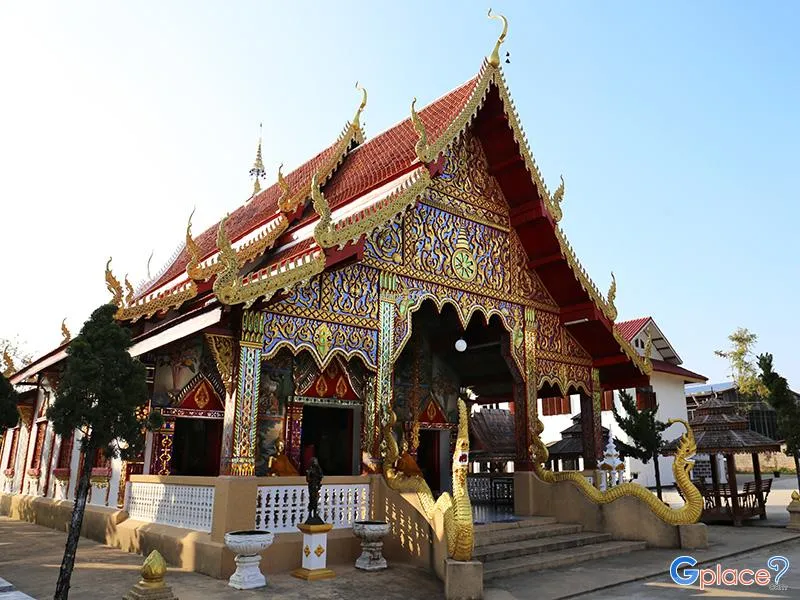
Wat Sri Bun Rueang, formerly known as Wat Khua Tat, is located in Ban Khua Tat, Sri Thoi Subdistrict, Mae Chai District, Phayao Province. It is an important community temple closely connected with the faith of Mae Chai residents. The temple is home to Phra Chao Ong Dam, a black bronze Buddha image in the Mara Vijaya posture, which is deeply respected by local people. The story of Phra Chao Ong Dam is significant in terms of faith, local history, and community memory. According to local tradition, the Buddha image was discovered around Nong Leng Sai, where it had been enshrined in an abandoned temple. The villagers later invited the image to be enshrined at Wat Sri Bun Rueang, where it has remained until today. Wat Sri Bun Rueang is therefore not only a village temple, but also a sacred place preserving an important Buddhist image that connects the people of Sri Thoi Subdistrict with the older spiritual roots of the Mae Chai area.
The importance of Wat Sri Bun Rueang lies in its role as a living community temple. Ban Khua Tat and Sri Thoi Subdistrict are local communities where people remain connected with merit-making, temples, traditions, and village relationships. The temple serves as a place for worship, merit-making, Dhamma listening, Buddhist ceremonies, and community gatherings. During annual merit-making events, Kathin, Pha Pa, Buddhist holy days, Buddhist Lent, the end of Buddhist Lent, and other local activities, Wat Sri Bun Rueang becomes a place where people return to meet, work together, and continue their local customs.
The temple’s former name, Wat Khua Tat, reflects its connection with Ban Khua Tat, the village where it is located. In northern Thai dialect, the word “khua” often means a bridge or crossing, while “tat” may be connected with local landscape features or flowing water. The old name therefore evokes a place with a specific geography and local memory. The later name, Wat Sri Bun Rueang, carries a more auspicious meaning. “Sri” suggests prosperity and sacred blessing, while “Bun Rueang” refers to merit that flourishes. The name reflects both the community’s original roots and the aspiration for the temple to be a place where merit and faith continue to grow.
Phra Chao Ong Dam is the spiritual heart of Wat Sri Bun Rueang. This black bronze Buddha image is in the Mara Vijaya posture, a posture that represents the Buddha’s victory over Mara through spiritual perfection and steadfastness of mind. The dark surface gives the image a distinctive and solemn appearance, different from many Buddha images commonly seen in other temples. Rather than reducing its sacred presence, the black tone gives Phra Chao Ong Dam a calm, grounded, and deeply reverent character. For local devotees, the image symbolizes spiritual victory, inner strength, mindfulness, and the overcoming of obstacles through wisdom.
The discovery of Phra Chao Ong Dam at Nong Leng Sai is central to the temple’s local significance. The image was not merely created and placed in the temple in an ordinary way. It was discovered in a landscape tied to local memory, where it had been enshrined in an abandoned temple. Such stories are common in Lanna and northern Thai traditions, where sacred Buddha images are often connected with old settlements, ponds, forests, ancient temple sites, or abandoned sacred places. When local people discover such an image, they usually regard it as a sacred object that must be properly cared for, protected, and made accessible to the community for worship.
Nong Leng Sai is therefore more than a place mentioned in a local story. It is a memory landscape that connects Phra Chao Ong Dam with the older history of Sri Thoi Subdistrict and Mae Chai District. The fact that the image was once enshrined in an abandoned temple suggests that the Mae Chai area has traces of earlier religious sites and communities. Bringing the Buddha image to Wat Sri Bun Rueang can be seen as the revival of faith from an abandoned place into a living temple. Phra Chao Ong Dam is therefore a sacred object, a revered Buddha image, and a sign of cultural continuity in Mae Chai.
Visitors to Wat Sri Bun Rueang should approach the temple with respect and calmness, especially when paying homage to Phra Chao Ong Dam inside the viharn. The image is highly revered by local people, so visitors should worship with proper manners, calm the mind, and reflect on the meaning of the Mara Vijaya posture. The image should not be viewed merely as an unusual object or a photo spot. It is the spiritual center of a community and has been respected by local residents for generations.
Local travel information notes that the viharn where Phra Chao Ong Dam is enshrined may not always be open regularly. Visitors who wish to enter the viharn and pay respect to the image should contact the temple or the abbot in advance. This reflects the need to protect sacred objects and maintain proper access to the worship area. Important community Buddha images are not ordinary display items, and contacting the temple beforehand helps visitors worship respectfully while allowing the temple to care for the sacred space appropriately.
In addition to Phra Chao Ong Dam, Wat Sri Bun Rueang is also interesting because of its connection with contemporary Buddhist art. The abbot, Phra Maha Somboonchai Chotipanyo, has been mentioned in local media as a monk with artistic skill, especially in painting and creating visual art. Local people have referred to him as a monk artist. This adds another dimension to Wat Sri Bun Rueang because the temple is not only a place preserving an old sacred Buddha image, but also a place where art, faith, and cultural transmission continue to happen in the present.
The role of monks in community temples is not limited to performing rituals. It also includes moral guidance, emotional support for villagers, leadership in merit-making activities, and the use of personal abilities to create value for the community. Art created within a temple, or by a monk who cares for a temple, can become a medium connecting Dhamma with people. Paintings and visual art can communicate calmness, beauty, and spiritual meaning in a way that complements spoken teachings.
Wat Sri Bun Rueang therefore has several layers of significance. The first layer is its identity as the community temple of Ban Khua Tat. The second is its role as the home of Phra Chao Ong Dam, the black bronze Buddha image discovered at Nong Leng Sai. The third is its function as a center for Buddhist merit-making and local community activities. The fourth is its connection with contemporary religious art, which keeps the temple alive in a new cultural dimension. A visit to this temple should therefore not be rushed, because the temple connects past and present, faith and art, sacred memory and everyday community life.
Sri Thoi Subdistrict is an important area in Mae Chai District, with agricultural communities, Nong Leng Sai, local ways of life, and several Buddhist temples. Wat Sri Bun Rueang stands within this wider cultural landscape. Nong Leng Sai, which is connected with the story of Phra Chao Ong Dam, is an important local water body, while Ban Khua Tat is a community with its own temple-based memory and devotion. Visiting Wat Sri Bun Rueang helps travelers understand Mae Chai more deeply than simply passing through on the main road between Phayao and Chiang Rai.
As with many community temples in northern Thailand, Wat Sri Bun Rueang is used for annual Buddhist activities. On Buddhist holy days and important religious occasions, villagers come to make merit, offer food to monks, listen to Dhamma teachings, and participate in ceremonies. Buddhist Lent and the end of Lent are important periods connecting monks and laypeople, while Kathin and Pha Pa ceremonies provide opportunities for the community to work together to support and maintain the temple. In this way, the temple turns faith into practical action in daily life.
Merit-making events at Wat Sri Bun Rueang are important for community relationships. Every temple event brings together people of different generations. Elders help pass down traditions. Children and young people learn how to pay respect, help with temple work, and behave appropriately in a sacred space. Monks provide spiritual guidance, while villagers help prepare the venue, food, and offerings. These activities may seem ordinary in a community temple, but they are important mechanisms that keep the community connected and allow culture to continue.
Phra Chao Ong Dam is also an important learning source for children and young people. The story of the Buddha image helps them understand local history, belief in sacred Buddha images, and the value of preserving religious objects. When children hear about the discovery of Phra Chao Ong Dam at Nong Leng Sai and its invitation to Wat Sri Bun Rueang, they learn that the sacred heritage of a community has stories, places, people, and shared responsibility behind it.
For visitors interested in Buddhist art, Phra Chao Ong Dam is a Buddha image worth observing carefully. The black bronze surface creates a calm and solemn impression, while the Mara Vijaya posture expresses spiritual victory and mental firmness. Artistically, a dark Buddha image has a distinct visual character because light falls across its surface differently from gilded or lighter-colored images. Visitors should take time to view the image quietly, rather than only glancing at it quickly.
Paying respect to Phra Chao Ong Dam should begin with calm worship and recollection of the Buddha’s virtues. Those who wish to make a prayer may set wholesome intentions such as developing mindfulness, compassion, patience, and right conduct. Worshipping an important Buddha image is not only about asking for blessings. It is also an opportunity to reflect on oneself and renew the intention to do good.
Wat Sri Bun Rueang is suitable for travelers who want to explore Mae Chai temples at a relaxed pace. A travel route can begin with paying respect to Phra Chao Ong Dam at Wat Sri Bun Rueang, then continue to Nong Leng Sai, Wat Sri Suphan where Phra Chao Thong Thip is enshrined, Wat Mae Chai Tai, or cafés and restaurants in Sri Thoi Subdistrict and Mae Chai town. This route reveals Mae Chai as a district with sacred Buddha images, local water landscapes, community temples, and a simple local lifestyle.
Nong Leng Sai should be connected with a visit to Wat Sri Bun Rueang because it is part of the origin story of Phra Chao Ong Dam and an important landscape of Sri Thoi Subdistrict. Seeing the surrounding area helps visitors understand how the temple’s sacred image is rooted in the local environment. With enough time, travelers can plan a trip that includes worship, a visit to the local water landscape, and a meal in Mae Chai, creating a fuller understanding of the community.
Photography inside the temple should be done with special care because Phra Chao Ong Dam is a sacred Buddha image of the community. If the viharn is open for worship, avoid using flash in a way that disturbs others, avoid inappropriate poses near the image, and do not photograph people inside the temple without permission. If villagers are worshipping or a ceremony is taking place, give priority to those making merit. Good temple photography should communicate peace, respect, and cultural value.
The atmosphere of Wat Sri Bun Rueang is suitable for travelers who want to rest the mind and experience a sincere community temple. The temple is not defined by grandeur or large-scale architecture, but by the presence of Phra Chao Ong Dam, the story of its discovery at Nong Leng Sai, the role of the abbot, and the relationship of Ban Khua Tat community. Visitors should approach the temple with an understanding of local context rather than expecting a major tourist attraction.
Getting There Wat Sri Bun Rueang is located in Ban Khua Tat, Sri Thoi Subdistrict, Mae Chai District, Phayao Province, along the Phayao–Chiang Rai route in the Mae Chai area. From Phayao city, take Phahonyothin Road toward Mae Chai District. When entering Sri Thoi Subdistrict, head toward Ban Khua Tat or the Sri Bun Rueang intersection. The temple is located within the community and can be reached by private car, motorcycle, or local hired transport. Visitors who wish to enter the viharn to worship Phra Chao Ong Dam should contact the temple in advance.
From Mae Chai town, Wat Sri Bun Rueang is not far and can be included in a half-day or full-day route with nearby places such as Nong Leng Sai, Wat Sri Suphan, Wat Mae Chai Tai, Wat Photharam, and restaurants or cafés in Sri Thoi Subdistrict. If continuing toward Chiang Rai or returning to Phayao city, Wat Sri Bun Rueang can also serve as a meaningful worship stop along the route.
The best time to visit is from morning to late afternoon, when the weather is comfortable for worship and walking around the temple. Visitors who want to pay respect to Phra Chao Ong Dam inside the viharn should contact the temple before traveling because the viharn may not be open regularly. Planning ahead helps ensure a smoother visit and shows respect for the temple’s way of protecting its sacred space.
Visitors should dress modestly when entering the temple. Clothing should cover shoulders and knees. Speak politely, behave calmly, and respect monks, villagers, and people making merit inside the temple. If ceremonies or community activities are taking place, avoid disturbing participants and allow space for the ceremony. A visit to Wat Sri Bun Rueang should be made with interest, calmness, and respect for the community’s faith.
Wat Sri Bun Rueang is therefore an important temple of Sri Thoi Subdistrict and Mae Chai District. It is the former Wat Khua Tat, the spiritual center of Ban Khua Tat, the home of Phra Chao Ong Dam, a black bronze Buddha image discovered near Nong Leng Sai, and a living community temple where faith and art continue to meet. For travelers who want to experience Phayao through local faith, sacred Buddha images, and community temples with deep stories, Wat Sri Bun Rueang is a meaningful stop in Mae Chai District.
| Name | Wat Sri Bun Rueang / Wat Khua Tat |
| Location | Ban Khua Tat, Sri Thoi Subdistrict, Mae Chai District, Phayao Province |
| Address | Ban Khua Tat, Sri Thoi Subdistrict, Mae Chai District, Phayao 56130, Thailand |
| Highlights | Home of Phra Chao Ong Dam, a black bronze Buddha image in the Mara Vijaya posture and one of the revered Buddha images of Mae Chai District |
| Former Name | Wat Khua Tat |
| Sacred Object | Phra Chao Ong Dam, a black bronze Buddha image in the Mara Vijaya posture, enshrined inside the viharn of Wat Sri Bun Rueang |
| History / Local Legend | Phra Chao Ong Dam was discovered around Nong Leng Sai, where it had once been enshrined in an abandoned temple. The villagers later invited the image to Wat Sri Bun Rueang, where it has remained until today. |
| Distinctive Features | A community temple connected with devotion to Phra Chao Ong Dam, the history of Nong Leng Sai, and the role of the temple as the spiritual center of Ban Khua Tat |
| Cultural Importance | A spiritual center for people in Sri Thoi Subdistrict, used for Buddhist ceremonies, merit-making, Kathin, Pha Pa, Buddhist Lent, the end of Buddhist Lent, and community activities |
| Visitor Note | The viharn of Phra Chao Ong Dam may not always be open regularly. Visitors who wish to pay respect inside the viharn should contact the temple in advance. |
| Travel Information | From Phayao city, take Phahonyothin Road toward Mae Chai District, then enter Sri Thoi Subdistrict and Ban Khua Tat around the Sri Bun Rueang intersection. The temple is located within the local community and is accessible by private car, motorcycle, or local hired transport. |
| Current Status | Active community Buddhist temple, sacred site of Phra Chao Ong Dam, and faith-based cultural attraction of Sri Thoi Subdistrict, Mae Chai District |
| Open Days | Daily |
| Opening Hours | 08.00 – 17.00 |
| Facilities | Temple courtyard, worship area, viharn of Phra Chao Ong Dam, merit-making area, community parking area, and restaurants and accommodations in Sri Thoi Subdistrict and Mae Chai town |
| Main Areas / Zones | Viharn of Phra Chao Ong Dam, temple courtyard, worship area, religious activity buildings, and community activity space |
| Abbot / Caretaker | Phra Maha Somboonchai Chotipanyo |
| Main Contact Number | 054-499-010, 064-339-1721 |
| Nearby Tourist Attractions | 1. Nong Leng Sai, Sri Thoi Subdistrict, about 2 km 2. Wat Sri Suphan, Mae Chai District, about 6 km 3. Wat Mae Chai Tai, about 6 km 4. Wat Photharam, Mae Chai District, about 8 km 5. Kwan Phayao, about 28 km 6. Wat Si Khom Kham / Phayao City, about 30 km |
| Nearby Restaurants | 1. Mee Pao Restaurant, Sri Thoi Subdistrict, about 2 km, Tel. 080-465-9868 2. Hug View Cafe, Sri Thoi Subdistrict, about 4 km, Tel. 095-705-5601 3. Kod Rak Cafe Mae Chai, about 5 km, Tel. 080-660-6050 4. Khrua Nong Leng Sai Mae Chai, about 3 km 5. Local Restaurants In Mae Chai Town, about 6 km |
| Nearby Accommodations | 1. Eden’home Daily And Monthly Rooms, Mae Chai, about 6 km, Tel. 080-306-7030 2. Ban Manao Mae Chai, about 7 km 3. Leng Sai Resort, about 10 km, Tel. 065-970-2284 4. White And Bloom, about 12 km, Tel. 081-560-4755 5. Accommodations In Phayao City, about 30 km |
Frequently Asked Questions (FAQ)
Q: Where is Wat Sri Bun Rueang located?
A: Wat Sri Bun Rueang, formerly Wat Khua Tat, is located in Ban Khua Tat, Sri Thoi Subdistrict, Mae Chai District, Phayao Province.
Q: What was the former name of Wat Sri Bun Rueang?
A: The former name of Wat Sri Bun Rueang was Wat Khua Tat, after Ban Khua Tat where the temple is located.
Q: What is Wat Sri Bun Rueang known for?
A: It is known as the home of Phra Chao Ong Dam, a black bronze Buddha image in the Mara Vijaya posture that is deeply respected by the people of Mae Chai.
Q: What is the history of Phra Chao Ong Dam?
A: Phra Chao Ong Dam was discovered around Nong Leng Sai, where it had been enshrined in an abandoned temple. It was later invited to Wat Sri Bun Rueang, where it remains today.
Q: What kind of Buddha image is Phra Chao Ong Dam?
A: Phra Chao Ong Dam is a black bronze Buddha image in the Mara Vijaya posture, symbolizing spiritual victory and firmness of mind.
Q: Who is the abbot of Wat Sri Bun Rueang?
A: The abbot of Wat Sri Bun Rueang is Phra Maha Somboonchai Chotipanyo.
Q: Should visitors contact the temple before paying respect to Phra Chao Ong Dam?
A: Yes. Visitors should contact the temple before traveling because the viharn of Phra Chao Ong Dam may not always be open regularly.
Q: Is there a contact number for Wat Sri Bun Rueang?
A: The contact numbers are 054-499-010 and 064-339-1721.
Q: What nearby attractions can be visited with Wat Sri Bun Rueang?
A: Nearby attractions include Nong Leng Sai, Wat Sri Suphan, Wat Mae Chai Tai, Wat Photharam, Kwan Phayao, and Wat Si Khom Kham.
 Category: ●Places of Worship
 Group: ●Temple
Last Update : 1 WeekAgo
 Last Update : 1 WeekAgo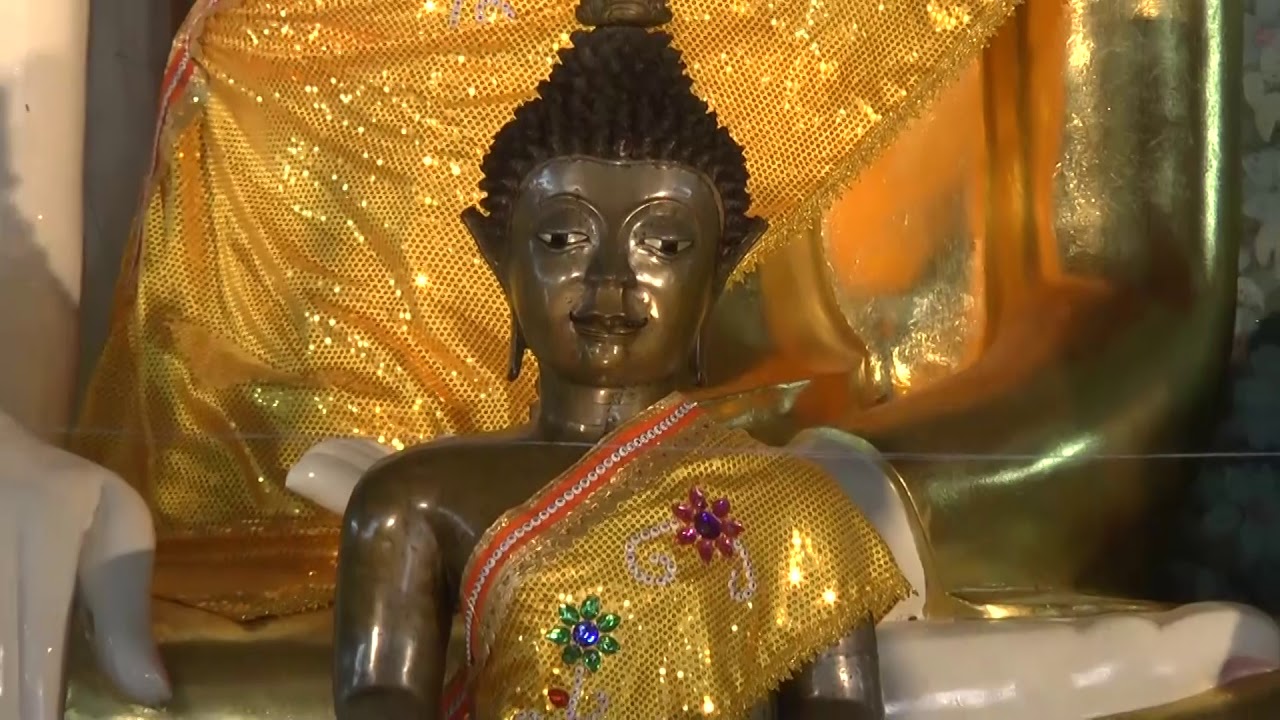
 Click to Access the Navigation Map GPS
Wat Sri Boon Rueang Map
Recommend
 Art, Culture and Heritage
 Historical Sites and Monuments(4)
 Landmarks and Memorials(4)
 Art, Craft Centres, Tradition(1)
 Museums(2)
 University Temple(39)
 Other religious and spiritural sites(5)
 Research and Development
 Royal Project(1)
 Suburban Living
 Village, Community(2)
 Local Market(4)
 Nature and Wildlife
 National Parks and Marine Reserves(6)
 Mountain (Doi)(2)
 Dam, Reservoir, Lake(11)
 Waterfalls(8)
 Caves(5)
 River, Canal(3)
 Other natural attractions(5)


