
lovethailand home >North Travel Attractions >Phayao Travel Attractions >Dok Kham Tai >Khue Wiang > Wat Pho Thong
TL;DR: Wat Pho Thong is located at Khue Wiang Subdistrict, Dok Kham Tai District, Phayao Province, open Daily, hours 08.00 – 17.00.
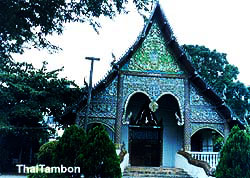
Wat Pho Thong
Open Days: Daily
Opening Hours: 08.00 – 17.00
Wat Pho Thong in Phayao Province is located in Khue Wiang Subdistrict, Dok Kham Tai District. It is an old community temple and a long-standing spiritual center for local residents. The temple has served as a central religious space for Buddhist ceremonies, merit-making, community traditions, and local activities that help preserve the relationship among people in Khue Wiang. Wat Pho Thong is therefore more than a place for worship or merit-making. It reflects the faith, beliefs, and everyday way of life of local people in Dok Kham Tai District, Phayao Province.
The distinctive value of Wat Pho Thong lies in its identity as a living community temple. It is located in Khue Wiang Subdistrict, a rural community in Dok Kham Tai where local life remains connected with agriculture, Buddhist merit-making, seasonal traditions, and village relationships. The temple serves both religious and social needs. On important Buddhist days, villagers come to make merit, listen to Dhamma teachings, offer food to monks, and join traditional ceremonies. These activities allow people to meet, reconnect, and maintain strong community bonds.
In the past, village temples in northern Thailand were often created through the faith of local people and monks. They were not built only as places for religious rituals, but also as spaces of cooperation, sacrifice, and shared care. Wat Pho Thong carries this same meaning. It is a temple that local people rely on spiritually, a place for making merit during important moments of life, and a center of shared community memory in Khue Wiang Subdistrict. The continued existence of the temple reflects the strength of community faith passed down from generation to generation.
The name Wat Pho Thong carries strong auspicious meaning. The word “Pho” is connected with the Bodhi tree, an important symbol in Buddhism because it is associated with the place where the Buddha attained enlightenment. The word “Thong” means gold, symbolizing prosperity, beauty, value, and auspiciousness. The name Wat Pho Thong therefore reflects both Buddhist sacredness and the wish for the temple to be a place of wisdom, brightness, and growth for the community.
When the temple name is considered together with its role in Khue Wiang, Wat Pho Thong can be seen as a spiritual shelter for local people. Residents come to the temple when they want to make merit, dedicate merit to deceased relatives, listen to sermons, or seek peace of mind. The temple supports the joys, suffering, hopes, and faith of people in the area. Having a temple as the center of the community gives everyone a shared place they can access, whether they are elders, children, young people, or working adults.
Wat Pho Thong is important as a center of Buddhist activity in Khue Wiang Subdistrict. Local people use the temple for merit-making on Buddhist holy days and major religious occasions such as Makha Bucha, Visakha Bucha, Asalha Bucha, Buddhist Lent, the end of Buddhist Lent, Kathin, Pha Pa, and local annual merit-making events. These activities are not only religious rituals. They also help people work together, prepare food, arrange offerings, welcome visitors, and care for the temple as a shared responsibility.
On Visakha Bucha Day, Wat Pho Thong is a meaningful place for reflecting on the three major events in the Buddha’s life: his birth, enlightenment, and passing into parinibbana. Local people may come to make merit, listen to Dhamma teachings, and join a candlelight procession depending on the temple’s activities. This important Buddhist day encourages reflection on mindfulness, good conduct, and mental cultivation. The temple therefore helps bring Buddhist teachings back into the everyday lives of local people.
Buddhist Lent and the end of Buddhist Lent are also important periods for a community temple like Wat Pho Thong. During Buddhist Lent, villagers often offer Lent candles, bathing cloths, food, and necessities to support monks who remain in residence at the temple. Many laypeople also take this period as an opportunity to do good, reduce harmful habits, listen to Dhamma, and observe moral precepts according to their ability. At the end of Buddhist Lent, the community gathers again for merit-making, naturally connecting the Buddhist calendar with local village life.
Kathin and Pha Pa ceremonies at Wat Pho Thong clearly reflect the faith and unity of the community. These events require cooperation from many groups, including monks, community leaders, elders, young people, and general villagers. People help prepare the temple grounds, arrange offerings, cook food, and welcome guests. Through these merit-making events, community cooperation becomes visible and meaningful.
Beyond its religious role, Wat Pho Thong also serves as a social and cultural center. In rural communities, temples are often used for meetings, conversations, event preparation, and the passing down of traditions to younger generations. Children and young people learn how to pay respect to Buddha images, listen to Dhamma, respect elders, help with temple work, and live harmoniously with others. This type of learning does not come only from books; it comes from real experiences and examples set by adults in the community.
Wat Pho Thong clearly reflects the relationship between Buddhism and community life in Dok Kham Tai District. The district has many community temples, each serving its own village and neighborhood. Wat Pho Thong is one of the temples that helps complete the cultural landscape of Phayao, a province where Buddhist faith remains deeply woven into daily life. A visit to this temple shows that the importance of a temple is not measured only by the size of its buildings, but also by the bond between people and the sacred space they share.
The atmosphere of Wat Pho Thong is suitable for making merit, paying respect, and resting the mind while traveling through Dok Kham Tai District. Community temples like this are often calm, simple, and not crowded. Visitors can walk respectfully around the temple courtyard, religious buildings, and surrounding areas. The visit should not be rushed only for photographs, because the value of Wat Pho Thong lies in its role as the spiritual center of local people and in the cultural meaning it has preserved over time.
Khue Wiang Subdistrict is a local community still connected with rural life and agricultural landscapes in Dok Kham Tai District. Traveling to Wat Pho Thong allows visitors to experience another side of Phayao, different from major attractions such as Kwan Phayao or Wat Si Khom Kham in the provincial city. The temple offers an experience closer to the everyday lives of local people. It is suitable for travelers interested in community temples, local history, and the quiet northern Thai way of Buddhist faith.
From a cultural perspective, Wat Pho Thong helps preserve the continuity of local traditions. During annual merit-making events, the temple becomes a gathering place for the community. Families who have moved away may return to their hometown to join temple events. Elders meet children and grandchildren. Villagers work together. Younger people observe traditional patterns that have been passed down over time. Merit-making at the temple is therefore more than a religious act; it is also a way of maintaining community ties.
Wat Pho Thong also has value as a place that supports emotional and spiritual well-being. In daily life, people may face fatigue, worry, or uncertainty. Having a temple where they can pay respect, sit quietly, or listen to Dhamma gives the mind a place to rest. Many community temples are not famous because of large buildings, but they are deeply important because they allow people to reconnect with calmness, goodness, and hope whenever needed.
A visit to Wat Pho Thong should begin with paying respect and calming the mind. Visitors can then walk around the temple grounds quietly and observe how the temple functions as a real community space. Areas such as the temple courtyard, merit-making spaces, religious buildings, and gathering areas show how local people use the temple on different occasions. These details help visitors understand Wat Pho Thong more deeply than seeing it only as another travel stop.
For travelers interested in religious and cultural tourism, Wat Pho Thong can be included in a Dok Kham Tai route together with nearby temples and places such as Wat Bun Koet, Wat Si Chum, Wat Bun Rueang (Dok Phrao), Wat Don Tan, Wat Phra That Chom Sin, the Local Lanna Museum, and Kwan Phayao. This route is suitable for those who want to understand Dok Kham Tai through community temples, old religious sites, local food, and everyday life in the area.
A travel route beginning at Wat Pho Thong in Khue Wiang and continuing to Wat Bun Koet or Wat Si Chum helps reveal the diversity of temples in Dok Kham Tai District. Wat Bun Koet is known for the 28 Buddha Images. Wat Si Chum serves as a community temple in Sawang Arom Subdistrict. Wat Bun Rueang is connected with local history involving Thao Bun Rueang and the Dok Phrao area. Wat Pho Thong is important as an old village temple of Khue Wiang. Visiting several temples together helps travelers understand the wider structure of community faith in Dok Kham Tai.
Photography inside the temple should be done respectfully and without disturbing people who come to make merit. If monks or local residents are present, avoid taking close photographs without permission. Visitors should not pose inappropriately near Buddha images or religious buildings, and should avoid loud behavior within the temple. Photographing a community temple should focus on recording calmness, faith, and the beauty of local life rather than creating scenes that reduce respect for the place.
Visitors should dress modestly when entering Wat Pho Thong. Clothing should cover shoulders and knees. Speak politely and behave calmly, especially if ceremonies or community merit-making activities are taking place. Those who wish to make merit should follow the temple’s and local community’s practices appropriately. Respect for the place and the people is an essential part of meaningful cultural travel.
Getting There Wat Pho Thong is located in Khue Wiang Subdistrict, Dok Kham Tai District, Phayao Province. From Phayao city, travel toward Dok Kham Tai District, then continue into Khue Wiang Subdistrict via local roads. The temple is located within a community area and can be reached by private car, motorcycle, or local hired transport. For map navigation, search for Wat Pho Thong, Khue Wiang Subdistrict, Dok Kham Tai District, Phayao Province. It is recommended to check the route in advance, especially if planning to visit several temples in Dok Kham Tai on the same day.
From Dok Kham Tai town, visitors can continue to Khue Wiang Subdistrict without difficulty. The route is suitable for a slow-paced trip that includes paying respect at local temples, eating in Dok Kham Tai town, and continuing to other important temples or attractions in Phayao city. With half a day, visitors can stop at Wat Pho Thong and nearby temples in Dok Kham Tai. With a full day, the route can continue to Kwan Phayao or Wat Si Khom Kham.
The best time to visit Wat Pho Thong is in the morning or late afternoon, when the weather is more comfortable for worship, walking around the temple, and resting the mind. Visitors who want to see community life may choose Buddhist holy days or important Buddhist occasions, when local people are more likely to come for merit-making. Those who prefer a quiet visit should come on ordinary weekdays.
Wat Pho Thong is therefore an old village temple of Khue Wiang Subdistrict that is worth visiting. Although it is not a large tourist attraction, it has strong value as a spiritual center of local people, a community religious space, and a place that preserves the continuity of Buddhism in the everyday lives of people in Dok Kham Tai. For travelers who want to experience a quiet, simple, and meaningful community temple in Phayao, Wat Pho Thong is a worthwhile stop on a cultural travel route through the province.
| Name | Wat Pho Thong |
| Location | Khue Wiang Subdistrict, Dok Kham Tai District, Phayao Province |
| Address | Khue Wiang Subdistrict, Dok Kham Tai District, Phayao 56120, Thailand |
| Highlights | Old village temple of Khue Wiang Subdistrict, spiritual center for local people, and community religious space for merit-making and local activities |
| Distinctive Features | Peaceful community temple suitable for worship, merit-making, quiet reflection, and learning about the role of temples in local life in Dok Kham Tai District |
| Cultural Importance | A place for Buddhist ceremonies, merit-making events, local traditions, and community activities of Khue Wiang residents, helping preserve faith and local relationships |
| Name Origin | Pho is connected with the Bodhi tree and the symbol of the Buddha’s enlightenment, while Thong means gold, prosperity, beauty, and auspiciousness. |
| Travel Information | From Phayao city, travel toward Dok Kham Tai District, then continue to Khue Wiang Subdistrict. The temple is located within a local community and can be reached by private car, motorcycle, or local hired transport. |
| Current Status | Active community Buddhist temple, spiritual center of Khue Wiang residents, and local merit-making space in Dok Kham Tai District |
| Open Days | Daily |
| Opening Hours | 08.00 – 17.00 |
| Facilities | Temple courtyard, worship area, merit-making space, community activity area, and nearby restaurants and accommodations in Dok Kham Tai District |
| Main Areas / Zones | Worship area, temple courtyard, religious activity buildings, and community merit-making space |
| Nearby Tourist Attractions | 1. Wat Bun Koet, 28 Buddha Images, about 5 km 2. Wat Si Chum, Sawang Arom Subdistrict, about 6 km 3. Local Lanna Museum, Dok Kham Tai Municipality, about 7 km 4. Wat Bun Rueang (Dok Phrao), about 10 km 5. Wat Don Tan, about 13 km 6. Kwan Phayao, about 25 km |
| Nearby Restaurants | 1. Khao Soi Him Kong, about 6 km, Tel. 089-010-1686 2. An Charoen Noodle, Dok Kham Tai, about 7 km 3. Sathan Arroy Dok Kham Tai, about 7 km 4. Van Drip Caffeine Doi Chang Coffee, about 8 km 5. Local Restaurants In Dok Kham Tai Town, about 7 km |
| Nearby Accommodations | 1. VC Hotel Dok Kham Tai Phayao, about 7 km, Tel. 054-418-888, 095-453-2692 2. Resort Ban Suan Dok Kham Tai Phayao, about 8 km, Tel. 080-352-6105 3. Phurimon Resort, about 15 km 4. Green Hill Hotel Phayao, about 25 km 5. Accommodations In Phayao City, about 25 km |
Frequently Asked Questions (FAQ)
Q: Where is Wat Pho Thong located?
A: Wat Pho Thong is located in Khue Wiang Subdistrict, Dok Kham Tai District, Phayao Province. It is an old village temple and a spiritual center for the local community.
Q: What is Wat Pho Thong known for?
A: Wat Pho Thong is known as an old community temple of Khue Wiang Subdistrict and as a center for Buddhist ceremonies, merit-making, local traditions, and community activities.
Q: What kind of travelers should visit Wat Pho Thong?
A: It is suitable for travelers who want to make merit, rest the mind, and learn about a quiet community temple in Dok Kham Tai District, Phayao Province.
Q: What are the opening hours of Wat Pho Thong?
A: Wat Pho Thong is open daily from 08.00 to 17.00.
Q: What does the name Wat Pho Thong mean?
A: Pho is connected with the Bodhi tree and the Buddha’s enlightenment, while Thong means gold, prosperity, beauty, and auspiciousness.
Q: What nearby attractions can be visited with Wat Pho Thong?
A: Nearby attractions include Wat Bun Koet, Wat Si Chum, the Local Lanna Museum, Wat Bun Rueang (Dok Phrao), Wat Don Tan, and Kwan Phayao.
Q: How can travelers get to Wat Pho Thong?
A: From Phayao city, travel toward Dok Kham Tai District, then continue into Khue Wiang Subdistrict. The temple is located within a local community and can be reached by private car, motorcycle, or local hired transport.
Q: What should visitors wear when visiting Wat Pho Thong?
A: Visitors should dress modestly, covering shoulders and knees, behave calmly, avoid loud noise, and respect monks and local people making merit at the temple.
 Category: ●Places of Worship
 Group: ●Temple
Last Update : 1 MonthAgo
 Last Update : 1 MonthAgo
Recommend

 Art, Culture and Heritage
 Historical Sites and Monuments(4)
 Landmarks and Memorials(4)
 Art, Craft Centres, Tradition(1)
 Museums(2)
Temple(39)
Museums(2)
Temple(39)
 Other Sacred Sites(5)
 Research and Development
 Royal Project(1)
 Suburban Living
 Village, Community(2)
 Local Market(4)
 Nature and Wildlife
 National Parks and Marine Reserves(6)
 Mountain (Doi)(2)
 Dam, Reservoir, Lake(11)
 Waterfalls(8)
 Caves(5)
 River, Canal(3)
 Other natural attractions(5)


