
lovethailand home >North Travel Attractions >Phayao Travel Attractions >Dok Kham Tai >Bun Koet > Wat Bun Koet
TL;DR: Wat Bun Koet is located at Bun Koet Subdistrict, Dok Kham Tai District, Phayao Province, open Daily, hours 06.00 – 18.00.
Wat Bun Koet
Open Days: Daily
Opening Hours: 06.00 – 18.00
Wat Bun Koet in Phayao Province is located in Bun Koet Subdistrict, Dok Kham Tai District. It is an important community temple and one of the most distinctive Buddhist sites in the district, known for its strong religious significance and remarkable Buddhist art. The temple is especially famous for the 28 Buddha Images enshrined inside its viharn. These large Buddha images are connected with the Buddhist concept of the 28 Buddhas and make Wat Bun Koet an important destination for visitors who want to pay respect, make merit, admire Lanna-style architecture, and learn about the Buddhist heritage of Dok Kham Tai. Wat Bun Koet is not only a temple used for local religious activities, but also a cultural and spiritual attraction that reflects faith, community cooperation, and the continuing presence of Buddhism in Phayao Province.
The importance of Wat Bun Koet begins with its role as a community temple that has long been connected with the people of Bun Koet Subdistrict and Dok Kham Tai District. Within the temple grounds are an ordination hall, a viharn, areas for monastic ceremonies, merit-making spaces, and important Buddha images worshipped by local people. The temple is used for Buddhist ceremonies on major religious days such as Makha Bucha, Visakha Bucha, Asalha Bucha, Buddhist Lent, the end of Buddhist Lent, Kathin, Pha Pa, Salak Phat, and local annual merit-making events. It is therefore a place where villagers meet, make merit, listen to Dhamma teachings, and preserve their cultural roots together.
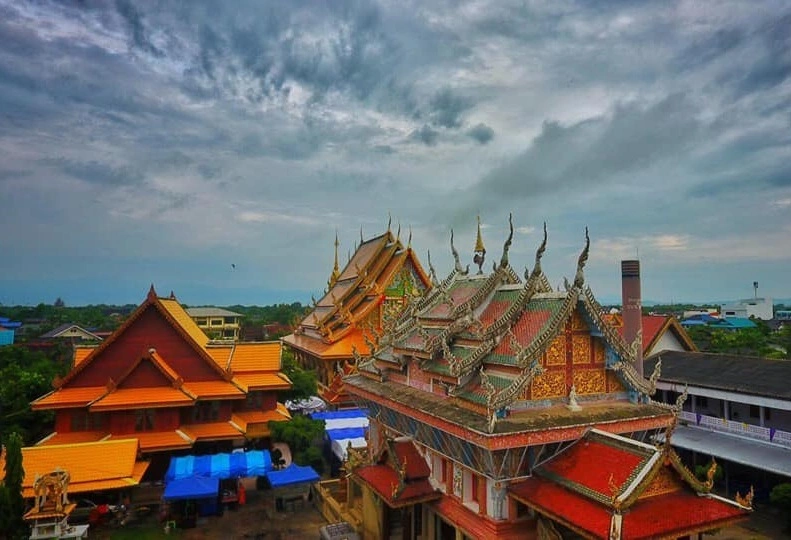
The ordination hall of Wat Bun Koet was built in 1926. Today, it remains an old religious building of strong spiritual and local craftsmanship value. The structure was built with Pradu wood pillars, wooden upper structures, and a teak-shingle roof. Its architectural style follows the Thai Lanna tradition, while the walls are made of brick and plaster. These details reflect the wisdom of northern local craftsmen, who selected strong materials suited to the climate and the sacred function of the building. Pradu wood and teak are materials associated with durability and beauty. Combined with Lanna architectural form, they give the building a calm, dignified, and sacred atmosphere.
The use of Pradu wood pillars is especially meaningful in terms of craftsmanship. Pradu is a strong hardwood suitable for the main structure of important religious buildings. The teak-shingle roof also reflects local taste and traditional northern construction wisdom. Teak has long been associated with northern Thai architecture, and wooden shingles create a refined roof texture that blends naturally with the atmosphere of a community temple. These features help make the ordination hall a valuable example of older temple architecture in Dok Kham Tai.
In 1946, Wat Bun Koet received its consecrated boundary, allowing the ordination hall to serve fully as a sacred space for monastic ceremonies. This consecration is important because it formally defines the sacred area used for Sangha activities such as ordination and other essential monastic rites. The ordination hall is therefore not only an old building, but also a place that supports the continuity of Buddhism at the community level. It connects monks and laypeople through rituals that have been practiced for generations.
Inside the temple are 5 old Buddha images created at the same time as the viharn. These images are made of brick and plaster. In addition, devotees later offered 5 newer brass Buddha images to the temple. Together, these Buddha images represent layers of faith across time. Some belong to the earliest phase of the temple, while others reflect the devotion of later generations. Their presence within the temple shows how Buddhist faith has continued from the past to the present.
The old brick-and-plaster Buddha images are valuable examples of local Buddhist craftsmanship. Creating a Buddha image from brick and plaster requires skill in structure, proportion, and religious form. Each image is not merely a sacred object, but also a witness to a time when people used labor, knowledge, and devotion to create something worthy of Buddhist worship. The brass Buddha images offered later show how later devotees continued to see the temple as a place of merit and sacred value.
The main feature that makes Wat Bun Koet widely known is the 28 Buddha Images enshrined inside the temple’s viharn. These images are large, impressive, and deeply respected by Buddhists and visitors who travel to Dok Kham Tai. The concept of the 28 Buddhas is connected with Buddhist tradition and devotional texts that refer to 28 Buddhas across time. Paying respect to all 28 Buddha Images in one viharn gives visitors the feeling of recalling many enlightened Buddhas and the virtues they represent.
The 28 Buddha Images at Wat Bun Koet are also notable because they are associated with the idea of representing important Buddha images from temples across Thailand, such as Phra Phuttha Chinnarat, the Emerald Buddha, Luang Pho Sothon, Luang Pho Phra Sai, and other revered Buddha images. Bringing together this concept in a single viharn makes Wat Bun Koet a place where Buddhists can pay respect to many symbolic forms of Buddhist devotion within one sacred space. This gives the temple a distinctive identity as both a merit-making destination and a learning place for Buddhist art.
The 28 Buddha Images are not significant only because of their size or number. They also carry deep religious meaning. Each Buddha symbolizes enlightenment, the accumulation of spiritual perfections, and compassion for all beings. By enshrining all 28 Buddha Images in the viharn, Wat Bun Koet provides a place for visitors to meditate, recall the virtues of the Buddha, and make wholesome aspirations. Walking respectfully through the viharn allows visitors to appreciate both Buddhist artistry and the inner meaning behind the images.
Inside the ushnisha of the 28 Buddha Images are sacred relics of the Buddha and relics of arahants. This makes the group of Buddha images especially important as sacred objects for Buddhist worship. Paying respect to the Buddha’s relics is an act of remembering the Buddha and his teachings, while arahant relics represent disciples who attained liberation through practice. The connection between the Buddha images, the Buddha’s relics, and arahant relics makes the viharn at Wat Bun Koet an especially meaningful sacred space for visitors.
Wat Bun Koet is also connected with Phra Ratchamongkhon Wisut, or Luang Pu Kam Kalyanadhammo, a former abbot who played an important role in developing the temple and making the 28 Buddha Images widely known. Luang Pu Kam was a respected elder monk in Phayao and nearby areas. He contributed to religious work, education, temple development, and community merit-making. A visit to Wat Bun Koet therefore also allows visitors to experience the legacy of faith created by respected monks and the local community together.
Today, Wat Bun Koet remains an active community Buddhist temple with resident monks and continuing religious functions. The temple hosts merit-making activities, ceremonies, Dhamma teaching, and local community events. It also welcomes visitors who come to pay respect to the 28 Buddha Images from different areas. Because the temple is still actively used in everyday religious life, Wat Bun Koet functions at the same time as a community temple, a pilgrimage site, and a cultural attraction.
The atmosphere of Wat Bun Koet is best experienced slowly and respectfully. Visitors should begin by paying respect, making merit, and calming the mind. They can then walk around the old ordination hall, viharn, old Buddha images, and the 28 Buddha Images with attention to detail. Those who wish to appreciate the full meaning of the viharn should allow enough time, as each Buddha image has its own form and presence. A hurried visit may cause visitors to miss both the artistic details and the religious meaning that the temple preserves.
Architecturally, Wat Bun Koet is an interesting example of a temple that combines older community temple heritage with a major devotional project. The old ordination hall, built with Pradu wood pillars and a teak-shingle roof, tells the story of the temple’s early period. The viharn of the 28 Buddha Images reflects later temple development and large-scale Buddhist devotion. Together, these areas allow visitors to see the development of the temple from the past to the present within one site.
Wat Bun Koet is also suitable for learning about Buddhism in a way that is easy to understand. The 28 Buddha Images make a scriptural concept visible and tangible. Parents can bring children and young people to learn that Buddhist tradition includes the concept of many Buddhas across time, each representing the cultivation of perfections and enlightenment. Learning through large Buddha images in a real sacred space can be more memorable than reading about the concept only in books.
For visitors interested in local merit-making traditions, Wat Bun Koet is connected with important community activities such as Salak Phat, Buddhist holy day merit-making, Kathin, Pha Pa, and other ceremonies organized according to the local calendar. These events show that the temple is a living space, not only a place where Buddha images are enshrined. The continued participation of local people demonstrates that Wat Bun Koet remains a true religious and social center of Bun Koet community.
Visiting Wat Bun Koet during a merit-making event allows travelers to see the temple at its most lively. Local people may dress modestly or in traditional clothing, monks conduct ceremonies, laypeople offer food and religious items, and the community helps prepare the temple grounds and welcome visitors. These scenes reflect the cooperation that lies at the heart of northern Thai community temples. Visitors should respect ceremonial areas, avoid loud behavior, avoid blocking processions, and ask permission before photographing people.
For photography, Wat Bun Koet offers several meaningful scenes, including the viharn, the 28 Buddha Images, the old ordination hall, Lanna architectural details, and the overall temple atmosphere. Photography should be done respectfully. Avoid inappropriate poses with Buddha images, do not climb on sacred structures, and do not touch images or decorative elements unnecessarily. The best photographs of a temple like this are those that convey peace, devotion, and cultural beauty without disturbing others.
Wat Bun Koet can be included in a travel route around Dok Kham Tai District together with nearby places such as Wat Si Chum, Wat Don Tan, Wat Bun Rueang (Dok Phrao), Wat Phra That Chom Sin, the Local Lanna Museum, and Kwan Phayao. With half a day, visitors can pay respect to the 28 Buddha Images, see the old ordination hall, and enjoy local food in Dok Kham Tai town. With a full day, they can continue to Wat Phra That Chom Sin or Kwan Phayao for a route that combines faith, culture, and scenic views.
Getting There Wat Bun Koet is located in Bun Koet Subdistrict, Dok Kham Tai District, Phayao Province. From Phayao city, travel toward Dok Kham Tai District, then continue to Bun Koet Subdistrict and the temple area. The temple is located within a local community and can be reached by private car, motorcycle, or local hired transport. For map navigation, search for Wat Bun Koet, Dok Kham Tai, Phayao.
Travelers using public transport can first arrive in Dok Kham Tai town and then continue to the temple by local hired vehicle. A private car is more convenient for visitors who want to combine several nearby attractions in one day, as it allows easy access to restaurants, accommodation, and cultural sites in Dok Kham Tai. The best time to visit is from morning to late afternoon, when the weather is more comfortable and there is enough time to pay respect, walk through the viharn, and take photographs calmly.
Visitors should dress modestly when entering the temple. Clothing should cover shoulders and knees. Speak quietly, avoid loud noise in worship areas, and behave respectfully around Buddha images, especially inside the viharn of the 28 Buddha Images, which is an important sacred area. If ceremonies or local merit-making activities are taking place, visitors should avoid disturbing participants and give priority to religious etiquette.
Wat Bun Koet is one of the most important temples in Dok Kham Tai District and is well worth visiting. It is an old community temple with an ordination hall dating to 1926, old Buddha images, brass Buddha images offered by devotees, and the outstanding 28 Buddha Images enshrined in the viharn. The temple also remains a spiritual center for the people of Bun Koet Subdistrict. For travelers who want to experience Phayao through Buddhist devotion, Lanna art, and community history, Wat Bun Koet is an essential stop in Dok Kham Tai.
| Name | Wat Bun Koet |
| Location | Bun Koet Subdistrict, Dok Kham Tai District, Phayao Province |
| Address | 53 Moo 4, Bun Koet Subdistrict, Dok Kham Tai District, Phayao 56120, Thailand |
| Coordinates | Latitude 19.167, Longitude 99.967 |
| Highlights | The 28 Buddha Images inside the viharn, old Lanna-style ordination hall, 5 old Buddha images, 5 brass Buddha images, and Buddha relics and arahant relics enshrined in the ushnisha of the 28 Buddha Images |
| History | The ordination hall was built in 1926 with Pradu wood pillars, wooden upper structures, a teak-shingle roof, Lanna-style form, and brick-and-plaster walls. The consecrated boundary was established in 1946. |
| Distinctive Features | A major temple in Dok Kham Tai with the 28 Buddha Images, connected with the Buddhist concept of the 28 Buddhas and the worship of important Buddha images |
| Sacred Objects | The 28 Buddha Images, 5 old brick-and-plaster Buddha images, 5 brass Buddha images, Buddha relics, and arahant relics |
| Cultural Importance | A spiritual center for Bun Koet Subdistrict and Dok Kham Tai District, used for merit-making, Dhamma listening, Salak Phat, Kathin, Pha Pa, and local Buddhist traditions |
| Travel Information | From Phayao city, travel toward Dok Kham Tai District, then continue to Bun Koet Subdistrict. The temple is located within the local community and is accessible by private car, motorcycle, or local hired transport. |
| Current Status | Active community Buddhist temple, sacred site of the 28 Buddha Images, and faith-based cultural attraction in Dok Kham Tai District |
| Open Days | Daily |
| Opening Hours | 06.00 – 18.00 |
| Facilities | Parking area, public toilets, seating areas, worship space, viharn, ordination hall, and merit-making areas |
| Main Areas / Zones | Viharn of the 28 Buddha Images, old Lanna-style ordination hall, monastic ceremony area, temple courtyard, worship area, and community merit-making area |
| Abbot / Caretaker | Phra Khru Siriwaranat |
| Main Contact Number | 062-659-4259, 054-418-927 |
| Official Website / Official Page | Wat Bun Koet, Dok Kham Tai, Phayao |
| Nearby Tourist Attractions | 1. Local Lanna Museum, Dok Kham Tai Municipality, about 4 km 2. Wat Si Chum, Sawang Arom Subdistrict, about 5 km 3. Wat Bun Rueang (Dok Phrao), about 6 km 4. Wat Don Tan, about 9 km 5. Wat Phra That Chom Sin, about 18 km 6. Kwan Phayao, about 22 km |
| Nearby Restaurants | 1. Khao Soi Him Kong, about 2 km, Tel. 089-010-1686 2. An Charoen Noodle, Dok Kham Tai, about 3 km 3. Sathan Arroy Dok Kham Tai, about 4 km 4. Van Drip Caffeine Doi Chang Coffee, about 4 km 5. Local Restaurants In Dok Kham Tai Town, about 3 km |
| Nearby Accommodations | 1. VC Hotel Dok Kham Tai Phayao, about 4 km, Tel. 054-418-888, 095-453-2692 2. Resort Ban Suan Dok Kham Tai Phayao, about 5 km, Tel. 080-352-6105 3. Phurimon Resort, about 12 km 4. Green Hill Hotel Phayao, about 22 km 5. Accommodations In Phayao City, about 22 km |
Frequently Asked Questions (FAQ)
Q: Where is Wat Bun Koet located?
A: Wat Bun Koet is located in Bun Koet Subdistrict, Dok Kham Tai District, Phayao Province. Its address is 53 Moo 4, Bun Koet Subdistrict, Dok Kham Tai District, Phayao 56120, Thailand.
Q: What is Wat Bun Koet known for?
A: Wat Bun Koet is known for the 28 Buddha Images enshrined inside the viharn, its old Lanna-style ordination hall, old Buddha images, and sacred relics enshrined in the ushnisha of the 28 Buddha Images.
Q: When was the ordination hall of Wat Bun Koet built?
A: The ordination hall was built in 1926 with Pradu wood pillars, wooden upper structures, a teak-shingle roof, and Lanna-style architecture. It received its consecrated boundary in 1946.
Q: Why are the 28 Buddha Images at Wat Bun Koet important?
A: The 28 Buddha Images are connected with the Buddhist concept of the 28 Buddhas and are the temple’s most distinctive sacred feature.
Q: What are the opening hours of Wat Bun Koet?
A: Wat Bun Koet is open daily from 06.00 to 18.00.
Q: Who is the abbot of Wat Bun Koet?
A: The abbot of Wat Bun Koet is Phra Khru Siriwaranat.
Q: Is there a contact number for Wat Bun Koet?
A: The main contact numbers are 062-659-4259 and 054-418-927.
Q: What nearby attractions can be visited with Wat Bun Koet?
A: Nearby attractions include the Local Lanna Museum, Wat Si Chum, Wat Bun Rueang (Dok Phrao), Wat Don Tan, Wat Phra That Chom Sin, and Kwan Phayao.
 Category: ●Places of Worship
 Group: ●Temple
Last Update : 1 MonthAgo
 Last Update : 1 MonthAgo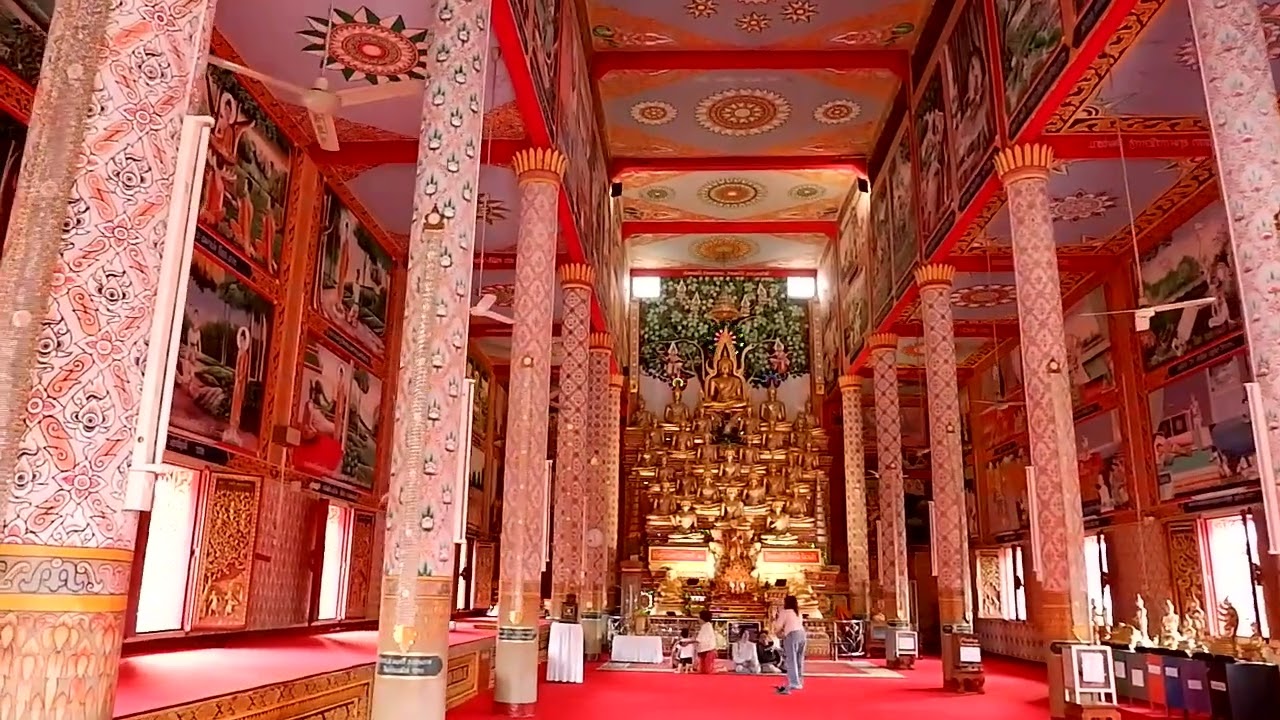
 Click to Access the Navigation Map GPS
Wat Bun Koet Map
Recommend

 Art, Culture and Heritage
 Historical Sites and Monuments(4)
 Landmarks and Memorials(4)
 Art, Craft Centres, Tradition(1)
 Museums(2)
Temple(39)
Museums(2)
Temple(39)
 Other Sacred Sites(5)
 Research and Development
 Royal Project(1)
 Suburban Living
 Village, Community(2)
 Local Market(4)
 Nature and Wildlife
 National Parks and Marine Reserves(6)
 Mountain (Doi)(2)
 Dam, Reservoir, Lake(11)
 Waterfalls(8)
 Caves(5)
 River, Canal(3)
 Other natural attractions(5)


