
lovethailand home >North Travel Attractions >Phayao Travel Attractions >Dok Kham Tai >Pa Sang > Wat Don Tan
TL;DR: Wat Don Tan is located at Pa Sang Subdistrict, Dok Kham Tai District, Phayao Province, open Daily, hours 08.00 – 17.00.
Wat Don Tan
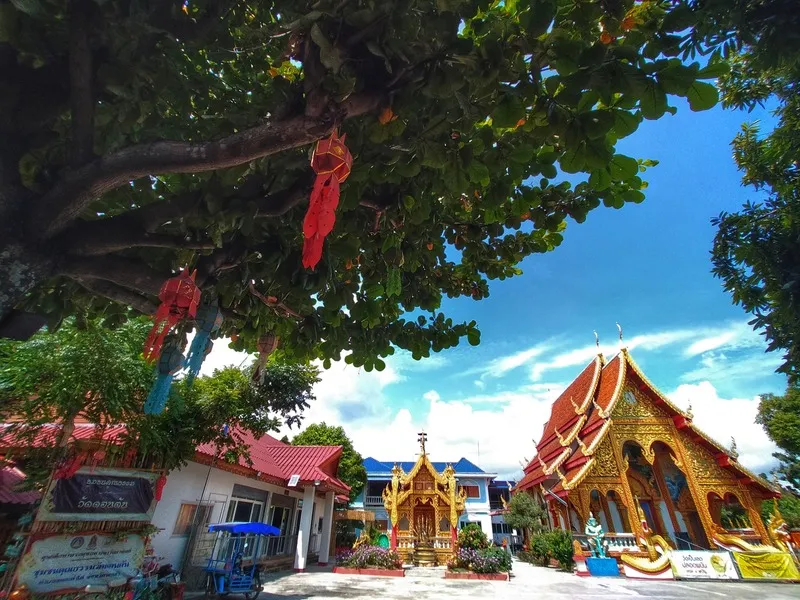
Open Days: Daily
Opening Hours: 08.00 – 17.00
Wat Don Tan is located in Pa Sang Subdistrict, Dok Kham Tai District, Phayao Province. It is an old community temple established in 1915 through the collective faith and effort of local villagers. The temple was built as a place for Buddhist activities, a spiritual refuge, and a central space for merit-making, local traditions, and community gatherings. Wat Don Tan is a community Buddhist temple that continues to serve the people of Pa Sang Subdistrict today. Monks reside at the temple, Buddhist ceremonies are held on important religious days, and the temple remains a shared space where local faith, cultural values, and community relationships are passed down from one generation to the next.
The importance of Wat Don Tan is not limited to its long history. Its true value lies in its role as the heart of Pa Sang community life. Local residents come here to make merit, listen to Dhamma teachings, offer food to monks, join Kathin and Pha Pa merit-making events, participate in Buddhist Lent and end-of-Lent ceremonies, and gather during major annual festivals. Many villagers have memories connected with this temple from childhood to old age, because it has served as a place for moral learning, family gatherings, community ceremonies, and emotional support during important moments of life.
Wat Don Tan stands amid the rural atmosphere of Pa Sang Subdistrict, an area still connected with agriculture, nature, rice fields, and the simple rhythm of local life. The temple is surrounded by large trees and community landscapes, giving visitors a calm and shaded feeling typical of a village temple. It was not created primarily for commercial tourism, but to serve the faith of local people. This gives Wat Don Tan a quiet charm rooted in sincerity, simplicity, and everyday community life.
The villagers built Wat Don Tan in 1915 to establish a Buddhist center for their community. In northern Thai rural society, the construction of a temple often comes from shared devotion among local people. It is not merely the construction of buildings, but the creation of a sacred space in which everyone participates, whether by donating labor, money, materials, or care. Because Wat Don Tan was born from community effort, it became a shared cultural and spiritual asset that local people continue to value and preserve.
The name Wat Don Tan reflects both the landscape and the memory of the community. The word “Don” is often used for a raised area or mound in a rural settlement, while “Tan” is a local name connected with the village area. Together, the name links the temple to the land and the identity of the people who live there. Wat Don Tan is therefore not only the name of a religious place, but also a name that carries the roots of the community and its relationship with the land.
For more than 100 years, Wat Don Tan has continued to function as the spiritual center of Pa Sang Subdistrict. It supports Buddhist activities on important days such as Visakha Bucha, Makha Bucha, Asalha Bucha, Buddhist Lent, the end of Buddhist Lent, and regular Buddhist holy days. It is also used for Kathin, Pha Pa, merit-making for the deceased, ordination ceremonies, funerals, and local traditions. Having the temple as a shared central space allows people in the community to meet, help one another, and maintain strong social relationships.
The temple architecture still carries the atmosphere of Lanna and local craftsmanship. Important areas within the temple, such as the ordination hall, sermon hall, pagoda, and religious activity spaces, reflect the modest but dignified character of a northern Thai community temple. The temple does not rely on grand scale. Instead, its beauty comes from the care, faith, and craftsmanship of local people, giving it a warm and familiar feeling that remains close to everyday village life.
The ordination hall is one of the most important sacred areas of the temple. It is used for monastic ceremonies and other Buddhist rituals. Visitors should behave respectfully around this area because it is a sacred space. The calm atmosphere around the ordination hall makes it suitable for worship, reflection, and recollection of the Triple Gem.
The sermon hall is another important space at Wat Don Tan. It is used for listening to Dhamma teachings, making merit, preparing community religious events, and receiving lay supporters on special occasions. In a community temple, the sermon hall is more than a resting building. It serves almost like a village meeting hall in a Buddhist context, where people gather to prepare offerings, organize ceremonies, and work together to make merit-making events successful.
The pagoda within the temple is a symbol of faith that strengthens the sacred atmosphere of Wat Don Tan. In Lanna and northern Thai Buddhist tradition, pagodas often symbolize devotion to the Buddha, the Dhamma, and the Sangha. Even if a village temple pagoda is not as large as those found in major provincial temples, it carries deep meaning for the people who live around it. It stands as a visible sign of faith at the center of the community.
Pa Sang Subdistrict has the character of an agricultural and cultural community connected with the philosophy of sufficiency economy. Local life is shaped by simplicity, mutual assistance, respect for nature, and moderation. Wat Don Tan plays an important role in nurturing these values through Dhamma teaching, merit-making, and community activities. The temple reminds people to live mindfully, share with others, and maintain good relationships within the community.
On Visakha Bucha Day, Wat Don Tan becomes a place where villagers gather to commemorate the birth, enlightenment, and passing away of the Buddha. Activities often include merit-making, listening to sermons, and candlelight procession. The day encourages reflection on core Buddhist values such as mindfulness, good conduct, and the cultivation of inner peace. The temple therefore helps local people reconnect with Dhamma in daily life.
Buddhist Lent is another important period at the temple. Local people often offer Lent candles, bathing cloths, and other necessities to monks. During the 3-month retreat, many Buddhists also make personal commitments to do good, reduce harmful habits, observe precepts, listen to Dhamma, and make merit more regularly. Wat Don Tan becomes a place that connects the monastic practice of monks with the moral development of laypeople.
At the end of Buddhist Lent, the community gathers again for merit-making and celebration. The atmosphere in a village temple during this period is usually warm and meaningful, as people come together after a season of religious observance. The cycle of Buddhist Lent and the end of Lent shows how the temple helps shape the religious calendar and social rhythm of local life.
Kathin and Pha Pa events at Wat Don Tan clearly reveal the strength of community faith. Villagers help prepare the event, arrange the temple grounds, cook food, welcome guests, and offer donations to support temple maintenance. These events are not only religious ceremonies but also social activities that allow people to meet, renew relationships, and work together. The success of such merit-making events reflects the unity of Pa Sang community.
Wat Don Tan also plays a role in teaching morality to local youth. Children and young people in the community learn about gratitude, respect for elders, merit-making, observing precepts, and living harmoniously with others through temple activities. This learning may happen through sermons, participation in temple events, helping with ceremonies, or simply observing adults working together for a good cause. The temple therefore functions as a moral school for the community, working alongside homes and formal schools.
Spreading the teachings of the Buddha is one of the temple’s most important roles. Monks help explain Dhamma in ways that connect with everyday life, such as mindfulness, contentment, non-harm, compassion, honest work, and maintaining harmony in the family and community. Dhamma is therefore not limited to scriptures. It becomes part of how people think, act, and live with one another.
Wat Don Tan is also part of a moral community shaped by the sufficiency economy philosophy. A moral community is not created only through titles or signs, but through real practice: helping one another, caring for the elderly, preserving traditions, supporting honest livelihoods, and using the temple as a common space for cooperation. In this way, Wat Don Tan helps turn moral values into real community activities.
For travelers interested in community temples, Wat Don Tan should be visited with understanding. It may not be a major tourist attraction with large structures or many photo spots, but it has value as a living temple with monks, villagers, merit-making activities, and a history connected with the community for more than 100 years. Visitors should approach the temple calmly, begin by paying respect, make merit according to their faith, and walk around the temple grounds respectfully.
Visitors can observe the relationship between the temple and the community through small details: the temple courtyard used for gatherings, buildings used for merit-making, large trees providing shade, and the village atmosphere around the temple. These details may seem ordinary, but they are what give a community temple its meaning. They reflect real lives and long-standing faith. Walking slowly through the temple helps visitors understand Wat Don Tan more deeply than a quick stop would allow.
As a cultural travel destination, Wat Don Tan can be combined with other places in Dok Kham Tai District, such as Wat Bun Rueang (Dok Phrao), Wat Bun Koet, Wat Si Chum, the Local Lanna Museum, Wat Phra That Chom Sin, and Phayao city. This route is suitable for travelers who want to understand Dok Kham Tai through community temples, local history, traditional food, and the daily life of different subdistricts rather than only through well-known attractions.
During the rainy season or after the rains, the landscape around Pa Sang Subdistrict and Dok Kham Tai becomes especially green with rice fields and trees, giving Wat Don Tan a refreshing and peaceful atmosphere. In the cool season, the weather is pleasant for a morning visit before continuing to nearby places. Visitors who want to experience local community life should visit in the morning or during merit-making events, when they can see the temple being used by local people.
Getting There Wat Don Tan is located at 255 Moo 8, Pa Sang Subdistrict, Dok Kham Tai District, Phayao 56120. From Phayao city, travel toward Dok Kham Tai District, then continue to Pa Sang Subdistrict and Don Tan village. The temple is located within a community area and is accessible by private car, motorcycle, or local hired transport. Travelers who plan to visit several places in Dok Kham Tai should use a private vehicle for easier access to nearby temples and restaurants.
From Dok Kham Tai town, visitors can travel to Pa Sang Subdistrict via local roads. The distance is not far compared with attractions farther outside the district. Using map navigation to Wat Don Tan or asking local residents will make the journey easier because the temple is well known among people in Pa Sang Subdistrict. Travelers using public transport should first reach Dok Kham Tai town and then continue by local hired vehicle.
The best time to visit Wat Don Tan is in the morning or late afternoon, when the weather is more comfortable for worship and walking around the temple grounds. Visitors who want to experience community merit-making should plan around Buddhist holy days, Kathin, Pha Pa, or local festivals. Those who prefer a quiet atmosphere for reflection should visit on ordinary weekdays.
Visitors should dress modestly when entering Wat Don Tan. Clothing should cover shoulders and knees. Speak politely, avoid loud noise, and do not disturb monks or local people who are making merit. Photography should be done respectfully, especially during ceremonies or community activities, because the temple is a sacred space and an active place for local use.
Wat Don Tan is therefore an old temple with deep value for the people of Pa Sang Subdistrict and Dok Kham Tai District. It is a religious place created through local faith in 1915, a spiritual center of the community, a place for moral education, a venue for merit-making and traditions, and a symbol of the close relationship between Buddhism and rural life in Phayao. For travelers who want to see a deeper side of Dok Kham Tai, Wat Don Tan is a worthwhile stop for making merit, resting the mind, and learning about a living community temple.
| Name | Wat Don Tan |
| Location | Pa Sang Subdistrict, Dok Kham Tai District, Phayao Province |
| Address | 255 Moo 8, Pa Sang Subdistrict, Dok Kham Tai District, Phayao 56120, Thailand |
| Highlights | Old community temple of Pa Sang Subdistrict, established in 1915, serving as a spiritual center for Buddhist ceremonies, merit-making, and local community activities |
| History | Established in 1915 through the collective effort of local villagers as a place for Buddhist activities and a spiritual refuge for the community |
| Distinctive Features | Peaceful community temple surrounded by trees and agricultural landscapes, with an ordination hall, sermon hall, pagoda, and religious activity spaces reflecting Lanna atmosphere and local craftsmanship |
| Cultural Importance | Community center for Buddhist ceremonies, youth moral education, local merit-making traditions, and the continued sharing of Buddhist teachings |
| Community Context | Wat Don Tan moral community is an agricultural and cultural community that follows the philosophy of sufficiency economy in daily life |
| Travel Information | From Phayao city, travel toward Dok Kham Tai District, then continue to Pa Sang Subdistrict and Don Tan village. The temple is located within a local community area and is accessible by private car, motorcycle, or local hired transport. |
| Current Status | Active community Buddhist temple, spiritual center of Pa Sang Subdistrict, and local merit-making and community activity space in Dok Kham Tai District |
| Open Days | Daily |
| Opening Hours | 08.00 – 17.00 |
| Facilities | Temple courtyard, worship area, merit-making space, sermon hall, community activity area, parking space in the village, and restaurants in Dok Kham Tai District |
| Main Areas / Zones | Ordination hall, sermon hall, pagoda, temple courtyard, worship area, and community merit-making area |
| Abbot / Caretaker | Phra Athikan Narong Wichittadhammo |
| Main Contact Number | 054-425-303 |
| Nearby Tourist Attractions | 1. Wat Bun Rueang (Dok Phrao), about 5 km 2. Wat Bun Koet, Buddha Images Of 28 Buddhas, about 9 km 3. Wat Si Chum, Sawang Arom Subdistrict, about 10 km 4. Local Lanna Museum, Dok Kham Tai Municipality, about 12 km 5. Wat Phra That Chom Sin, about 25 km 6. Kwan Phayao, about 28 km |
| Nearby Restaurants | 1. Khao Soi Him Kong, about 9 km, Tel. 089-010-1686 2. An Charoen Noodle, Dok Kham Tai, about 10 km 3. Sathan Arroy Dok Kham Tai, about 11 km 4. Van Drip Caffeine Doi Chang Coffee, about 11 km 5. Local Restaurants In Dok Kham Tai Town, about 10 km |
| Nearby Accommodations | 1. VC Hotel Dok Kham Tai Phayao, about 10 km, Tel. 054-418-888, 095-453-2692 2. Resort Ban Suan Dok Kham Tai Phayao, about 11 km, Tel. 080-352-6105 3. Phurimon Resort, about 16 km 4. Green Hill Hotel Phayao, about 28 km 5. Accommodations In Phayao City, about 28 km |
Frequently Asked Questions (FAQ)
Q: Where is Wat Don Tan located?
A: Wat Don Tan is located at 255 Moo 8, Pa Sang Subdistrict, Dok Kham Tai District, Phayao 56120, Thailand.
Q: When was Wat Don Tan established?
A: Wat Don Tan was established in 1915 through the collective effort of local villagers as a Buddhist center and spiritual refuge for the community.
Q: What is Wat Don Tan known for?
A: It is known as an old community temple of Pa Sang Subdistrict, with a peaceful rural atmosphere, Lanna-style religious spaces, and an important role in local merit-making and community activities.
Q: Who is the abbot of Wat Don Tan?
A: The abbot of Wat Don Tan is Phra Athikan Narong Wichittadhammo.
Q: Is there a contact number for Wat Don Tan?
A: The main contact number for Wat Don Tan is 054-425-303.
Q: What kind of travelers should visit Wat Don Tan?
A: Wat Don Tan is suitable for travelers who want to make merit, rest the mind, and learn about a living community temple in Dok Kham Tai District.
Q: What nearby attractions can be visited with Wat Don Tan?
A: Nearby attractions include Wat Bun Rueang (Dok Phrao), Wat Bun Koet, Wat Si Chum, the Local Lanna Museum, Wat Phra That Chom Sin, and Kwan Phayao.
Q: What should visitors wear when visiting Wat Don Tan?
A: Visitors should dress modestly, covering shoulders and knees, and behave respectfully because the temple is an active sacred space used by local people.
 Category: ●Places of Worship
 Group: ●Temple
Last Update : 1 MonthAgo
 Last Update : 1 MonthAgo
 Click to Access the Navigation Map GPS
 Art, Culture and Heritage
 Historical Sites and Monuments(4)
 Landmarks and Memorials(4)
 Art, Craft Centres, Tradition(1)
 Museums(2)
Temple(39)
Museums(2)
Temple(39)
 Other Sacred Sites(5)
 Research and Development
 Royal Project(1)
 Suburban Living
 Village, Community(2)
 Local Market(4)
 Nature and Wildlife
 National Parks and Marine Reserves(6)
 Mountain (Doi)(2)
 Dam, Reservoir, Lake(11)
 Waterfalls(8)
 Caves(5)
 River, Canal(3)
 Other natural attractions(5)


