
lovethailand home >North Travel Attractions >Phayao Travel Attractions >Dok Kham Tai >Huai Lan > Wat Mai Thaen Kham
TL;DR: Wat Mai Thaen Kham is located at Ban Mai Thaen Kham, Moo 10, Huai Lan Subdistrict, Dok Kham Tai District, Phayao Province, open Daily, hours 08.00 – 17.00.

Wat Mai Thaen Kham
Open Days: Daily
Opening Hours: 08.00 – 17.00
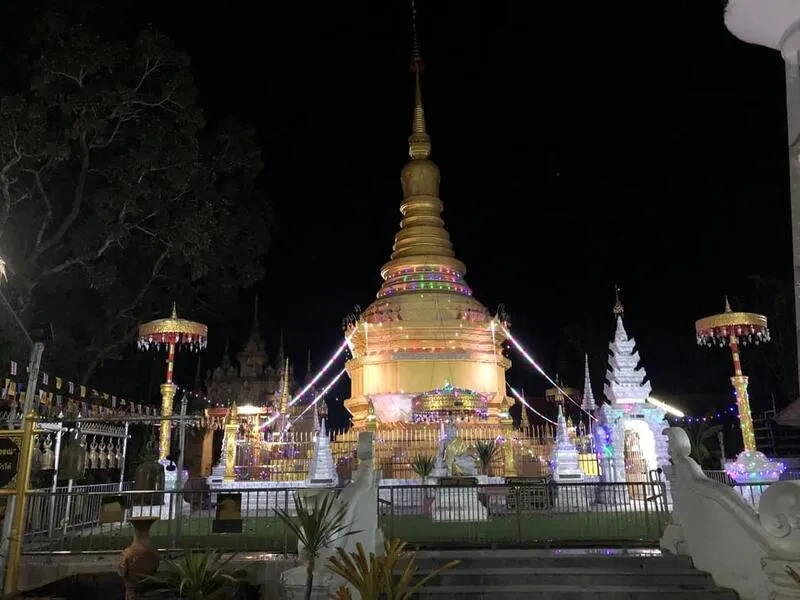
Wat Mai Thaen Kham, also found in public temple records as Wat Thaen Kham, is located in Ban Mai Thaen Kham, Moo 10, Huai Lan Subdistrict, Dok Kham Tai District, Phayao Province. It is a community temple and a spiritual center for local residents. The temple is especially interesting because it has a small learning space or museum related to traditional rice farming. Inside the temple, visitors can see old agricultural tools such as yokes, harrows, buffalo-drawn farming equipment, and other tools once used in rice cultivation. This makes the temple more than a place for worship; it is also a cultural memory space preserving the farming heritage of rural Phayao.
Wat Mai Thaen Kham is suitable for travelers who want to understand a quiet community temple in Dok Kham Tai through the relationship between Buddhism, village life, and rice-farming wisdom. The temple is not defined by large-scale tourism or crowds, but by its local role. People in the community come here to make merit, listen to sermons, join Buddhist activities, and gather during important festivals. At the same time, the farming museum helps younger generations and visitors understand a way of life that has gradually changed with modern agricultural machinery.
Huai Lan Subdistrict has long been connected with agricultural life. In the past, rice farming shaped the rhythm of the community from land preparation to planting, transplanting, harvesting, threshing, and storing rice. Tools such as yokes and harrows were central to this cycle. A yoke was used with buffaloes for pulling ploughs or farming equipment, while a harrow was used to break soil and prepare paddy fields for rice cultivation. These objects are therefore not simply old tools. They are evidence of labor, patience, animal power, and practical knowledge developed through generations.
According to Buddhist temple records, Wat Thaen Kham is a community temple under the Mahanikaya order. It was established in 1932 and received its consecrated boundary in 1948. The temple is located in Moo 10, Huai Lan Subdistrict, Dok Kham Tai District, Phayao Province. The current abbot is Phra Khru Suwan Thammaniwit. These details show that the temple has served the community for a long period and continues to function as an active Buddhist and social center.
The name Mai Thaen Kham is closely connected with Ban Mai Thaen Kham, the local community where the temple stands. The name Thaen Kham carries a sense of value and auspiciousness. As a temple name and community name, it reflects the role of the temple as a shared spiritual foundation for local people. The temple is not separate from village life; it is part of the community’s identity and daily rhythm.
In northern Thai rural society, temples often function as more than religious buildings. They are places for merit-making, learning, local meetings, cultural events, and community memory. Wat Mai Thaen Kham follows this pattern. It is used for Buddhist holy days, Kathin, Pha Pa, Songkran, Buddhist Lent activities, and other annual events. Through these activities, the temple connects monks, elders, families, children, and youth within the community.
The traditional rice-farming museum is the most distinctive feature of Wat Mai Thaen Kham. The display of tools such as yokes, harrows, and buffalo-related farming equipment gives visitors a clear picture of agriculture before machines became common. Each tool tells a story about how people once worked with animals, soil, water, seasons, and community cooperation. The museum therefore helps preserve both objects and the knowledge behind them.
Traditional rice farming required close understanding of nature. Farmers needed to observe rainfall, soil condition, water levels, and planting seasons. The shape and material of each tool came from practical experience. A yoke had to fit the buffalo comfortably. A harrow had to be strong enough for wet paddy soil. A plough had to suit the land. These tools reveal how local people designed equipment from real agricultural needs and available materials.
The old farming tools also help explain the social structure of the village. In the past, rice farming often depended on cooperation among neighbors and relatives. People helped one another during planting and harvesting seasons. These shared activities were not only economic work; they were also social events that strengthened relationships. The tools displayed at the temple therefore open a window into community life, not just farming techniques.
For children and young visitors, the museum is especially valuable. Many young people today grow up seeing tractors, rice harvesters, and modern equipment, but may never have seen how buffaloes were once used in the fields. Seeing a yoke, harrow, and other traditional tools helps them understand the effort behind rice cultivation. It also encourages respect for farmers and for the food that sustains everyday life.
Wat Mai Thaen Kham is a good example of how a temple can preserve cultural memory. Instead of allowing old farming tools to disappear, the temple has become a place where these objects can be kept, viewed, and understood. This kind of local preservation is important because it keeps community history visible. Without spaces like this, many tools and their stories could be lost as older generations pass away.
The atmosphere of the temple is calm and simple, typical of a living village temple. Visitors can pay respect, make merit, walk around the temple grounds, and learn about traditional farming in one visit. The temple does not need to be grand to be meaningful. Its value lies in its relationship with the people of Huai Lan and its role in preserving both faith and local knowledge.
On important Buddhist days, the temple becomes more active. Local residents gather to make offerings, listen to Dhamma teachings, and participate in ceremonies. During Buddhist Lent and the end of Lent, people support the monks and temple activities. Kathin and Pha Pa events show the strength of community faith, as villagers work together to maintain the temple and continue Buddhist traditions.
During Songkran, community temples in northern Thailand often become centers for merit-making, Buddha image bathing, paying respect to elders, and family reunion. Wat Mai Thaen Kham plays this role for the local community. It is a place where people return to renew relationships, express gratitude, and begin the traditional New Year with acts of merit.
For cultural travelers, Wat Mai Thaen Kham is interesting because it offers a small but meaningful story. It is a temple where visitors can see the connection between Buddhism and agriculture. The farming museum gives the temple a distinctive identity and makes it suitable for visitors interested in rural heritage, local museums, farming history, education, and community-based travel.
Visitors should take time to explore the temple slowly. Begin by paying respect in the worship area, then continue to the farming museum. Observe the shape, material, and function of each tool. Many of the tools were made from wood, iron, rope, and practical local materials. They reflect efficient use of resources and practical wisdom developed by generations of farmers.
Families can use the temple as an outdoor classroom. Parents can explain how buffaloes were used in rice farming, why fields needed ploughing and harrowing, and how rice cultivation shaped village life. Learning from real objects makes the experience easier to understand than reading from a textbook. It also helps children connect with the history of food, labor, and community.
Wat Mai Thaen Kham can also serve as a starting point for learning about rice culture in Dok Kham Tai. The surrounding area still reflects rural life and agricultural landscapes. The museum inside the temple connects past and present, showing how farming methods have changed over time. For visitors interested in local heritage, the temple offers a grounded and authentic experience.
Nearby places in Huai Lan and Dok Kham Tai can be added to the same route, such as Wat Phra That Chom Khrai, Wat Tham Thep Nimit, Rong Sak Reservoir, Wat Phra That Chom Sin, and Dok Kham Tai town. This allows visitors to combine a community temple, agricultural heritage, local restaurants, and nature-based attractions in one relaxed day trip.
Photography should be done respectfully, especially around the museum and old tools. Visitors should not move, pull, or use displayed items without permission. Some objects may be old and fragile. If monks, caretakers, or local residents are present, ask permission before taking close photographs of people. Respectful behavior helps protect the temple and the community’s cultural property.
Getting There to Wat Mai Thaen Kham is most convenient by private car or motorcycle. From Phayao city or Dok Kham Tai town, travel toward Huai Lan Subdistrict and Ban Mai Thaen Kham. The temple is located within the community. Travelers can use map navigation to Wat Thaen Kham, Huai Lan Subdistrict, Dok Kham Tai District, Phayao Province.
Visitors using public or hired transport should first travel to Dok Kham Tai or Phayao city, then continue to Huai Lan by local vehicle. Because the temple is located in a community area rather than a major tourist zone, planning the route in advance is useful. A private vehicle is recommended for travelers who want to combine the temple with nearby attractions in the same day.
The best time to visit is in the morning or late afternoon, when the weather is more comfortable and the temple atmosphere is peaceful. Visitors who want to experience community activity may visit during Buddhist holy days or annual festivals. Those who prefer quiet learning and photography may find ordinary weekdays more suitable.
Visitors should dress modestly, covering shoulders and knees, and behave calmly within the temple grounds. The temple is both a sacred Buddhist place and a local cultural learning space. Respecting both areas helps preserve the dignity of the temple and supports the community’s effort to keep its farming heritage alive.
Wat Mai Thaen Kham is therefore a meaningful place for travelers who want to see a deeper side of Dok Kham Tai. It brings together Buddhist faith, village life, traditional farming tools, and community memory. Although it is not a large tourist attraction, its value lies in the way it preserves the story of rice farming and the spiritual life of the people of Huai Lan. For visitors interested in Phayao’s rural culture, this temple is a worthwhile stop.
| Name | Wat Mai Thaen Kham / Wat Thaen Kham |
| Location | Ban Mai Thaen Kham, Moo 10, Huai Lan Subdistrict, Dok Kham Tai District, Phayao Province |
| Address | Moo 10, Huai Lan Subdistrict, Dok Kham Tai District, Phayao 56120, Thailand |
| Coordinates | Latitude 19.31864, Longitude 100.03324 |
| Highlights | Community temple of Ban Mai Thaen Kham, spiritual center of Huai Lan, and a traditional rice-farming museum displaying yokes, harrows, buffalo-related farming tools, and old agricultural equipment |
| History | A Mahanikaya community temple established in 1932 and granted its consecrated boundary in 1948 |
| Distinctive Features | A community temple that connects Buddhist practice with traditional rice-farming wisdom and the agricultural heritage of rural Phayao |
| Museum / Learning Area | Traditional rice-farming museum displaying old tools such as yokes, harrows, buffalo-drawn equipment, soil-preparation tools, and objects related to rice cultivation |
| Cultural Importance | A spiritual center for the people of Huai Lan and a place preserving memories of rice farming, local agricultural tools, and traditional farming knowledge |
| Travel Information | From Phayao city or Dok Kham Tai town, travel toward Huai Lan Subdistrict and Ban Mai Thaen Kham. The temple is accessible by private car, motorcycle, or local hired transport. |
| Current Status | Active community Buddhist temple and local learning site for traditional rice-farming heritage in Huai Lan Subdistrict |
| Open Days | Daily |
| Opening Hours | 08.00 – 17.00 |
| Facilities | Temple courtyard, worship area, merit-making space, traditional farming museum, community parking area, and nearby restaurants in Huai Lan and Dok Kham Tai |
| Main Areas / Zones | Worship area, temple courtyard, religious activity buildings, traditional rice-farming museum, and community activity space |
| Abbot / Caretaker | Phra Khru Suwan Thammaniwit |
| Nearby Tourist Attractions | 1. Wat Phra That Chom Khrai, Huai Lan Subdistrict, about 1 km 2. Wat Tham Thep Nimit, about 3 km 3. Khrua Mae Pa Tu / Local Food Learning Stop, about 1 km, Tel. 080-925-5199, 089-517-4855 4. Rong Sak Reservoir, about 13 km 5. Dok Kham Tai Town, about 20 km 6. Kwan Phayao, about 30 km |
| Nearby Restaurants | 1. Khrua Mae Pa Tu, about 1 km, Tel. 080-925-5199, 089-517-4855 2. Huai Lan Local Cafe, about 5 km, Tel. 087-656-1944 3. Khao Soi Him Kong, about 20 km, Tel. 089-010-1686 4. An Charoen Noodle, Dok Kham Tai, about 21 km 5. Local Restaurants In Dok Kham Tai Town, about 20 km |
| Nearby Accommodations | 1. VC Hotel Dok Kham Tai Phayao, about 22 km, Tel. 054-418-888, 095-453-2692 2. Resort Ban Suan Dok Kham Tai Phayao, about 22 km, Tel. 080-352-6105 3. Phurimon Resort, about 24 km 4. Green Hill Hotel Phayao, about 30 km 5. Accommodations In Phayao City, about 30 km |
Frequently Asked Questions (FAQ)
Q: Where is Wat Mai Thaen Kham located?
A: Wat Mai Thaen Kham, also known as Wat Thaen Kham, is located in Ban Mai Thaen Kham, Moo 10, Huai Lan Subdistrict, Dok Kham Tai District, Phayao Province.
Q: What is Wat Mai Thaen Kham known for?
A: It is known as a community temple with a traditional rice-farming museum displaying yokes, harrows, buffalo-related farming tools, and old agricultural equipment.
Q: What can visitors see in the farming museum?
A: Visitors can see old rice-farming tools such as yokes, harrows, buffalo-drawn equipment, soil-preparation tools, and objects connected with traditional rice cultivation.
Q: When was Wat Thaen Kham established?
A: Temple records state that Wat Thaen Kham was established in 1932 and received its consecrated boundary in 1948.
Q: Who is the abbot of Wat Mai Thaen Kham?
A: The abbot of Wat Thaen Kham, Huai Lan Subdistrict, is Phra Khru Suwan Thammaniwit.
Q: What kind of travelers should visit Wat Mai Thaen Kham?
A: It is suitable for travelers who want to make merit, visit a quiet community temple, and learn about traditional rice farming and rural Phayao heritage.
Q: What nearby attractions can be visited with Wat Mai Thaen Kham?
A: Nearby attractions include Wat Phra That Chom Khrai, Wat Tham Thep Nimit, Rong Sak Reservoir, Dok Kham Tai town, and Kwan Phayao.
Q: What are the coordinates of Wat Mai Thaen Kham?
A: The coordinates of Wat Thaen Kham are Latitude 19.31864 and Longitude 100.03324.
 Category: ●Places of Worship
 Group: ●Temple
Last Update : 1 MonthAgo
 Last Update : 1 MonthAgo
 Click to Access the Navigation Map GPS
 Art, Culture and Heritage
 Historical Sites and Monuments(4)
 Landmarks and Memorials(4)
 Art, Craft Centres, Tradition(1)
 Museums(2)
Temple(39)
Museums(2)
Temple(39)
 Other Sacred Sites(5)
 Research and Development
 Royal Project(1)
 Suburban Living
 Village, Community(2)
 Local Market(4)
 Nature and Wildlife
 National Parks and Marine Reserves(6)
 Mountain (Doi)(2)
 Dam, Reservoir, Lake(11)
 Waterfalls(8)
 Caves(5)
 River, Canal(3)
 Other natural attractions(5)


